
Seven days is Mohe at its deepest: read the town through (memorial, Songyuan, square, goods market and snowfield), slow the border loop down (every key stop claims the morning light), give Beihong and the northernmost point their own full day, and close on the Longjiang First Bend and the snowfield road home. Against the five-day version, the two extra days all go to rhythm: no sunset chased, no night driving on any stretch.
Logistics outweigh itinerary at seven days: a week of chartering, nights split across town and two villages, extreme-cold kit packed to the minus-forty standard. The discipline stays threefold: at most two key stops a day, driving under three hours, continuous outdoor time under two hours, warming up in the car whenever cold bites, the key to seven healthy days at the cold pole.
Itinerary at a glance
| 14:00 | Songyuan Park: The Preface to Seven Days |
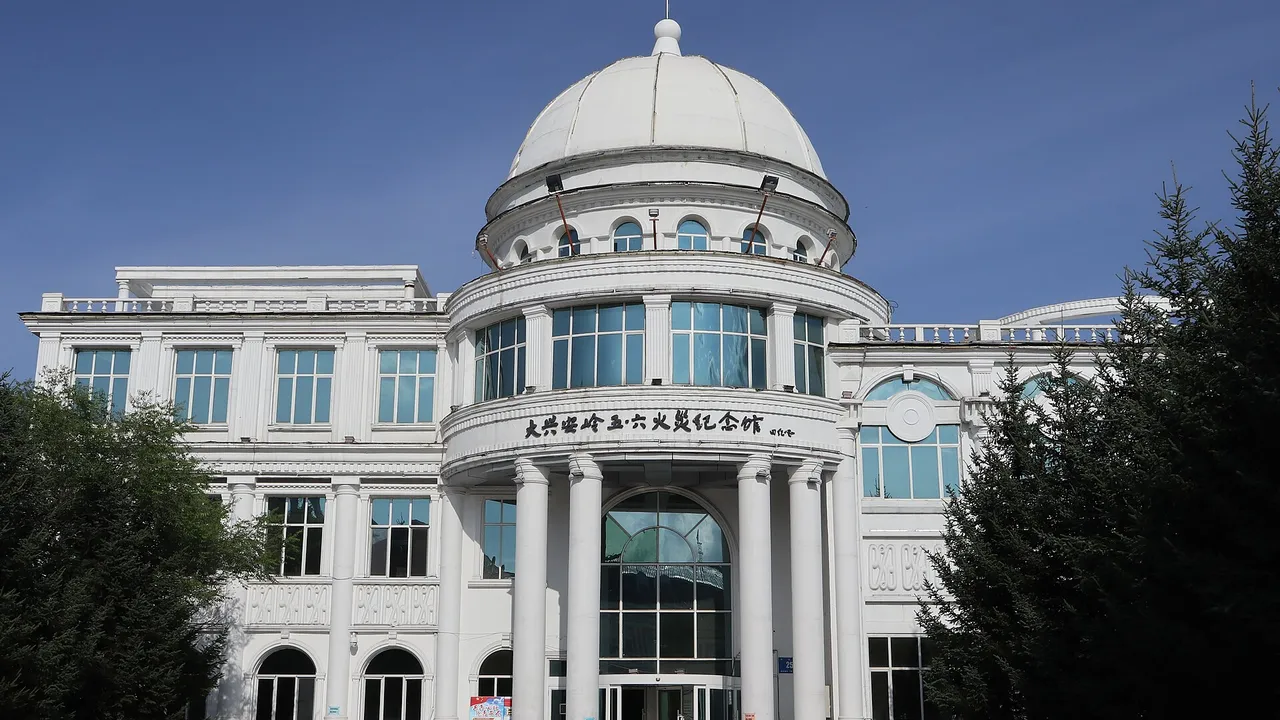
| 16:00 | The May 6 Fire Memorial: Understanding Where the City Comes From |
| 09:00 | Polar Star Square: Day Two Starts High |
| 10:30 | The Mohe Mountain-Goods Market: First and Last Resupply of the Week |
| 14:00 | Mohe Winter Snowscape: First Lesson in the Snowfield Around Town |
| 09:00 | Nine Bends and Eighteen Turns: Entering the Border River System |
| 11:00 | The White Birch Forest: The Loop's White Interlude |
| 15:00 | Beiji Village: First Dusk of a Three-Night Base |
| 09:00 | China's Northernmost Post Office: Day Four's Morning Rite |
| 10:30 | Beiji Shoal and the Golden Rooster Crown: The Week's Physical Climax |
| 15:00 | The Christmas Village: A Fairy-Tale Afternoon by the Border River |
| 09:00 | Wusuli Shoal: Giving the Northernmost Point a Full Morning |
| 11:30 | Beihong Village: The Quietest Night of the Seven |
| 09:30 | The Longjiang First Bend: Eight Hundred Steps for the Final Climax |
The route, stop by stop
Songyuan Park: The Preface to Seven Days
Arrival afternoon opens at Songyuan, the fire-surviving pine grove as the first page of Mohe: a half-hour trail with rime in winter and pine scent in summer. Carry the city's legend out of the woods, and the next six days all come pre-narrated.
Arrival day holds only two easy stops, jet lag and road fatigue left to the forest and an early night. Open with a hot iron-pot stew downtown; seven days of calorie management begin tonight.
The May 6 Fire Memorial: Understanding Where the City Comes From
An hour at the memorial before evening completes the 1987 fire and the rebirth after. The restrained exhibition works better than any lecture: once the fire is understood, Songyuan's survival, the tidy streets and the fire-safety obsession all find their source, and seven days of travel now ship with their own narration.
Free with ID, Monday closures per posted notice; if arrival day is a Monday, slide this stop to day seven's morning and nothing else moves.
Polar Star Square: Day Two Starts High
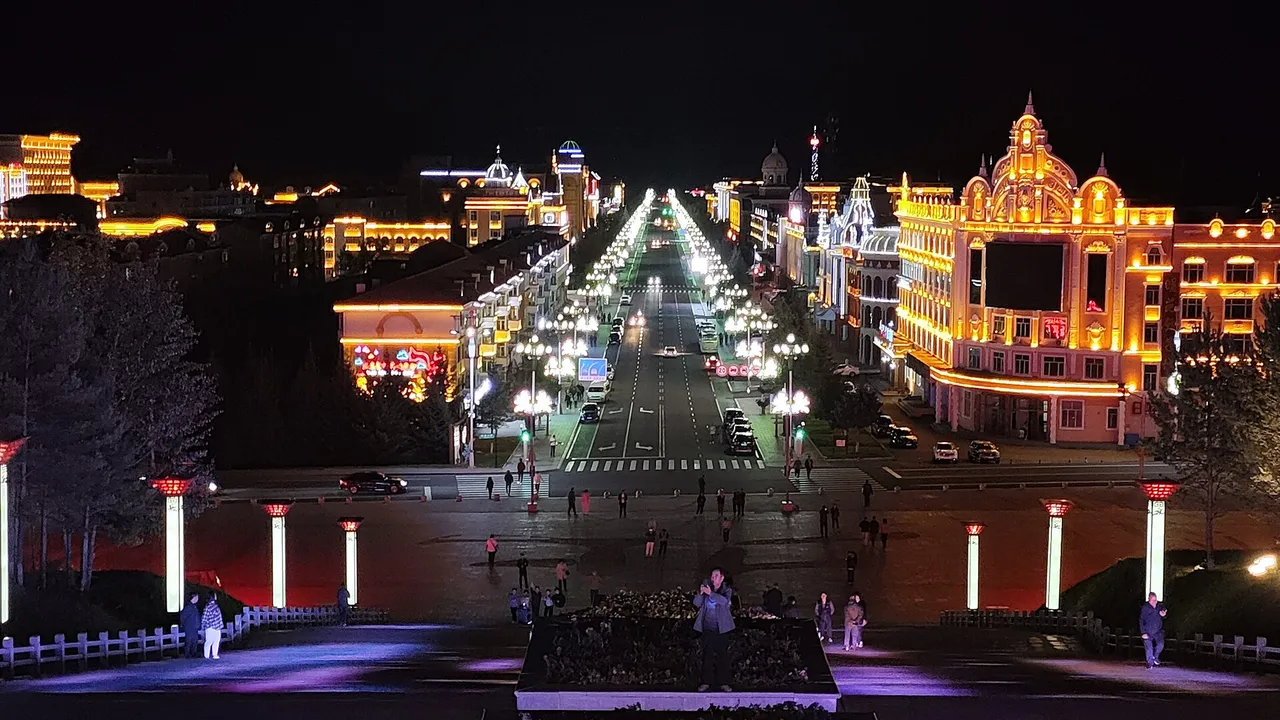
The morning climbs Polar Star Square, ten minutes of steps for the whole-town view: orderly streets, forest farms and hills beyond. You will cross this small town repeatedly over seven days; memorize it today, and the final look will read entirely differently.
Winter steps ice over, hold the chains; summer light runs best after 19:00. Descend to the market for the last round of mountain goods and cold-weather supplies, the buying window before the loop proper.
The Mohe Mountain-Goods Market: First and Last Resupply of the Week
The morning market carries the entire week's shopping: taste and decide on blueberries, wood-ear, mushrooms and honey on the spot, running two to four tenths below village and scenic-counter prices. Seven days allow this single buying window, so walk the whole floor for floor prices first.
Frozen pears and persimmons get eaten same-day; dry goods are vacuum-packed on the spot and shipped from downtown couriers before leaving Mohe. The market is fullest in the morning, stalls thinning after eleven.
Mohe Winter Snowscape: First Lesson in the Snowfield Around Town
The afternoon charters a loop through snowfield and woodland around town, the seven days' first snow lesson: pines crowned white, birch in ranks, the road turning blue in slanted light. Have the driver stop once or twice at safe stretches and nail the snowfield texture now; the river-loop snowscapes later will shoot truer for it.
Winter light turns steep after 15:30, so snowfield shooting sits best between 13:00 and 15:00. Twenty minutes outdoors, then warm up in the car: the rhythm that keeps seven days frostbite-free.
Nine Bends and Eighteen Turns: Entering the Border River System
Day three launches the loop at Nine Bends: the Emuer's chain of curves spread through the wetland, ghosting through morning mist. Snow fills the bends in winter, golden birch edges them in autumn, and each season composes differently, the border river system's first bow.
Forty minutes suffices; for mist be in place before 8:00. Then run north, birch forest and Beiji Village queuing ahead.
The White Birch Forest: The Loop's White Interlude
The road to Beiji Village threads the birch stretch; pick a pull-off and step inside: crowns closing, light leaking through gaps, winter's black-mottled trunks crowned with snow, the cleanest line material of the whole week. A ten-to-twenty-minute stroll suffices.
Winter follows trampled tracks with car warm-ups between frames; summer repels mosquitoes. Trunk texture reads most sculptural in back and side light.
Beiji Village: First Dusk of a Three-Night Base
Reach Beiji Village in the afternoon, base for the next three nights. Settled, walk riverside before dusk for the Shenzhou Beiji Monument, the stone on the Amur as the border river spreads sunset into a gold band. Three nights here mean morning mist, night skies and unhurried light all stay in your own hands.
Dinner at a farmhouse or fish room, stars after. Light pollution runs minimal, the Milky Way naked-eye on clear nights, winter occasionally tossing an aurora, never a promise.
China's Northernmost Post Office: Day Four's Morning Rite
Day four opens at the post office: write cards, collect the China's-northernmost postmark, thinnest crowds in the morning. The card will beat you home from this week-long trip; write the week's mood onto it, the cheapest souvenir there is.
Breakfast on the main street after, since the morning's heavy lift is Beiji Shoal's five-kilometer boardwalk, so eat and layer up first.
Beiji Shoal and the Golden Rooster Crown: The Week's Physical Climax
The five-kilometer boardwalk loop of Beiji Shoal crosses primeval Mongolian Scots pine and wetland, the Golden Rooster Crown at the rooster-crest coordinate of the national map. Moss, pine cones and dappled light make the week's cleanest forest frames, worth an entire unhurried morning.
The loop takes about two hours with rest pavilions en route. Summer mosquitoes are ferocious, long sleeves plus repellent; winter boardwalks ice over, hold the rails and tape heat packs to your phone.
The Christmas Village: A Fairy-Tale Afternoon by the Border River
North to the Christmas Village in the afternoon, log cabins, windmills and reindeer sleds ranged out at the highest-latitude Christmas park. Winter lighting answers the snow, summer quiets into a viewpoint, forty-five minutes through, an easy close after the morning's heavy legs.
Settle price and duration for reindeer photos and sled rides first; snow glare is strong, sunglasses on. Back to Beiji Village by evening and rest early.
Wusuli Shoal: Giving the Northernmost Point a Full Morning
Day five runs upriver early to Wusuli Shoal, the northernmost-point stone on the bank above the trip's widest river reach. Seven days give the point its own morning: after the standard portrait, walk the embankment and watch the border river blend the light of both shores.
Layer up against the wind; in winter always have locals confirm ice before stepping on. Tape heat packs to your phone and finish shooting within ten minutes outside, the winter rhythm.
Beihong Village: The Quietest Night of the Seven
Afternoon into Beihong Village, China's northernmost administrative village by coordinates, unremade log houses, firewood piles and old boats. The seven-day plan schedules exactly two things here: a kang-table farmhouse dinner and one whole night of stars.
The main street walks out in twenty minutes, winter's snow-capped log eaves a mandatory frame. Overnight at a farmhouse (RMB 100-200 pp); the Milky Way rising off the river repays every kilometer of the day.
The Longjiang First Bend: Eight Hundred Steps for the Final Climax
Day six's morning goes to the Longjiang First Bend: eight hundred-plus boardwalk steps, twenty minutes up, and the Amur's horseshoe curve unfolds whole below, the green island embraced by the border water. Every river view of seven days, the bends, the reaches, the northernmost point, closes into this one curve.
Autumn's five-flower hills and winter's frozen snow bend are the twin peaks. The summit wind wants a shell; the descent leads about two hours back to Mohe town, an evening of rest before day seven's unhurried exit.
| Getting around |
|
| Budget | Seven-day charter RMB 3150-4200 per car, tickets and activities RMB 350-500, six nights RMB 900-2100; the whole trip about RMB 2800-4500 pp for two sharing. |
| Best time | Deep winter (December to February) is the seven-day line's first choice: extreme cold, snowfield and frozen river all in place; the white-night summer runs second with green river and stars as the other answer. |
FAQs
Are the two extra days over the five-day plan worth it?
Worth it, but in rhythm rather than sights: one extra day gives Beihong a complete night with its morning mist, another gives downtown its snowfield and a procurement buffer. Across seven days every key stop claims morning light and outdoor stints stay under two hours, slashing the odds of cold-season illness. Travelers chasing stop counts should take five days; travelers chasing quality should take seven.
What is the complete extreme-cold kit for seven days?
Three layers of clothing from quick-dry base through fleece to a long down coat, snow boots with thick felt insoles, an ear-covering hat, touchscreen gloves with spare wool pairs, and a neck gaiter or face mask. Consumables sized to a week: fifty or so heat packs at six to eight a day, a warm cup, lip balm and hand cream, routine medicines and stomach remedies. Electronics: two power banks, heat-pack plans for phone and camera, offline maps throughout, and RMB 500 cash, still hard currency in the villages.
How should the seven nights be split and booked?
Nights one and seven in Mohe town as arrival and departure buffers, nights two to four in Beiji Village, the loop's hub where three consecutive nights earn a discount, night five in Beihong for the northernmost night, and night six back in town. Book village stays one to two weeks ahead, farmhouse rooms RMB 150-300 in Beiji and RMB 100-200 a head in Beihong in season, while town hotels relieve late-booking pressure. At every property, confirm heating and hot water first, the cold pole's first lodging question.
How do I keep the seven-day budget in check, and where does it slip?
Charter RMB 3150-4200, six nights RMB 900-2100, tickets and activities 350-500, meals RMB 80-150 a day, so about RMB 2800-4500 pp with two sharing a car. The three classic slips: improvised added stops or extended charter days, so fix the daily itinerary in the contract; village catering and whole-roast-lamb projects, priced out in advance; and last-minute cold-gear purchases, since Mohe is expensive and thin, so bring gear from home. Hold back a tenth as contingency, and unused is profit.