
Five days is Mohe in full: compress the town trio of memorial, Songyuan and Polar Star Square into half a day to one, then lay three-plus days across the border loop: Nine Bends, the birch forest, deep Beiji Village (shoal and post office included), the Christmas Village, Wusuli Shoal, Beihong and the Longjiang First Bend. What the extra days buy is the shoal's five-kilometer boardwalk and unhurried light.
The five-day discipline matches the three: daily driving under three hours, key stops in the morning, winter kit to the minus-thirty standard. Sleep two nights in Beiji Village, one in Beihong, one in Mohe town; village nights outprice hotels.
Itinerary at a glance
| 14:00 | Songyuan Park: The Survivor Grove on Arrival Day |
| 16:00 | The May 6 Fire Memorial: Finishing the Town's Story |
| 09:00 | Polar Star Square: A Town Farewell Before the Loop |
| 10:00 | Nine Bends and Eighteen Turns: The Loop's Wetland Opening |
| 12:00 | The White Birch Forest: The Highway's Honor Guard |
| 15:00 | Beiji Village: Arrival and the First Border-River Dusk |
| 09:00 | China's Northernmost Post Office: The Morning Ritual |
| 10:30 | Beiji Shoal and the Golden Rooster Crown: The Boardwalk at the Map's Edge |
| 15:00 | The Christmas Village: The Nordic Fairy Tale's Matinee |
| 09:00 | Wusuli Shoal: The Northernmost Point in the Clearest Hours |
| 11:30 | Beihong Village: A Night in the Northernmost Village |
| 09:30 | The Longjiang First Bend: Eight Hundred Steps for the Curtain Call |
The route, stop by stop
Songyuan Park: The Survivor Grove on Arrival Day
Arriving around midday, the afternoon goes first to Songyuan: the Mongolian Scots pine grove that survived the fire untouched is Mohe town's preface, a half-hour trail with rime in winter and pine scent in summer. The city's legend and daily life share this green.
Arrival day runs deliberately light, jet lag and road fatigue dissolving among the pines. Early to bed, since the loop starts tomorrow.
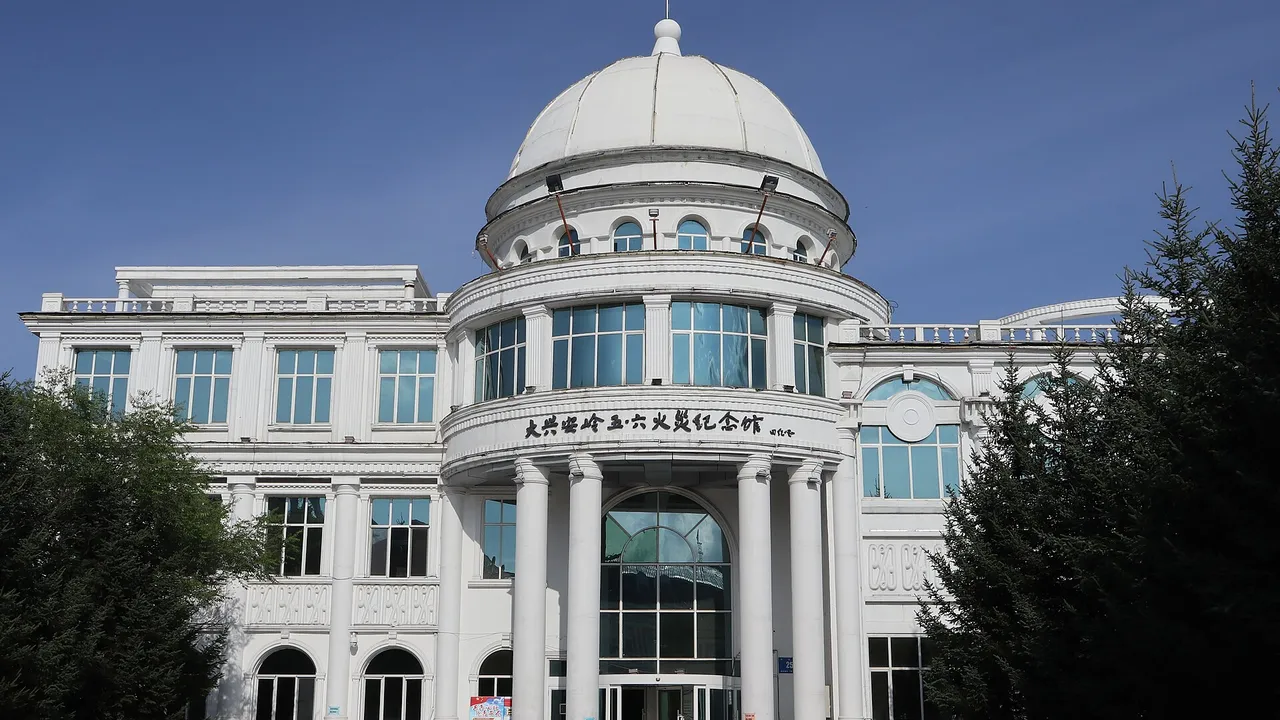
The May 6 Fire Memorial: Finishing the Town's Story
An hour at the memorial before evening, photographs, artifacts and rebuilding models completing the story of the 1987 fire and the rebirth after. Once the fire is understood, everything in Mohe, Songyuan's survival, the orderly streets, the fire-safety obsession, gains full context.
The memorial closes Mondays per posted notice, free with ID; if arrival day is a Monday, slide this stop to the departure morning.
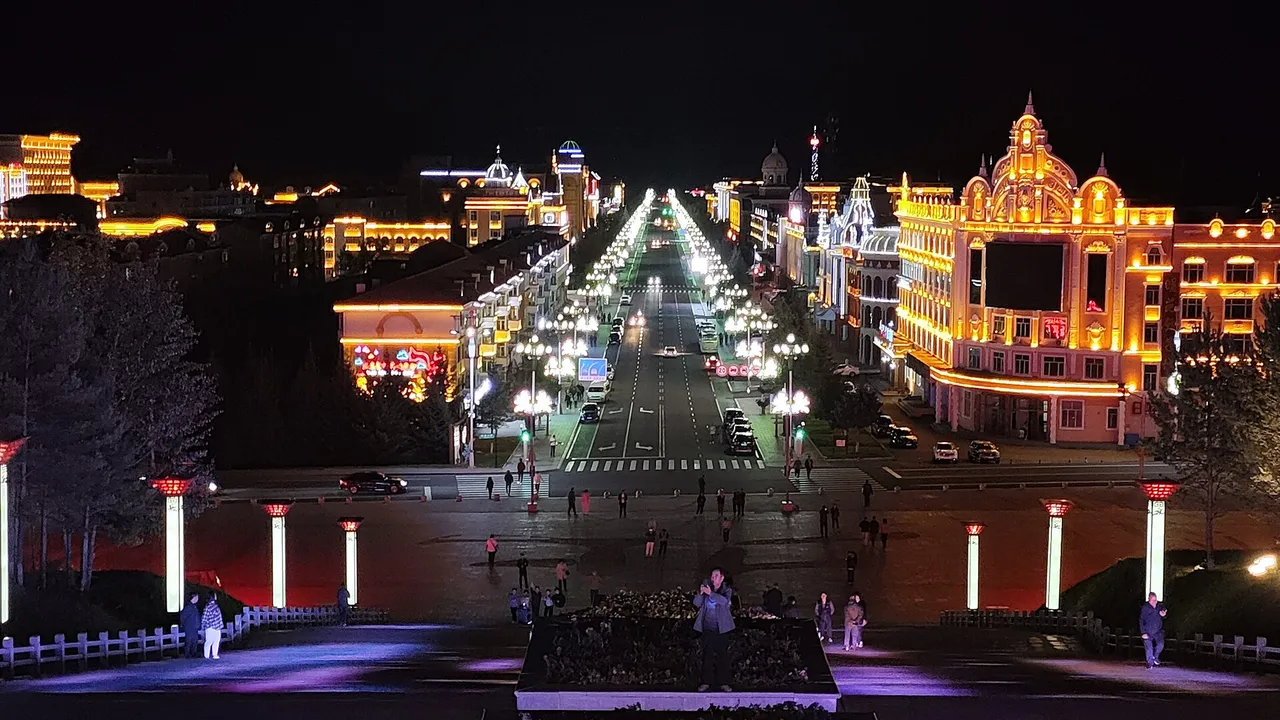
Polar Star Square: A Town Farewell Before the Loop
Day two opens with the climb at Polar Star Square, ten minutes of steps for the whole-town view: orderly streets, forest farms and hills beyond. Memorize Mohe town from above; five days later the same view will feel entirely different.
Winter steps ice over, hold the chains; summer light runs best after 19:00. Descend to a hot breakfast at the market or a morning stall, then launch the loop in earnest.
Nine Bends and Eighteen Turns: The Loop's Wetland Opening
Half an hour from town, the deck opens on the Emuer's chain of bends through the wetland, morning mist or slanted light each offering its version. This is the border river system's first appearance, teaching how to watch the days of river ahead: find the curves, the far bank, the angle of light.
Forty minutes suffices, panorama above and detail below. Then run north, with the birch forest waiting along the way.
The White Birch Forest: The Highway's Honor Guard
The road to Beiji Village threads the birch stretch; pick a pull-off, park, and step inside: crowns closing, light slanting through, gold in autumn, snow-bent boughs in winter. A ten-to-twenty-minute forest stroll is this road's standard move.
Trunk texture reads best in back and side light. Winter follows trampled tracks, summer repels mosquitoes, and never pose standing in the roadway.
Beiji Village: Arrival and the First Border-River Dusk
Reach Beiji Village in the afternoon, home for two nights. Settled, walk riverside before dusk for the Shenzhou Beiji Monument, the border river spreading sunset into a gold band, the Russian hills in clear silhouette. The first riverside sunset of five, with new versions daily.
Dinner at a farmhouse or fish room, stars after. The village's low light pollution shows the Milky Way to the naked eye on clear nights, winter occasionally tossing in an aurora easter egg.
China's Northernmost Post Office: The Morning Ritual
Day three's opening rite sits at the northernmost post office: write cards, collect the China's-northernmost postmark, with half the afternoon's crowd in the calm morning. The green mailbox against snow (or summer blooms) is the classic doorway frame.
After the cards, breakfast on the main street, then brace for the day's heaviest stop: the five-kilometer boardwalk of Beiji Shoal.
Beiji Shoal and the Golden Rooster Crown: The Boardwalk at the Map's Edge
The five-kilometer loop of Beiji Shoal is the five days' physical climax: boardwalks through primeval Mongolian Scots pine and wetland, the Golden Rooster Crown standing at the rooster-crest coordinate of the national map. Moss, pine cones and dappled light make Mohe's cleanest forest frames.
The loop takes about two hours with rest pavilions along the way. Summer mosquitoes are ferocious, long sleeves plus repellent; winter boardwalks ice over, hold the rails, slow is fast.
The Christmas Village: The Nordic Fairy Tale's Matinee
North to the Christmas Village in the afternoon, log cabins, windmills and reindeer sleds ranged out, the highest-latitude Christmas park taking its fairy tale seriously. Winter lighting answers the snow, summer quiets into a riverside viewpoint, forty-five minutes through.
Reindeer photos and sled rides are the standing acts, price and duration settled first. Back to Beiji Village for dinner and an early night before tomorrow.
Wusuli Shoal: The Northernmost Point in the Clearest Hours
Day four runs upriver early to Wusuli Shoal, claiming the northernmost point in the morning: the stone carries the latitude, beneath it the trip's widest river reach, the Russian hills receding layer by layer to the sky.
The portrait with the northernmost stone is the five days' geographic full stop. Layer up against the wind, and in winter always have locals confirm ice before stepping on.
Beihong Village: A Night in the Northernmost Village
Afternoon into Beihong Village, China's northernmost administrative village by coordinates, stacked-log houses, firewood piles and old boats keeping the village unwrapped. After a farmhouse dinner, stars at night, the Milky Way rising off the river.
The main street walks out in twenty minutes, winter's snow-capped log eaves a mandatory photographer's frame. Overnight at a farmhouse (RMB 100-200 pp) and keep the northernmost night for yourself.
The Longjiang First Bend: Eight Hundred Steps for the Curtain Call
The last morning goes to the Longjiang First Bend: eight hundred-plus boardwalk steps, twenty minutes up, and the Amur's horseshoe curve unfolds whole below, the green island embraced by the border water. Every river view of the five days gathers into one concluding sentence here.
Autumn's five-flower hills and winter's frozen snow bend are the two peak states. After descending, Mohe town is about two hours back, so book departures after 18:00 for a calm finish.
| Getting around |
|
| Budget | Five-day charter RMB 2250-3000 per car, tickets RMB 250-350 combined, four nights RMB 600-1400; the whole trip about RMB 1800-2800 pp for two sharing. |
| Best time | Deep winter and the white-night summer are the two themed seasons; September to October's five-flower hills are the photographers' golden window. |
FAQs
Where do the extra day and a half of the five-day plan pay off?
Three places: the five-kilometer boardwalk of Beiji Shoal, which the three-day version often skips for time yet which holds Mohe's cleanest forest scenes; a full night in Beihong, the complete version of morning mist and night skies; and an hour or two of spare light every day. Mohe's stops sit close together, so the five-day version buys composure, not a longer checklist.
How do I set the five-day charter budget and contract?
In season, RMB 2250-3000 for a sedan is the rational band including fuel, tolls and the driver's board. Three contract elements: an itinerary sheet naming every stop including Beiji Shoal and the birch stops, an explicit zero-shopping clause, and staged payment, sixty percent at departure and the balance at the end. In winter confirm snow tires and ice-driving experience, and your lodging host is the best reference on a driver's record.
What is the most comfortable split of the four nights?
Night one in Mohe town for arrival, nights two and three in Beiji Village as the loop's hub, where staying put beats swapping hotels, night four in Beihong for the northernmost night and its mist, and night five back in town or straight out of the village depending on your departure. Book village stays three to five days ahead at RMB 150-300 a room in season, and never gamble on the Beihong night at the last minute.
How does the five-day gear list differ from the three-day one?
Clothing adds only one spare set; the real additions are redundancy: five days of medicines, twenty heat packs in winter, two power banks, RMB 500 cash, and offline maps covering everything. The week crosses repeated extreme-cold outdoors and kang-house temperature swings, so skincare matters too, the cold pole ferociously dry, lip balm and hand cream far from optional. Three camera batteries minimum, since cold drain is the norm.