
The nature three walks Mohe's landforms by type: wetland bends at Nine Bends, forest birch and pine in the birch stretch and Beiji Shoal, river surface and curves at Wusuli Shoal and the Longjiang First Bend. Three days with no museums and no shopping streets, only boardwalks, decks and embankments.
Photographers should pick autumn or winter: the five-flower hills of late September and the frozen snowfield of January are two entirely different peaks of the nature line. Summer's edge is white nights and stars, the Milky Way clear over Beiji Village. Charter throughout, daily driving under three hours, saving legs for the boardwalks.
Itinerary at a glance
| 09:00 | Nine Bends and Eighteen Turns: The Wetland's First Curves |
| 11:00 | The White Birch Forest: Walking into the Honor Guard |
| 15:00 | Beiji Village: First Sight of the Border River at Dusk |
| 09:00 | Beiji Shoal: Primeval Forest on the Rooster's Crest |
| 13:30 | Wusuli Shoal: The Northernmost Reach of River |
| 16:00 | Beihong Village: The Raw Village in Cooking Smoke at Dusk |
| 09:00 | The Longjiang First Bend: The Great Curve After Eight Hundred Steps |
| 14:00 | Mohe Winter Snowscape: The Snowfield Road Home |
| 16:30 | Songyuan Park: A Primeval Grove to Close the Loop |
The route, stop by stop
Nine Bends and Eighteen Turns: The Wetland's First Curves
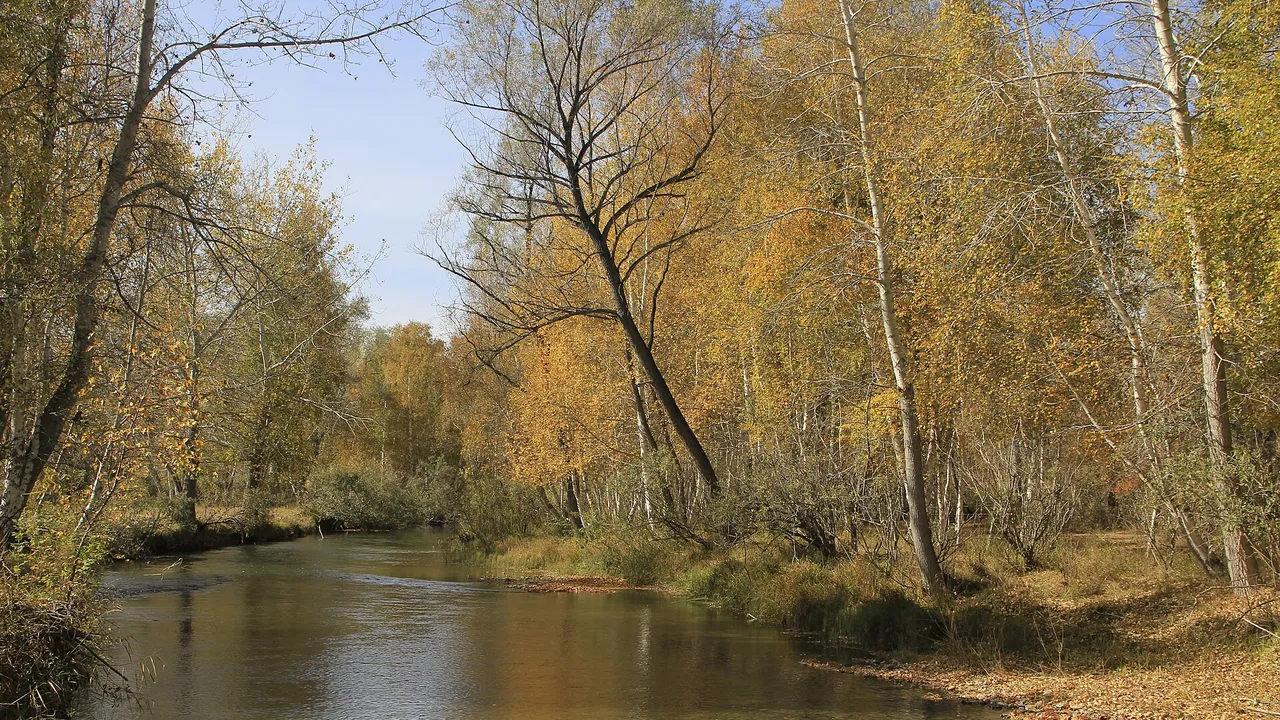
Half an hour from town, the deck opens on the Emuer River's chain of bends through the wetland, curves ghosting through morning mist as the nature line's overture. Golden birch edging in autumn, snow-filled curves in winter, fullest green in summer, each season its own composition.
The deck has two levels, panorama above and detail below, forty minutes suffices. Chasing mist means being in place before 8:00; once the sun climbs, the fog lifts and the show ends.
The White Birch Forest: Walking into the Honor Guard
The highway to Beiji Village runs between birch massed like an honor guard. Stepping inside the wood is the nature day's proper posture: crowns closing overhead, light leaking through gaps, gold and translucent in autumn, black-mottled trunks crowned with snow in winter.
Forest paths and pull-offs are free; winter snow runs deep, so follow trampled tracks. Backlight is the birch wood's best light, trunk texture most sculptural against side-backlit rays.
Beiji Village: First Sight of the Border River at Dusk
Reach Beiji Village in the afternoon and walk riverside before dusk for the Shenzhou Beiji Monument: the stone on the Amur, the border river spreading the sunset into a gold band, the Russian hills across in clean silhouette. The first and most important riverside sunset of the three days.
At night watch stars in the village, where light pollution runs so low the Milky Way shows to the naked eye on clear nights. Lucky winter nights may even chance an aurora, never a plan, while the stars are the reliable bet.
Beiji Shoal: Primeval Forest on the Rooster's Crest
Day two's main event is Beiji Shoal: a river island built by the Amur, the very tip of the rooster's crest on China's map. A five-kilometer boardwalk loop crosses primeval Mongolian Scots pine and wetland, the Golden Rooster Crown sculpture at the mapped high point, the nature line's geographic climax.
The loop takes about two hours, moss, pine cones and dappled light the cleanest forest frames of the trip. Summer mosquitoes are fierce, long sleeves plus repellent; winter boardwalks run icy, so hold the rails.
Wusuli Shoal: The Northernmost Reach of River
The afternoon runs upriver to Wusuli Shoal, the northernmost-point stone on the bank, the Amur at its widest reach of the whole trip here. Wind textures the river's surface finely, and the Russian hills across recede in layers toward the sky.
This is the nature line's northernmost rite, more open than any village vantage. The wind bites, so layer up, and in winter always have locals confirm ice before stepping onto the frozen river.
Beihong Village: The Raw Village in Cooking Smoke at Dusk
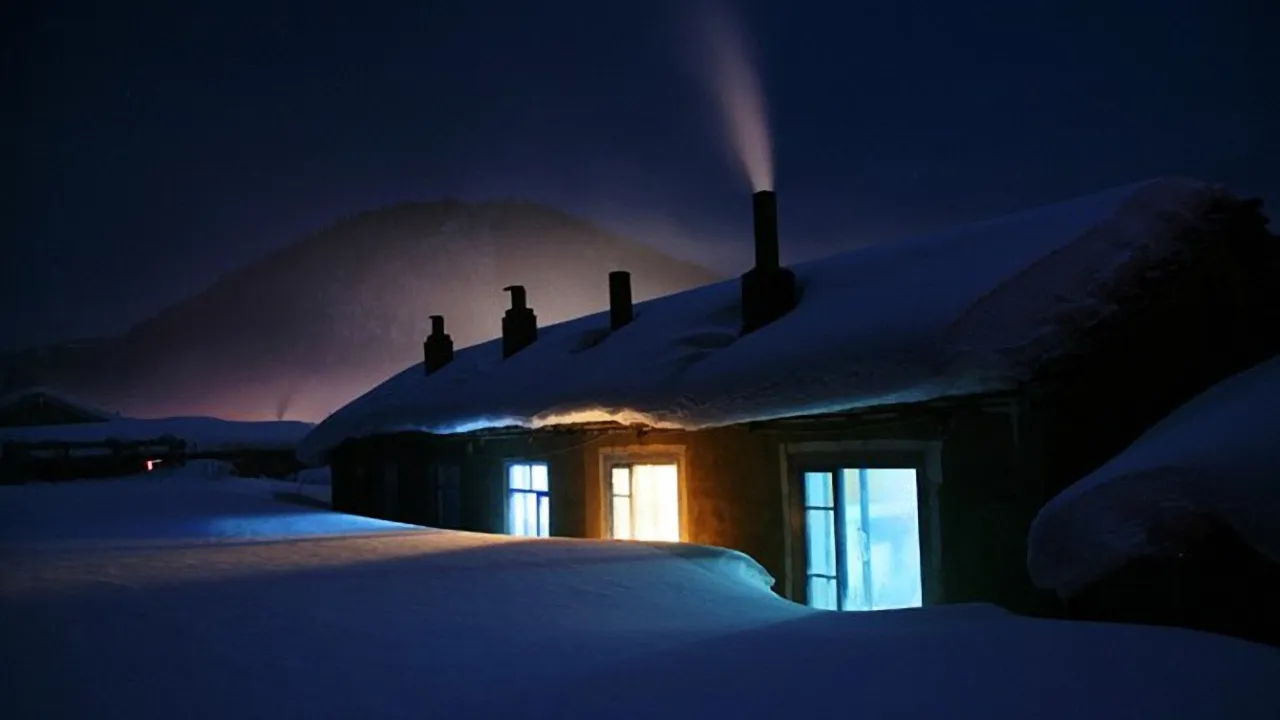
Reach Beihong Village by dusk, China's northernmost administrative village by coordinates, nearly untouched by commerce: log houses, firewood piles and old boats composing the native frame. Evening cooking smoke flattening across snow eaves or green trees is the photographers' hour.
Overnight at a farmhouse and eat northeastern dishes off the kang. The village's quiet is real quiet; step out at night for stars, the Milky Way rising off the river to the east.
The Longjiang First Bend: The Great Curve After Eight Hundred Steps
The last day puts the heaviest climb in the morning: the Longjiang First Bend deck demands eight hundred-plus boardwalk steps, twenty minutes up, and then the Amur's horseshoe curve unfolds complete below, the green island embraced by the border water, the nature line's summit.
Autumn's five-flower hills and winter's frozen, snow-filled bend are the two peak states. The summit wind runs cold, shell and gloves ready; the descent leads about two hours back to Mohe town.
Mohe Winter Snowscape: The Snowfield Road Home
The road home crosses the snowfield forest, and this return leg is itself the nature line's final stop: Mongolian Scots pines carrying snow on both sides, the road turning blue in the afternoon's slanted light. Ask the driver for one or two safe pull-offs to collect the last snowfield frames.
A winter-only close: with slack in the schedule, add one more snowfield or rime spot around town. Back downtown, dusk at Polar Star Square lowers the curtain on the whole nature line.
Songyuan Park: A Primeval Grove to Close the Loop
Back in Mohe town, close the loop at Songyuan Park: this stand of primeval Mongolian Scots pine that survived the great fire is the nature line's finest footnote, snow-laden branches and forest light signing three days with a quiet full stop.
The trail takes half an hour, rime in winter and pine scent in summer, each with its own character. After Songyuan, catch dusk at Polar Star Square, and give the nature line's last frame to this small city wrapped in forest.
| Getting around |
|
| Budget | Three-day charter RMB 1350-1800 per car, tickets RMB 150-250 combined, two nights RMB 300-700; the whole trip about RMB 1100-1600 pp for two sharing. |
| Best time | Autumn's five-flower hills and deep winter are the twin peaks; summer's green and white nights suit star-and-Milky-Way shoots; ice-out (April-May) draws the thinnest crowds. |
FAQs
Which season photographs best on the nature three?
Two peaks: late September into early October's five-flower hills, with golden birch, dark-green pines and reddening wetland stacking the richest color; and January's frozen snowfield, the river locked, snow filling the bends, lines clean as a woodcut. Summer wins on white nights and the Milky Way, winter on rime and blue-toned snow, so choose whether you want color or line.
How demanding is the five-kilometer boardwalk at Beiji Shoal?
A gentle boardwalk with no step climbs; ordinary fitness finishes in two hours and seniors strolling take three. The real costs are summer mosquitoes and winter ice: long sleeves and trousers plus repellent for the former, grippy overshoes and handrails for the latter. Rest pavilions dot the loop, so carry ample water and a warm layer and no special conditioning is needed.
What if I cannot manage the Longjiang First Bend climb?
Three options: walk slowly, since the eight hundred-plus steps carry no time limit and twenty minutes on, five off is perfectly normal; take the base viewpoint, which discounts the sweep but keeps the curve's outline; or swap this stop for a second session at Nine Bends, whose deck involves no climb. In winter the steps ice over, so safety outranks everything and the chains get held.
What camera kit suits the nature three days?
One wide and one telephoto for bends and the far-bank hills, a tripod for mist, stars and nights, and at least two spare batteries kept warm against your body. In winter, bag the camera before moving indoors to stop condensation and tape heat packs to your phone; in summer, repellent and a lens cloth matter just as much. Carry ample memory cards, since Mohe sells no high-end storage.