
Seven days is Nanchang's luxury configuration, and the city's layers earn it: the gunshots of 1927, Han tomb gold two millennia old, the old town's grey-brick lanes, the new skyline on both banks of the Gan, the western bamboo hills and a thousand-year village northwest, each deserving its own day. Two anchors daily, and the rest goes to streets and appetite.
Base the whole week near the old town or Bayi Square, where two metro lines cross and seven days of routes radiate. Book cars a day ahead for the two long-haul days, Haihun and Anyi; the other five run metro plus walking. An evening departure on day seven flows best, with the village trip last and the ride back for savoring.
Itinerary at a glance
| 第1天 08:30 | August 1 Uprising Memorial |
| 第1天 10:30 | Zhu De's Residence and He Long's Headquarters |
| 第1天 14:30 | Wanshou Palace Historical and Cultural Block |
| 第2天 09:00 | Jiangxi Provincial Museum |
| 第2天 15:00 | Bayi Square and the Memorial Tower |
| 第3天 08:30 | Haihun Marquis Site Museum |
| 第3天 17:00 | Tengwang Pavilion |
| 第4天 09:00 | Youmin Temple and Baihuazhou |
| 第4天 11:00 | New Fourth Army Headquarters Site Museum |
| 第4天 14:30 | Shengjin Pagoda and the Food Street |
| 第5天 09:30 | Qiushui Square |
| 第5天 14:00 | The Nanchang Star Ferris Wheel |
| 第5天 18:30 | Ganjiang Riverside Park and the Light Show |
| 第6天 08:30 | Meiling: Lion Peak and Hongya Danjing |
| 第7天 09:00 | The Anyi Ancient Villages |
The route, stop by stop
August 1 Uprising Memorial
The week's first layer starts in 1927. Enter at opening: two floors lay out the decisions and marches, the restored headquarters and period firearms are lesson one, and the audio guide outclasses the panels.
Ninety minutes suffices; stamp a commemorative mark at the exit post office as the week's paper starting point, keeping day one light for scouting and settling in.
Zhu De's Residence and He Long's Headquarters
Chain west from the memorial: Zhu De's residence at Huayuanjiao, a key pre-dawn stronghold, and He Long's headquarters on Zigu Road, its command room walls still bullet-scarred. The buildings themselves outshine the displays.
An hour covers both, nearly empty of visitors, and standing in those courtyards and stairwells explains that night better than ten panels.
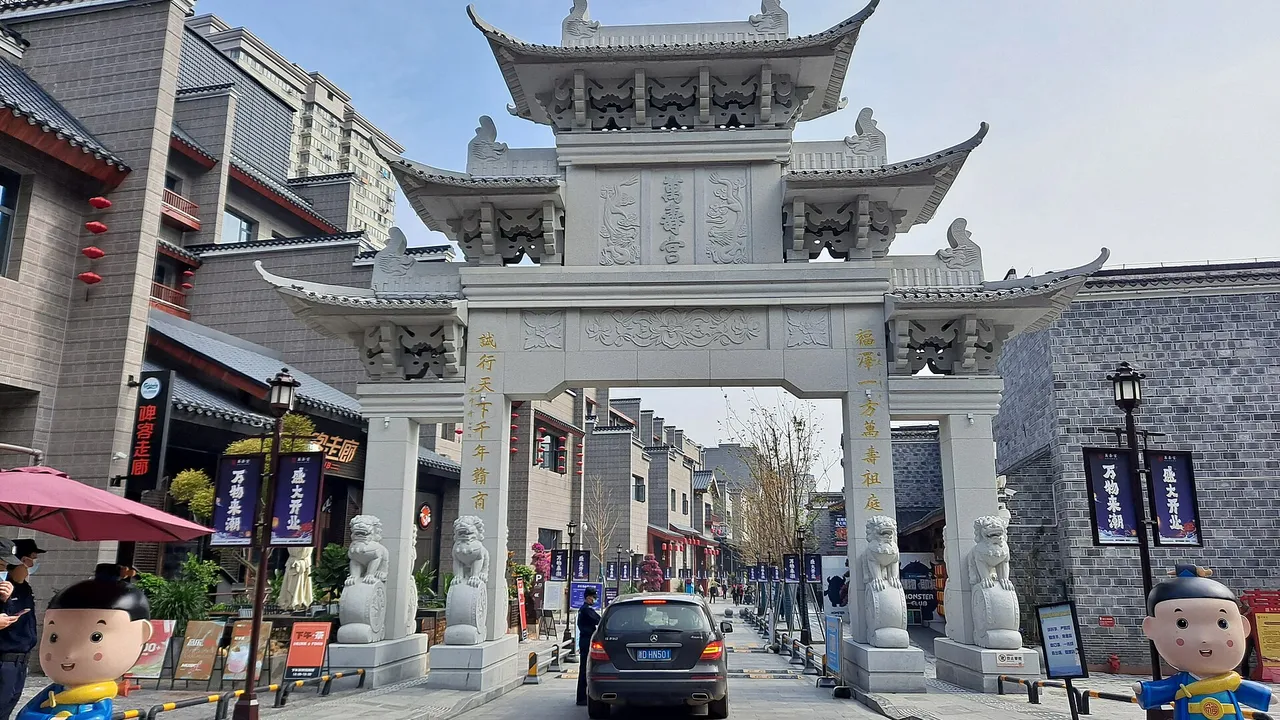
Wanshou Palace Historical and Cultural Block
Day one's afternoon slips into the Wanshou Palace lanes, grey brick threading the Tiezhu temple and veteran shops, sugar cakes fried to order, artemisia pork and clay-pot soup hot for dinner, layer one closing on street life.
After the meal, drift the side lanes as design shops and teahouses fill the dusk. Memorize these lanes; you will cross-check them on day seven's return.
Jiangxi Provincial Museum
Day two's first layer is the Jiangxi underground: the Haihun gold and bamboo slips plus the Shang tiger bronzes of Dayangzhou, two events that rewrote the region's story, three hours covering the main line.
The museum and tomorrow's Haihun site mirror each other, objects today, tomb context tomorrow, and the week's archaeology chapter takes shape in that order.
Bayi Square and the Memorial Tower
Day two's second layer returns to the surface. The tower stands on the square's axis, reliefs and inscriptions marking the city's spiritual origin, afternoon light flattering the full frame, Soviet-era buildings sketching the fifties blueprint.
An evening lap catches the commuter flow and kite-flying kids, setting yesterday's and today's Nanchang in one frame.
Haihun Marquis Site Museum
Day three is the week's archaeological heavyweight. The site in Xinjian District, forty-five kilometers out, exhibits the dig from tomb structure to extraction; the gold and slips seen yesterday at the provincial museum read completely differently in the ground itself.
Shuttles link the main hall and excavation core, museum first then site; stop in Honggutan for dinner on the return. Giving the whole day to one thing here earns its keep.
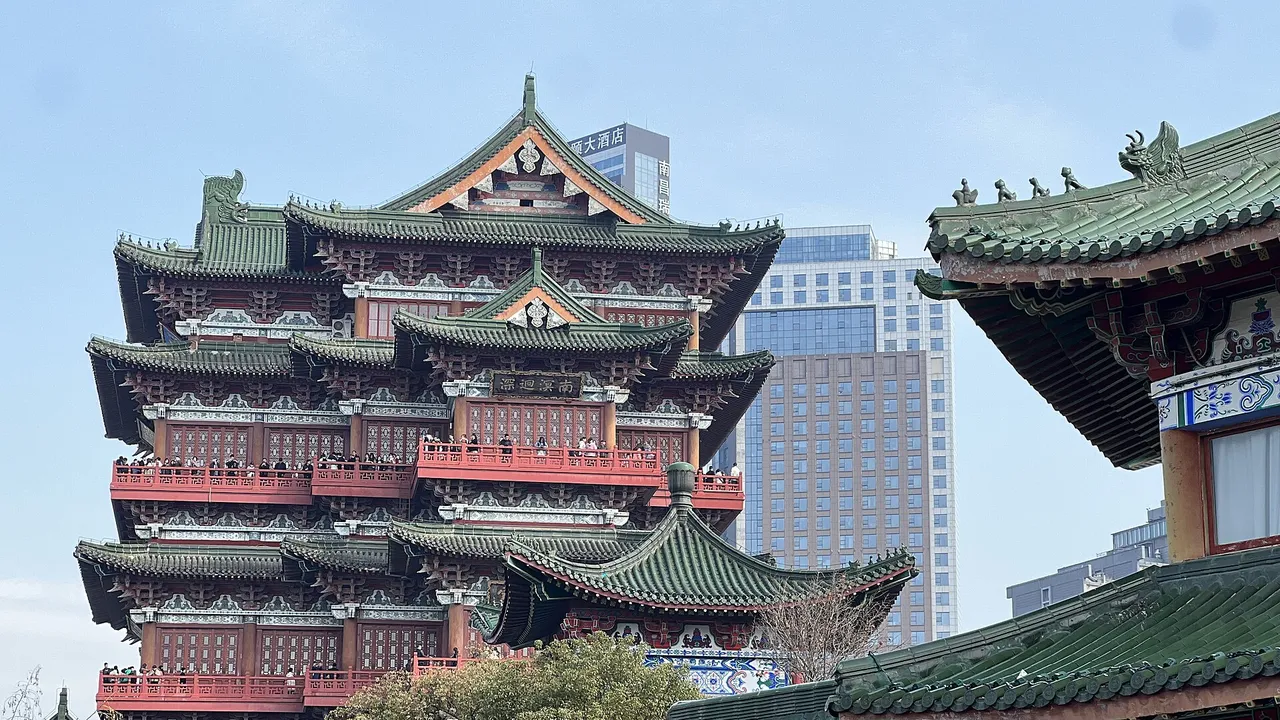
Tengwang Pavilion
Back from the site, climb Tengwang Pavilion at dusk when the river gilds and Wang Bo's lines land in the real world; the floor-by-floor murals finish just as the lamps come on at the top.
Recite the full preface for a free climb, slots limited daily. From a Han tomb park to a Tang tower, day three writes the word ancient in capital letters.
Youmin Temple and Baihuazhou
Day four is the slow one. Morning at Youmin Temple, the thousand-year sanctuary among apartment blocks, ancient camphors and bronze Buddha from old photographs; minutes away Baihuazhou spreads the old town across East Lake.
Two hours covers both, benches anywhere. Day four's job is to slow down and pay back three days of digging and climbing.
New Fourth Army Headquarters Site Museum
Late morning adds the other chapter of the red narrative. The New Fourth Army headquarters site south of the old town runs compact, readable in an hour, stitching the wartime Jiangxi chapter into the week's thread.
Inside it is hushed, the original office and dormitory buildings keeping their timber stairs and old doors and windows in place. Free, no booking needed.
Shengjin Pagoda and the Food Street
Day four's afternoon lands at Shengjin Pagoda, its seven-story octagonal yard calm, the food street serving an afternoon round of clay-pot soup and sugar cakes, the square market good for slow browsing.
At dusk the lit tower's shadow crosses the square, the gentlest close of the week, banking energy for the riverfront and hills ahead.
Qiushui Square
Day five crosses the river into the new-town chapter. Qiushui Square faces the pavilion head-on, the best seat for both banks: quiet mornings, Honggutan's towers lining the far shore, kite territory by day.
Read the geography by daylight, return for the fountain and light show at night; one place, two of its hours, is day five's architecture.
The Nanchang Star Ferris Wheel
Ride the Nanchang Star in the afternoon. Once the world's tallest, it turns in about half an hour, the cabin overlooking both banks and skyline, the Meiling ridgeline visible on clear days, a neat preview of tomorrow's hills.
Queues peak at night while afternoon cabins run loose. Vertigo sufferers should start facing away from the river and turn toward the view once settled.
Ganjiang Riverside Park and the Light Show
Day five's night unfolds along the riverside park, the green ribbon stringing square to wheel with paths, lawns and decks, the river wind rinsing the day's heat.
Around eight the both-banks light show starts, towers shifting with the score, the pavilion the fixed foreground. Day five is the week's new-town night, worth watching a full performance properly.
Meiling: Lion Peak and Hongya Danjing
Day six climbs. Morning on Lion Peak, the cliff jutting like a lion's head with city and river from the top, morning fog often islanding the summit; afternoon at Hongya Danjing, a one-hour ravine walk as the descent's buffer.
Mountain there and back with a farmhouse lunch between, artemisia pork and chicken soup hot. Day six trades the city's stacked layers for a mountain's breathing room.
The Anyi Ancient Villages
Day seven goes to the thousand-year villages. The Anyi cluster, Luotuo, Shuinan and Jingtai, preserves whole streets of grey-brick Jiangxi houses, carved gate towers and ancestral halls the treasures, residents still drying chili at their windows.
Hire a village guide so the carved stories open up; the three villages fill a slow half day, back in town by evening for night departures. Ending the week on village stillness leaves the longest afterglow.
| Getting around |
|
| Budget | Entries total about RMB 350-450 pp, two car days add RMB 150-250 per head, and six mid-range nights run near RMB 1,500. |
| Best time | Mar-May and Sep-Nov run steadiest; in winter swap the last two days for Nanjishan birding. |
FAQs
What does a week of transport cost?
Five urban days run on metro and buses at about ten yuan a day per head; two long car days add one to two hundred combined; airport transfers take a few dozen more. The whole week lands under three hundred a head, the most controllable line in the budget.
What is the week's booking and ticketing list?
Only the uprising memorial and provincial museum need real-name bookings, both closed Mondays; Haihun and the pavilion sell on site, online in peak; Meiling and Anyi ticket at the gate. Lock the two museums before departure and handle the rest on arrival, and nothing jams all week.
How should winter adjust this route?
Trade day six's Meiling and day seven's Anyi for Nanjishan birding, the migrants present November to March, white cranes and goose skeins being winter Jiangxi's greatest natural show. The villages turn bleak in cold, so two bird days win; the old town and museums run season-proof as scheduled.
How should energy be rationed across seven days?
Ration it medium, low, high, low, medium, high, medium: half a day one, a seated day three, the climb on six, a slow village walk on seven. Bank an afternoon hotel hour daily and never force night plans. Seven days are inhabited, not sprinted, and a drowsy lakeside hour beats a forced agenda.