 TripMyChinaJOURNEYS THROUGH REAL CHINA✦ AI Trip✦ Plan My Trip
English
简体中文
繁體中文
日本語
한국어
ไทย
Tiếng Việt
Bahasa Indonesia
Italiano
Español
العربية
Русский
Deutsch
Français
Bahasa Malaysia
TripMyChinaJOURNEYS THROUGH REAL CHINA✦ AI Trip✦ Plan My TripSix dynasties ruled from here, and the Ming wall they left behind is still the longest in China. Nanjing wears its history in the open — a 600-metre spirit road lined with stone animals, a museum sunk beneath the old examination hall, and a river that has been lit by painted boats for a thousand years.
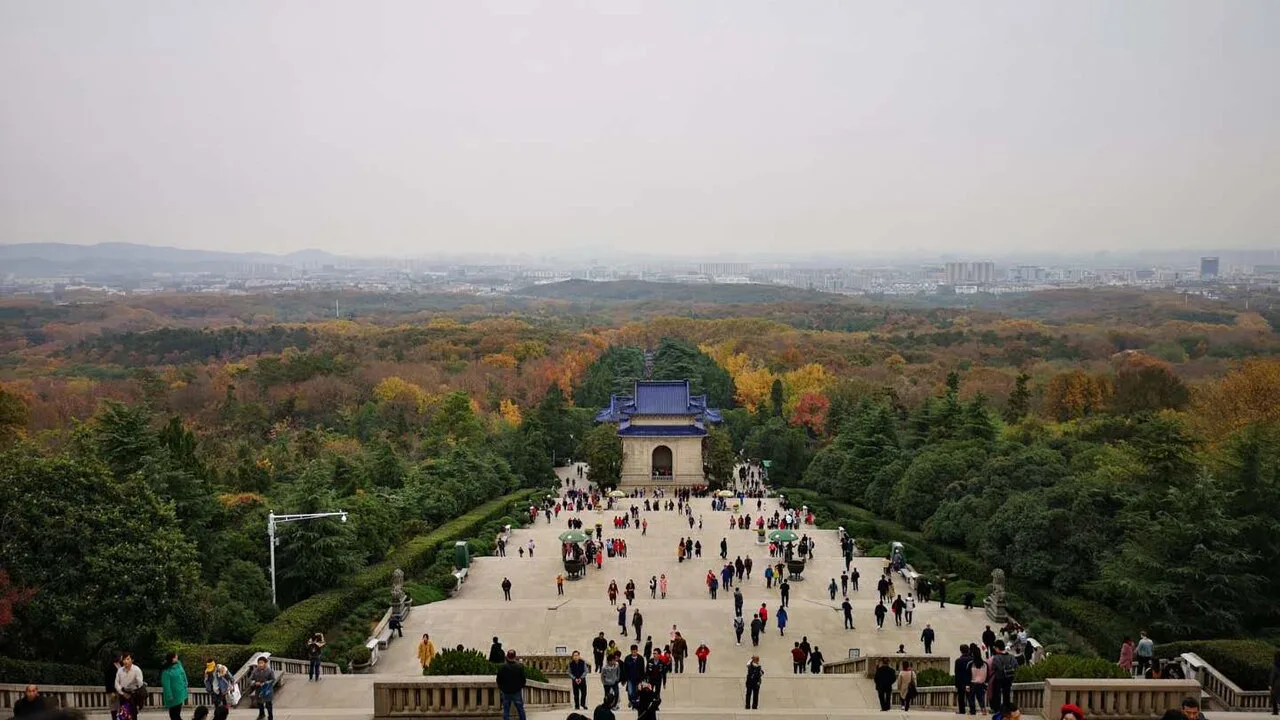
Nanjing sits in the lower Yangtze valley in eastern China, the capital of Jiangsu Province. It is a major rail and air hub, with the Yangtze River running through the city and a compact historic core in the centre.
Nanjing served as the capital of several dynasties and later as the seat of the early Republic of China, and its Ming-era city wall still shapes the old centre. The city has a sober, layered character: imperial tombs, Republican-era government buildings and dense residential lanes sit close together.
Most visits centre on the Ming and Republican heritage. The Ming Xiaoling tomb and the Sun Yat-sen Mausoleum sit in the wooded hills east of the city; the Presidential Palace and the Nanjing Museum cover the modern and imperial past; the Nanjing City Wall at Zhonghua Gate and the Keju Museum in the old examination halls are within the historic core. The Ganjia residence, now the Nanjing Folk Museum, shows traditional courtyard housing.
World-class, national and global recognition earned over the decades.
Joined UNESCO's Creative Cities Network in 2019 — the only Chinese city on the literature list.
The first Chinese city designated an International City of Peace, recognising its wartime history and postwar reconciliation work.
Awarded by UN-Habitat for urban renewal that kept historic neighbourhoods intact.
Designated in 1982 among the first group of 24 nationally protected historic cities.
Home to Nanjing Museum, one of China's three largest, plus more than 60 registered museums.
Named the first national Software City for its software and service-outsourcing industry.
Awarded for urban green cover that reaches the old city walls on three sides.

The moments that shaped the city — and the stories its people still tell.
A fortified town called Yecheng was built on the site — the first recorded settlement where Nanjing now stands.
Sun Quan moved his capital here as Jianye, opening the Six Dynasties period — six regimes ruled from this city for more than 320 years.
Zhu Yuanzhang made Nanjing the first capital of the Ming and built the longest city wall in China; the Forbidden City here predated Beijing's.
The first of the unequal treaties was signed on a British warship anchored off Nanjing, opening China's treaty ports.
Sun Yat-sen took office as provisional president here; the city was the national capital for most of the following 37 years.
Listed among China's first 24 nationally protected historic cities, with the Ming wall and old城南 fabric largely intact.
A girl from Luoyang married into a Jiankang family, nursed the poor with herbs while her husband was at war, and the lake was renamed in her memory. A later Ming version turns it into a tragedy of the Xu family — the opera Mo Chou Nü is still staged.
Zhuge Liang, on a mission before the battle of Red Cliffs, is said to have stood on the Qinhuai and described the terrain as a dragon coiled on Zhongshan and a tiger crouched at Stone City — the phrase that made Nanjing a capital.
The 'tiger' stele in Zhan Garden was a gift from Zhu Yuanzhang to his general Xu Da. Look closely at the brushwork and four characters emerge inside it: fu jia tian xia — richest under heaven.
The Tang monk Farong meditated here for 21 years. On a snowy day, while he preached the Lotus Sutra, golden lotus opened through the ice and birds flew in with flowers. The story is listed as district-level intangible heritage.
Three paces, one city — every route built from places we actually operate.
Weather, crowds and the best months for what you want to see.
Plum blossom on Plum Blossom Hill, cherry trees along the road at Jiming Temple, roses on Yihe Road in May. Also the first crowd peak of the year — go before 7am or come in early March.
Plum rains for three weeks from mid-June, then 33–36°C. Fireflies at Linggu Temple in mid-July, night cruises on the Qinhuai. Cheapest hotel rates and fewer crowds than spring or autumn.
The reason to come. Ginkgo turns gold on the Ming Xiaoling spirit road, maples cover Qixia Mountain, plane trees line the whole city. Best window is 15 October to 10 November — after National Day, before the maple peak.
Damp cold with no central heating — feels colder than the north at the same temperature. Quietest season: empty sites, cheap rooms. If it snows, the city turns back into Jinling. Tangshan hot springs for the cold.
Three weeks of steady drizzle, high humidity, laundry that will not dry. Museums and covered streets are the move; the gardens are at their greenest.
What this city is known for — the things worth planning your day around.
The places worth building a day around.
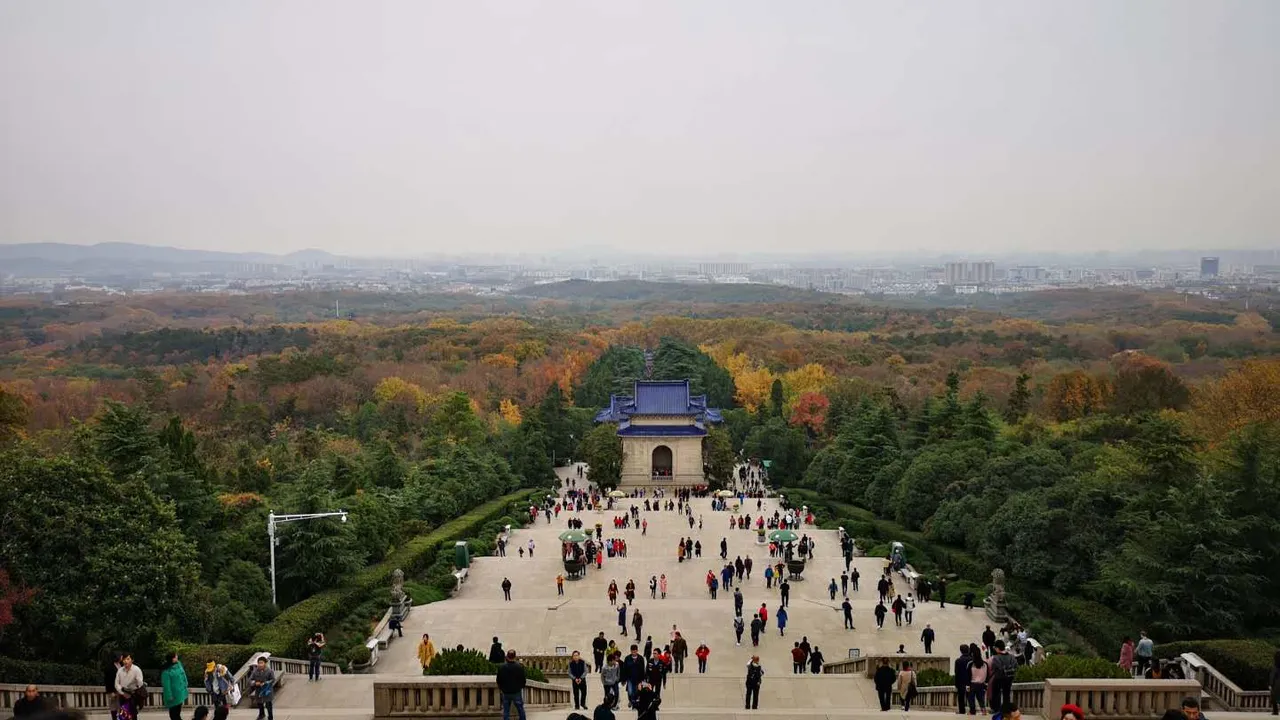
Rising in terraces up the forested slope of Purple Mountain, the Sun Yat-sen Mausoleum is Nanjing's most monumental landmark. Built between 1926 and 1
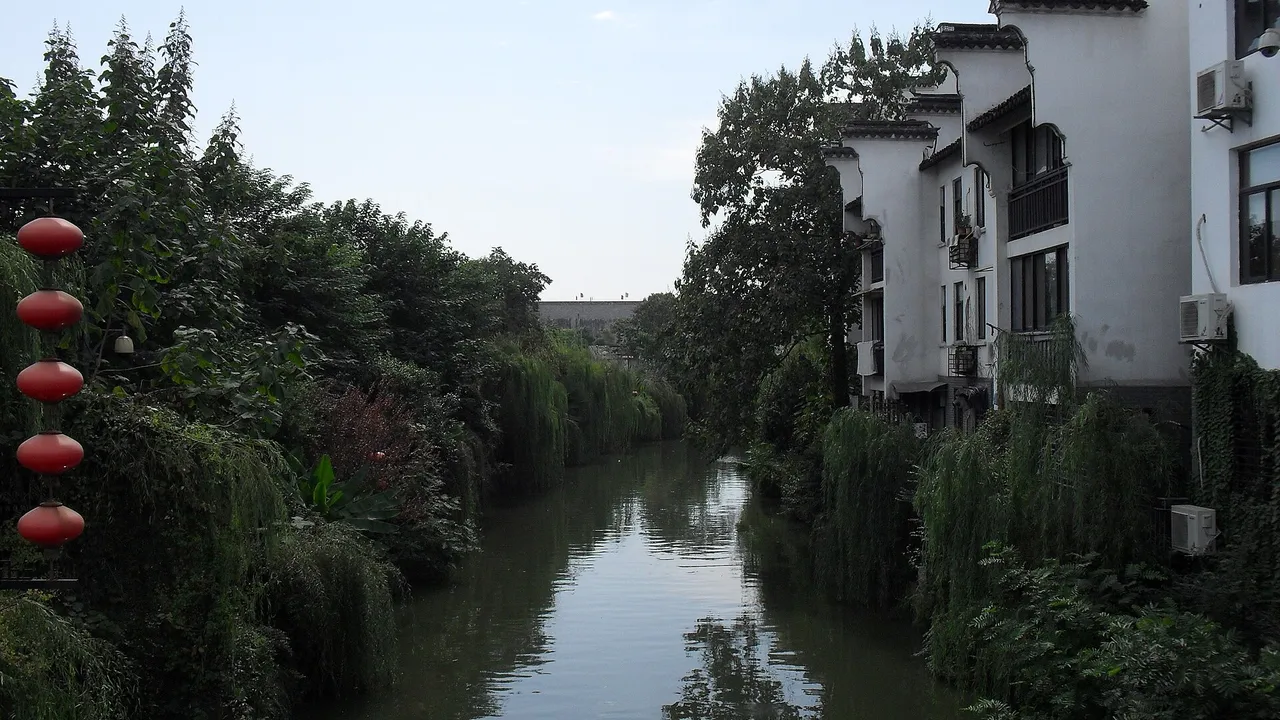
The Confucius Temple and Qinhuai River district is the old soul of Nanjing, a quarter of lantern-lit waterways, examination halls and snack streets th
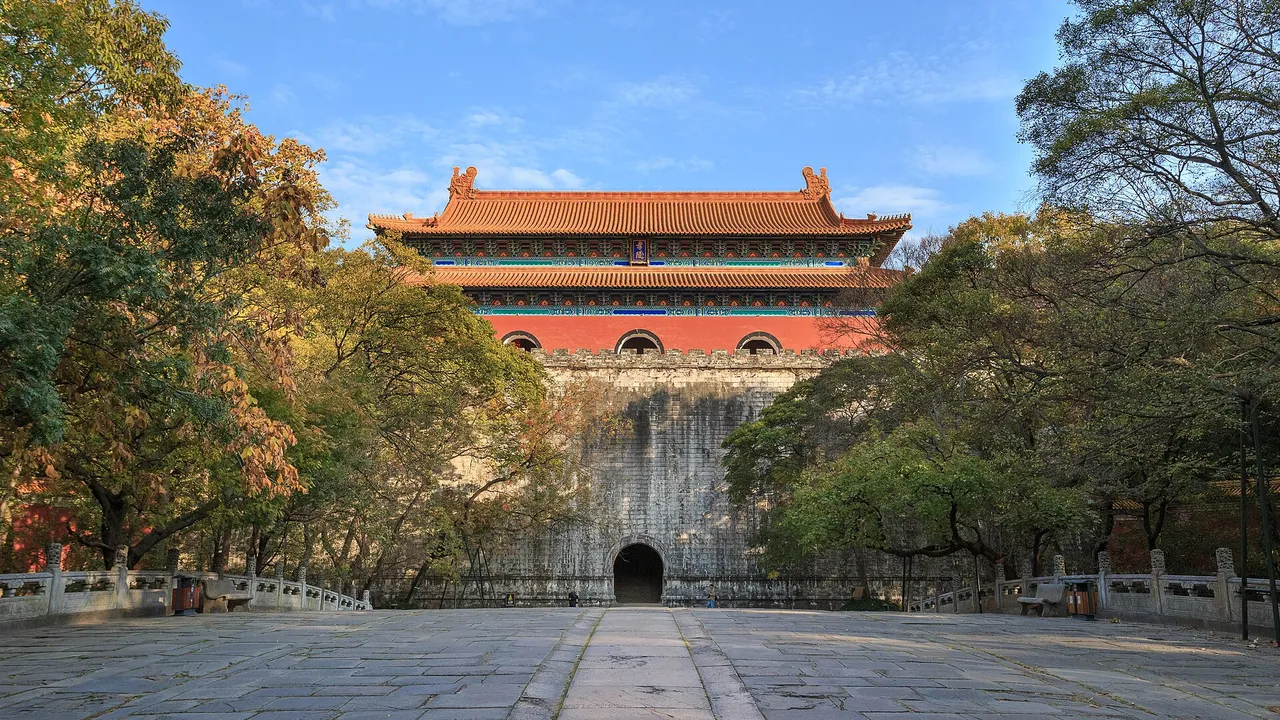
Ming Xiaoling is the resting place of Zhu Yuanzhang, the founder of the Ming dynasty, and the mausoleum that set the architectural template for all la
A little further out, for a spare half-day.
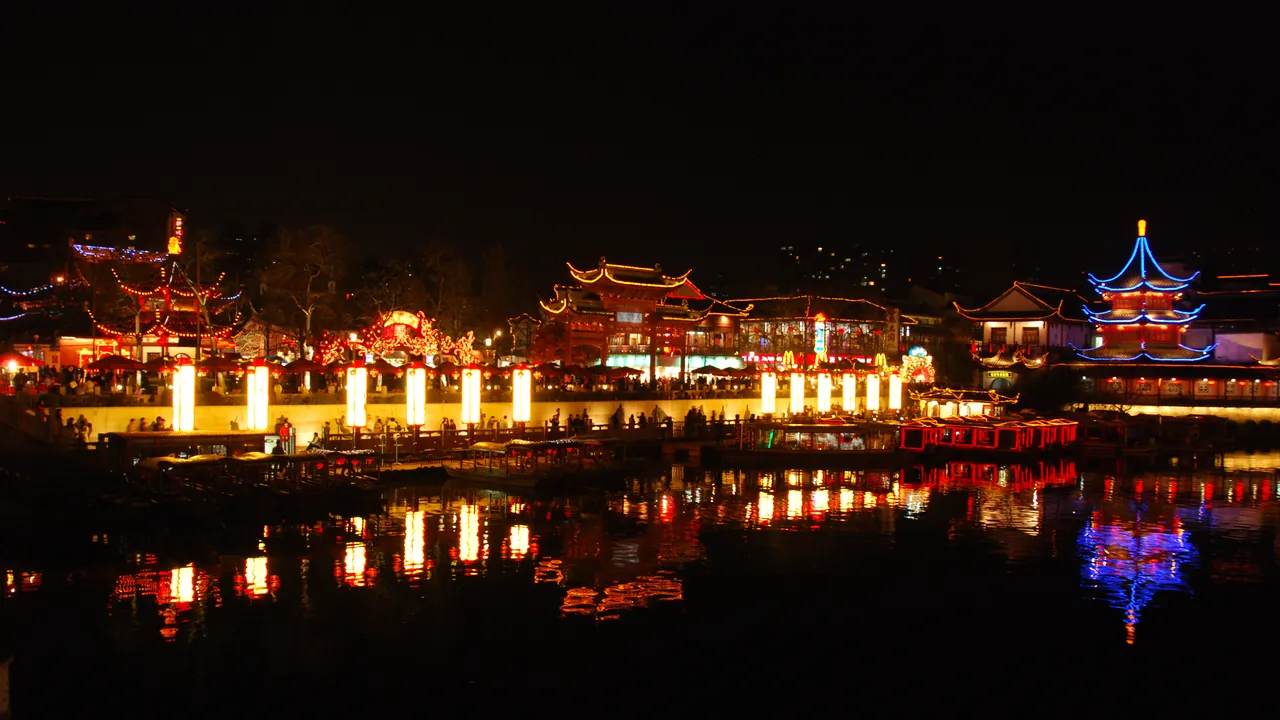
Pleasure boats glide through lantern light on the river that made old Nanjing famous.
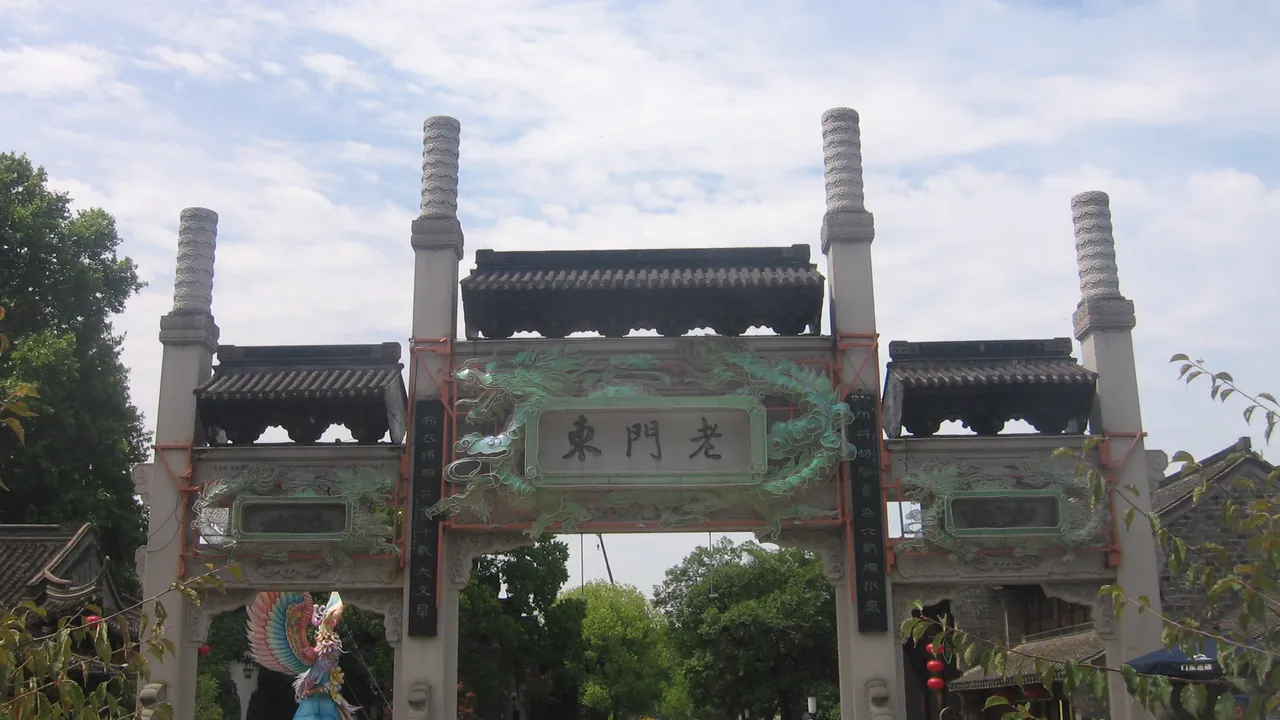
Restored grey-brick lanes where the smell of duck-blood vermicelli soup drifts down every alley.
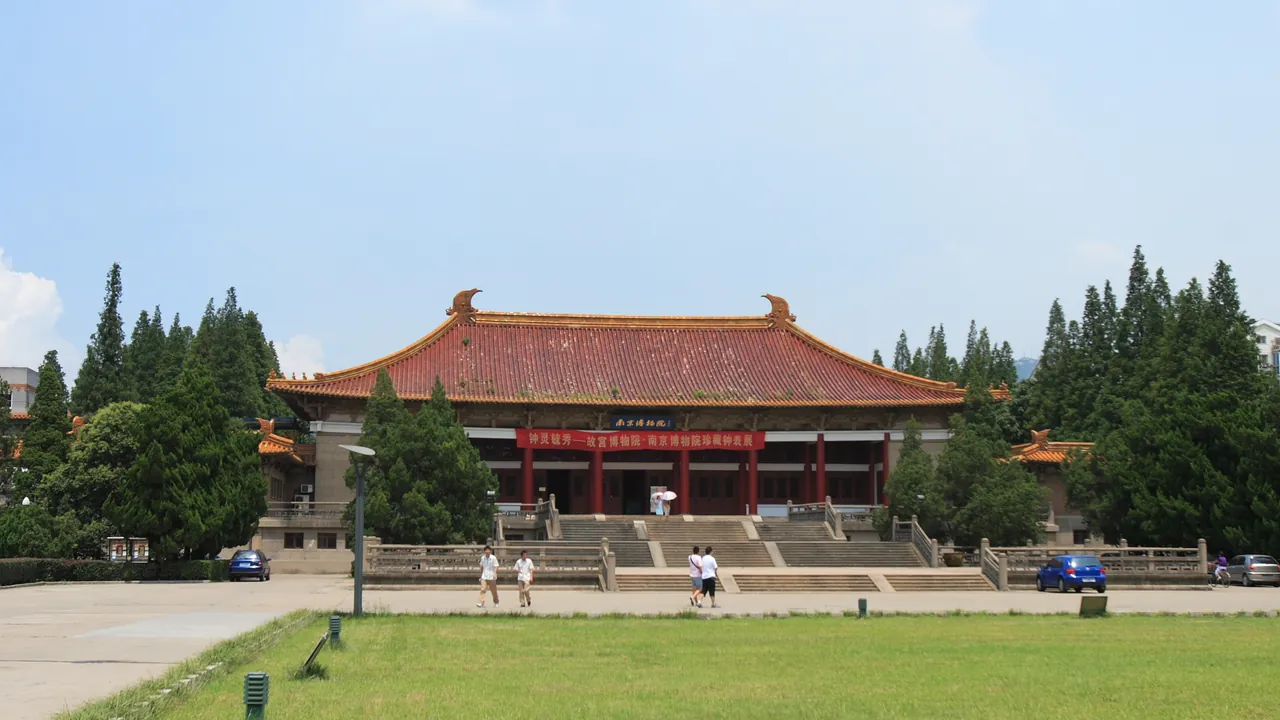
Beyond its national treasures, the basement holds an entire recreated 1930s street.
Where the whole street eats — the city's most famous food streets, each with its own guide page.
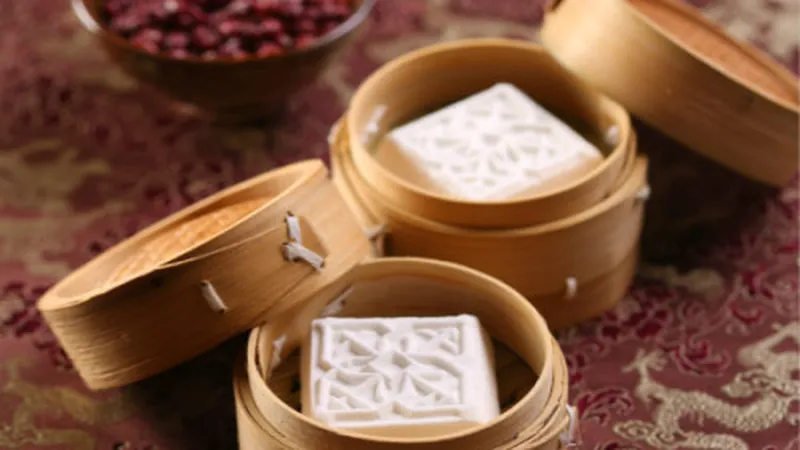
A forty-year Huaiyang institution with Ming-Qing carved interiors. Signature dishes: hand-cured salted duck…

A seasonal Huaiyang kitchen. Regular orders: red-braised pork, eel stewed with stock in a clay pot, and…

A thirty-year neighbourhood chain with arch-and-lantern Jiangnan interiors. Crisp roast duck, lion's head…
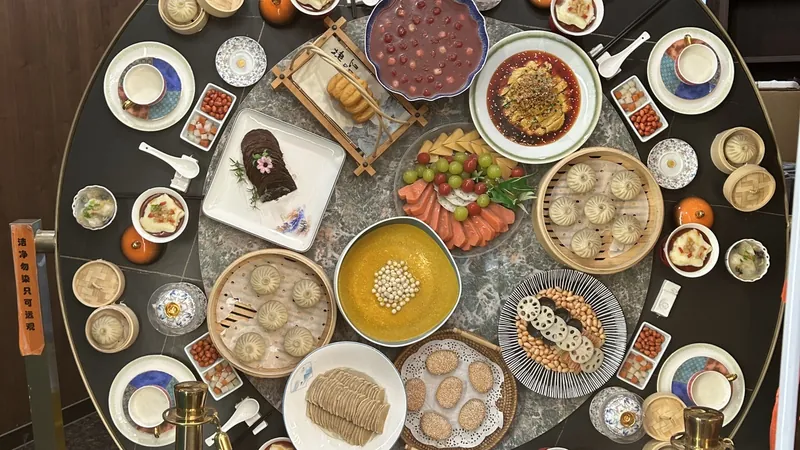
A halal restaurant founded in 1912. Beef potstickers, vegetable buns and osmanthus taro are the staples; the…
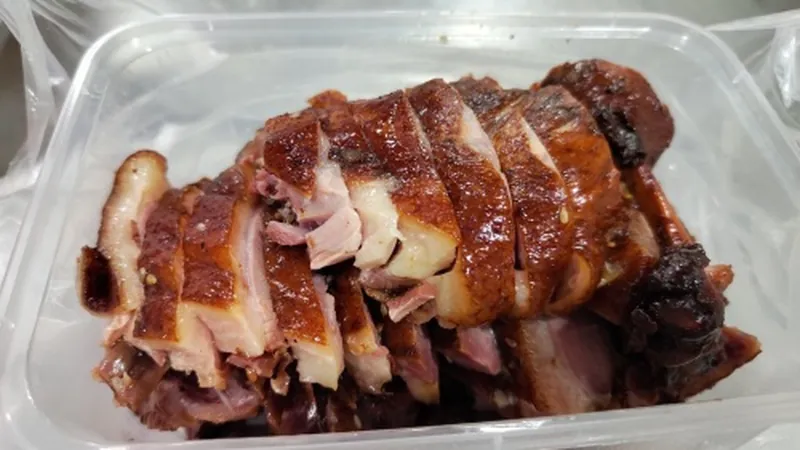
Both salted duck and roast duck done properly, plus the offal cuts locals prize. Vacuum-packed to travel —…
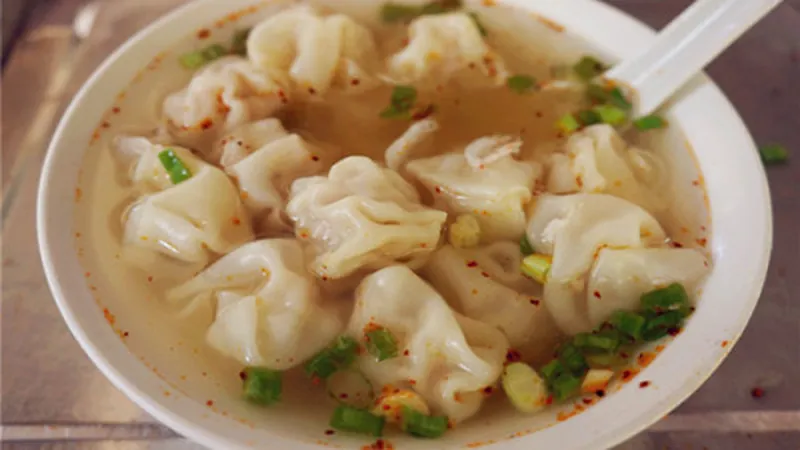
Thirty years of thin-skinned wontons and a chilli oil that defines the bowl. Order the small wontons…
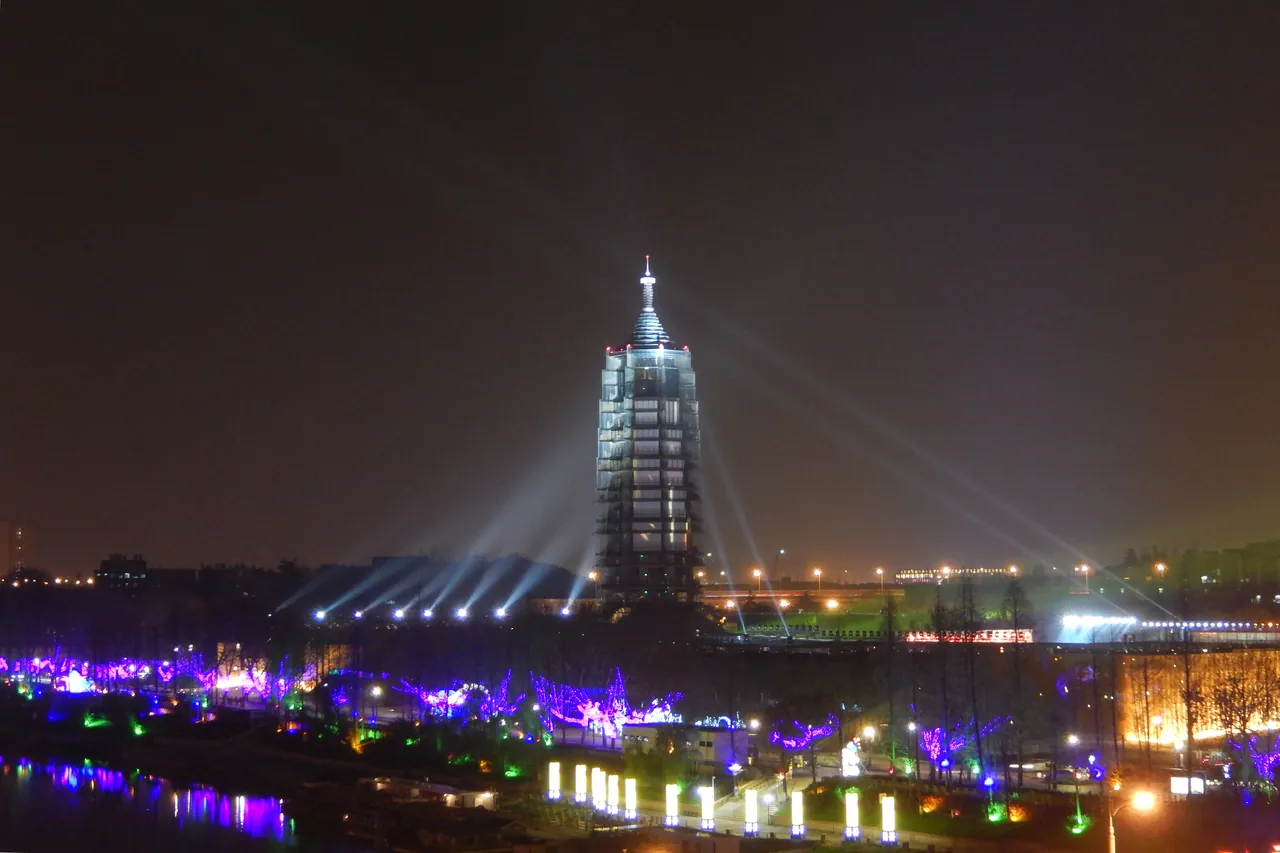
The classic: 40-odd bridges, gardens and lit facades glide past in an hour, with a recorded commentary. Buy ahead on weekends.
Restored Ming-Qing lanes where over 90% of shops stay open at night — teahouses, snack stalls, a Kunqu theatre and a live house in the same block.
Only the Zhonghua Gate section opens after dark: city lights on the outside, the black Qinhuai on the inside. 17:00–21:00 in winter, to 22:00 in summer.
Republican-era brick buildings turned into bars — jazz, craft beer, Japanese whisky, and a lot of photographers. Best after 21:00.
The Qinhuai is the spine of the evening — lit boats, red lanterns on white walls, and the old south city eating until late. Everything else hangs off that.
Listed sites and the crafts that made this city famous.
Inscribed in 2003 as part of the Imperial Tombs of the Ming and Qing Dynasties. The first Ming imperial tomb, and the one that set the layout later copied in Beijing — spirit road, stone animals, a tomb mound under a wooded hill.
Nanjing's 35 km of Ming wall is the longest surviving city wall in China; the Zhonghua Gate has four tiers of hidden chambers inside. On the UNESCO tentative list.
Figured silk woven on a 5-metre loom by two people working the top and bottom warp — an inch of cloth is worth an inch of gold. UNESCO intangible heritage.
One of the great schools of the seven-string zither, known for a clear, spare tone. UNESCO intangible heritage.
Jiangnan papercut with its own bold, rounded cuts — flowers and birds that fill the whole sheet without a gap.
Woodblock carving and printing of Buddhist texts, kept alive by the Jinling Scriptural Press since 1866.
Senior licensed guides with 10+ years in the field and fluent English — deep on history, culture and local life.

Experienced licensed guides with clear English — solid on city highlights, food and day-to-day logistics.

Licensed guides with workable English — a good-value choice for city days, transfers and standard commentary.

Chauffeur-driven by the day, plus airport and intercity transfers.



Private chauffeur-driven vehicles, priced per vehicle not per person. Airport transfer from $45; intercity transfer from $180.
10 guides split by trip length: one-day city routes, three-day escapes and longer journeys, with stops, costs and transport in each.
Sun Yat-sen Mausoleum and Ming Xiaoling in the morning, the Presidential Palace after lu
Three DaysThree Days in Nanjing: The Full Stratigraphy from Ming Wall to RepublicDay one on Purple Mountain, day two in the historic core, day three in the old south: a
Multi-DayNanjing in Five Classic Days: The Ancient Capital as Three VolumesOne volume on Purple Mountain, one downtown, one in the old south, plus a suburban day a
Real routes, real travellers — a sense of what a trip looks like.
6 days · Shanghai + Nanjing · "We came for the wall and stayed for the breakfast noodles — our guide took us to a place with no English menu and it was the best meal of the trip."
4 days · Nanjing · "Nanjing Museum on a rainy Tuesday, then the Republican street inside it. I have never seen a museum do that."
5 days · Nanjing + Yangzhou · "The Qinhuai at 9pm with the boats lit — I understood why the emperors stayed."
Most travellers spend 3 days here. Add a day for a side trip if you want a slower pace.
Spring and autumn are usually the most comfortable. Check the seasonal notes above before booking.
We arrange airport/rail transfers and private drivers. Tell us your arrival point and we plan the connection.
Send an enquiry and a human expert replies within 12 hours with a draft plan and real prices. Flexible rescheduling; clear cancellation terms in your quote.
2-day private itineraries in Nanjing start from $540 per person, two travelling together. Your proposal itemises hotels, tickets, guide and car — no hidden fees.
High-speed rail to Nanjing South is the easiest — under 1.5 hours from Shanghai, 3.5 from Beijing. The airport is 35 km out, connected by metro line S1 in about 35 minutes.
Confucius Temple / Laomendong for the old-city atmosphere and nightlife, Xinjiekou for transport and shopping. Both are on metro line 3.
Sun Yat-sen Mausoleum and Nanjing Museum are free but require booking 7 days out and release tickets at 07:00 and 18:00 respectively. The Presidential Palace needs 3 days, Niushoushan 1 day.
Nanjing Museum, Sun Yat-sen Mausoleum, the Presidential Palace and the Memorial Hall of the Victims all close on Mondays except public holidays. Plan the week around it.
15 October to 10 November — after the National Day crowds, ginkgo turning gold, 20–25°C. Spring is second, but the cherry week at Jiming Temple is packed.
Ming Xiaoling 70 CNY, Qixia Mountain 25–40, Niushoushan 98, the Presidential Palace 35–40. Sun Yat-sen Mausoleum, Xuanwu Lake, Laomendong and the Confucius Temple streets are free.
No. Metro, taxis, shops and even temple donation boxes take WeChat or Alipay. Set up Alipay's transport QR before you arrive for the metro.
It is a grave and a history museum, not an attraction — plain clothes, no bright colours, no photos inside some halls. Many families with children under 10 skip it.
Recent listed prices: Sun Yat-sen Mausoleum 免费; Confucius Temple & Qinhuai River 白天 35 元,夜晚 50 元; Ming Xiaoling Mausoleum 70 元; Nanjing Presidential Palace 35 元(淡季)/ 40 元(旺季); Xuanwu Lake 免费. Ticket prices change seasonally — we confirm them in your quote.