
With only one day in Nanjing the trade-offs are simple: the morning goes to Purple Mountain, the afternoon to the Presidential Palace, and dusk to the Qinhuai. Sun Yat-sen Mausoleum rewards an early start, since tour buses crowd the steps after 9:30; Ming Xiaoling's sacred way lies en route, and a scenic shuttle links the two without backtracking.
The day rides on the metro: enter the mountain area near Muxuyuan, reach the palace at Daxinggong, and continue to Fuzimiao from Sanshanjie, one arc from east to west then south with almost no repeated ground. Expect close to twenty thousand steps, mostly on mountain ramps, so shoes you trust matter more than anything.
Itinerary at a glance
| 08:30 | Sun Yat-sen Mausoleum: The Gate of Fraternity before the Crowds |
| 11:00 | Ming Xiaoling and the Stone Elephant Road: Six Centuries of Sacred Way |
| 14:00 | The Presidential Palace: A Century of History, Open Book |
| 17:00 | The Confucius Temple and Qinhuai River: Two Faces Around Lighting Time |
The route, stop by stop
Sun Yat-sen Mausoleum: The Gate of Fraternity before the Crowds
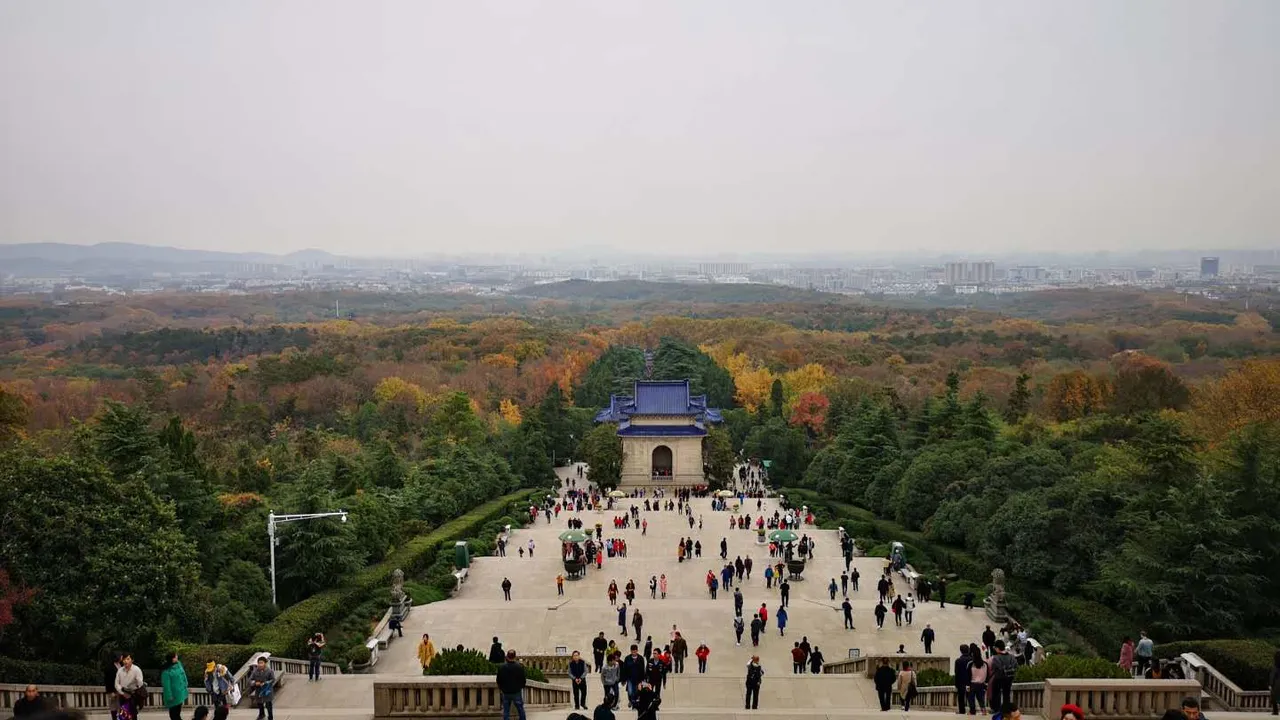
Start the day at the mausoleum. The 392 stone steps from the Fraternity Gate to the memorial hall hide a design trick: climbing, you see only steps and no landings, while looking back reveals only landings and no steps. Inside the hall a marble statue of Sun Yat-sen sits at center, the founding program carved on all four walls. The climb takes about twenty minutes, and the cedars flanking the way match the old photographs.
In the first hour after opening the hall sits nearly empty, the best window of the day. Descend by the shaded path on the east and glance at the water of Liuhui Pavilion, the quietest corner on the mountain.
Ming Xiaoling and the Stone Elephant Road: Six Centuries of Sacred Way
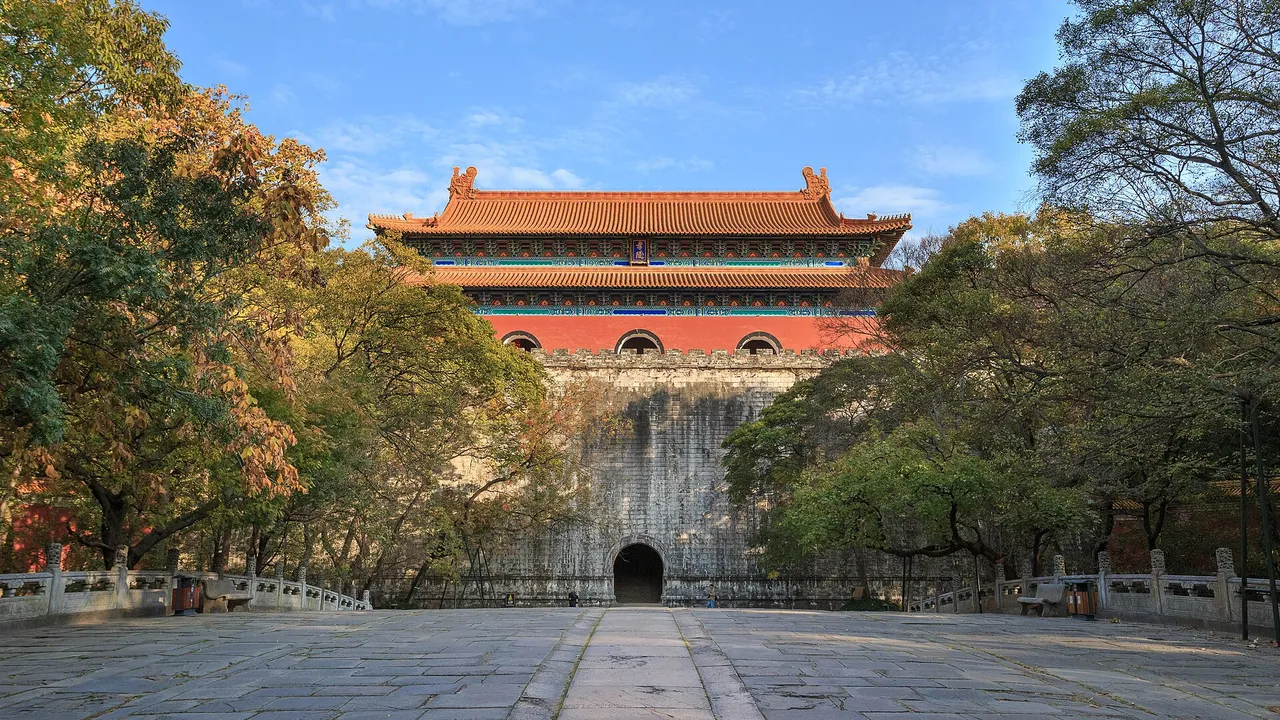
Ming Xiaoling is the tomb of Zhu Yuanzhang, founder of the Ming, and its front-court, rear-chamber layout became the template for all later Ming and Qing imperial tombs. Along the sacred way the stone beasts stand in sequence, lions, xiezhi, camels, elephants, qilin and horses, two of each, some standing some crouching; six hundred years of weather have left patina more convincing than any label.
The Stone Elephant Road peaks in autumn, when Chinese tallow and ginkgo trees gild the path in gold and deep red, an annual pilgrimage for the city's photographers. In spring, Plum Blossom Hill beside the way turns the hillside pink and white, a different mood with the same stones.
The Presidential Palace: A Century of History, Open Book
The Presidential Palace rewards layer-peeling: a Ming prince's mansion, then the Liangjiang Viceroy's office under the Qing, then the Taiping Heavenly King's palace, and in 1912 the seat where Sun Yat-sen was sworn in as provisional president. One central axis walks you through a textbook, from the old desks in Zichao Tower to the stone barge in Xu Garden.
Enter through the gatehouse, take the central axis first, then the east and west wings; two hours covers the core. History buffs should invest in the viceroy's exhibition and the provisional president's office; the pressed can choose between Zichao Tower and Xu Garden.
The Confucius Temple and Qinhuai River: Two Faces Around Lighting Time
Three metro stops from the palace sits the Confucius Temple district. By day it is an orderly scenic area; after the lamps come on, the Qinhuai plays its real show, glazed roofs of the Great Hall, lamplight on Wende Bridge, small painted boats weaving past, the same river Zhu Ziqing and Yu Pingbo wrote about, its bones unchanged. The China Imperial Examination Museum hides inside the quarter, a sunken venue with real immersion.
Dinner happens here: duck-blood vermicelli soup and soup dumplings are the standard answer, with salted duck from an old shop that vacuum-seals daily. Before leaving, take one last look at the water from Wende Bridge; Nanjing's day ends in that lamp.
| Getting around |
|
| Budget | Tickets (Ming Xiaoling about RMB 70, Presidential Palace RMB 35, exam museum about RMB 50) plus meals, roughly RMB 200-300 pp. |
| Best time | Mar-May and Sep-Nov are steadiest; autumn lights up the Stone Elephant Road best, and in summer hit Purple Mountain early to dodge the noon sun. |
FAQs
What is the least tiring transport plan for one day in Nanjing?
Ride the metro plus the mountain shuttle: Muxuyuan into the hill area, Daxinggong for the palace, Sanshanjie for the temple, with hardly any taxi need. Fit walkers can skip the shuttle entirely and save queue time instead. Downtown jams at rush hour, so metro wins on the way back.
Can I enter the mausoleum and the palace without booking?
Almost never. Both run real-name booking, with peak slots filling two to three days ahead and only leftover tickets released on site. Foreign passports book by passport number and enter with the physical document. Reserve the whole day's tickets the night before, slots ordered to your route, rather than waiting at the gate.
With one day, must I choose between the two mausoleums?
No. A shuttle links them in ten minutes and together they fill half a day neatly. The real cuts are far-flung spots like Niushou Mountain or Qixia Hill; skip them without regret and save them for next time. If hours run short, see the sacred way at Ming Xiaoling and move on, keeping the bulk for the mausoleum and the Qinhuai night.
What does this route demand in fitness and clothing?
Expect nearly twenty thousand steps with many stairs and long ramps on the mountain, so wear sneakers; carry water and a hat in summer, and a windproof layer in winter when the hill is exposed. Keep quiet inside halls and never climb the statues. The temple night market packs in crowds, so wear your backpack in front and keep documents and phones close.