
Nanjing's natural endowment is badly underrated: within one city lie hills, lakes, a great river and hot springs, with the Purple Mountain spurs half-embracing the town and the Yangtze bending north. Three days open the natural side: urban lake and hill first, then Niushou in the south and the eastern lake greenways, finally a river crossing to Yanziji, a climb of Qixia, and a soak at Tangshan.
The rhythm runs two outdoor days plus one buffer: the first two hover near fifteen thousand steps, while day three climbs in the morning and soaks in the afternoon, paying the fatigue back. Metro covers most stops; Qixia and Tangshan need a bus or taxi link, so check timetables before setting out.
Itinerary at a glance
| D1 08:30 | Xuanwu Lake: Starting with the Morning Crowd |
| D1 10:30 | Purple Mountain Greenway and Zixia Lake: Breathing in the Urban Forest |
| D1 15:00 | Yanchue and Qian Lakes: Cypress Standing in Water |
| D1 16:30 | The Nanjing Botanical Garden: A Living Library as a Park |
| D2 09:00 | Niushou Cultural Park: The Underground Palace of the Buddha Crown |
| D2 14:30 | Plum Blossom Valley and the Mausoleum Road: A Plane-Tree Tunnel |
| D3 08:30 | Qixia Hill: Autumn Color and the Thousand-Buddha Cliffs |
| D3 13:00 | Yanziji: One of the Three Great River Cliffs |
| D3 16:00 | Tangshan Hot Springs: Handing Three Days' Fatigue to Hot Water |
The route, stop by stop
Xuanwu Lake: Starting with the Morning Crowd
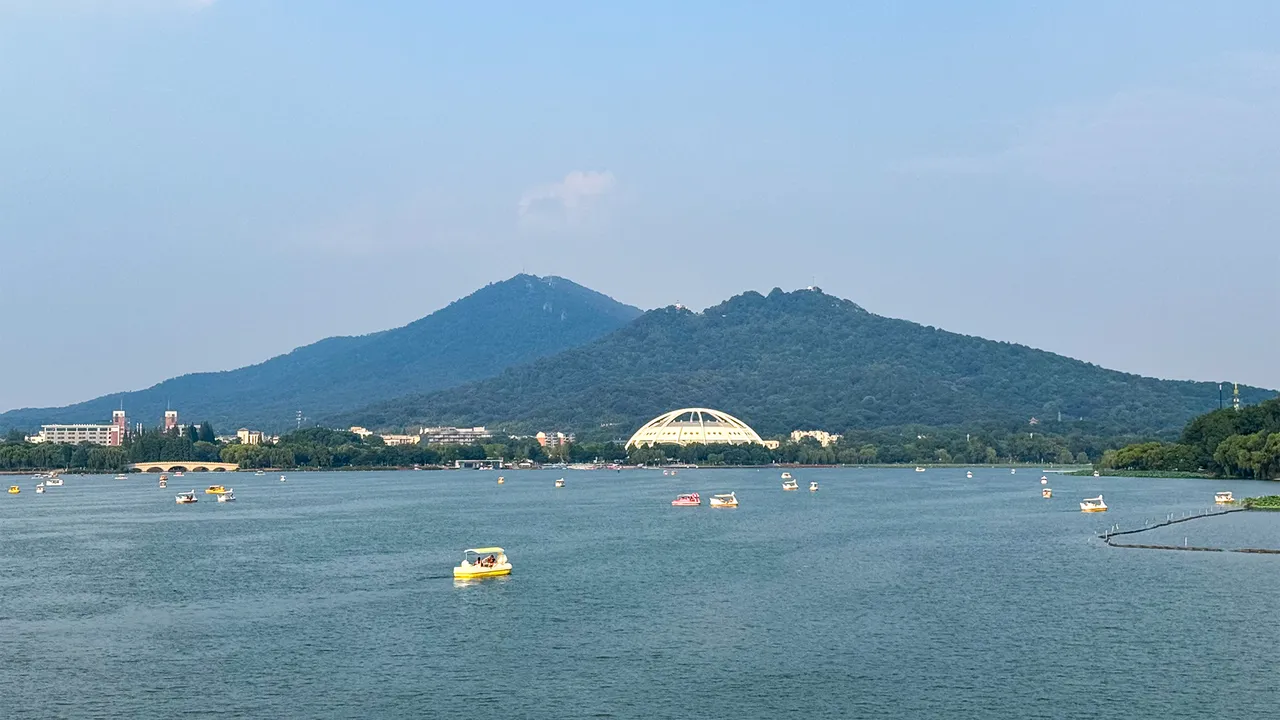
Open the nature days on the south shore of Xuanwu Lake, where the morning loop belongs to locals, joggers, tai-chi groups, strollers with birdcages. Enter at Jiefang Gate onto Yingzhou under willow shade; when the water lies flat, mirrored shots line up with Purple Mountain as the ready backdrop.
Follow the shore to Liangzhou, where bonsai courts and ginkgo rows change costume by season. Morning light softens the lake best, so walk only the south-shore-to-Liangzhou essence and save your legs for the afternoon climb. Benches abound; sit ten minutes and watch waterbirds rise and settle.
Purple Mountain Greenway and Zixia Lake: Breathing in the Urban Forest
The Purple Mountain greenway is the model of its kind nationwide, alternating rubber track and boardwalk under near-total canopy, about an hour from Pipa Lake to Zixia Lake. Tucked deep in the woods, Zixia's water glows green, swimmers claiming it in summer while shore stones serve as grandstands.
The fit push on to the Observatory, stone steps in good repair and the old dome crowning the ridge as the mountain's landmark. Otherwise double back and descend toward Yingtuocun or Pipa Lake, with hillside teahouses for a rest.
Yanchue and Qian Lakes: Cypress Standing in Water
Return to the southern foot of Purple Mountain for the bald-cypress stand of Yanchue Lake, the city's breakout natural scene: trunks rising from water, rust-red by late autumn, reflections flooding the surface. A boardwalk crosses the grove in a forty-minute loop, photographers camped along the east side.
Neighbor Qian Lake opens wider, egrets skimming at dusk. The two lie ten minutes apart on foot and merge into one evening stroll. Free entry and far quieter than the sacred way, made for seekers of calm.
The Nanjing Botanical Garden: A Living Library as a Park
A short walk south of Yanchue Lake sits the Nanjing Botanical Garden, site of China's first national botanical garden. Two sections: the old north classification quarter reads like a living library, every tree tagged with name and provenance, while the southern tropical glasshouse, heated year-round, becomes the favorite in winter.
The right way to tour it is aimless, no map, since ginkgo and Chinese tulip-tree lawns reward every season. It is the most underrated stop on the nature line, perpetually thin on crowds.
Niushou Cultural Park: The Underground Palace of the Buddha Crown
Day two's heavyweight is Niushou. The Buddha Crown Palace rises from a former mine pit, a two-hundred-meter dome inside where the reclining Buddha and the thousand-Buddha hall deliver visual force rare among Chinese sites; believer or not, you go quiet stepping in. The skull relic faces public veneration on special days.
Hongjue Pagoda and Zheng He elements share the hill; tour the palace first and the tower after, four hours overall. The grounds run vast, so the internal shuttle earns its fare.
Plum Blossom Valley and the Mausoleum Road: A Plane-Tree Tunnel
Back east of town, the afternoon walks the plane-tree greenway of the Mausoleum Road. Trees planted a century ago close their crowns overhead into kilometers of green tunnel, kind to both wheels and feet. Plum Blossom Valley flanks the road, a sea of blooms in spring and a quiet grassy basin the rest of the year.
Nothing here demands a checklist; the pleasure is rhythm of shade and grade. Rent a shared bike from Muxuyuan toward Linggu Temple, the classic local ride, loveliest against the low evening sun.
Qixia Hill: Autumn Color and the Thousand-Buddha Cliffs
Day three heads north to Qixia Hill, one of China's four great maple-viewing grounds, where autumn color climbs species by species from sweet gum to red maple, capped by a Yangtze view from the summit. Qixia Temple is a thousand-year monastery, and behind it the Thousand-Buddha cliffs, carved in the Southern Dynasties, rank among the earliest surviving grottoes south of the river.
Two routes climb: the front stone steps past Peach Blossom Ravine straight to the top, and a gentler back trail. Peak-season crowds pack the front, so the back trail buys quiet. Three hours overall, split evenly between climb and cliffs.
Yanziji: One of the Three Great River Cliffs
After descending, ride east to Yanziji, the swallow rock jutting into the Yangtze, ranked with Caishiji and Chenglingji as the river's three great cliffs. The Guanlan Pavilion at the tip is the best Yangtze perch, the water broad, freighters passing in convoys, ancient inscriptions cut into the bluff.
The park is small, an hour thorough, and links to the Mufu riverside belt, so spare legs can extend along the water. This is the only river vista of the three days, wholly unlike the city skyline.
Tangshan Hot Springs: Handing Three Days' Fatigue to Hot Water
The finale is Tangshan, one of China's four great hot-spring resorts, water holding around sixty degrees year-round with sulfur and rich minerals. The district scales from grand hotels to public pools, and the spring museum explains the geothermal story in passing.
Soak etiquette: shower first, keep each dip under twenty minutes, rehydrate between pools. Ending three days in rising steam eases the next morning's aches visibly. The drive back downtown takes an hour, and lodging in Tangshan suits an early departure next day.
| Getting around |
|
| Budget | Tickets total RMB 200-300 pp, with Niushou and the hot springs the big items; meals and transport extra. |
| Best time | Spring and autumn shine, with Qixia's red leaves peaking mid-to-late November; summer favors greenways and lakes, winter belongs to the springs. |
FAQs
Roughly how many steps per day?
Day one runs fifteen to twenty thousand with lake and hill, day two about fifteen at Niushou, day three near twelve with the climb and riverside. Short legs can drop the Observatory and the back trail and stay under ten thousand daily. Placing the springs on the final afternoon is itself part of the recovery design.
Between Niushou and Qixia, which one?
Season and taste decide: deep autumn picks Qixia without hesitation, maples being what Niushou cannot offer; other seasons pick Niushou, where the Buddha Crown Palace is visually one of a kind and indoor halls shrug off rain and heat. Doing both is ideal; the route books Niushou for ordinary seasons, with Qixia as the maple-season swap.
Is Tangshan suitable for kids?
Yes, with children's zones and cooler pools at many properties, subject to three rules: halve each soak, keep an adult alongside throughout, and wait an hour after eating. Hotels with private family pools beat the big communal baths, billed per session, weekdays running twenty to forty percent below weekends.
What does winter demand on this route?
Nanjing winters are damp-cold, feeling five degrees lower by lake and river, so windproof shell plus fleece is standard; the cypresses stay red into early December, with lake mist at dawn gifting great frames. Qixia loses its leaves but the cliffs stay open. Springs become the winter main course and can take a bigger share, with climbs moved to midday.