
The countryside hides behind the city's fame: Gaochun runs China's first international slow city, Yaxi's fields keep the imagined Jiangnan village intact, Bulao at Laoshan's foot polishes guesthouses and farmland to a shine, and Shijiu Lake's mirror-sky shots flood feeds once a year. These three days stay outside the city, pace deliberately slow.
The logic gives southeast and northwest each a day and a half: day one southeast (Niushou, Yangshan, Tangshan), day two all Gaochun, day three northwest at Laoshan. Country buses run sparse, so charter or self-drive is advised; the metro only reaches the gates, and the last leg belongs to feet and patience.
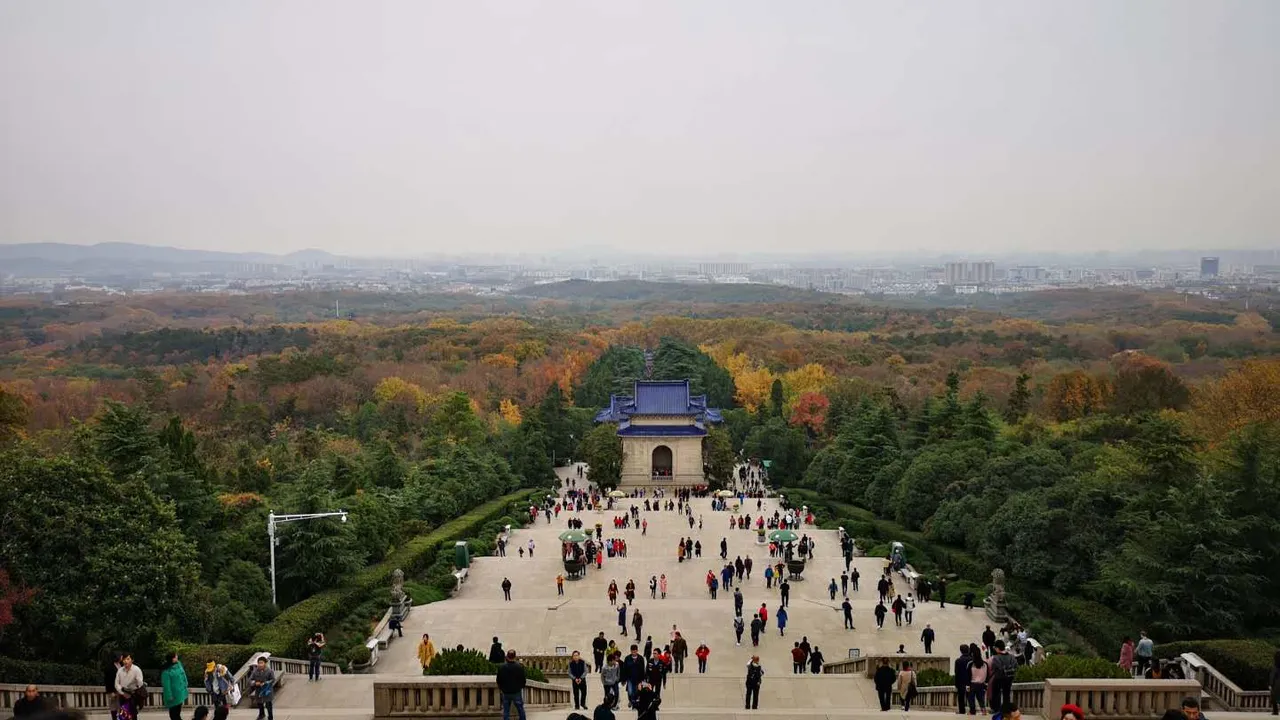
Itinerary at a glance
| D1 09:00 | Niushou Cultural Park: Opening Big |
| D1 14:00 | Yangshan Stele Quarries: A Monument Never Moved |
| D1 16:30 | Tangshan Springs: A Ritual for the First Country Night |
| D2 09:00 | Gaochun Old Street: Nine Hundred Meters of Old Shops |
| D2 11:30 | Yaxi International Slow City: Shifting Down a Gear |
| D2 15:00 | Shijiu Lake: Waiting for the Mirror of Sky |
| D3 09:30 | Laoshan National Forest Park: The Northwest Green Lung |
| D3 13:30 | Bulao Village: Living a Guesthouse Village for a Day |
| D3 16:00 | Pearl Spring Scenic Area: A Spring-Water Finale |
The route, stop by stop
Niushou Cultural Park: Opening Big
The country line paradoxically opens at Niushou, the first stop heading out of the south gate, thus en route. Mornings are thin, leaving an unhurried hour under the palace dome, with the thousand-Buddha hall richest in early light. The cherry orchard and bamboo groves claim spring in their own ways.
Seen as countryside rather than checklist, the hill reads differently: villages, tea fields and reservoirs ring it, and the shuttle reveals the mountain's ties to surrounding farms. Lunch at a farmhouse below, ordering bamboo shoots and river catch worth the table.
Yangshan Stele Quarries: A Monument Never Moved
The Yangshan stele blanks were quarried for a merit stele of the Ming's Yongle Emperor, abandoned in the mountain as too huge to move, billed the greatest stele blank under heaven. Base, body and cap stack nearly eighty meters; standing beneath the body, a person shrinks to ant size.
The site is compact, an hour through the core, with Ming quarry chisel marks crisp and clear, an overlooked gem whose visual punch rivals any flagship park. Tangshan's springs lie conveniently nearby for the afternoon.
Tangshan Springs: A Ritual for the First Country Night
Sleep in Tangshan the first night, one of China's four great spring resorts, water near sixty degrees. The district scales from grand resorts to public pools, and after the soak a country dinner in town sets the tone for the countryside nights.
Choosing logic: privacy picks a hotel's private pool, bustle picks the open-air baths, value picks the town's veteran pools. Soak rules unchanged: shower first, watch the clock, rehydrate.
Gaochun Old Street: Nine Hundred Meters of Old Shops
Day two belongs to Gaochun. The old street dates to Ming and Qing, nine hundred meters of flagstone lined with shops mixing Hui and Nanjing styles, pastries, cloth shoes, feather fans, dried tofu, mostly things locals genuinely use, lightly commercialized. The Qianlong well and a New Fourth Army site merit a passing look.
The street tastes best early, when locals crowd the market and tofu and pastries come freshest. The slow way walks it twice: once for shops, once for horse-head walls and lintel carvings.
Yaxi International Slow City: Shifting Down a Gear
Yaxi is China's first international slow city, industry-free across fifty kilometers, only tea gardens, bamboo, rice paddies and scattered villages. The right approach is bike or jog along the slow-city greenway linking village gates, rapeseed flooding the slopes in spring, golden rice waves in autumn.
Farmhouse eateries and guesthouses serve lunch in the villages: free-range chicken, dried bamboo shoots, house-brewed rice wine, portions honest. Afterward walk the tea-field ridges and watch pickers work, time moving at village speed.
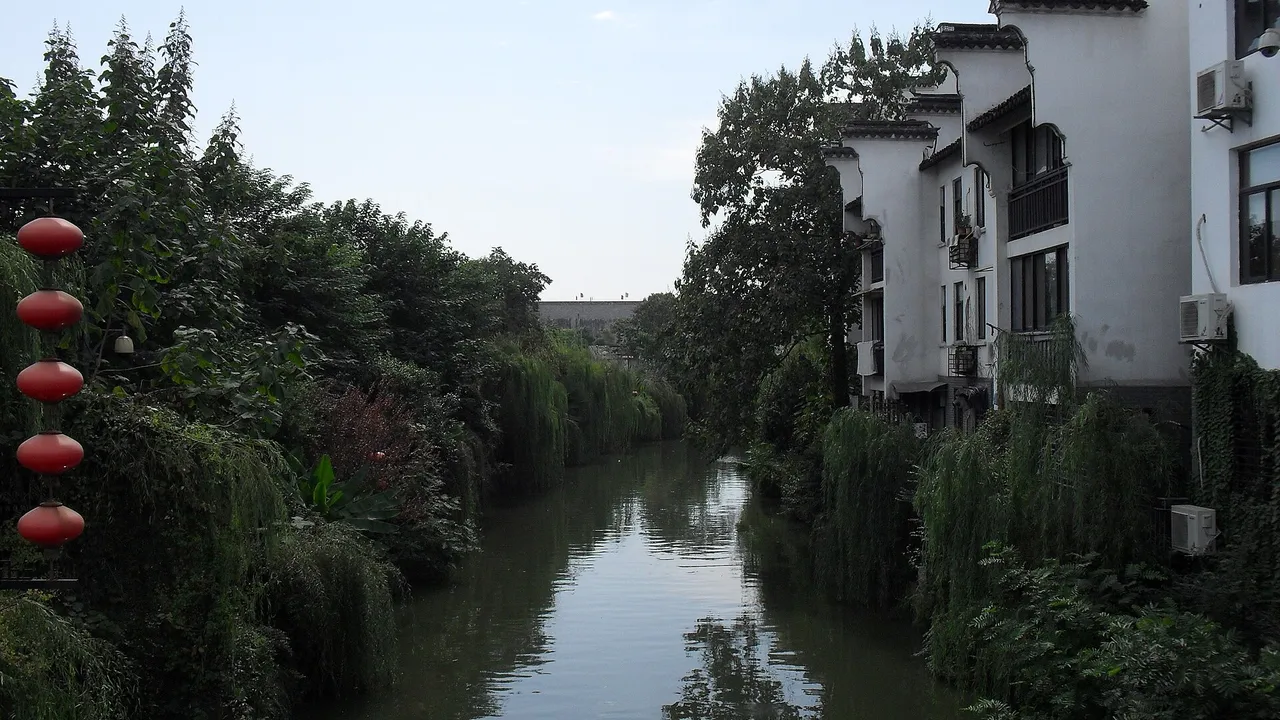
Shijiu Lake: Waiting for the Mirror of Sky
In the afternoon comes Shijiu Lake, where falling water in dry seasons leaves tidal flats mirror-flat, reflecting sky and the great lake-crossing bridge, the famed sky mirror, endlessly photogenic. Best vantage sits along the shore near the bridge, spectacular at dusk when tide and light cooperate.
Lake-viewing is weather gambling: water level, wind and cloud must all align. On windy days the chop carries its own drama, while fishing villages and reed beds suit easy walks, egrets homing at sunset.
Laoshan National Forest Park: The Northwest Green Lung
Day three swings northwest to Laoshan, forest lying between the Yangtze and downtown, the city's green lung. Trails run mature, and around Lion Ridge the main summit opens views catching both river and skyline, autumn foliage layered in stages.
Rich in negative ions, the paths never tire, built for the slowest gear. Several loops exist, a two-hour circuit sufficing for most, and village teahouses at the foot pour freshly roasted Yuhua tea.
Bulao Village: Living a Guesthouse Village for a Day
Bulao at Laoshan's foot is the city's model guesthouse village: white-walled, dark-tiled courtyards converted from old houses, with cafes, craft workshops and a paddy museum mixed in. The play is going nowhere, taking a field-side cafe for the whole afternoon, reading, idling, waiting for sunset.
Dining runs to light meals and farmhouse plates, priced slightly above town but justified by setting. To carry something home, the village produce market stocks seasonal vegetables and honey.
Pearl Spring Scenic Area: A Spring-Water Finale
Close at Pearl Spring, named for bubble strings rising like pearls from the vent, water clear to the bottom. The park adds Mirror Hill Lake and a replica long wall, family-crowded and relaxed in rhythm.
Here the country line gathers itself: springs, forest, slow city, old street and lake, the other face of Nanjing fully seen. Sum up three days on a bench by the spring, then return unhurried, the drive downtown about forty-five minutes.
| Getting around |
|
| Budget | Tickets and experiences total RMB 250-400 pp, country meals stay cheap, and RMB 500 or so buys three comfortable days. |
| Best time | Spring and autumn lead, with Yaxi's rapeseed bloom in spring and rice fields in autumn; winter shifts weight to the springs. |
FAQs
Can this route work without driving?
Yes, if you accept transfers and waiting: metro plus bus covers every stop, but sparse country schedules shave two or three effective hours a day. Compromise by halving Gaochun (old street only) and Laoshan (Bulao only), filling the rest with urban parks and greenways.
What if Shijiu Lake shows no mirror?
The mirror needs low water and windless air, so missing it is normal, no disappointment owed. The reed beds, fishing villages and sunset justify the trip alone; for serious photography check levels and forecast, with the best odds after a week of clear skies. Treat it as an easter egg, not the spine.
How does the slow city's rapeseed compare with Wuyuan's?
Wuyuan stages mountain-scale drama while Yaxi offers gentle-hill pastoral charm, different aesthetics. The slow city wins on crowds and distance: ninety minutes from downtown, no queue for viewpoints, ridges open to roam. Given one choice inside a Nanjing trip, Yaxi suffices; Wuyuan deserves its own journey.
Is the country line tiring for seniors?
Effort runs below the city line: Niushou offers shuttles, the old street and Bulao stay level, and the springs are seated activity. Watch for few rural restrooms and little shade on walks, so carry a folding stool and parasol; Niushou and Pearl Spring admit wheelchairs, and the slow-city greenway runs sightseeing carts.