
Ningbo's cultural confidence has two layers. One is the thousand-year prefecture: the governance and schooling system of county offices, Confucian temples and academies since Tang and Song, still laid out complete at Cicheng. The other is the maritime silk road: from Yue kiln celadon to the Tianhou temple at Qing'an Guild Hall, the city's wealth and faith both moved by sea. This day walks both layers.
The line runs west to east: Baoguo Temple in Jiangbei hides one of the oldest surviving timber structures south of the river; midday enters Cicheng, chaining Confucian temple, county yamen and exam hall into a lesson in the imperial civil system; afternoon bows at King Asoka Temple east of town, closing at the guild hall by the Old Bund. Metro now serves Cicheng, with taxis linking the rest.
Itinerary at a glance
| 08:30 | Baoguo Temple: A Northern Song Hall Without a Single Nail |
| 11:00 | Cicheng Ancient County: Confucian Temple, Yamen and Exam Hall |
| 15:00 | King Asoka Temple: A Thousand Years under the Relic Stupa |
| 17:30 | Qing'an Guild Hall: Where Canal Meets Sea |
The route, stop by stop
Baoguo Temple: A Northern Song Hall Without a Single Nail
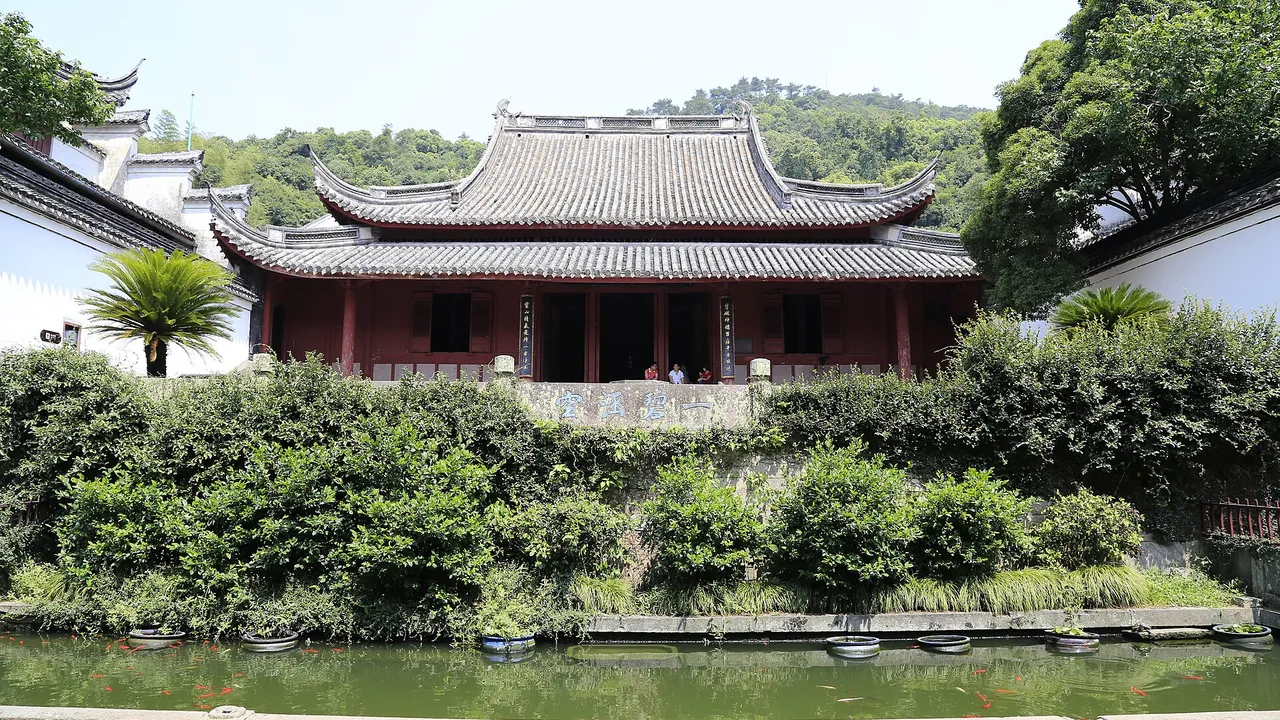
The main hall of Baoguo Temple dates to 1013, the sixth year of the Song's Dazhong Xiangfu era, among the oldest timber structures standing south of the Yangtze. Its claim is the ceiling-caisson design often called beamless: not one iron nail in the whole hall, mortise and tenon holding for a thousand years, the pierced caissons doubling as acoustic and pest-proofing devices, ancient builders answering every question with structure.
Baoguo today is a museum of historic architecture, its galleries dismantling Jiangnan timber craft before your eyes: bracket models, frame breakdowns, records of each repair. Whether or not you read architecture, ten minutes looking up at the caissons from the threshold explains what it means for structure and beauty to be one thing.
Cicheng Ancient County: Confucian Temple, Yamen and Exam Hall
Cicheng is among the most complete ancient county towns in Jiangnan, the county seat from Tang times until 1954. Its trio stands intact: the Confucian temple for worship, the yamen for justice, the exam hall for the civil service tests. Walking all three retraces a scholar's whole life, from schooling to office to examination.
The yamen is a faithful reconstruction: ceremonial gate, main hall, second hall and inner quarters in sequence, with concrete displays of the legal offices and jail. The exam hall preserves the numbered cells where candidates lived two nights and three days, their cramped desks still legible. Cicheng's rice cakes are the town's card, so lunch on a bowl of rice-cake soup in town.
King Asoka Temple: A Thousand Years under the Relic Stupa
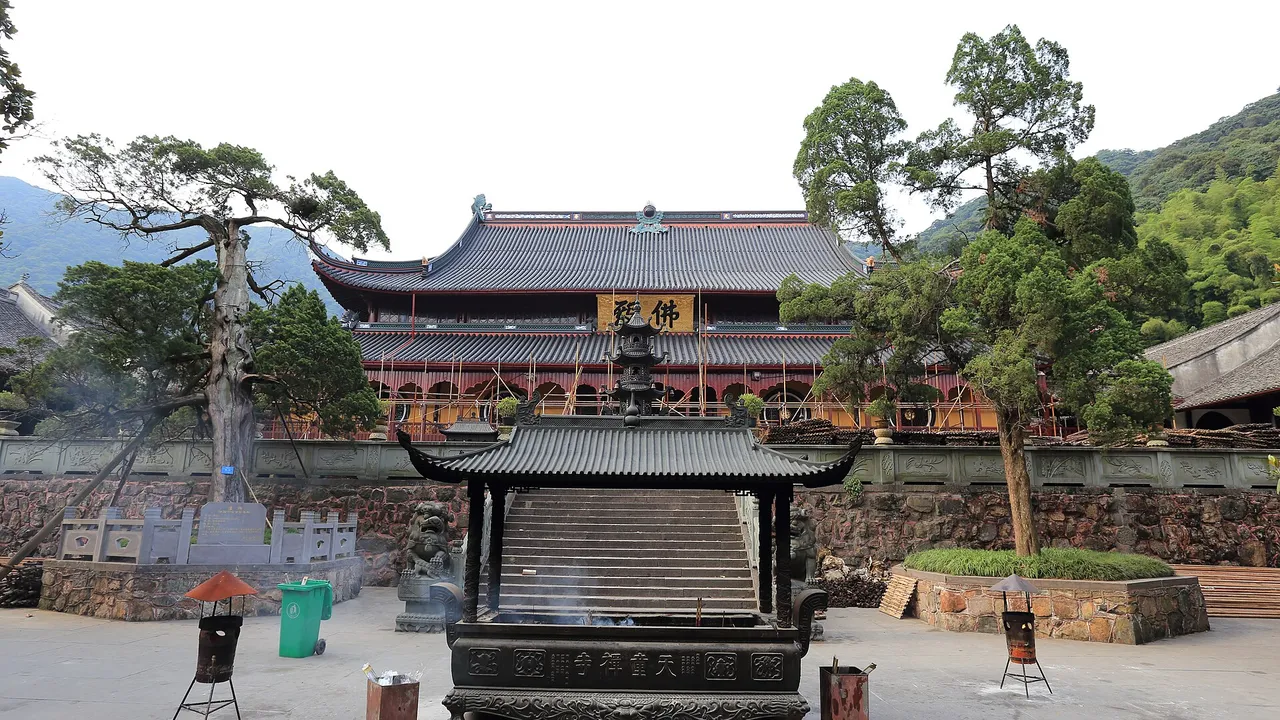
Forty minutes by taxi from Cicheng stands King Asoka Temple, a Jin-era monastery named for the Buddha relic stupa it houses, counted with Tiantong and Qita among Ningbo's three great temples. The original axis survives: Heavenly Kings Hall, Great Hall and Relic Hall climbing the slope, most timber Qing-era restorations yet the mountain gate keeps its old dignity.
The carved wooden relic stupa in the Relic Hall is the temple's treasure, with worshippers circling it in a steady line. The visiting experience differs wholly from ticketed sights: quiet, plain, scented only by incense and tree shade. A path behind climbs Yuwang Hill for a panorama of the roofs before descending.
Qing'an Guild Hall: Where Canal Meets Sea
The day closes at Qing'an Guild Hall beside the Old Bund. This Tianhou temple was built by Qing-era shipping merchants as both a shrine to Mazu and a meeting house for northern and southern boat fleets, marking exactly what Ningbo was in Chinese water transport: the Grand Canal's southern terminus and a departure port of the maritime silk road.
The galleries trace shipping and Mazu faith, but the building is the exhibit: carved brick gate, gilded wooden opera stage, pierced stone windows, gathering Ningbo's three carving arts in one courtyard. As dusk empties the hall and the stage glows gold-red, look back over the day: timber hall, academy, temple, guild hall, one continuous cultural line.
| Getting around |
|
| Budget | Tickets total about RMB 60-100 pp (mostly Baoguo Temple and the Cicheng combo), with meals and transport adding RMB 80-120. |
| Best time | Year-round, mostly indoors; some sites close Mondays, and King Asoka Temple draws extra worshippers on the lunar first and fifteenth. |
FAQs
Are four stops in one day too rushed?
Tight but workable, provided you merge lunch into the Cicheng visit instead of returning downtown to eat. To loosen, drop King Asoka Temple, stretch Baoguo and Cicheng through midday, and close at the guild hall by three, doubling the ease. Culture devotees should keep all four; general visitors, three.
What is the smoothest way between Baoguo, Cicheng and King Asoka?
Cicheng rides metro line 4 direct; the rest goes by taxi, about forty minutes downtown to Baoguo, fifty from Cicheng to King Asoka, thirty on to the Old Bund. A half-day hire suits bigger groups, pricing close to stacked taxis for two or three, with the driver waiting at each gate instead of hailing anew.
Does this culture route suit children?
Good for primary school age and up. The exam hall's period scenes engage children most, the yamen's court reenactments hold attention best, and Baoguo becomes a game of finding the nailless hall with an audio guide. King Asoka Temple demands quiet, so set the rule beforehand. The day carries long rides, so plan for motion sickness and rest between the two long legs.
What tickets and bookings need advance prep?
Cicheng's combo sells on site, though holiday online tickets skip queues; Baoguo sells at the gate; the guild hall is free but some hours require registration, so carry identification. Most venues close Mondays except holidays, so verify opening days before planning. Tripods face wide restrictions at temples and heritage sites, a long lens beats a tripod here.