
Ningbo's interior splits along two lines: the rice-farming civilization of seven thousand years on the Yao river plain, and the bamboo and villages of the Siming range. This three-day line walks both: day one reading county institutions at Cicheng and Song timber at Baoguo; day two at Hemudu for the origins of rice cultivation and in Yuyao town for Wang Yangming; day three into the Siming Mountains, ending under persimmon trees at Persimmon Grove village.
The first two days run gentle, the third carries mountain roads with sharp bends, so drive carefully or hire a driver who knows them. Mountain day-night swings demand a jacket in every season, village guesthouses improve year by year, and peak weekends need advance booking.
Itinerary at a glance
| 第1天 09:00 | Cicheng Ancient County: A Day in County Institutions |
| 第1天 14:00 | Baoguo Temple: A Song Hall in the Woods |
| 第1天 17:00 | Night in Yuyao: A Bowl of Yellow Croaker Noodles |
| 第2天 09:00 | Hemudu Site: Rice from Seven Thousand Years Ago |
| 第2天 13:30 | Wang Yangming's Residence and Yangming Old Town |
| 第2天 16:30 | Siming Lake's Red Cedars: Metasequoia at Dusk |
| 第3天 08:30 | Lianglong Town: Rice Cake Squares and Revolutionary Sites |
| 第3天 10:30 | Siming Mountains National Forest Park: Bamboo and Mountain Wind |
| 第3天 14:00 | Dan Mountain Red Waters and Persimmon Grove Village: The Full Stop |
The route, stop by stop
Cicheng Ancient County: A Day in County Institutions
Starting the countryside line at Cicheng has an advantage: finish institutional China first, then enter landscape. The temple, yamen and exam hall chain takes about three hours, the yamen layout and exam cells most rewarding. Crowds thin here, so slow down and wander the old lanes.
Lunch on Cicheng rice cakes, in soup, as dumplings or stir-fried with swimming crab. The town's small kitchens pound cakes fresh daily, a difference one bite reveals over supermarket versions.
Baoguo Temple: A Song Hall in the Woods
Baoguo sits half an hour's drive from Cicheng. The hall's year 1013, its nailless joinery and pierced caissons make the craft high point of the whole countryside line, thirty minutes that outclass everything. The architecture museum explains bracket and frame, and the real thing reads wholly differently after.
The woods run cool, making this the right summer afternoon station. Before leaving, look from the platform outside the gate across the Yao river plain, where tomorrow's Hemudu lies.
Night in Yuyao: A Bowl of Yellow Croaker Noodles
Sleep the first night in Yuyao town, banking the whole of tomorrow morning. Yuyao's dinner options outrun expectations, the local signature yellow croaker noodles: small croakers pan-fried for broth, noodles drinking the freshness, RMB 20-40 a bowl. Afterward stroll the Shun riverbank and watch Tongji bridge at night.
Yuyao is Wang Yangming's birthplace, and the town's bookshops and curio stalls carry traces of his school, worth a browse for humanities-minded guests.
Hemudu Site: Rice from Seven Thousand Years Ago
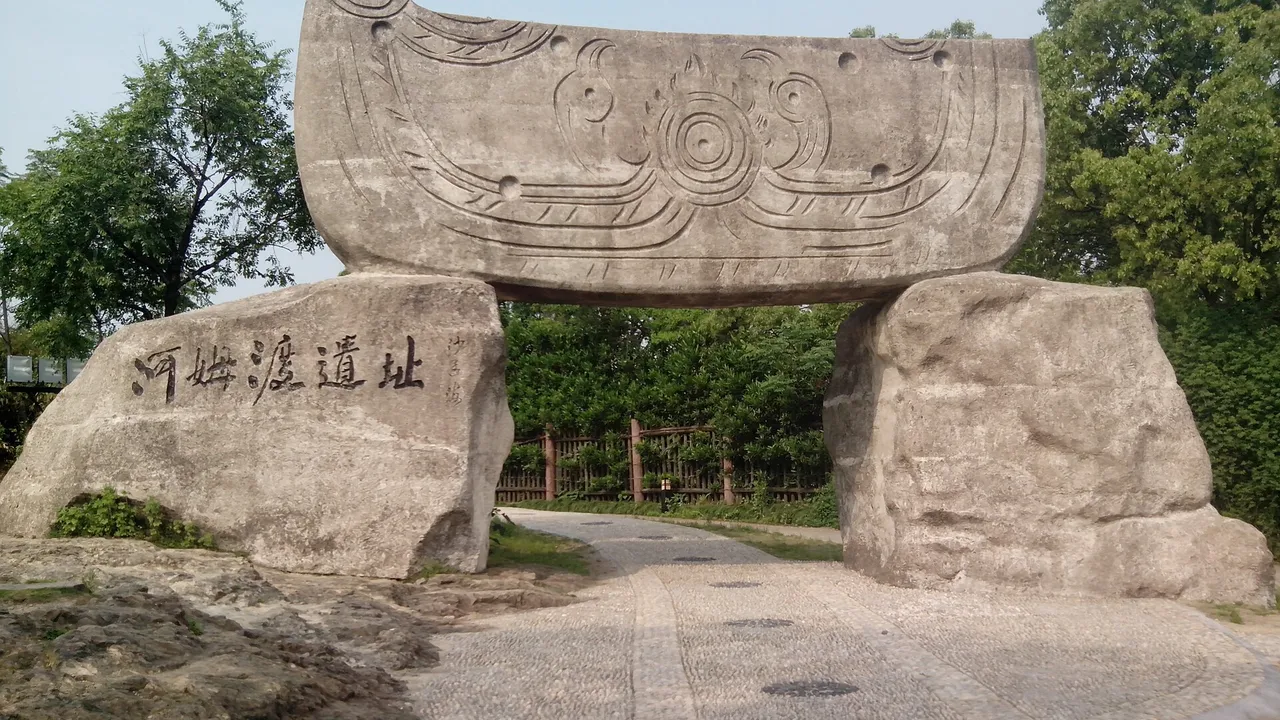
The Hemudu site museum is the line's academic anchor. Excavations from 1973 unearthed carbonized rice, piles of stilt-house architecture and bone spades, pushing rice cultivation in the Yangtze basin back seven thousand years and rewriting the central-plains narrative. The restored paddies and timber members display vividly.
The museum is free, with the site park beside it and a reconstructed stilt longhouse you can enter to read the structure. Two hours all told, after which the phrase land of fish and rice carries entirely new weight.
Wang Yangming's Residence and Yangming Old Town
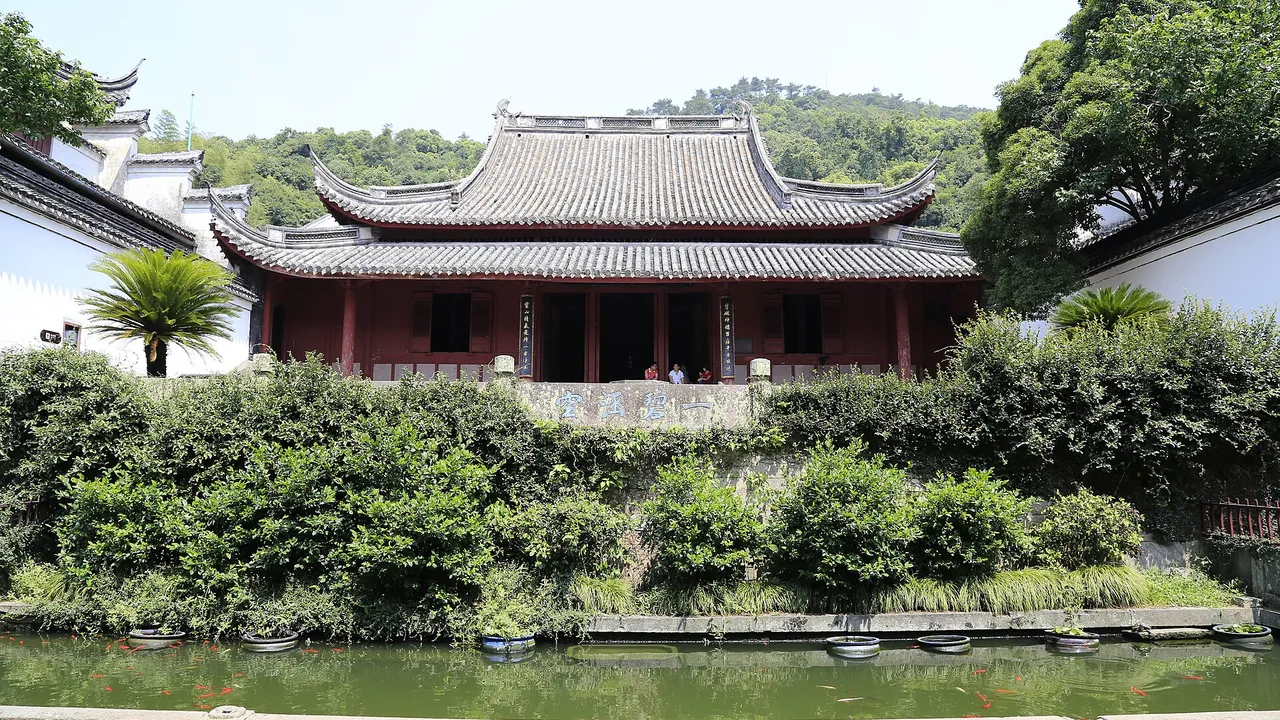
Afternoon returns to Yuyao town for Wang Yangming's residence, a rebuilt compound whose displays trace his life and the line of his learning, with the story behind unity of knowledge and action told plainly on the panels. Free entry, about an hour.
Yangming old town beside it stretches along the river, its restored lanes mixing bookshops, teahouses and design goods with more restraint than most retro quarters. An hour in a riverside teahouse watching the stone piers of Tongji bridge and the current is the best rest stop of this humanities line.
Siming Lake's Red Cedars: Metasequoia at Dusk
At dusk drive toward Lianglong, where the metasequoia stand by Siming Lake is Yuyao's photogenic darling: whole groves rising from shallow water, turning red-brown in autumn and winter, the reflections reading like oil painting. The best light is the slant before dark, with a lakeside path reaching the grove's edge.
Peak red runs mid-November into early December; other seasons the cedars stay green and the show softens, though the lake and sunset remain. Sleep in Lianglong town or a mountain guesthouse to bank time for day three.
Lianglong Town: Rice Cake Squares and Revolutionary Sites
Day three opens with humanities at Lianglong, the wartime center of the East Zhejiang base area, its site cluster intact and the exhibition hall free. The town's rice cake squares hold national intangible-heritage status: glutinous flour around red-bean paste, sixteen neat squares a tray, steamed to order, sweet but never cloying.
Buy from the town's established houses, steamed fresh, about RMB 10-20 a tray, two trays provisioning three days nicely. Finish all last supplies here too, as mountain prices and options run thin.
Siming Mountains National Forest Park: Bamboo and Mountain Wind
The mountain road climbs about an hour, temperature dropping several degrees as bamboo thickens from scattered to continuous. The park's core is forest and lookout decks, its trails all easy, half an hour's walk reaching quiet cedar stands.
Late autumn and winter bring fog; in poor visibility skip the lookouts, as the forest paths lose nothing. In summer this is Ningbo's cooling retreat, low twenties in the hills when the plains hit the thirties.
Dan Mountain Red Waters and Persimmon Grove Village: The Full Stop
The last stop is Dan Mountain red waters at Persimmon Grove village, named for persimmon trees over the hills, its houses classic Siming stone-walled old builds. The stream runs beneath red cliffs, the name earning itself. In autumn fruiting season the whole village hangs with orange lanterns, the line's annual high point.
The gorge trail takes about ninety minutes, then return to the village for high-mountain tea and a few jin of picked persimmons in autumn as farewell gifts. The descent to Ningbo runs about two hours, leaving all the day's fatigue in the hills.
| Getting around |
|
| Budget | Three days of tickets total about RMB 150-200 pp, meals RMB 200-350, transport RMB 200-350. |
| Best time | Apr-May and Oct-Nov best: mountain cherry and tea terraces in spring, persimmons at the village and red cedars at the lake in autumn; mountain roads can ice in winter. |
FAQs
Country line or coast line, how to choose?
By season and taste: for seafood in Sep-Oct take the coast; for autumn color take this line, persimmons and red cedars both in window. Seniors and kids, or anyone wary of mountain roads and ferries, belongs here, no boats and controllable pace; sea and geology lovers with good legs take the coast. With time for both, coast first, then countryside, catching seafood and persimmons alike.
Is self-driving in the Siming Mountains safe?
Main roads run good but bendy and steep, so novices should slow, honk on blind corners and never cross the centerline. Winter and early-spring mornings can bring ice and fog patches, check road notices before departure, and when visibility drops under a hundred meters, wait it out. Lacking confidence, hand the mountain legs to a hired driver, RMB 500-700 with waiting, a better experience than white-knuckle driving.
What about tickets and closing days at Cicheng, Baoguo and Hemudu?
Cicheng's combo runs RMB 60-80 and Baoguo about 20, both buying on site; the Hemudu museum is free but closed Mondays, with parts of Cicheng and Baoguo resting Mondays too. Check opening days before fixing the three-day order, swapping Mondays for villages and old streets en route.
What is lodging like in the mountains?
Guesthouses around Lianglong and Persimmon Grove have visibly upgraded, clean twin rooms, hot water and breakfast now standard, RMB 200-400 on weekdays, doubling on red-cedar and persimmon weekends with advance booking required. Quality-sensitive travelers can invert the plan: mountains by day, sleep in Yuyao or Ningbo, at the cost of longer day-three drives.