
A day in Taiyuan begins twenty-odd kilometers southwest of downtown at Jinci. China's earliest surviving ancestral garden-temple keeps the Song-era Hall of the Holy Mother, more than forty Song clay attendant figures, a locust tree said to date to the Western Zhou, and the Never-aging Spring in one courtyard: Shanxi's opening lecture for any visitor.
Morning at Jinci, midday on the winding road to the Tianlongshan Grottoes, afternoon back at the Shanxi Museum by the Fen River for the bird-shaped zun, evening in downtown Zhonglou Street. Taxis save the most time and buses cost the least; the whole line is reverse-engineered from opening hours so the pace neither rushes nor idles.
Itinerary at a glance
| 08:00 | Jinci Temple: The Holy Mother Hall, the Flying Bridge and the Never-aging Spring |
| 12:00 | Tianlongshan Grottoes: Eastern Wei and Tang at the End of the Mountain Road |
| 15:30 | Shanxi Museum: An Afternoon with the Bird Zun |
| 19:00 | Zhonglou Street and the Food Street: Closing under the Lights |
The route, stop by stop
Jinci Temple: The Holy Mother Hall, the Flying Bridge and the Never-aging Spring
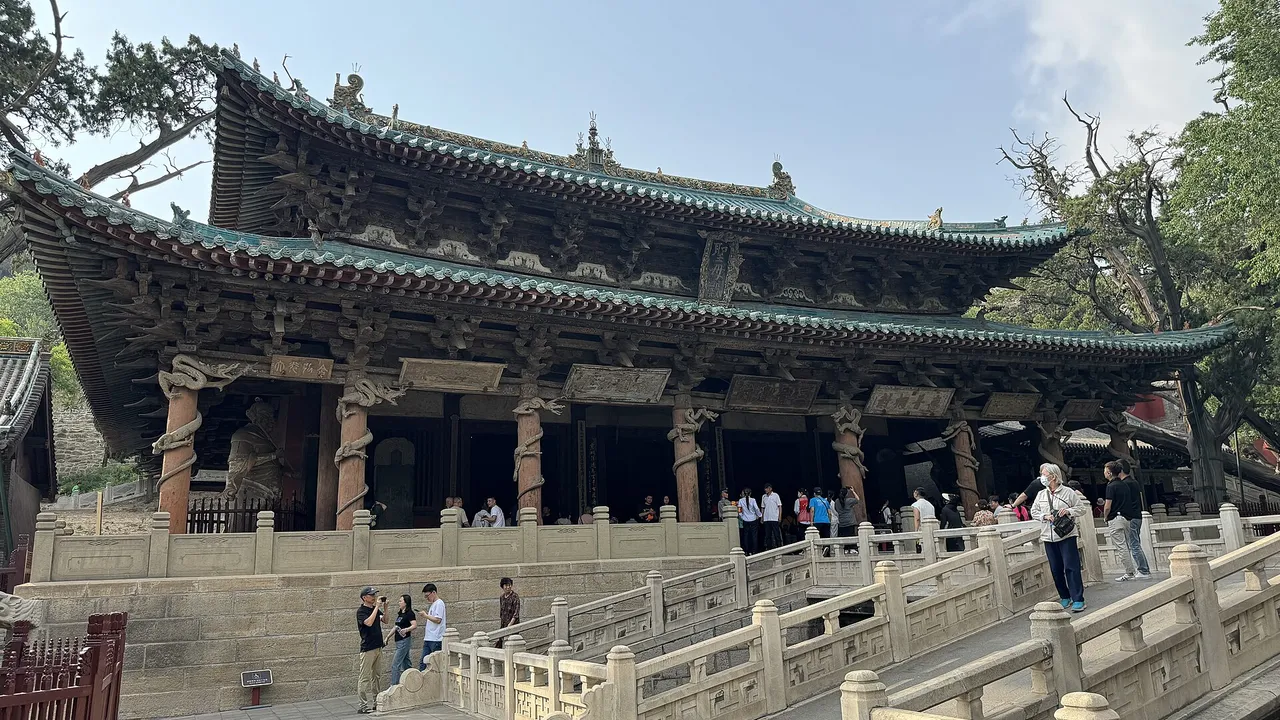
Head straight for the Hall of the Holy Mother at the deep end of the central axis. Eight wooden coiled dragons wrap the front columns of this Northern Song hall, and inside stand more than forty clay attendants from the Song, each face its own mood: a three-dimensional archive of court life and the first of Jinci's three wonders.
Outside waits the Fish Pond and Flying Bridge, a cross-shaped span over a square pool that architectural historians call unique among ancient bridges; west of the pool the Never-aging Spring still runs beneath its pavilion, with the ancient Zhou locust leaning beside it. Add the Offering Hall and the Iron Men terrace and two hours covers every highlight.
Tianlongshan Grottoes: Eastern Wei and Tang at the End of the Mountain Road
From Jinci turn south up Tianlongshan, where the road coils along the ridge to caves cut from the Eastern Wei through the Tang. The carving is prized for its elegant lines; the Northern Qi Buddha head of Cave 8, repatriated after nearly a century abroad, now rests in its original home and rewards the longest stop.
The caves split between eastern and western peaks linked by boardwalks; an hour covers the main niches. Descend by the other road for views over the old Jinyang plain, and in October the smoke-tree foliage turns the whole mountain into the locals' private autumn.
Shanxi Museum: An Afternoon with the Bird Zun
Back in town, give the afternoon to the Shanxi Museum. The main building reads as a dou vessel braced by four tripod corners; the bird-shaped zun of the Jin marquises anchors the collection, flanked by the dragon-headed gong, the Houma covenant tablets and Northern Wei lacquer panels, three thousand years packed into four floors.
Short on time, take two lines: the bronze galleries for the evolution of ritual patterns, and the Northern Dynasties hall for the age of Pingcheng. The bird zun figurine in the museum shop is Taiyuan's most presentable souvenir.
Zhonglou Street and the Food Street: Closing under the Lights
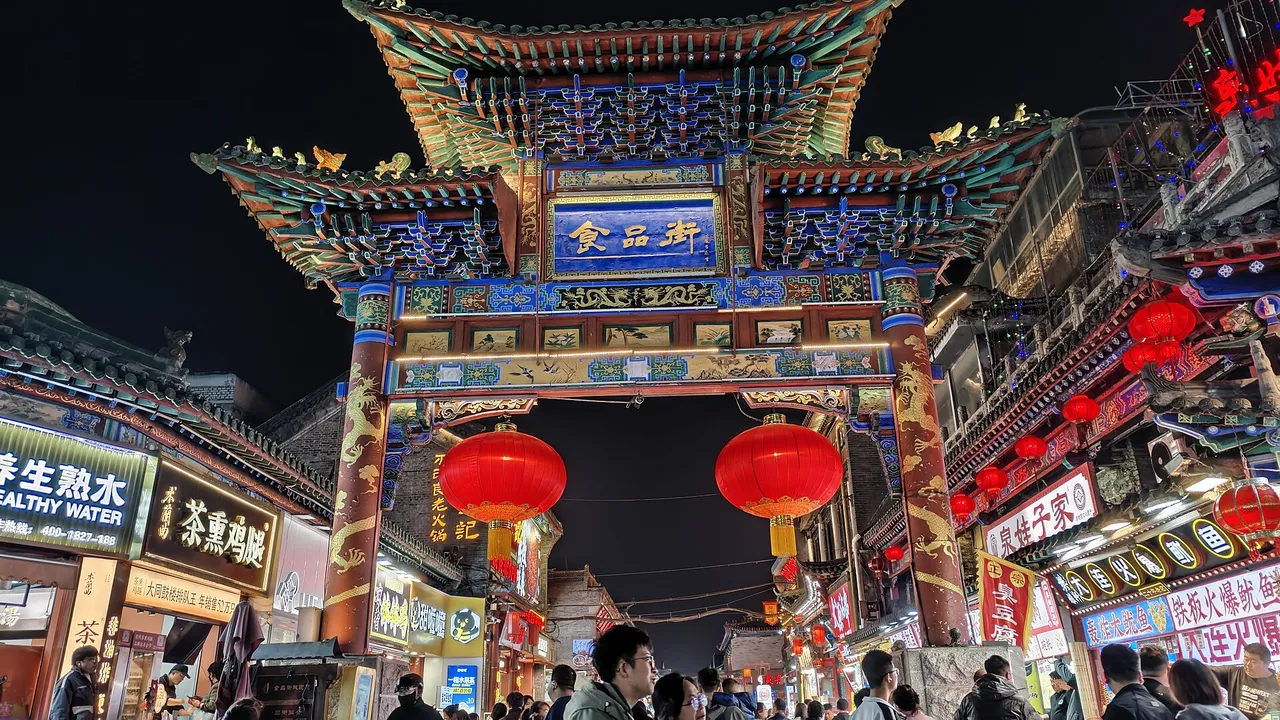
By evening you are back downtown, one step from Zhonglou Street via metro line 2. Renovated shopfronts line the block, veterans like the Laoshuku yuanxiao stall and Liweizhai deli still in their old spots; next door the Food Street has just switched on, with sugar painting, copperware and vinegar stalls in a row.
Dinner happens here: a bowl of lamb offal soup or rice topped with the classic vinegar pork, then a plate of sugar-rolled yuanxiao. In the right season, taxi to the Fen River afterward and watch both banks light up, the local way to close a day.
| Getting around |
|
| Budget | Jinci entry is RMB 80; with the Tianlongshan shuttle, transport and meals, the full day runs about RMB 280-420 per person. |
| Best time | April to June and September to October are the steady months; the Shanxi Museum closes Mondays, so plan around it. |
FAQs
What is the easiest way from downtown to Jinci?
For two or three people, take a taxi: about forty minutes each way and the least hassle. On a budget, bus 308 reaches Jinci Park followed by a ten-minute walk, over an hour in total. The last return bus runs early, so book a ride if you leave late.
Do Jinci and the Shanxi Museum need reservations?
Jinci charges RMB 80 with online tickets skipping the queue, though the counter stays open. The Shanxi Museum is free but strictly by real-name reservation, closed Mondays. Slots tighten in peak season, so book three days ahead and build the itinerary around the confirmed date.
If I can only pick one, Tianlongshan or the Mengshan Great Buddha?
First-timers should pick Tianlongshan: the carvings span more centuries, the summit views are better, and it chains naturally with Jinci. The Mengshan Great Buddha wins on sheer scale and pairs well with Jinyang Lake as a separate half day; do not force both into one day.
What should I wear and eat on this one-day route?
Shanxi swings between day and night temperatures, so carry a jacket in spring and autumn; Jinci and Tianlongshan are all steps and mountain paths, wear real shoes. Noodles and aged vinegar sneak up on newcomers, so start with soup on the side and one bowl of knife-cut noodles, not three dishes at once.