
Five days stretch the three lines of a Taiyuan day into full walks: the southwestern mountains with Jinci, Tianlongshan and Mengshan for two days, a museum day for the underground Shanxi, a day in the old city finishing the Ming heritage, then south to Qi county and Pingyao for the close.
This is the greatest-common-denominator version for first visits: every stop headlines its own category, and cutting any one stings. The hill lines take the two heaviest opening days, museums and the old city hold the middle, and Pingyao closes.
Itinerary at a glance
| Day 1 · 09:00 | Jinci Temple: The Song Attendants and the Never-aging Spring |
| Day 1 · 15:00 | Taiyuan Ancient County Town: An Afternoon on Ming Ramparts |
| Day 2 · 08:30 | Tianlongshan Grottoes: Eastern Wei Figures on the Mountain Road |
| Day 2 · 14:00 | The Mengshan Great Buddha: A Northern Qi Cliff in the Afternoon |
| Day 3 · 09:00 | Shanxi Museum: From the Bird Zun to the Yu Hong Sarcophagus |
| Day 3 · 14:00 | China Coal Museum: One Hour Down the Shaft |
| Day 3 · 19:00 | The Fen Riverside: A River Close to Museum Day |
| Day 4 · 09:00 | Yongzuo Twin Pagodas: The Summit of Ming Brickwork |
| Day 4 · 11:00 | Chongshan Temple and the Confucian Temple: Two Ritual Compounds, One Lane |
| Day 4 · 15:00 | Zhonglou Street and the Food Street: Closing the Old-City Day |
| Day 5 · 09:00 | The Qiao Family Compound: A Textbook of Merchant Mansions |
| Day 5 · 13:30 | Pingyao Ancient City: Wall, Draft Bank and the Ming-Qing Street |
The route, stop by stop
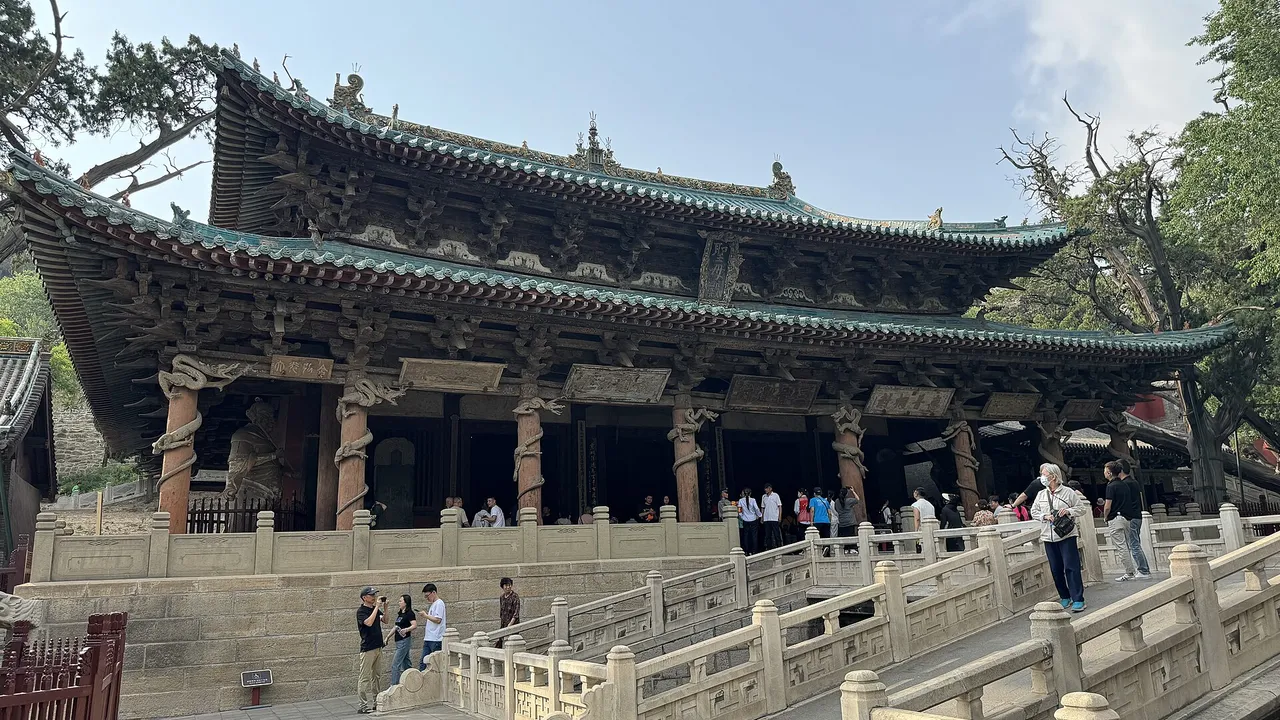
Jinci Temple: The Song Attendants and the Never-aging Spring
Five days open at Jinci. The forty-plus Song clay attendants in the Holy Mother Hall, the Flying Bridge before it and the Zhou cypress by the spring form the three wonders, with two hours covering the axis from the Iron Men terrace to the deep end.
Morning light slants into the gallery porch, the best hour for the wooden dragons and clay detail. Even without an architecture habit, the value is originality: every beam you see is nine hundred years old.
Taiyuan Ancient County Town: An Afternoon on Ming Ramparts
In the afternoon, return to the county town in Jinyuan. Sharing the southwestern line with Jinci, this Ming county keeps its cross streets and four quarters intact, and half a wall circuit digests lunch nicely.
The dusk moat-and-tower shot is day one's climax; the town's Confucian and city-god temples deserve twenty minutes each, setting up a neat scale contrast with the prefectural halls to come.
Tianlongshan Grottoes: Eastern Wei Figures on the Mountain Road
Day two's mountain line opens at Tianlongshan. Cut from the Eastern Wei through the Tang, the figures carry elegant lines, and the repatriated Northern Qi Buddha head of Cave 8, among the most celebrated returns in recent years, displays beside its original home.
Boardwalks join the twin peaks, ninety minutes for the main caves. The slanted morning light models every drapery fold, so photographers should linger here.
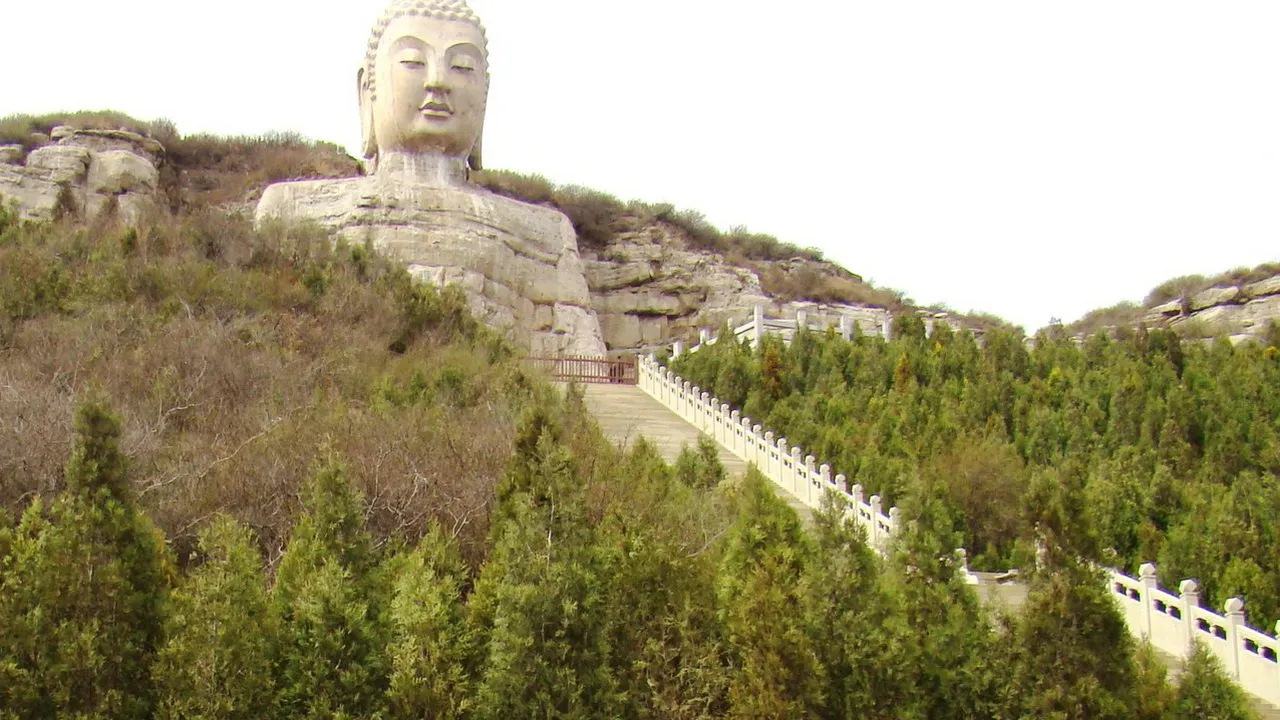
The Mengshan Great Buddha: A Northern Qi Cliff in the Afternoon
Descend from Tianlongshan toward Mengshan. Carved from the cliff in the Northern Qi Tianbao era, the Buddha tops sixty meters including the restored head, a century older than Leshan's; from the afternoon worship platform the face reads complete within the mountain's shadow.
The approach climbs along a stream, and the twin Northern Song Lianli towers by the temple form a shape rare in North China. Afternoon light from the west picks out every chisel mark on the cliff.
Shanxi Museum: From the Bird Zun to the Yu Hong Sarcophagus
Day three's morning belongs to the Shanxi Museum. The bird zun, the Houma tablets and the Yu Hong sarcophagus are the compulsory three, and the chronological galleries slot Jinci and the grottoes of the past two days into a far larger frame.
Two lines repay the closest study: the evolution of bronze patterns and the Northern Dynasties fusion hall. Lunch in the Changfeng district, since the afternoon stops cluster nearby.
China Coal Museum: One Hour Down the Shaft
Give the afternoon to the sea of coal. The simulated shaft is the museum's main event: helmet on, ride the mine car into a full-scale tunnel with the working face running overhead, the most direct hour available into Shanxi's economic bedrock.
The surface galleries cover coal's formation and the history of mining, and the ancient coal-carving room is small and delightful. Families run past two hours here; solo visitors can hold it to ninety minutes.
The Fen Riverside: A River Close to Museum Day
Evening closes on the west bank of the Fen. Step onto the path near the museum's riverside stretch, where sunset and the light ribbons warm the water, trading a day of gallery walls for the sound of the river.
Summer runs boats, autumn and winter host geese and ducks. Dinner sits conveniently in the west-bank malls, twenty minutes back to old-town hotels.
Yongzuo Twin Pagodas: The Summit of Ming Brickwork
Day four returns to the old-city line, starting with the twins. The two Ming brick pagodas of Yongzuo top fifty meters, every timber detail ground out of brick; climb the spiral and watch old and new skylines alternate through the window slots.
The famous Zixiaxian peony blooms in late April, flowers and pagodas in one classic frame. Mornings are quiet, no queue for the climb.
Chongshan Temple and the Confucian Temple: Two Ritual Compounds, One Lane
From the pagodas, fold back to the old city's southeast. Chongshan's Dabei Hall stands as early-Ming fabric, its thousand-armed Guanyin over eight meters with six hundred years of unbroken incense; three minutes away the Confucian Temple, now the Shanxi Archaeology Museum, keeps a complete axis of Lingxing Gate to Dacheng Hall.
Ninety minutes covers both: sculpture and trusses at the temple, courtyards and stelae at the Confucian compound, motion and stillness in neat complement.
Zhonglou Street and the Food Street: Closing the Old-City Day
Mid-afternoon slows the pace back on Zhonglou Street. The veterans line up, Laoshuku yuanxiao, Liweizhai, Shuanghecheng, with dinner on the Food Street, lamb offal soup or the vinegar pork over rice.
Afterward, taxi to the Fen for the night lights or head straight back to pack for the Pingyao day. This is the trip's midpoint, and any shopping gaps fill here.
The Qiao Family Compound: A Textbook of Merchant Mansions
Day five runs south to Qi county. Six courtyards step along the central lane at the Qiao compound, brick carving, woodwork and painting denser than any peer among merchant mansions, two hours from gatehouses to the boudoir tower.
After days of temples and yamen, this completes the domestic chapter, the family half of merchant culture. Groups flood in after nine, so enter at opening.
Pingyao Ancient City: Wall, Draft Bank and the Ming-Qing Street
Arrive after lunch to close the trip. Climb a stretch of wall to read the tortoise-shell plan, then West Street's Rishengchang for the cipher system of China's first bank, finally drifting down the Ming-Qing street to the city tower.
The tower lit at dusk is Pingyao's most photogenic minute. If time allows, stay the night: the town after dark is a different city, the pass holds three days, and there is no need to rush back.
| Getting around |
|
| Budget | Entries total about RMB 500-600; five days with transport and meals run RMB 1,600-2,400 per person. |
| Best time | May and September-October are best; the museum closes Mondays, and Pingyao rewards midweek visits. |
FAQs
Can five days shrink to four?
Yes: drop the Coal Museum from day three, give the museum a half day, and fold the freed day into an overnight in Pingyao. For three days, cut the county town and Mengshan, keeping Jinci, Tianlongshan, the museum and Pingyao as the four headliners.
Is five days realistic with children?
Realistic and child-friendly: the grottoes and boardwalks feel adventurous, the mine descent is the trip's most popular stop, and Pingyao's wall reads as a giant walkway. Hold daily walking near eight thousand steps, rest at the hotel after lunch, and take only the essential stretches on the two hill days.
How do the seasons rank for five days?
Mid-May and mid-September to mid-October tie for first, mild enough for hills and walls with no mugginess in the towns. Late April adds peony season at the pagodas and late October the Juwei foliage, both bonuses; avoid midsummer noons and deep-winter mornings.
What is the most budget-conscious way to run it?
Three moves: choose entries ruthlessly beyond the free museums and walls; swap charters for buses plus rail, costing an hour on the hills; and keep one hotel by a metro stop all five days. Run at minimum spec and the trip closes near RMB 1,200 a head.