
Heshun is not a town for ticking sights but for walking, lingering and dropping in on people. This overseas-Chinese hometown at the foot of a volcano keeps over a hundred Ming and Qing houses, with more than eight hundred residents still living in the old buildings: corn drying at lane mouths, old men playing chess outside ancestral halls. The best way to spend a day here is unhurried: sit a while in the library, watch the water at the washing pavilions, get lost in the lanes after lunch.
The route starts at the cultural landmarks, follows the water downhill, returns to the depths of the residential lanes after lunch, and ends at the dragon pool by the town's edge. Total walking is five or six kilometers, but stone slabs and slopes ask for soft-soled shoes. Tickets stay valid five days, so those staying outside town can come in for dusk and return next morning, skipping the tour-group peak between ten and two.
Itinerary at a glance
| 08:30 | Heshun Library: The Legend of a Rural Reading Room |
| 10:30 | Washing Pavilions and the Xianhe Waterline: The Women's Docks of Heshun |
| 13:30 | Wanlouzi and the Lanes: Inside a Century-Old Merchant House |
| 15:30 | Ai Siqi's Former Residence and Yuanlong Pavilion: The Day's Last Steps |
The route, stop by stop
Heshun Library: The Legend of a Rural Reading Room
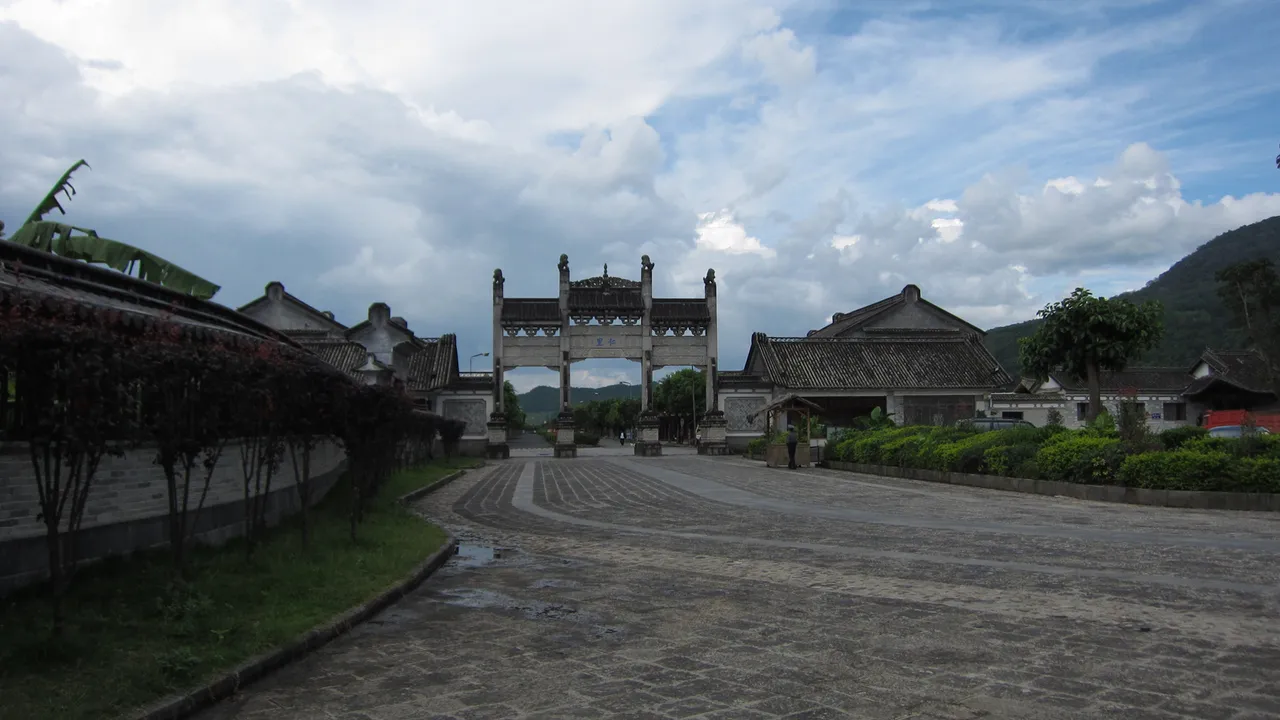
Give the opening hour to the Heshun Library. Founded in 1928 with funds raised by townsfolk working in Burma, it ranks among China's largest rural libraries, its gateway a paifang-style facade blending Chinese and Western lines, its shelves still holding old texts and Republican-era newspapers. That a borderland emigrant village built a public library in the 1920s tells you exactly what Heshun is.
Behind it stands the Wenchang Temple, once the village charity school; look up for a minute at the caisson ceiling in the main hall. Early starts pay off most here: before nine the courtyard is nearly empty, and you hear wind chimes and turning pages. Forty minutes suffices, then follow the Shuanghong bridges into the lanes.
Washing Pavilions and the Xianhe Waterline: The Women's Docks of Heshun
Generations of Heshun men left for business in Burma, and the women who stayed washed clothes at the river, so the village built roofed washing pavilions along the Xianhe waterway, shelter from sun and rain, a sight nearly unique in China. These pavilions are Heshun's gentlest architecture: stone benches, water troughs, bamboo drying poles, and villagers still rinse greens and beat laundry there today. Life here never became a stage set.
Follow the Xianhe down to Wild Duck Lake, where ducks, whitewashed walls and grey tiles share one frame, the town's most photogenic stretch. Villagers sell pine-pollen cakes and grilled erkuai from the boardwalk for a few yuan; sit in a pavilion, finish, then walk on.
Wanlouzi and the Lanes: Inside a Century-Old Merchant House
After lunch, turn into Wanlouzi, named for its corridor bending with the lane. This courtyard house belonged to the Li family of the late-Qing trading firm Yongmaohe: three complete courtyards where a British fireplace, furniture imported from Burma and carved Chinese doors live under one roof, the actual parlor of the generation that traded along the Burma road.
Then wander the lanes freely: Heshun's alleys use volcanic stone for their base courses, and each mouth bears a traditional lintel carved with family maxims. Getting lost costs nothing, since the town is small and every lane bends back to the main one. Some courtyards hold family-run tea rooms; a cup of thunder tea with mulberry cake makes a rest with a courtyard thrown in.
Ai Siqi's Former Residence and Yuanlong Pavilion: The Day's Last Steps
On the Shuidui village side sits the former home of the philosopher Ai Siqi, a stone-and-brick Western-style villa under the shade of phoenix trees, its rooms displaying his life and manuscripts. His Popular Philosophy carried philosophy out of the study and into the public; after the exhibition, sit in the courtyard and feel how quiet the childhood home of a thinker can be.
Close the day at Yuanlong Pavilion by the town's edge: a Taoist complex climbing the hillside above an emerald dragon pool framed by old trees. At dusk, sitting on the stone rail watching the light sink layer by layer into the water makes the town's most complete full stop. Walk the main road back to the main gate in time for the evening bus into the city.
| Getting around |
|
| Budget | Town entry is RMB 55 and reusable for five days; add RMB 80-150 pp for meals, with no transport cost across the walking day. |
| Best time | Enter at the 8:30 opening on weekdays or after 16:00 for the quietest lanes; pair naturally with Ginkgo Village from mid-November to early December. |
FAQs
How do I buy Heshun tickets, and how long do they last?
Entry costs about RMB 55, bought at the main gate or online, and stays valid for repeated visits across five days, so a second entry needs no new ticket. Guests at in-town guesthouses pass with their room card and ticket. Most courtyards open roughly 8:30 to 17:30; evening visits can still enjoy the lanes though some halls close.
Is half a day enough for Heshun, or should I stay overnight?
A rushed half day works, but an overnight rewards the town's quiet: at seven in the morning Heshun belongs to its guests, sunlight slanting into lanes as villagers light breakfast fires. On a tight schedule, enter in late afternoon for dusk, stay one night, and leave before nine, cleanly skipping the tour peak; the five-day ticket supports exactly this pattern.
Does Heshun work for seniors and small children?
Yes: the main paths are gentle, and though courtyards have many sills, alternatives exist. For limited stamina, compress the route to the library, Wild Duck Lake and Wanlouzi, under two kilometers total; children take to feeding ducks at the washing pavilions and the Xianhe waterline. Stone slabs turn slick in rain, so pack non-slip overshoes or a cane for seniors, and sightseeing carts at the gate cover a stretch of the way.
What should I eat in Heshun, and what does it cost per person?
Try three local things: Da Jiujia, stir-fried erkuai with pickled greens and pork; the tupotuo, a charcoal-fired clay pot layered with ingredients; and tounao, Heshun's traditional sweet soup of egg and rice cake served to guests. Small lane restaurants run RMB 40-80 per head for an excellent meal, and pine-pollen cakes or grilled erkuai cost a few yuan as snacks. Lane kitchens cook to order at mealtime, so order first and stroll while it comes.