
With one day in Tengchong, the trade-off is easy: the land's three signatures are volcanoes, the floating wetland and geothermal heat, and stringing them together by geography makes the best route. Head north in the morning for the crater, tread the floating meadows at Beihai Wetland at noon, return southwest for the Big Boiling Pot in the afternoon, and land in Heshun at dusk, drawing a full loop.
The game is drive-time management: each leg runs thirty minutes to an hour, so a charter is the efficient choice. Pace yourself too. Dakong Mountain is the hardest climb, best before noon; the Rehai trail stretches two kilometers, and entering after three keeps you out of the harshest sun. Wear grippy shoes, since both the volcanic cinder paths and the wetland boardwalks demand them.
Itinerary at a glance
| 08:30 | Dakong Mountain at the Volcano Park: 598 Steps to the Crater Rim |
| 11:30 | Beihai Wetland: Standing on the Breathing Meadow |
| 14:30 | Rehai Scenic Area: A Pot of Boiling Earth |
| 17:30 | Heshun Ancient Town: A Dusk Finale in the Overseas Chinese Hometown |
The route, stop by stop
Dakong Mountain at the Volcano Park: 598 Steps to the Crater Rim
The Tengchong cluster ranks among China's best-preserved dormant volcano groups, and Dakong Mountain is its most regular cone: a summit above two thousand meters, a crater some fifty meters deep, and 598 cinder steps running straight from the base to the rim. In early morning, mist often wraps the cone's waist; from the rim, dark cinder and the green crater floor share one frame, and Tengchong's geological character lands at first sight.
If time allows, tour the volcano geology museum at the visitor center before climbing, and the cones, lava plateaus and columnar joints read completely differently. Horse rides along the cinder track between Dakong and Heikong cost extra. The round trip up takes about an hour, so budget ninety minutes inside the park.
Beihai Wetland: Standing on the Breathing Meadow
Beihai Wetland is a floating meadow evolved from a volcano-dammed lake: roots and humus weave a mat nearly a meter thick on the water, and a cut channel slowly heals itself. The standard visit runs by boat into the lake, then onto the mat experience zone, where each step sinks in with a slight springy give, like a thick mattress. From June to September, iris blooms carpet the surface in purple.
Autumn and winter bring a second mood: the grass turns gold, waterfowl gather, and quiet birding and photography reward the cold. The mat zone sits over deep water, so wear the life vest; children and less mobile elders do better on the lakeside boardwalk. Two hours suffice, and farmhouse grilled fish near the exit makes a solid lunch.
Rehai Scenic Area: A Pot of Boiling Earth
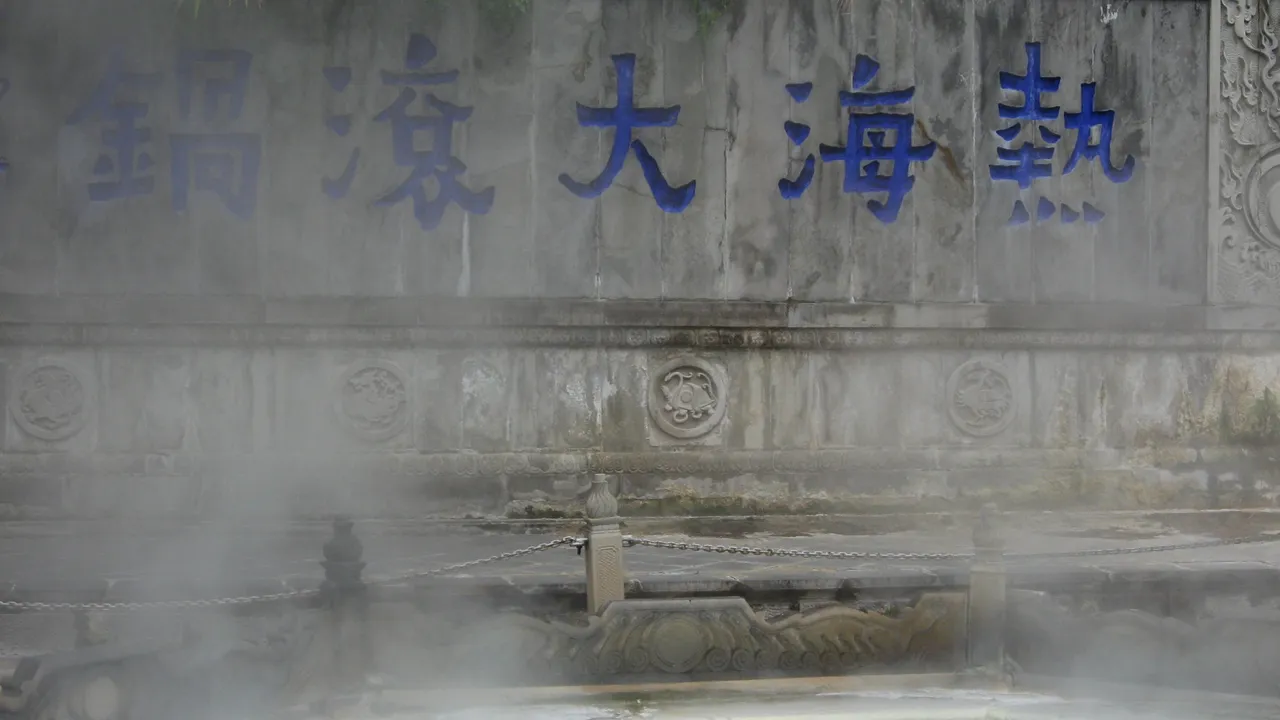
Rehai is the core of Tengchong's geothermal field, the Zaotang River valley steaming year-round along a trail of roughly two kilometers. The Big Boiling Pot is both endpoint and climax: a boiling pool six meters across holding near ninety-seven degrees, its blue-green water rolling like a cauldron, sulfur and white mist meeting you head-on. In the Ming dynasty, the traveler Xu Xiake recorded these springs; four centuries on, the pot still boils.
Along the way, the Pearl Spring and the Drumming Spring each keep their own rhythm of bubbles. Inside the scenic area you can buy eggs and peanuts steamed by the pot's own vapor, a few yuan a string with a faint mineral tang. For soaking, head to the dedicated pools downstream at Yugou or the Beauty Pool, ticketed separately, swimsuit in hand. The pot itself is strictly off limits: the steam scalds worse than it looks, so keep behind the rail for photos.
Heshun Ancient Town: A Dusk Finale in the Overseas Chinese Hometown
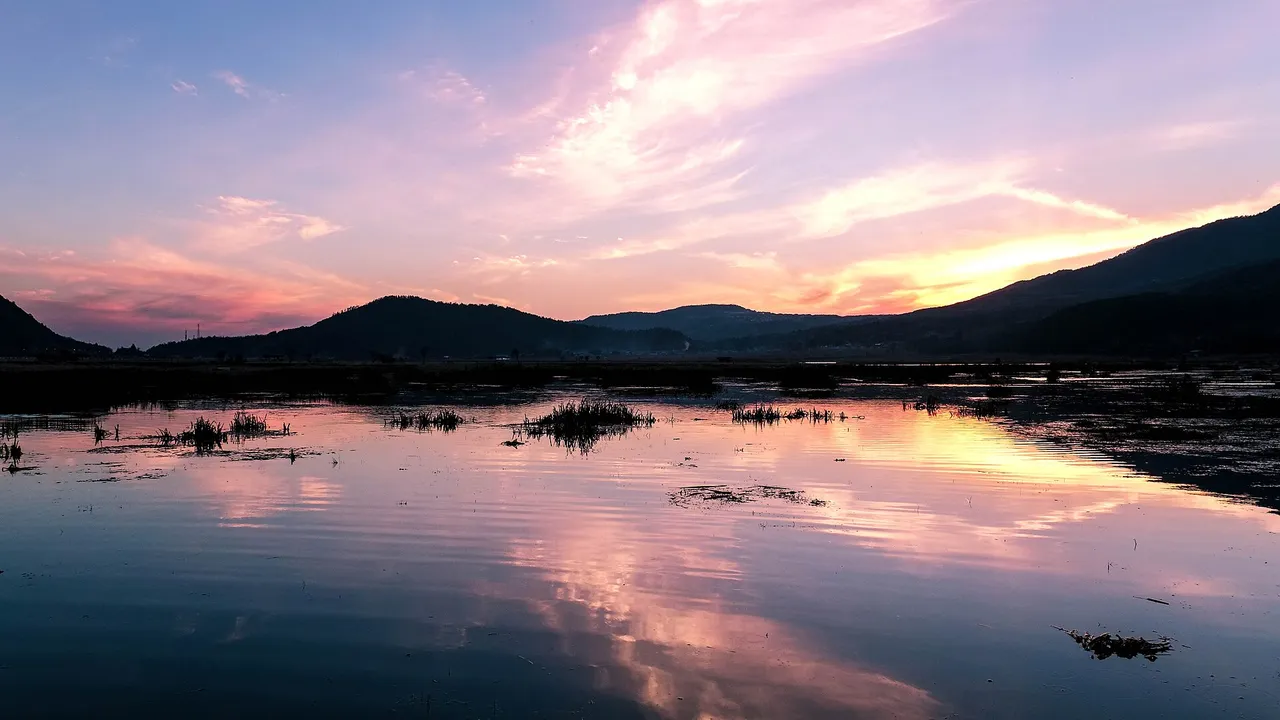
Hand the day's close to Heshun. By evening the tour groups have gone; walk the main lane from the main gate to Wild Duck Lake, where sunset stains whitewashed walls, grey tiles and the lake the same gold. Heshun is a celebrated overseas-Chinese hometown, a village six centuries old that keeps a library, ancestral halls and washing pavilions all in working order, and the lanes smell most of dinner smoke right at mealtime.
Dinner happens in town: the fried erkuai called Da Jiujia, the charcoal cassole tupotuo stew, copper-wok beef, all within the lanes. Stroll the lake afterward to digest before heading back. Town tickets stay valid five days, so dusk entry plus a morning return is the way to save time and still get the essence.
| Getting around |
|
| Budget | Entry for the volcano park, Beihai Wetland and Rehai totals about RMB 170 pp; with shared charter and meals, budget RMB 350-520 for the day. |
| Best time | Mid-November to early December, golden ginkgo season under steady skies, is the year's best window; in the rainy season from June to August, pack rain gear and check that wetland rafts operate. |
FAQs
Charter or public bus for one day in Tengchong?
Buses cover Heshun and Rehai, but departures toward the volcano park and Beihai Wetland run sparse, and transfers shred a single day. For two or more people, charter at RMB 300-450 per day and fix the order and waiting time in advance; solo travelers can ask their hotel to arrange carpooling, or skip the volcano and ride buses between Rehai and Heshun.
Can you soak at the Big Boiling Pot, and how should you soak properly?
The Big Boiling Pot is for viewing only: the water holds near ninety-seven degrees year-round, entry is strictly forbidden, and the steam alone can scald. Soaking happens in dedicated pools downstream such as Yugou and the Beauty Pool, ticketed separately, with your own swimsuit and cap. Parents should keep children from the water entirely, stay behind the rails for photos, and shower before entering the pools.
If time runs short, should I keep the volcano or the wetland?
Protect Rehai and Heshun first; they are Tengchong's irreplaceable signatures. Choosing between volcano and wetland, take the volcano on a clear day, since the rim view and balloon rides live on weather, and the wetland on an overcast one, since the boardwalk and floating mats hardly care about the sky. In ginkgo season from mid-November to early December, you can also trade half a Heshun day for Ginkgo Village in Gudong.
How big is the temperature swing in Tengchong, and what should I pack?
At about 1,600 meters, Tengchong runs cool mornings and evenings with strong midday sun: pack a light jacket even in summer, and expect near-zero early mornings in winter. Wear grippy sneakers for the crater steps and wetland boardwalks, and in the rainy season a raincoat beats an umbrella on windy ridges. Ultraviolet light is strong at altitude, so keep sunscreen and a hat handy, hydrate around your soak, and never enter the pools hungry or after drinking.