
Wulan county's nature is criminally underrated: beyond Chaka's trump card lie Jinzihai's dune wetland and Halihatu's cypress valley. Three days giving each landform its own day is the line's quiet luxury.
The pacing: day one wholly on the lake (sunrise, wading, sculptures, sunset, stars), day two north to Halihatu's forest valley, day three Jinzihai plus a closing run toward Qinghai Lake. Altitude holds 3,000-3,500 m throughout, chained by charter with no driving day over three hours.
All three nights sit in Chaka town, luggage parked at the hotel with every day leaving light. The lake, Halihatu and Jinzihai carry different ticket rules, and charter drivers usually buy in or point the way, so ask whether queue time is included before boarding.
Itinerary at a glance
| 06:30 | Sunrise at Chaka Salt Lake: The Day Opens on the Mirror |
| 09:30 | Wading the Mirror and the Salt Sculptures |
| 19:00 | Lake Sunset and Stars: Day One's Double Close |
| 16:30 | The Salt Lake Boardwalk: The Pre-Dusk Walking Line |
| 09:00 | Halihatu Forest Park: A Cypress Valley Morning |
| 14:00 | The Halihatu Pasture Valley: Herders' Tracks and Flocks |
| 09:30 | Jinzihai Wetland: Freshwater Held by Dunes |
| 13:30 | The Jinzihai Dune Line: One Climb for the Panorama |
| 16:00 | Closing toward Qinghai Lake: Dusk at the Xiangpi Pass |
The route, stop by stop
Sunrise at Chaka Salt Lake: The Day Opens on the Mirror
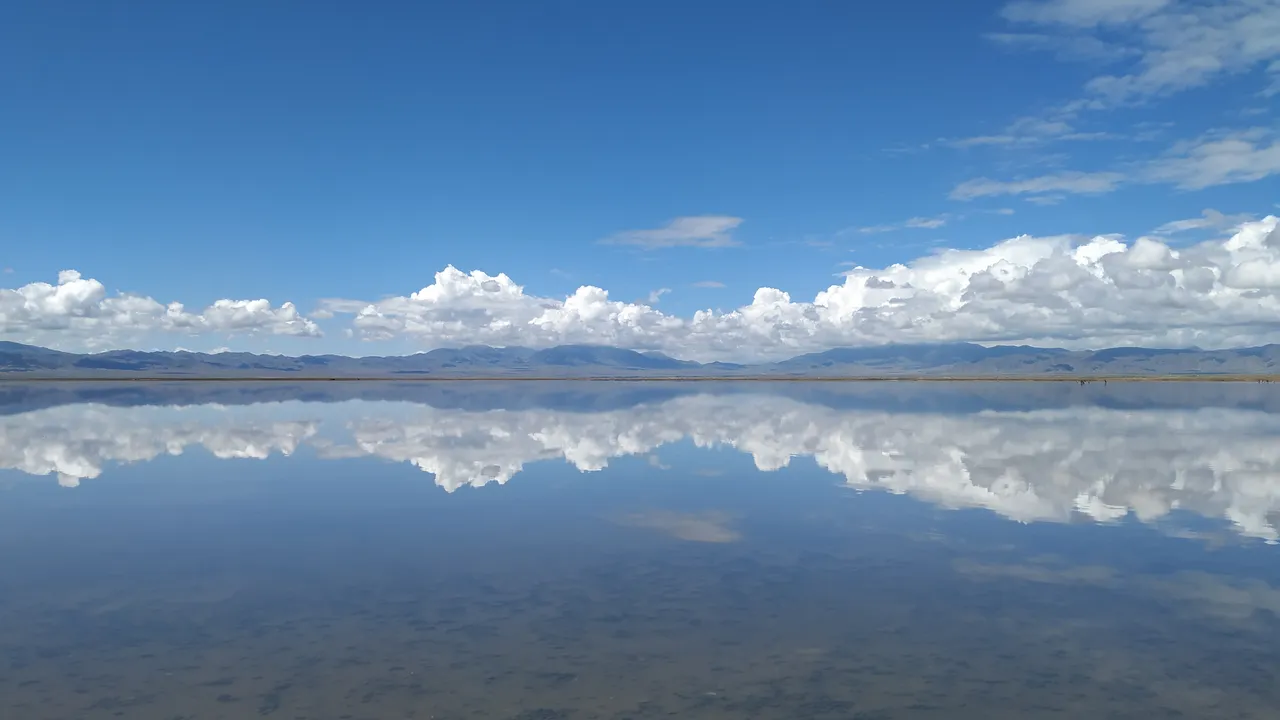
Windless dawn is the lake's high point: sky and clouds lie fully inverted on the shallow brine, scattered photographers the only company. The sunrise light tints the pan pale gold, and this half hour's mirror quality caps the day's photographs.
After sunrise, breakfast in town and re-enter the park near nine, spending stored legs on wading and sculptures.
Wading the Mirror and the Salt Sculptures
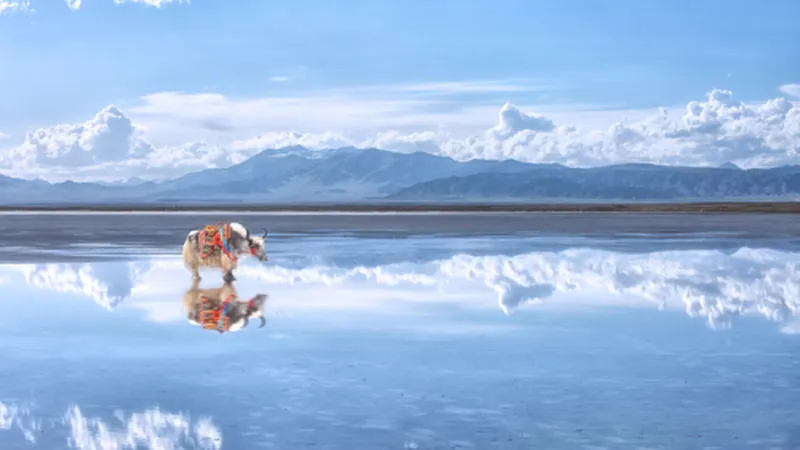
The morning's formal program: rent wading covers, walk ten meters out and turn for the reflection; before ten the water stays glassy, earlier meaning cleaner frames. Off the lake, the sculpture zone raises white giants of the Queen Mother of the West and Genghis Khan glowing cold in sun, weathering their true growth rings.
Never cross the warning line in the water and rinse eyes with fresh water if brine splashes; the sculptures take forty minutes on foot, forward light doing the work.
Lake Sunset and Stars: Day One's Double Close
Dusk returns to the platform for sunset, pans and harvest rails turning golden silhouettes in the low light; after dark retreat to the town edge and wait for the post-ten Milky Way. Chaka's light pollution is minimal, stars mirrored in distant shallows the lake's gift to night owls.
The lakeside sheds heat fast, so cap stargazing at half an hour, down jacket and hot drink standard; sleep early, the mountains come tomorrow.
The Salt Lake Boardwalk: The Pre-Dusk Walking Line
Reserve an hour of day one for the boardwalk before sunset. The timber path reaches from shore onto the lake between crystallized crust and shallow brine, quieter than the main lake, the best stretch for unhurried looking.
Shoot crystal textures from a low crouch, the grains catching fire against the light; wind off the water bites, so keep a windbreaker in the pack.
Halihatu Forest Park: A Cypress Valley Morning
Day two heads north into Halihatu, Mongolian for the place where cypresses grow. Qilian juniper cloaks the valley slopes, and the trail climbs beside a stream on air mixed of resin and meadow, total contrast to the white of the pans.
The main trail runs two to three kilometers, under two hours. The forest sits near 3,200 m, so slow the climbs; the stream's sound sets the pace.
The Halihatu Pasture Valley: Herders' Tracks and Flocks
The afternoon pushes deeper into the valley, where herders' tracks edge meadows of tiny wildflowers and sheep scatter like sesame on a green blanket. Traces of seasonal migration and grazing tents show the most everyday face of Wulan's pastoral country.
Never enter fenced range uninvited and ask before photographing herders; the valley blows cold, so the coat stays on. An hour or two here, then back to town.
Jinzihai Wetland: Freshwater Held by Dunes
Day three's morning reaches Jinzihai, a freshwater wetland at the desert's rim held in crescent dunes, birds, reeds and sand-lines in one frame, the Qaidam's most contrasting natural image. Legend buries gold here, and herders have held the place sacred for generations.
Walk the rim only, never into the wetland off-trail; morning light layers the dunes and the water's reflection runs fullest.
The Jinzihai Dune Line: One Climb for the Panorama
The dunes outside the wetland invite a climb, modest in height but soft underfoot; from the crest the view opens in two directions, jade wetland on one side, endless gobi on the other, wind combing the sand spine, the loneliest and widest image of the three days.
Dune climbing costs more breath than expected, so slow to a plateau rhythm, ten steps one pause; the sand burns by midday, so finish this before noon.
Closing toward Qinghai Lake: Dusk at the Xiangpi Pass
The afternoon return runs the Qinghai Lake direction, stopping once at Xiangpi Pass near 3,800 m. The pass opens wide, and in clear weather a blue thread of the lake shows on the horizon, prayer flags snapping in wind, a high-altitude cadence for three days of nature.
Stay under twenty minutes at the pass, moving gently and dressed warm; the descent passes the Heimahe direction, with an optional lakeshore glance before returning to Chaka or Xining.
| Getting around |
|
| Budget | A three-day charter runs RMB 1,800-2,600 per car, with tickets, beds and meals about RMB 700-1,100 pp; boardwalks and town stay free. |
| Best time | June-September shows steppe and forest at full strength, the mirror riding dawn calm; the Jinzihai and Halihatu roads degrade after rain. |
FAQs
Between Jinzihai and Chaka Salt Lake, which one?
Unless you hold only half a day, do not choose: the lake is Chaka's identity, Jinzihai is Wulan's hidden card, and their landforms share nothing. The right question is how many hours each, and the answer is a full day at the lake, half a day at Jinzihai, neither sacrificed.
What does a three-day charter cost, and how do I negotiate?
RMB 1,800-2,600 for three sedan days is fair, fuel and driver included, room and board usually extra. Confirm three things when pricing: the gravel legs to Jinzihai and Halihatu, whether waiting bills separately, and cancellation terms. Quotes far under market carry the highest mid-road surcharge risk.
Which day suits Halihatu and which Jinzihai?
Take Halihatu on day two and Jinzihai on day three: the forest trail wants morning legs, while Jinzihai's dunes and wetland favor light before noon and sit closer to the Qinghai Lake road for a smooth final-day exit. The reverse works but adds detour on the way home.
Which stretch tests the car most over the three days?
The last twenty to thirty gravel kilometers to Jinzihai and sections of the Halihatu approach, worst after rain. Tell the charter up front that the plan includes both and let the driver pick the vehicle; a sedan driver who declines bad roads is showing reliability, not weakness.