
Seven days is the complete answer for Wulan: the first three never leave Chaka, collecting the salt lake's sunrise, mirror, sculptures, pans, sunset and stars while the body adapts in town; days four and five run the Qinghai Lake return; day six Halihatu; day seven Jinzihai and the town close.
The deep itinerary's confidence is slack: the mirror rides on wind, so a bad morning simply reschedules, and seven days hold three dawn chances; one core goal per day, afternoons always open. On the plateau, comfort runs seven parts pacing.
The seven-day line's currency is dawn and dusk, with noons given to transfers, rest and indoor time. Spend both golden hours where they count and let the blanks fill with sleep, meals and resupply, and the schedule breathes on its own.
Itinerary at a glance
| 08:30 | The Chaka Town Morning Market: Landing and Acclimatizing on Day One |
| 19:00 | Sunset at the Salt Lake: The Week's Opening Silhouette |
| 06:30 | Sunrise at the Salt Lake: The First Mirror Chance |
| 10:00 | The Salt Lake Boardwalk and Wading the Mirror |
| 14:00 | The Sky One Section: The Salt Lake's New Frame Ground |
| 09:00 | The Salt Sculptures: A Close Reading of the White Giants |
| 10:30 | The Chaka Salt Fields: On Site with Two Thousand Years of Harvest |
| 16:00 | The Chaka Viewing Platform: A Panorama Lesson before Dusk |
| 08:00 | Xiangpi Pass: Setting Out for Qinghai Lake |
| 11:00 | The Heimahe Shore: First Meeting with the Great Water |
| 19:00 | Heimahe Sunset and the Night There |
| 06:30 | Heimahe Sunrise: Qinghai Lake's High Point |
| 15:00 | Jinzihai: The Holy Lake Held by Dunes |
| 09:30 | Halihatu Forest Park: A Day in the Cypress Valley |
| 20:30 | The Closing Night: A Herder Feast, Keepsakes and One Last Sky |
The route, stop by stop
The Chaka Town Morning Market: Landing and Acclimatizing on Day One
Arrival day in Chaka schedules nothing strenuous. The morning walks town and market, hot bread, milk tea, yogurt, stallholders mostly neighbors; the salt works' old dormitories and a rail crossing keep the salt-worker town's origin in its street frontages.
On day one at 3,100 m, walk slow, drink water, skip alcohol; rest at the lodging through the afternoon, charging for the first lakeside sunset tonight.
Sunset at the Salt Lake: The Week's Opening Silhouette
The evening enters the park for the week's first salt-lake sunset, the low sun dyeing pans, harvest boats and ponds gold-orange while the platform's height takes in the whole flat. Read it broadly tonight; the detailed shooting comes over the next two days.
Temperatures plunge after dark, so back to town for kang-pot mutton; early bed, tomorrow's sunrise being the first mirror chance.
After the first sunset do not rush back, the shore's blue hour holding fifteen minutes of cold tones, sky-blue against the brine's grey-blue; bring a flashlight for the walk out, the boardwalk unlit at night.
Sunrise at the Salt Lake: The First Mirror Chance
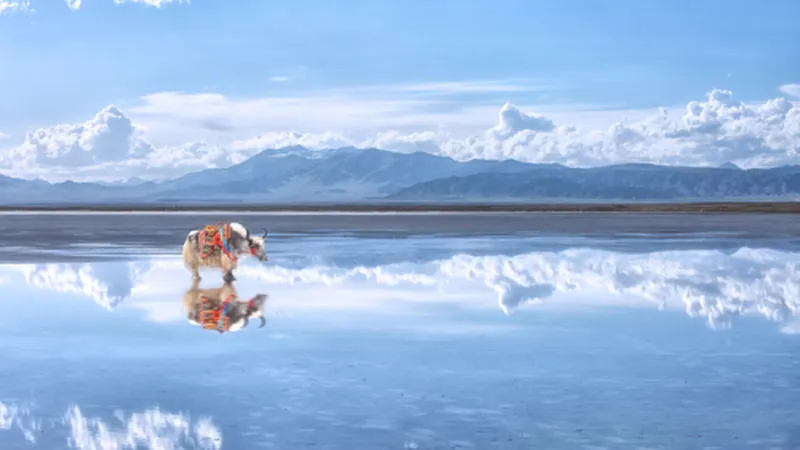
In the windless dawn, sky and clouds invert whole on the shallow brine, scattered photographers the only company, the day's highest-quality half hour. Pale-gold sunrise light sweeps the pan; breathe deep, this is the reason you came to Chaka.
The seven-day plan grants the lake three dawns, today the first: learn the positions and the light's direction, saving the serious compositions for the day after.
The Salt Lake Boardwalk and Wading the Mirror
The formal wading lands before ten: rent covers, walk in over salt crust fused under shallow brine, and ten meters out turn for the canonical frame, your reflection beside the clouds. The boardwalk adds crystallizing ponds and harvest rails along the way.
Wind roughs the mirror after ten, so wade early; never cross the warning line, and rinse eyes with fresh water at any splash.
The Sky One Section: The Salt Lake's New Frame Ground
Recent years added the Sky One section to Chaka, a separate gate and ticket from the main area. Its renovated pans carry denser boardwalks and viewing installations, thinner crowds, fresh angles, the place to complete your salt lake portfolio.
Sky One tickets separately from the main lake, the combo fare saving money; shuttles link the two sections, so mind which gate you enter.
The Salt Sculptures: A Close Reading of the White Giants
Day three's morning reads the sculptures closely: the detail of the Queen Mother of the West, Genghis Khan and the rest, weathering and repairs their true growth rings. The side angle, light passing through the salt grain, outlasts the head-on view; interpretation boards are thin, so light homework pays.
Never climb or touch the figures, the crust breaks and cuts; forward light runs all morning, so pull exposure down a stop.
The Chaka Salt Fields: On Site with Two Thousand Years of Harvest
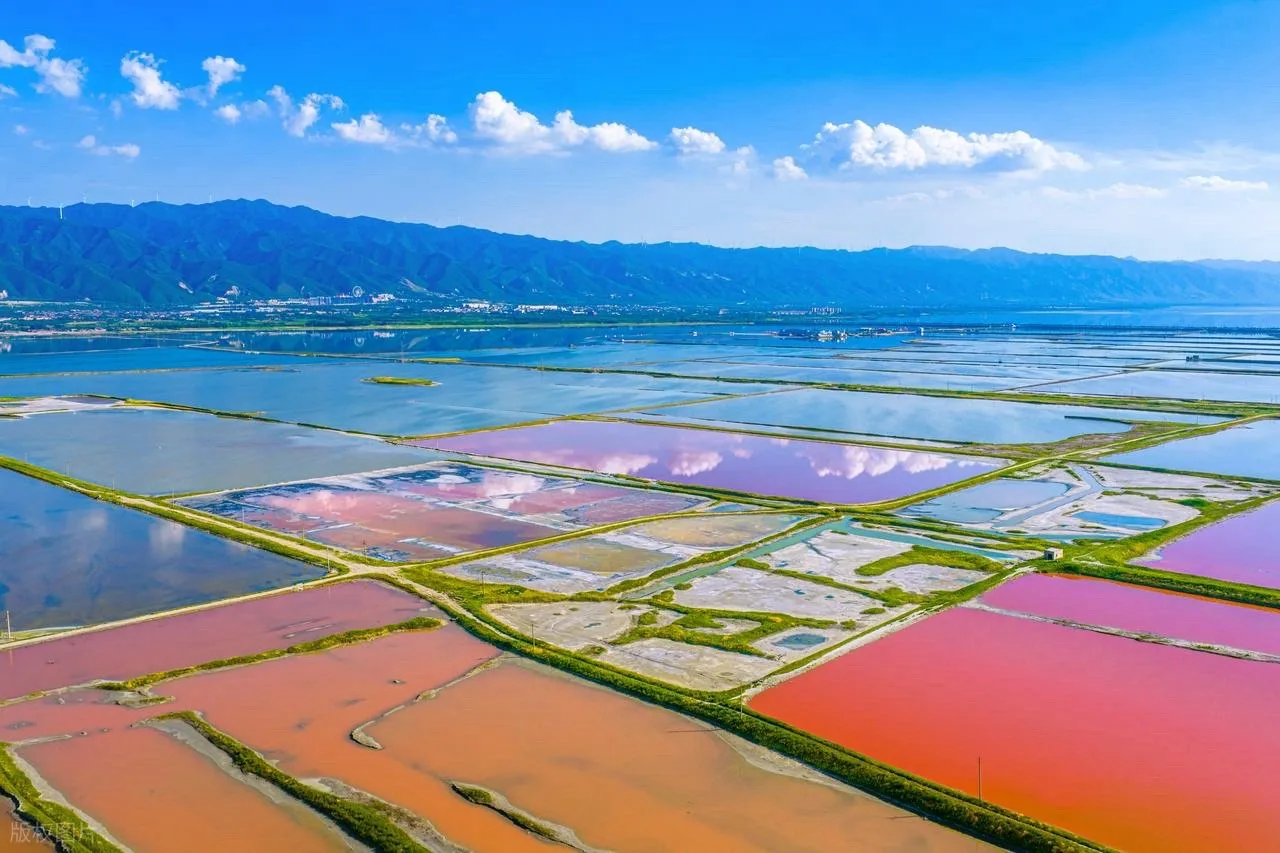
The late morning walks the pans' viewing strip, brine crystallizing stepwise through the ponds, harvest rails running to the lake's heart, old timber tracks and modern boats in one frame. Chaka's salt record reaches before the Western Han, the key to the whole town.
Forty minutes to an hour on the path, working zones off-limits; once the salt makes sense, every street in town cross-references.
The pans' harvest rails are Chaka's industrial-photography anchor, old timber tracks pointing at the lake's heart; forward light before ten maximizes the lines' perspective, where a wide lens earns its keep.
The Chaka Viewing Platform: A Panorama Lesson before Dusk
After four the light softens, and the platform's height reads the lake's geometry whole: the grid of ponds, the rails' straight lines, the layered ridges beyond. From here Chaka resolves not into one mirror but a white land cut into geometry.
Stay forty minutes to an hour, holding for a golden silhouette after sunset; then back to town for dinner and an early night.
Xiangpi Pass: Setting Out for Qinghai Lake
Day four climbs Xiangpi Pass near 3,800 m, the watershed between salt-flat and great-lake worlds. A blue thread of Qinghai Lake already shows southward, prayer flags snap in wind, and cloud shadows wheel across the slopes at visible speed.
Cap the stop at twenty minutes, move gently, dress warm; three nights at 3,100 m have built the buffer.
The Heimahe Shore: First Meeting with the Great Water
Before noon the car reaches Heimahe; drop bags at the guesthouse and head straight for the lake. Qinghai Lake runs so large the far shore dissolves, blue water landing in layers, a different language from Chaka's white; birds skim the waves, summer rapeseed edging it all in gold.
The lakeside sits near 3,200 m and blows hard, so walk slow and rest often; keep out of the slick shallows and reapply sunblock every two hours.
Heimahe Sunset and the Night There
Sleep in Heimahe, at the shore half an hour before sunset for the west bank's golden half hour, lake and sky burning gold-red, fire clouds under low skies. The town quiets early; mutton noodle soup and kang-pot, then bed, the 6:30 sunrise the whole point of the night.
Book heated rooms ahead, weekend prices doubling in season; a light night's insomnia at 3,200 m is normal, no alarm needed about it.
Heimahe Sunrise: Qinghai Lake's High Point
At the shore by 6:30, the sun lifts behind the far ridge, dyeing clouds first then flooding the water, the surface recoloring in seconds. This is the seven-day plan's only Qinghai Lake sunrise, repaying every minute of the early alarm.
Breakfast in town after, then the return over Xiangpi Pass by the lake road, water riding the windows, back in Chaka before noon for a rest.
Jinzihai: The Holy Lake Held by Dunes
Day five's afternoon reaches Jinzihai, freshwater at the desert's rim held in crescent dunes, birds, reeds and sand-lines in one frame, the Qaidam's most contrasting image. Mongolian herders have held it sacred for generations, legend tying it to buried gold.
Walk the rim, keep out of the wetland and leave birds alone; afternoon light layers the dunes, and one dune climb repays the legs with a panorama.
Jinzihai's dunes grow a sharp light-shadow line after four, the key to the landscape frame; the lee face climbs gentle, the windward face firmer but blowing hard, hat wearers choose their own trade.
Halihatu Forest Park: A Day in the Cypress Valley
Day six enters Halihatu, Mongolian for the place where cypresses grow. The valley's Qilian juniper woods and streamside trail are the week's only green chapter; from white salt pan to blue great lake to gold dunes, the deep green closes the palette exactly.
The trail runs two to three kilometers under two hours; afternoon showers frequent the woods, rain gear ready, grippy shoes on the wet boardwalks.
The Closing Night: A Herder Feast, Keepsakes and One Last Sky
Day seven's daylight goes to gaps: return to whatever hour of the salt lake you want to reshoot, and complete the shopping list of grand salt, salt carvings and goji in town. The evening books a herder feast or the town's best kang-pot, the week's reward.
After dinner, one last sky from the town edge, the Milky Way over the salt pan closing the whole arc. Next day, bus, seasonal tourist train or charter back to Xining in three to four hours, tickets bought a day ahead in season.
| Getting around |
|
| Budget | A seven-day charter runs RMB 4,200-5,600 per car; all-in about RMB 2,200-3,200 pp with six nights. |
| Best time | June-September overall; the seven-day line climbs altitude slowest and holds the most mirror chances, the photographer's pick. |
FAQs
Are seven days too long, and what do they add over five?
For photography-driven travelers, no: what it adds is the lake's second and third dawn chances plus a calm adaptation window in town, a wholly different weather tolerance. Pure sightseers fit five days; seven belongs to those who want to shoot the salt lake through.
How do I keep all seven daylight blocks from going to waste?
One core goal per day with open afternoons: town plus sunset, sunrise and wading, sculptures-pans-platform, over the pass to Heimahe, sunrise return plus Jinzihai, Halihatu, then reshoots and the close. The open hours are not waste but insurance for weather and legs.
Will six straight nights in Chaka town get boring?
Not if the days stay outdoors: Chaka's nights are meant for sleep and recovery, with enough small kitchens and teahouses to rotate. For variety, the Heimahe night is the change of air; a stable base also means no daily repacking.
Three days at the salt lake and still not enough? Why add the Sky One section?
The main area and Sky One have different characters: the main lake is grand and canonical, Sky One renovated, quieter, compositionally complementary. To photographers they are two sets; to non-shooters, the main lake plus pans and sculptures already complete the story, so cut Sky One for a half day of rest.