
One day in Wuxi splits into lake and canal. The morning belongs to Yuantouzhu, the finest corner of Lake Tai, where spring blossoms line both banks of Changchun Bridge and the water shares every frame. The afternoon turns back to Huishan Ancient Town, where ancestral halls, a classical garden and the Second Spring under Heaven fill in the other half of Jiangnan.
In the evening return to the city: the canal stretch between Nanchan Temple and Qingming Bridge is called the water lane, white walls and dark tiles crowding a lit river. The route is timed to real bus and metro schedules; Yuantouzhu has no rail link and relies on bus route 1, while the rest chains together by metro and on foot. Expect about fifteen thousand steps.
Itinerary at a glance
| 08:00 | Yuantouzhu: The First Morning on Lake Tai |
| 13:00 | Huishan Ancient Town: Ancestral Halls, Jichang Garden and the Second Spring |
| 16:00 | Nanchan Temple and Miaoguang Pagoda: From Incense to Street Noise |
| 18:00 | Qingming Bridge and Nanchang Street: The Water Lane at Night |
The route, stop by stop
Yuantouzhu: The First Morning on Lake Tai
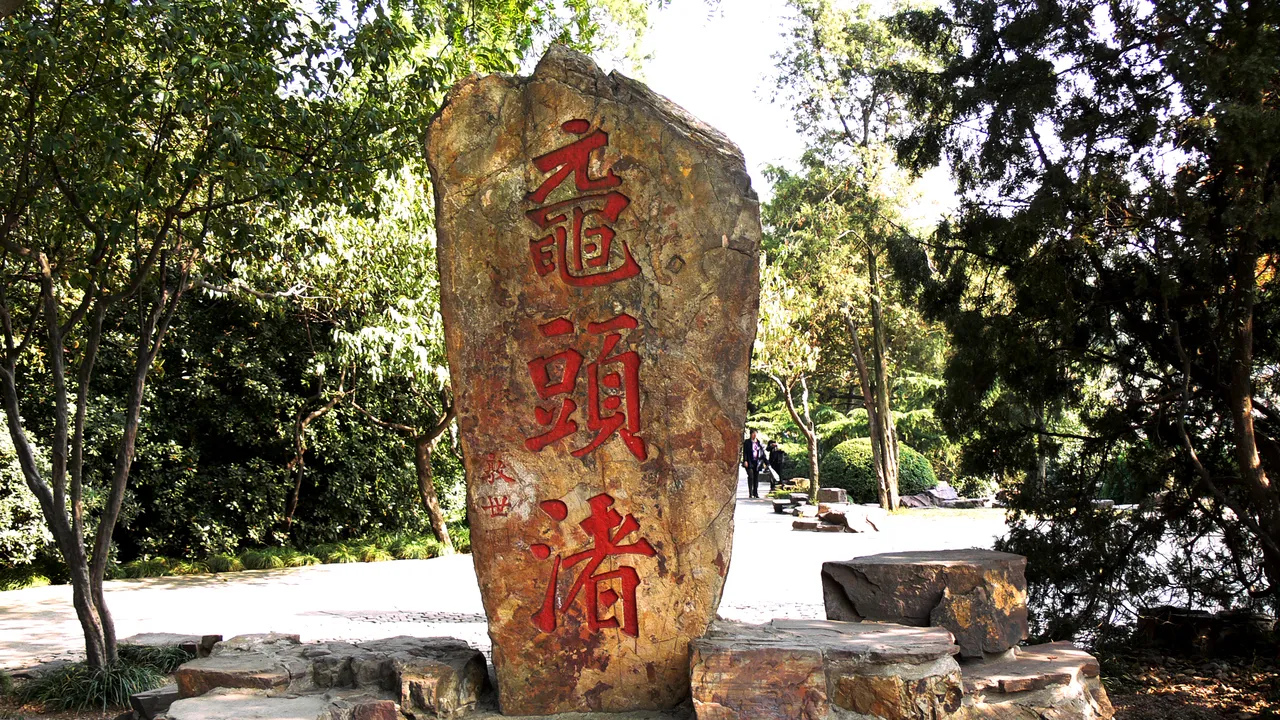
Yuantouzhu concentrates Lake Tai into one rocky peninsula reaching into the water. Enter and follow Changchun Bridge toward the point; in spring the Somei-Yoshino cherries on both banks form a pink tunnel, petals reflected in the water below, the most photographed walk in Wuxi.
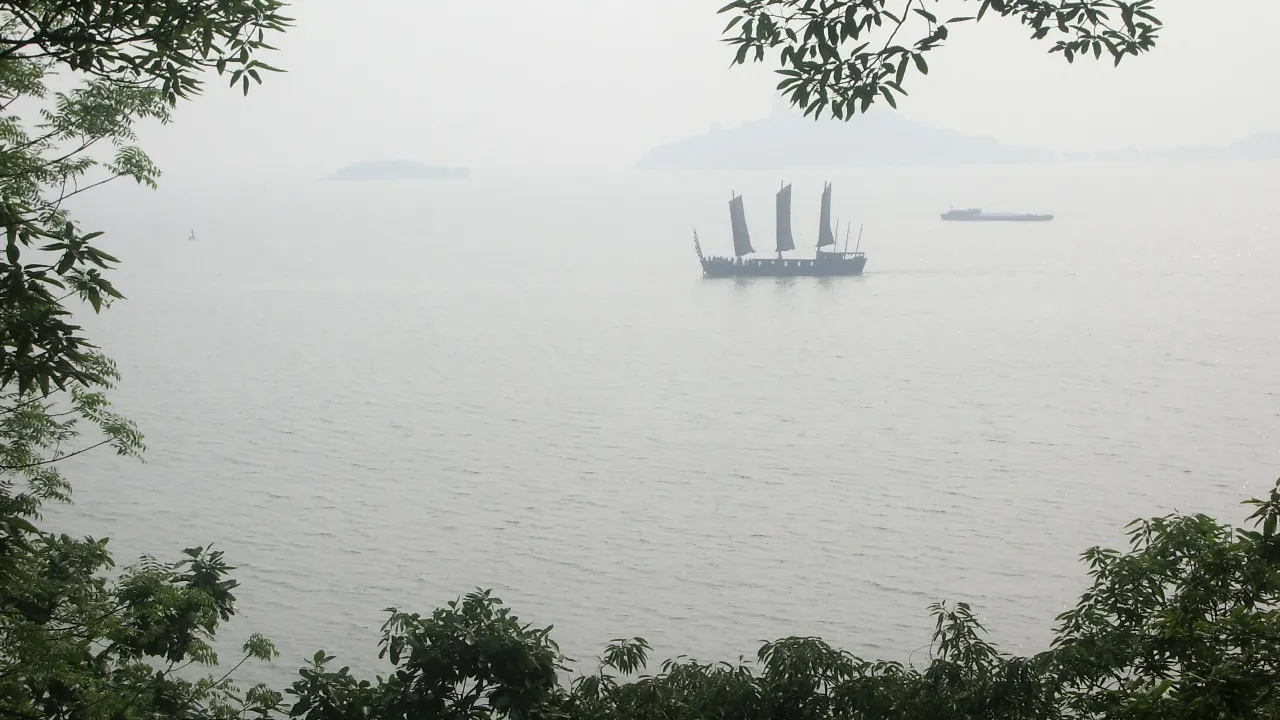
At the lighthouse and the carved rock the lake opens up, with island silhouettes and sail dots on clear days. Climb Luding Hill for the divide between Lake Tai and Lake Li if energy allows, or simply wander the shore rocks and watch waves break. Blossom-season crowds build after ten, which makes the first hour the most valuable of the day.
Huishan Ancient Town: Ancestral Halls, Jichang Garden and the Second Spring
After lunch turn to Huishan Ancient Town in the city's west, spreading along both banks of the Longtou River. Its whitewashed lanes hide China's densest cluster of ancestral halls, over a hundred compounds belonging to dozens of surnames, their brick carving and couplets rewarding a slow pace. Craft shops and snack stalls line the street: Huishan tofu pudding, crispy pastry and sweet taro in osmanthus syrup are best eaten hot.
Xihui Park behind the town is the main event. Jichang Garden ranks among the finest of Jiangnan gardens, borrowing Mount Xi as scenery and piping spring water through its courts; Qianlong camped here on his southern tours and had it copied in Beijing. The Second Spring under Heaven is famous through Abing's tune The Moon Reflected in the Second Spring, its pavilion shaded by old trees.
Nanchan Temple and Miaoguang Pagoda: From Incense to Street Noise
Nanchan Temple dates to the Southern Dynasties, and the cultural market around it folds incense shops, Buddhist supply stores, secondhand bookstalls and everyday life into one street; the hush inside the gate and the clatter outside are a door apart. Miaoguang Pagoda rises over the market, a canal-side landmark for wayfinders since the Song era.
Keep this stop light: forty minutes covers temple and pagoda, and leaves time to scout dinner options. The area is one of Wuxi's street-food hubs, where veteran pastry shops and stalls set up toward dusk, laying the groundwork for the canal finale.
Qingming Bridge and Nanchang Street: The Water Lane at Night
Walk ten-odd minutes south from Nanchan Temple along the canal into the Nanchang Street historic quarter. Qingming Bridge, a Ming stone arch, curves into its own reflection, while whitewashed houses and stone steps retreat into the lanes on both banks; this stretch is held up as the model of the Jiangnan water lane.
After the lamps come on the quarter looks its best, lanterns strung along the eaves all the way to the bridge arch. Boats leave from Kuatang Bridge dock and rock slowly from arch to arch through the reflections; stay ashore and loop Nanchang Street and its quieter twin Nantang across the water. Dinner happens here, where homestyle kitchens mix with cafes, and the busy ones rarely disappoint.
| Getting around |
|
| Budget | Entry (about RMB 90 at Yuantouzhu including the boat, RMB 70 for the Xihui combo) plus meals and transport, roughly RMB 280-420 pp. |
| Best time | Mid-March to early April is blossom season and the busiest, so arrive early; September to November brings cool lake winds and thinner crowds. |
FAQs
Yuantouzhu has no metro link, so what is the easiest way to get there in a day?
Take bus route 1 from Wuxi Railway Station straight to the gate, about 50 minutes for a few yuan with frequent departures. A taxi needs only 30 minutes but blossom weekends jam the road, so the bus is steadier. The last return bus usually leaves around 6 pm; confirm the time that day if staying for night blossoms, or taxi back.
Do I need to book tickets for blossom season, or can I buy on site?
During blossom season, mid-March to early April, Yuantouzhu uses real-name advance booking via the official account and platforms; hot weekend morning slots fill one or two days ahead and walk-up tickets are not guaranteed. On weekdays buying on site is usually fine. Off season, just buy at the gate: about RMB 90 including the return boat to the island.
Can I fit both Yuantouzhu and the Grand Buddha into one day?
Not recommended. The Grand Buddha sits in the Mashan direction, on the opposite side of the lake from Yuantouzhu; combining them costs six or seven hours of transit and rushed viewing. Follow this lake-and-old-town classic for one day, and give the Grand Buddha and Nianhuawan their own full day instead.
With blossom-season crowds, any practical tips on timing and what to wear?
Beat the crowds at the edges: enter near 8 am or after 4 pm, since tour groups cluster between 10 am and 3 pm. Lakeside wind bites and spring temperature swings are sharp, so bring a windproof layer; expect over ten thousand steps in soft-soled shoes. Mobile QR payment works everywhere, no need to carry much cash.