
Wuxi's cultural estate stacks two layers: one on the water, where the Grand Canal threads the city and modern Chinese industry began, a century told clearly in the city museum; one on the hill, where the ancestral halls below Huishan and the Second Spring carry Jiangnan's rites and its music. This route splits the day across both layers: museum morning, garden evening.
Every highlight rewards a slow pace. Give the museum two full hours and the academy one, then let dusk and spring water close the day at Huishan. Metro links all three quarters, with line 4 to Huishan Ancient Town station landing right at the quarter's entrance.
Itinerary at a glance
| 09:00 | Wuxi Museum: A Century of Canal and Industry |
| 13:30 | Donglin Academy: Family and State in the Lecture Hall |
| 16:00 | The Huishan Ancestral Halls: A Hundred Family Gates |
| 17:30 | The Second Spring under Heaven: Where the Melody Began |
The route, stop by stop
Wuxi Museum: A Century of Canal and Industry
The permanent galleries lay out the city's two trump cards. One is the canal: in the grain-transport era Wuxi anchored the Jiangnan rice market, told here through wharf models and rice-house ledgers. The other is industry: textiles and flour milling started here in the late Qing and early Republic, and the old machines and brand plates in the cases mark the starting line of modern Chinese industry.
Leave time for the painting, yixing clay and huishan figurine displays, including a dedicated room on the figurines' handcraft process. If you can only manage one hall, pick modern industry, the city's most distinctive story in the national museum lineup.
Donglin Academy: Family and State in the Lecture Hall
Come in the afternoon. In the late Ming, the dismissed censor Gu Xiancheng and colleagues returned to Wuxi and lectured on state affairs at this Song-era academy site; the wind-and-rain couplet in Yiyong Hall became a footnote to scholarly conscience. Repeatedly destroyed and rebuilt, the grounds still hold lecture hall, Daonan shrine and stele corridors, old trees and still water slowing every sound.
The exhibits are spare but sharply curated, tracing how the lectures fed into late-Ming court struggles. An hour suffices; pause in the stele corridor before leaving, where many inscribed names surface in the footnotes of history textbooks.
The Huishan Ancestral Halls: A Hundred Family Gates
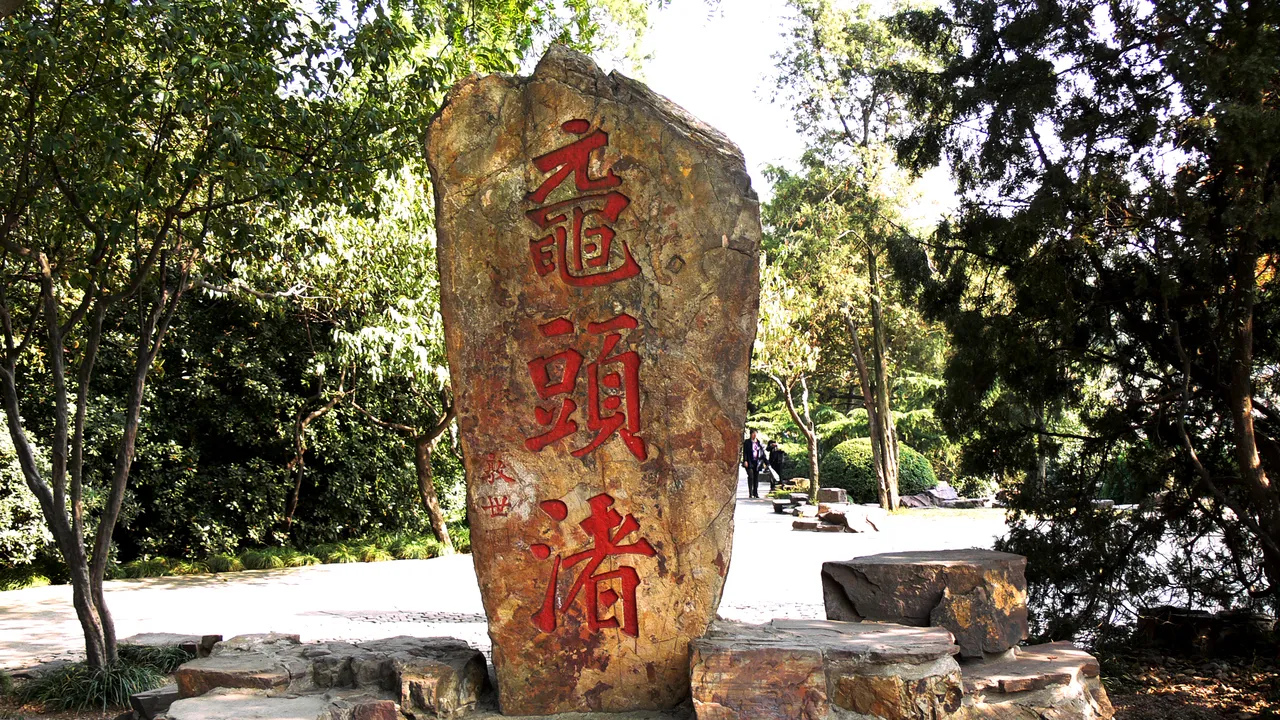
Huishan Ancient Town at dusk is the day's gentlest stretch. The ancestral halls along both banks of the Longtou River hold national heritage status: dozens of compounds in a row, each gate hiding a surname's migration and glory, from Fan Zhongyan's line to the Gu and Wang families. Most halls admit visitors, their courtyards and name plaques a hands-on textbook of clan culture.
No need to enter every gate; pick highlights like the Fan Zhongyan hall and a few others, then sweep the rest at stroll pace. As evening visitors thin out and teahouse lamps come on, order a pot of tea by the river and digest the whole day's history.
The Second Spring under Heaven: Where the Melody Began
The Second Spring inside Xihui Park was ranked by the Tang tea master Lu Yu, its water drawn through three pooled basins. The blind musician Abing busked here often, and his melody The Moon Reflected in the Second Spring has been bound to this water ever since. Abing's tomb and statue stand beside the spring pavilion, bronze figure holding an erhu, facing the water.
If the season allows, catch a live folk-music fragment in the park. After the spring, finish at Jichang Garden, whose borrowed view of Mount Xi reads clearest in slanting light, a garden-style full stop for a culture day.
| Getting around |
|
| Budget | Museum and academy are free with booking; main costs are the RMB 70 Xihui combo plus meals, roughly RMB 150-250 pp. |
| Best time | Year-round with climate-controlled halls; the museum closes Mondays, so plan around it, and the hall quarter is quietest toward dusk. |
FAQs
Do the museum and academy both need booking, and what if slots run out?
Both need free real-name booking on their official accounts, tightest on weekends and holidays. If slots run out, camp for cancellations on weekday mornings, or substitute the museum with the Huishan figurine workshop display plus the halls on foot, and the academy with Xiaolou Lane; the day's cultural weight barely drops.
Are three quarters in one day too rushed?
Intensity tapers: the museum is the heavy lift, the academy moderate, Huishan pure strolling. The key is a two-hour alarm at the museum, out the door on time; Huishan is scheduled at dusk anyway, where teahouse and riverside are rest by definition. The plan is front-loaded by design and quite walkable.
What is actually worth seeing related to Abing and his melody?
Three spots: the spring pools where he busked, his tomb and erhu-holding statue inside Xihui Park, and his old home beside Chong'an Temple in the old city. If a single day cannot cover all, view the museum exhibits, then fold the residence into a Chong'an meal stop; both together take under an hour.
Any low-effort adjustments for traveling with seniors?
Three tweaks: the museum has elevators and wheelchair loan, so concentrate on the second-floor galleries; taxi directly from the academy to Huishan to skip transfer walks; and on Huishan's uneven stone lanes keep to the west bank of the river, flatter and dense with teahouses for frequent sits. Outdoor exposure stays low, manageable even in summer.