
Five days is the shortest stretch that turns Xiamen into its complete edition: one day for Gulangyu at sea, two for the main island's coast, campus and quarters, half a day for Kah Kee's Jimei, and a closing day and a half between the botanical garden and the old town. Against a one-day sprint, five days let each day carry a single heavyweight, leaving the rest to lanes and sea wind.
List the bookings first: the Gulangyu ferry by real name, a Xiamen University visitor slot, the two free museums' reservations, and same-day sessions for springs and sailing. Once those pegs hold, the skeleton stands and every other stop flexes with weather and mood.
Itinerary at a glance
| Day1 08:00 | Gulangyu: Landing at Sanqiutian and the Villa Quarters |
| Day1 10:00 | Sunlight Rock and Shuzhuang Garden: The Island's Two Essentials |
| Day2 09:00 | Nanputuo Temple and Xiamen University: Incense and Class Bells Across a Wall |
| Day2 15:00 | Baicheng Beach and Hulishan Fortress: Sea and Guns in the Afternoon |
| Day3 09:00 | Shapowei and Daxue Road: A Slow Morning at the Old Harbor |
| Day3 14:00 | The Ring Road and Zengcuoan: An Afternoon on the Coastline |
| Day4 09:00 | Jimei School Village: A Kah Kee Morning |
| Day4 13:30 | Tan Kah Kee Memorial Museum and Aoyuan: The Ledger and the Stone |
| Day5 09:00 | The Botanical Garden: A Final Lesson in Mist |
| Day5 15:00 | Zhongshan Road and the Eighth Market: The Five-Day Closing Rite |
The route, stop by stop
Gulangyu: Landing at Sanqiutian and the Villa Quarters
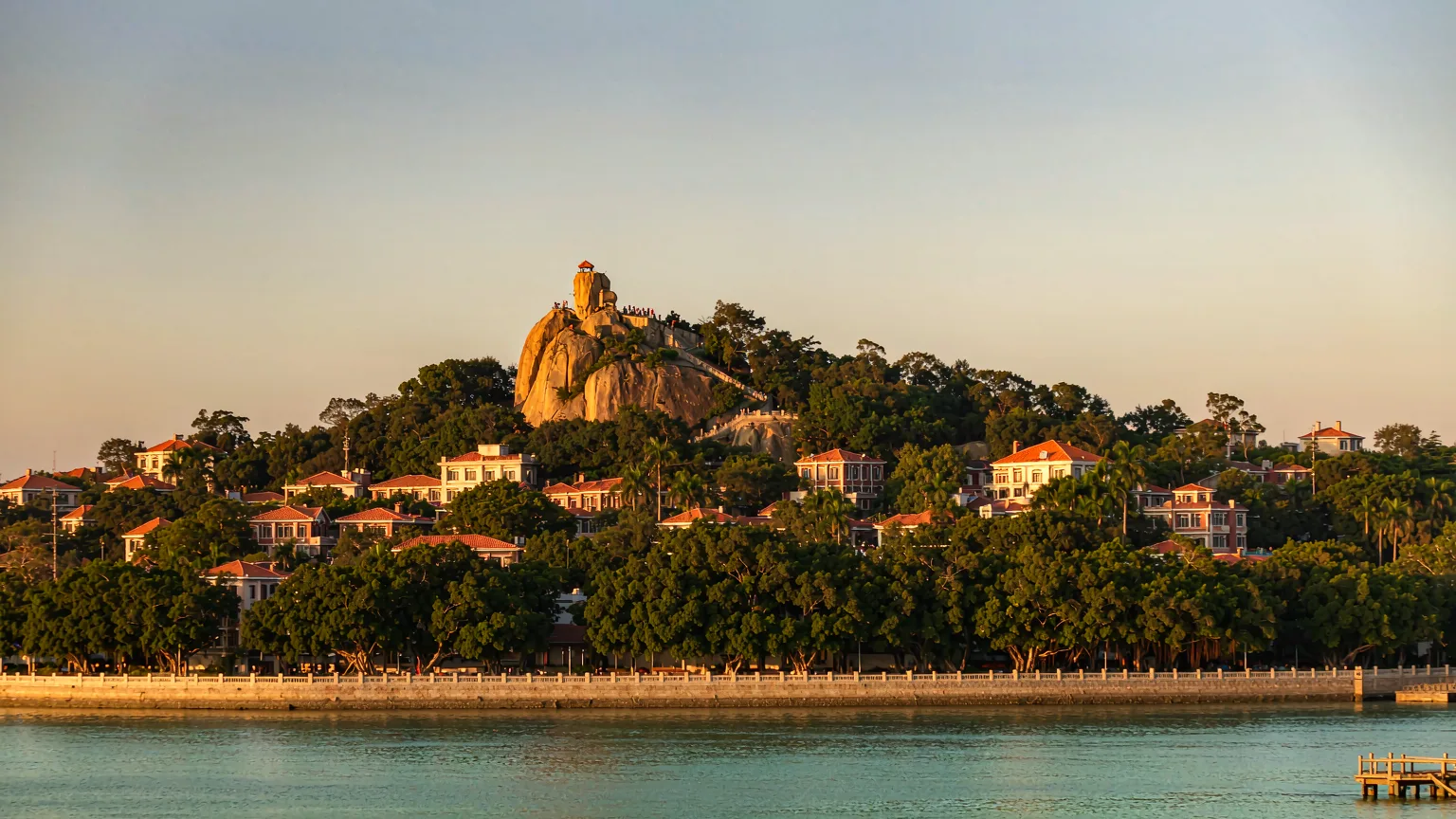
Day one belongs wholly to Gulangyu. Take the first boat and walk the villa quarters along Guxin and Bishan Roads, red-brick arcades and bougainvillea the base palette, piano notes leaking through louvered windows of old houses. The World Heritage core is these lanes themselves, no hunting for sights required.
The morning's task is finishing the lanes ahead of tour groups, reaching Sunlight Rock before noon.
Sunlight Rock and Shuzhuang Garden: The Island's Two Essentials
Summit Sunlight Rock for the island's red rooftops and the Lujiang channel, inscriptions layered up the cliff; descend into Shuzhuang Garden, its forty-four bend bridge fencing the sea into the courtyard, the Piano Museum tucked inside. The five-site combo ticket, about RMB 90, covers both, with the Organ Museum a short afternoon add-on.
A workable beat: the rock at ten, the garden at one, the organ museum at half past three, and a pastry on Longtou Road for afternoon tea before the boat.
Nanputuo Temple and Xiamen University: Incense and Class Bells Across a Wall
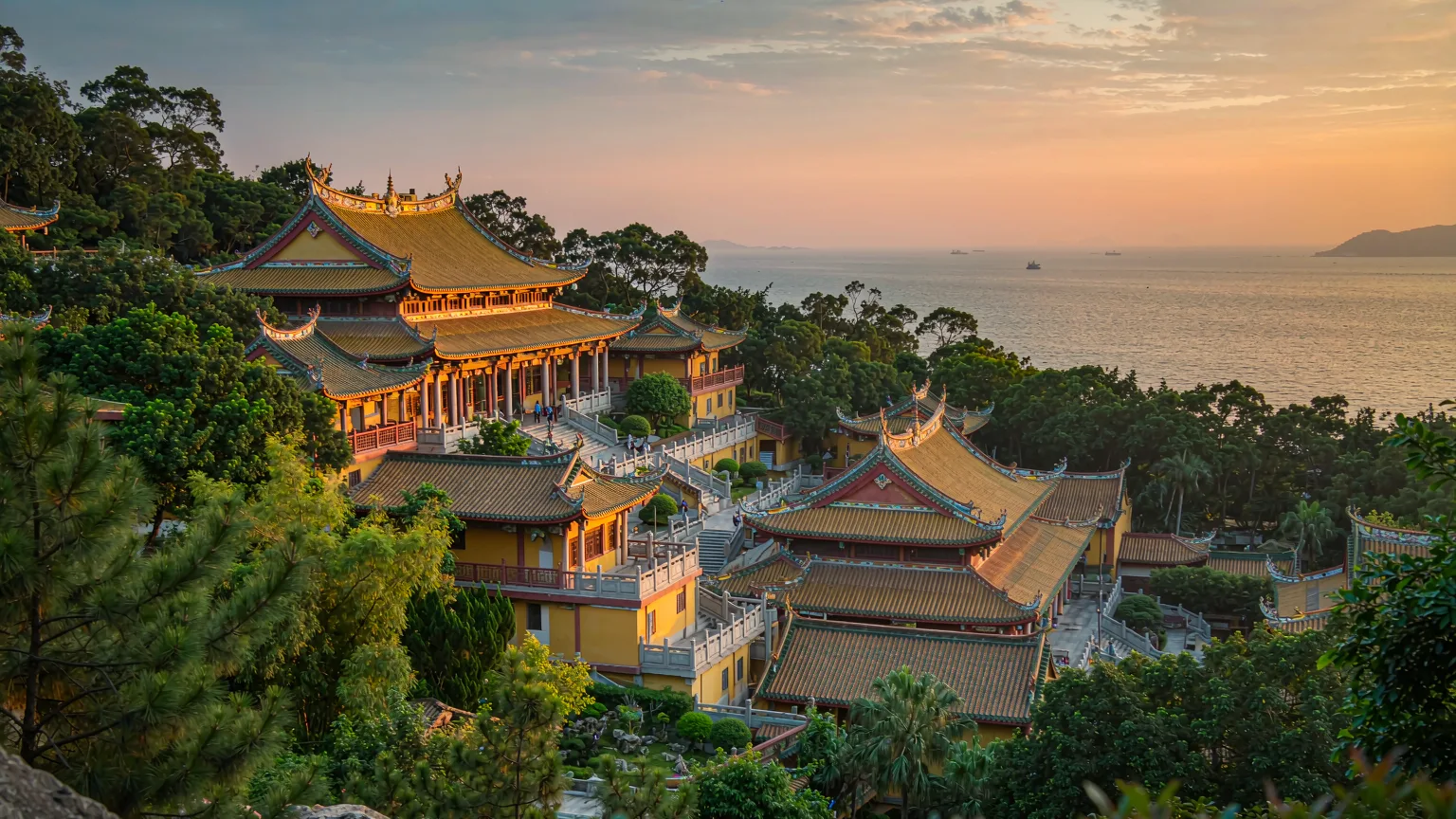
Day two opens at Nanputuo, bodhi shade along the central axis and a mid-height hillside ascent for the sea view. The temple gate faces Xiamen University; with a visitor slot booked, circle Furong Lake, where the Kah Kee building complex retells the suit-and-bamboo-hat mix to every campus generation.
Without a slot, no grief: Daxue Road and Nanhua Road outside extend the same temperament.
Baicheng Beach and Hulishan Fortress: Sea and Guns in the Afternoon
Swim or wade at Baicheng Beach off the university, the sun easing after three as the sea deepens in color. Follow the boardwalk southeast to Hulishan Fortress, where the Krupp gun and its drill show stage coastal defense history, entry about RMB 25.
Walk into Zengcuoan for dinner at dusk, oyster omelet and four-fruit soup closing the day.
Shapowei and Daxue Road: A Slow Morning at the Old Harbor
Day three downshifts. The basin lies calm, the Art Zone's red-brick sheds spread with markets and studios, and Daxue Road's cafes stand shoulder to shoulder. Morning here rewards slowness: fishing boats turned cafes, the steel frames of old cold stores, the tide line at the harbor mouth.
Lunch on shacha noodles along Daxue Road, then choose the afternoon by energy: ring-road cycling or a nap back at the room.
The Ring Road and Zengcuoan: An Afternoon on the Coastline
The afternoon follows the boardwalk southeast, the two kilometers from Baicheng to Zengcuoan the finest stretch of all: shade, sea wind and flat ground. Cycling costs less effort, with rental docks all along the line.
Graze through Zengcuoan for afternoon tea and stay until the red lanterns light, a stretch that never dulls however many times you walk it.
Jimei School Village: A Kah Kee Morning
Day four crosses the water north to Jimei, the metro's sea-crossing section itself a view, the school village opening at the exit: Nanxun and Daonan setting Minnan roofs over Western bodies, the dragon-boat pond's reflections at their fullest early. Classes still run here, reading voices the ambient track.
Two hours circle the pond and public roads, morning light suiting red brick and swallowtail ridges.
Tan Kah Kee Memorial Museum and Aoyuan: The Ledger and the Stone
Afternoon covers the memorial museum and Aoyuan: ledgers and letters turning devoted fortune into numbers, while the stone galleries carve Chinese history wall by wall, Jimei craft running unbroken between rooflines and stone. Adjacent sites, two hours total.
Return to the main island by dusk and add a nanyin or Gaojia Opera night, a fitting footnote to the Jimei day.
The Botanical Garden: A Final Lesson in Mist
The last day opens at the Wanshi Mountain garden. The rainforest mist session presses the valley into cloud, and the succulent zone's cactus array stands most sculptural in morning light. Both zones with the shuttle take about three hours, landing neatly on lunch.
The garden's paths are the five days' only real climb, grippy shoes and water required.
Zhongshan Road and the Eighth Market: The Five-Day Closing Rite
The final stretch returns to the old town. The arcades of Zhongshan Road turn photogenic after four, while the market trades dried goods and seafood at a century-old tempo. Complete the souvenirs here: pastry, tea, pork floss, flagship by flagship.
Close dinner with shacha noodles and peanut soup, then watch Gulangyu light up from the riverside road. Five days began across that water and end here, the loop closed.
| Getting around |
|
| Budget | Ferry about RMB 35-50, combo ticket about RMB 90, experiences like springs extra; five days run roughly RMB 900-1600 pp before lodging. |
| Best time | Mar-May and Oct-Dec are best; save the clearest day for Gulangyu and dodge Mondays when the museums close. |
FAQs
Are five days too many, and which days compress?
Exactly right is the honest answer: a full day on Gulangyu is not excessive, and Jimei can fold into an island day. On four days, merge the garden into the Jimei return and keep the rest; on three, drop the culture night and the Shapowei half day.
What if Xiamen University visitor slots never open for me?
Three ways: camp the release time for returned slots, pick off-peak weekday windows, or skip entry altogether, since Daxue Road, Nanhua Road and Baicheng Beach already unwrap along the campus wall with none of the character lost. Scarce slots are the norm, so keep the weight low in the plan.
How do I control the five-day budget, and where does it concentrate?
Tickets barely register; lodging and seafood dining dominate. Control by buying souvenirs at flagships and the market, keeping stall seafood under three catties per table, and taking weekday spring and sailing sessions. RMB 900-1600 pp before lodging travels handsomely.
What are the fallbacks for a rainy or typhoon spell across five days?
Build the indoor skeleton first: two museums, the art museum and the malls make a rain kit. On warning days abandon all coast and crossing legs and pull downtown and Jimei forward. A veteran trick is placing Gulangyu mid-trip rather than first, leaving one day of weather slack.