
Seven days is not about more sights but a slower pulse: one theme per day, free wandering within it. Base two nights in the old town reading market and arcades; days three and four take the island and the coast; day five climbs to hills and springs; day six crosses to Jimei; day seven closes with museums and the market. Only by staying does the city's layering read out.
The booking list: the Gulangyu ferry, a university visitor slot, two museum reservations, a spring session. Everything else is free or cheap. A seven-day frame's great virtue is slack, generous enough to cut any stop without regret, and the day you cut often turns out the best.
Itinerary at a glance
| Day1 08:00 | The Eighth Market: Chapter One Begins at the Morning Market |
| Day1 14:00 | Zhongshan Road and the Arcade Blocks: An Afternoon of Facades |
| Day2 08:00 | Gulangyu: A Full Day of Villas and the Two Museums |
| Day3 09:00 | Nanputuo Temple and Xiamen University: Up the Hill, into the School |
| Day3 15:00 | Shapowei and Daxue Road: The Transition from Fish Basin to Art Quarter |
| Day4 08:30 | Hulishan Fortress and Baicheng Beach: Opening Coast Day |
| Day4 13:00 | Zengcuoan and the Ring Road: Food Street and the Long Shore |
| Day5 09:00 | The Botanical Garden and the Rail Park: Green-Lung Day |
| Day5 15:00 | Tianzhu Mountain and Riyuegu Springs: Into the Hills, into the Pool |
| Day6 09:00 | Jimei School Village: The Complete Kah Kee Lesson |
| Day6 14:00 | Aoyuan and Qingjiao Ciji Palace: Stone Carving and Folk Faith |
| Day7 09:00 | The Xiamen Museum and the Overseas Chinese Museum: Footnotes for Day Seven |
| Day7 15:00 | The Market Revisited and the Riverside: Closing the Loop on Day Seven |
The route, stop by stop
The Eighth Market: Chapter One Begins at the Morning Market
Deep travel opens its first class in the Eighth Market. The Kaihe Road morning session strikes up at six thirty, fish stalls, dried-goods shops, veteran pastry counters and street mee suah forming the old town's digestive system. Walk it once loosely, learning doors, stalls and prices; over seven days you will return three or four times, each surer than the last.
Breakfast at the market edge, standing over a bowl of rice-noodle paste, sets the city's first taste firmly at street level.
Zhongshan Road and the Arcade Blocks: An Afternoon of Facades
The afternoon reads the town's facades. The main street's arcades are the shopwindow of emigrant fortunes, but the real reading runs along the back: in the lanes of Datong, Jukou and Dazhong Roads, pediments, old signs and merchant names carved into columns survive better. Carry a pen and note the interesting house numbers.
Graze an early dinner in Jukou Street, then by seven sort ferry tickets and reservations at your room for tomorrow's crossing.
Gulangyu: A Full Day of Villas and the Two Museums
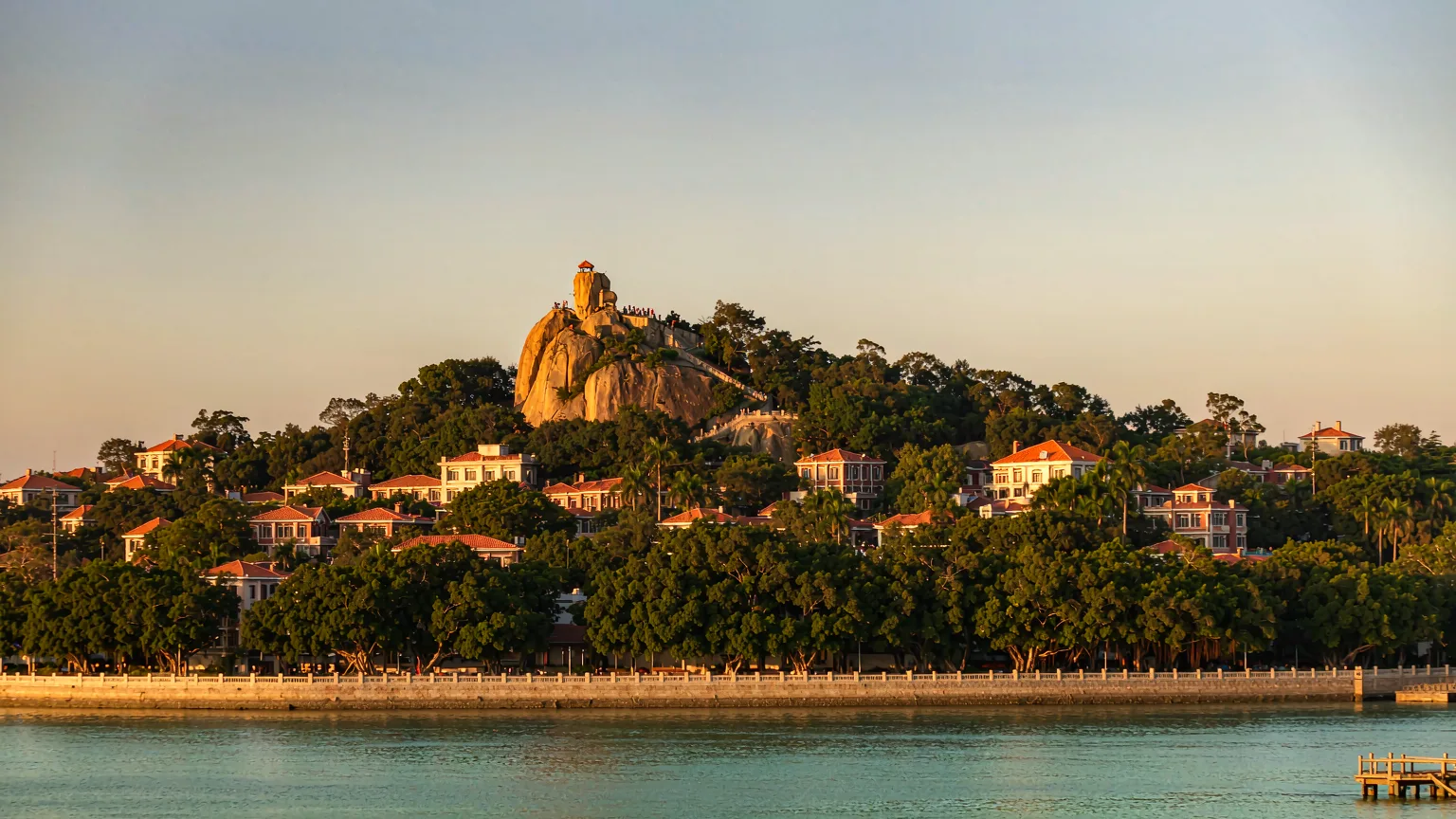
Day two is not the day-tripper's Gulangyu: morning walks the villas from Sanqiutian along Guxin and Bishan Roads past former consulates and churches; afternoon sums Sunlight Rock, then Shuzhuang Garden with the Piano Museum, and the Organ Museum's live demonstration before the evening boat.
The order, lanes to summit to garden to keyboard, walks the island's three layers in turn: dwelling, defense and refinement.
Nanputuo Temple and Xiamen University: Up the Hill, into the School
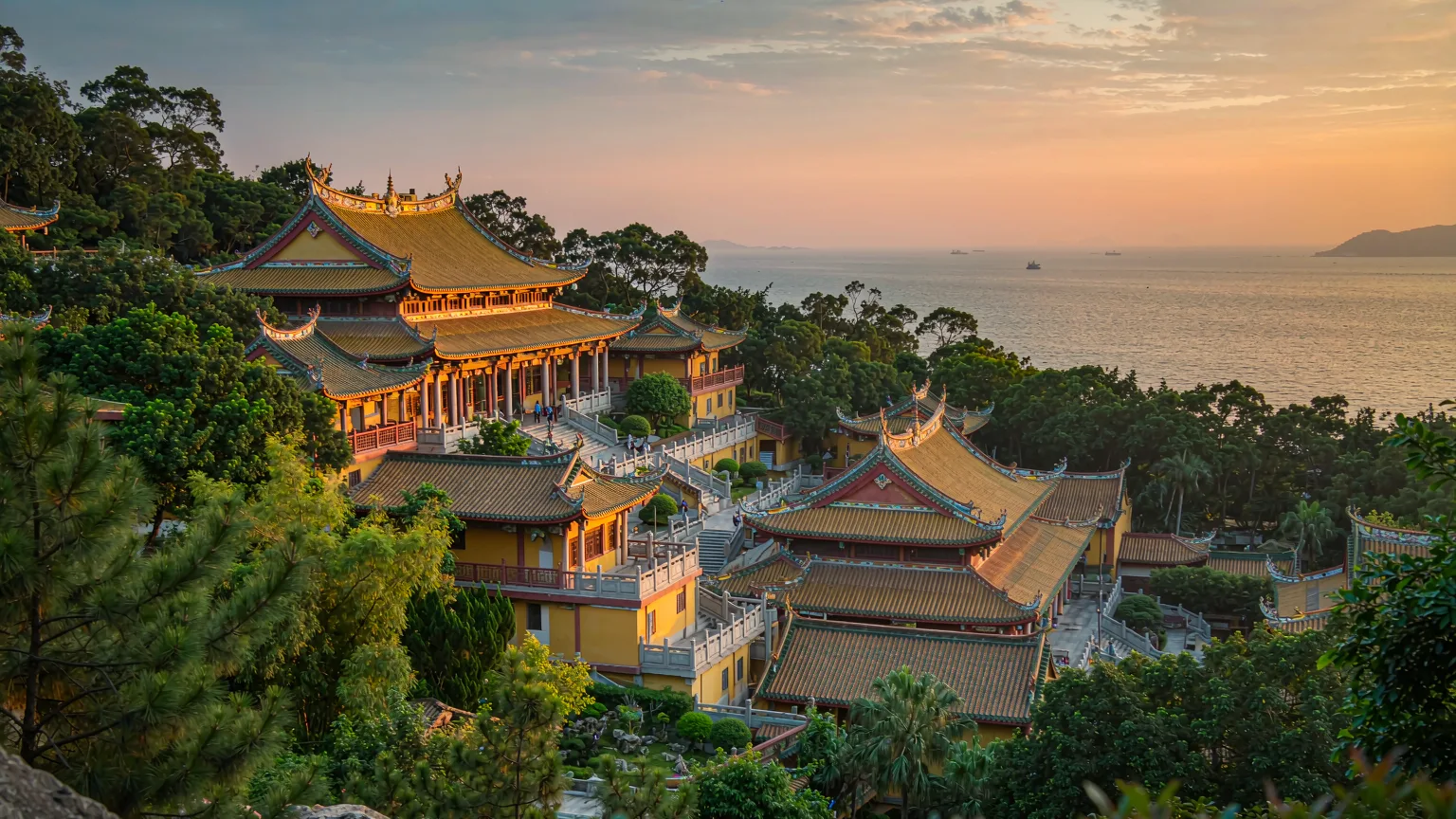
Day three starts at Nanputuo, climbing Wulao Peak to mid-height, where temple roofs, campus blocks and the sea share one frame, the position that explains the back-to-hill, facing-sea layout. The afternoon enters Xiamen University, visitor slot required, circling Furong Lake and the Kah Kee complex, with the campus history museum telling its South Seas lineage.
Without a slot, walk Daxue and Nanhua Roads outside the wall, the same temperament intact, with a cafe crawl as the bonus.
Shapowei and Daxue Road: The Transition from Fish Basin to Art Quarter
The afternoon returns to Shapowei, where the basin's water and the Art Zone's sheds form the seam between old and new, a seam that is Xiamen's last decade in miniature. Sit by the tide line, then continue Daxue Road's unfinished cafe list from the morning.
Dinner in the lanes off Daxue Road closes day three on market-and-coffee slowness, banking strength for tomorrow's coast.
Hulishan Fortress and Baicheng Beach: Opening Coast Day
Day four goes wholly to the coast. Climb Hulishan Fortress first for thin crowds and slanting light, the Krupp gun's field of fire square across the channel you walked yesterday; descend straight onto Baicheng Beach to wade or swim, safely inside the buoys.
From Baicheng the boardwalk runs two kilometers southeast, the island coast at its essence, shade and sea wind each in the right place.
Zengcuoan and the Ring Road: Food Street and the Long Shore
Lunch inside Zengcuoan shelters the noon glare, side-lane tables running a fifth cheaper than the main street. After three, rent a bike eastward on the ring road, the palm straights of the Huangcuo stretch the day's high point, riding to Wanyuepo for the sunset line.
Return the bike and bus back to town, ending day four on wheels and sunset, with an early night before the hills.
The Botanical Garden and the Rail Park: Green-Lung Day
Day five's morning goes to the Wanshi Mountain garden: the mist session pressing the rainforest valley into cloud, the succulent zone's cactus array at its most sculptural in slanted light. Three hours cover both zones, and the exit feeds the rail park's greenway, forty minutes along old tracks toward the old town.
The day's theme is slowing and breathing; the evening stays free for sorting the week's photos.
Tianzhu Mountain and Riyuegu Springs: Into the Hills, into the Pool
The afternoon heads for Haicang's Tianzhu Mountain and a stretch of creek trail under closed canopy with constant water sound, intensity self-set: an hour on the short loop, three on the long line. By dusk, descend to nearby Riyuegu springs, where dozens of open-air pools settle six days of fatigue in one invoice.
Spring day is the seven-day line's halftime; soak, return early, and rise for tomorrow's Jimei.
Jimei School Village: The Complete Kah Kee Lesson
Day six crosses the water north. Read the school village rightly, layout first, details second: the axis between dragon-boat pond and schoolhouses, the ratio of Nanxun's roof to its body, the cement tracery on Daonan's columns. Morning light trues the red brick.
Two hours in the village, then the Tan Kah Kee memorial museum to finish the ledger, lunch in Jimei's market streets.
Aoyuan and Qingjiao Ciji Palace: Stone Carving and Folk Faith
Afternoon opens at Aoyuan's stone galleries, Jimei craftsmen carving history across the walls, then heads south to Qingjiao Ciji Palace in Haicang, ancestral court of the Baosheng Dadi faith, its roofline porcelain reliefs without a spare inch, incense steady all day. Both are field classes in Minnan craft.
Return to the main island by dusk and stroll the riverside road after dinner, watching Gulangyu's lights across the water, a rehearsal for tomorrow's farewell.
The Xiamen Museum and the Overseas Chinese Museum: Footnotes for Day Seven
The last day footnotes the week with two museums. The city museum's history and folk halls classify the celadon, ship models and festivals met along the way; the Overseas Chinese Museum's qiaopi gallery grounds the phrase gone south in letter after family letter. Museum visits after the fieldwork double their hit rate.
Three hours for both, lunch nearby at midday, and an empty afternoon block for tickets, packing and goodbyes.
The Market Revisited and the Riverside: Closing the Loop on Day Seven
Day seven's evening returns to the market, now armed with six days of data: which pastry comes out that afternoon, which dried-goods stall prices straight, which bowl of mee suah suits you best. Buy every souvenir in one pass, then carry the bags to the riverside road for a last look at Gulangyu across the water.
Close dinner by replaying the week's favorite meal, shacha noodles, ginger duck or soy-water fish. A loop closes meaningfully when what you carry home is not a checklist but a tested preference.
| Getting around |
|
| Budget | Tickets total about RMB 150-250, springs RMB 200-300; seven days run roughly RMB 1500-2500 pp before lodging. |
| Best time | Mar-May and Oct-Dec are best; a seven-day frame reshuffles with weather, saving the clearest one or two days for Gulangyu and the ring road. |
FAQs
Where should I base seven nights, and do I need to switch hotels?
A two-block plan works: four nights by Zhenhai Road or the university, covering old town, island and coast; the last three nights can stay put, or spend one in Jimei for the village at dawn. Move bags as little as possible, since metro and bus easily support a single base for the week.
What are the essential bookings for seven days?
Four items: the round-trip Gulangyu ferry by real name, first boats scarcest; a university visitor slot, gone at release; bookings for the two free museums, dodging Mondays; and a Riyuegu session, weekday discounts available. With those pegged, everything else flexes with the weather.
Will seven days of seafood turn tiresome?
Not if you rotate: soy-water, blanching, shacha, ginger duck and popiah in turn, with the carbohydrate line of shacha noodles, mee suah and peanut soup woven between. Sensitive stomachs should schedule one plain meal every two days, sweet-potato congee and blanched greens available everywhere.
Where is worth an extra half day most of all?
Gulangyu. Most grant it a single day, yet the villa quarters deserve two mornings at least: one for the southern consulates and churches, one for the northern residential lanes. Overnight on the island and you meet two different islands at dawn and night, worth bending the budget for.