
Old Yangzhou measures best on foot: five historic quarters sit inside the Ming-Qing street grid, and the tea steam of Yechun, the craft courtyards of Renfengli, the bookshops and cafes of Pishi Street and the time-worn brands of Dongguan Street all fall within walking range. This route treats lanes as skeleton and eating as waystations.
The pace is slow: tea until ten is not late, lanes invite stopping anywhere, and dusk belongs to Dongguan Street and the canal. Walking plus two or three bus legs totals about six kilometers, a line that lets the city's street life sink into the body.
Itinerary at a glance
| 08:00 | Morning Tea at Yechun: The Opening Rite of Skin Wrapping Water |
| 10:30 | Renfengli: A Tang-Era Fishbone Lane |
| 13:00 | Pishi Street: Bookshops, Coffee and Shrimp-Roe Noodles |
| 16:00 | Dongguan Street and the Ancient Ferry: Handing Dusk to the Canal |
The route, stop by stop
Morning Tea at Yechun: The Opening Rite of Skin Wrapping Water
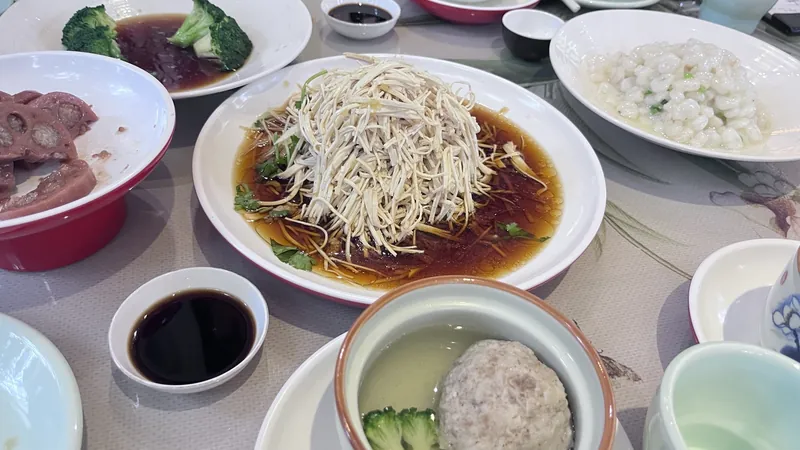
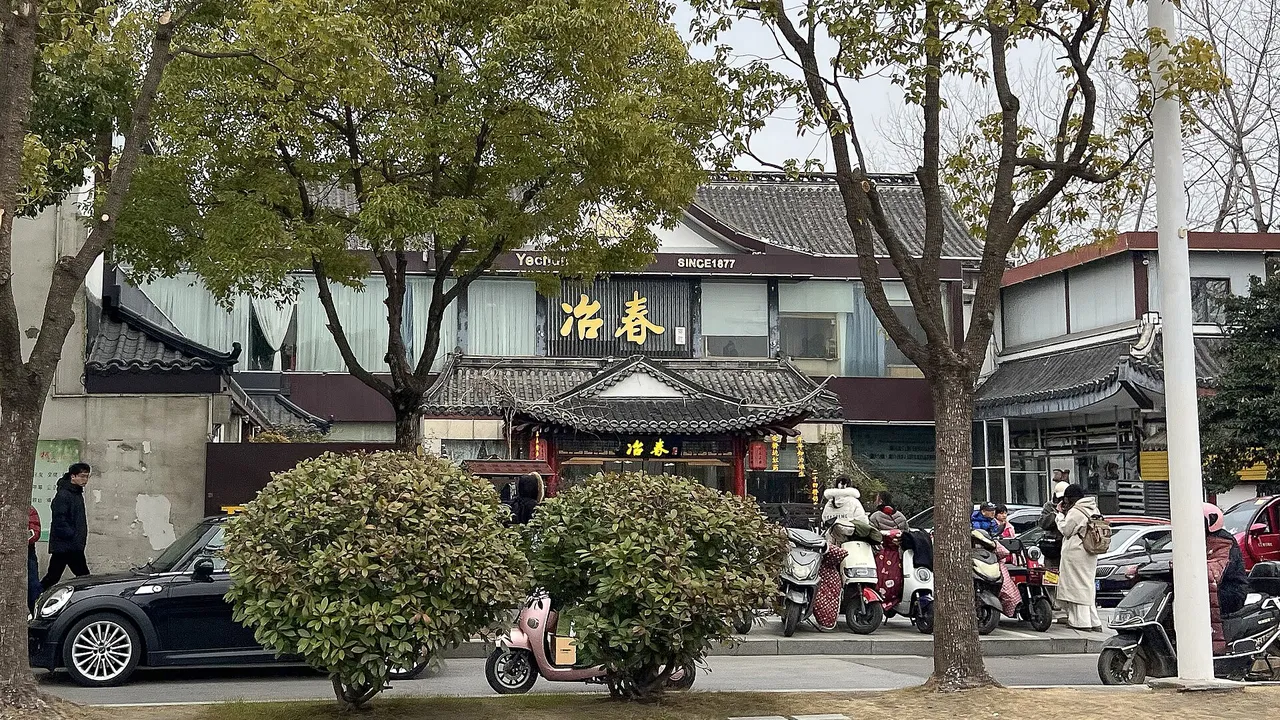
Yangzhou calls a teahouse morning skin wrapping water, and the day opens with that steamer basket. Yechun sits in its own garden by the Old Ferry head, riverside seats watching mist rise off the moat. The ordering formula: one basket of steamed dumplings or soup dumplings, one plate of shredded tofu in hot broth, one three-delicacy or five-delicacy bun, plus a pot of Kui Long Zhu tea.
The jade steamed dumpling owes its green to vegetable juice, the thousand-layer oil cake is sponge-soft, and the shredded tofu prizes fineness of cut over thinness. The correct posture is unhurried: three refills of tea, and the day's plan settled at the table.
Renfengli: A Tang-Era Fishbone Lane
From Yechun follow the moat east into Renfengli, a living specimen of Tang ward planning: one spine lane with side lanes forked like fishbones, the layout barely changed in a thousand years. Today it folds craft studios into old courtyards, where artisans of paper-cutting, guqin and pith-flower craft work in their own doorways.
The lane is short, half an hour at a slow pace, dipping into one or two courtyards. Commerce stays thin here, and a paper-cut bought or a tune heard up close is closer to the real thing than any staged show.
Pishi Street: Bookshops, Coffee and Shrimp-Roe Noodles
Midday shifts to Pishi Street, a few hundred meters of lane that anchors Yangzhou's young crowd: independent bookshops, vinyl stores, cafes and snack counters packed shoulder to shoulder, hand-painted signs in odd harmony with the old houses. Lunch happens here, at the veteran shrimp-roe noodle-and-wonton shop by the street's mouth, the local lunch stronghold.
The dish's soul is the broth: a red soup built on shrimp roe and soy, with wontons and thin noodles sharing one bowl. Digest afterward in a bookshop and pick a small volume on Yangzhou, the lane's most fitting souvenir.
Dongguan Street and the Ancient Ferry: Handing Dusk to the Canal
Walk or ride one bus stop to Dongguan Street, where the citywalk completes itself. Evening crowds thicken, shopfronts and lanterns lighting in sequence, voices mixing on the bluestone. Step into two or three heritage shops, Xiefuchun's egg-shaped face powder and Sanhemeimei's pickles being the Yangzhou you can carry.
At the east end, the Ancient Ferry bends the Grand Canal underfoot. After sunset the river lamps come on and the gate-tower silhouette presses onto the water, gathering the day's lanes and smoke into one closing frame. Dine on the street or cross the bridge for a proper Huaiyang banquet to end.
| Getting around |
|
| Budget | Morning tea about RMB 40-80 pp, meals and coffee together roughly RMB 150-250, with all quarters free. |
| Best time | Year-round, best April-June and September-October; tea tables open at 7:30 and famous houses queue on weekends, so weekdays breathe easier. |
FAQs
If I miss the 7:30 tea start, is there anything left at ten?
Yes, service runs to about 10:30, with famous houses turning small tables faster; by ten the menu narrows but the signature baskets keep steaming. If completeness worries you, split it: walk Renfengli first, return at ten for a late-morning tea, dodging the peak in comfort.
Do Renfengli and Pishi Street overlap, and how to choose?
No overlap. Renfengli shows old-lane fabric and living artisans, Pishi Street shows new-style shops and the young crowd, one old and one new in clean complement. Short on time, walk each main spine once, ninety minutes combined; skip-depth on bookshops means trimming Pishi and moving lunch to a Dongguan Street veteran.
Does this route work in rain?
Yes, and rain suits it, with a gear change: slick bluestone makes grip shoes matter more than umbrellas, and lane eaves are narrow, so carry a compact umbrella. Stretch the courtyard and bookshop stops, use Dongguan Street's arcade and shop porches for continuous shelter; no re-routing needed.
Is this route easy solo?
Highly solo-friendly: teahouses offer single seats and small portions, shrimp-roe noodles are a solo classic, and the lanes' teahouses and bookshops welcome one. The only note is Dongguan Street's evening crush, so keep valuables front-carried; beyond that, no real obstacles.