
Yangzhou's cultural hand holds three cards: woodblock printing survived here for a millennium as a living craft; Jianzhen sailed from Daming Temple six times toward Japan carrying Buddhism and building arts; salt-merchant wealth raised compounds like Wang's, while Zhu Ziqing walked from here into modern literature. One day strings all three, routed west to southeast.
Every highlight sits indoors or in courtyards, a quiet rhythm: two hours for the twin museums, ninety minutes for Daming Temple, forty minutes each for the afternoon houses. Tourist lines 1 and 2 cover the run, with taxis between stops near flag fare.
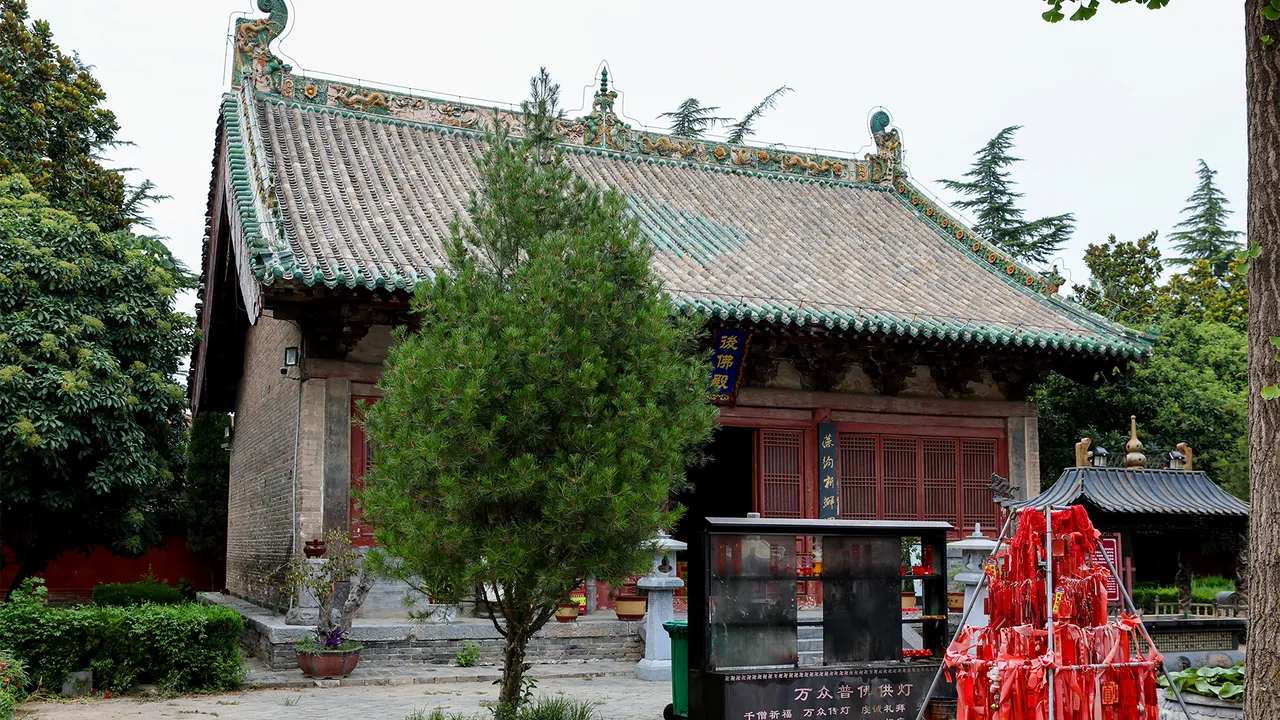
Itinerary at a glance
| 09:00 | The Yangzhou Twin Museums: Woodblock Printing Alive |
| 11:30 | Daming Temple: Jianzhen's Hill and Pagoda |
| 14:30 | Wang's Compound: The Spatial Wisdom of a Merchant Mansion |
| 16:30 | Zhu Ziqing's Former Home: Where the Silhouette Began |
The route, stop by stop
The Yangzhou Twin Museums: Woodblock Printing Alive
The Yangzhou Museum and the China Woodblock Printing Museum share one building as the twin museums. The printing wing tells the craft's full genealogy, writing the sample, carving the block, brushing the print, binding the book, with artisans pulling prints live in the hall; a freshly inked page, still fragrant, can go home with you.
Across the atrium, the Yangzhou Museum's treasure is the fogged-blue glaze meiping with white dragon, one of only three known survivals of its type and the most complete. Han-dynasty holdings and a canal-theme gallery round out a relaxed two hours.
Daming Temple: Jianzhen's Hill and Pagoda
Before noon, climb Shugang ridge to Daming Temple. The Jianzhen Memorial, designed by Liang Sicheng after the golden hall of Toshodaiji in Japan, holds a replica of the seated Jianzhen facing east, with a stone lantern out front whose flame came from Nara. The start of six voyages lives here, fixing the temple as a physical coordinate of cultural exchange.
Pingshan Hall was Ouyang Xiu's hillside study, its railing once commanding the river to the south. The Qiling Pagoda climbs for a whole-city view with the lake spread below, and the temple's vegetarian canteen makes lunch: a bowl of vegetarian noodles with monk's medley, eating the culture line with Zen intent.
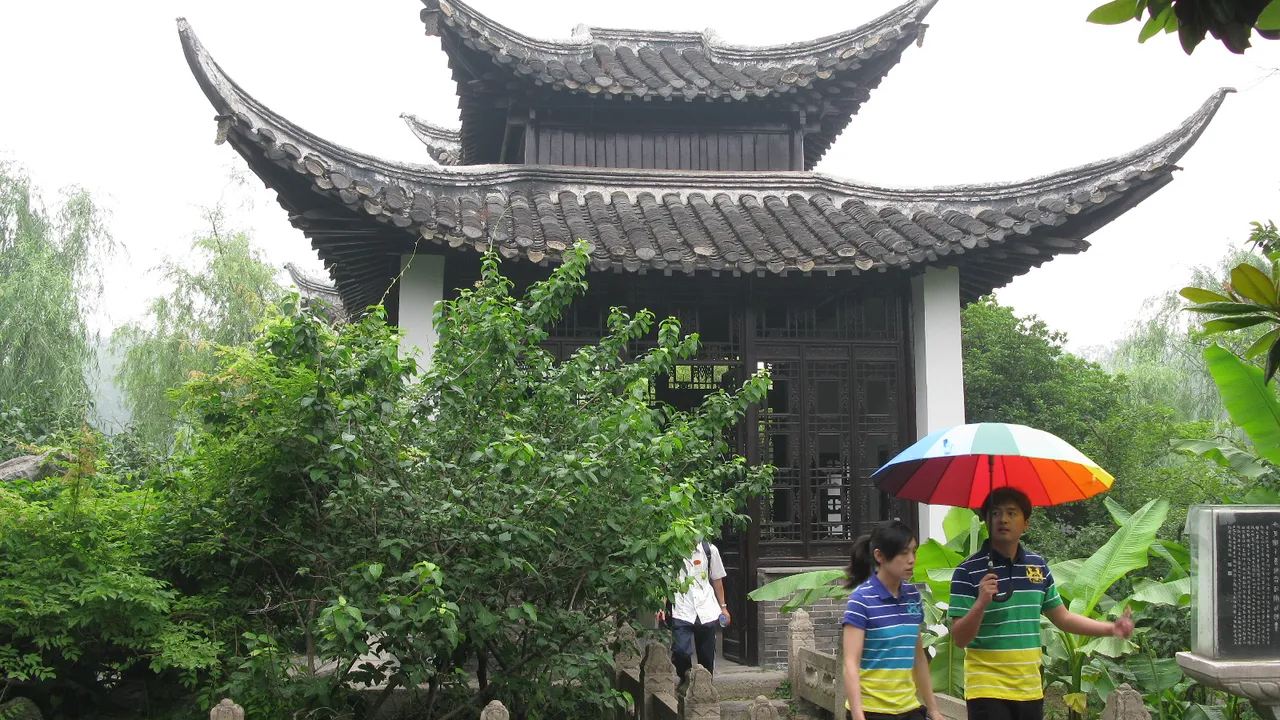
Wang's Compound: The Spatial Wisdom of a Merchant Mansion
Spend the afternoon inside a mansion. Wang's Compound on Diguan Di off Dongquanmen is among the best-preserved salt-merchant residences in the city: three rows by three bays, gardens tucked between the ranges, the name's small garden earning its modesty, small in area, deep in sequence. Fire lanes and hidden doors everywhere betray the twin instincts of guarding wealth and guarding against trouble.
Read the house through its space: hall heights, courtyard daylight, fire-lane widths, the merchant sewing safety, face and fengshui into one floor plan. Forty to sixty minutes sees it through.
Zhu Ziqing's Former Home: Where the Silhouette Began
The culture day closes in Anle Lane. Zhu Ziqing's former home is a plain courtyard dwelling where the exhibits read The Silhouette and Moonlight over the Lotus Pond against his life. Standing at the study window, you understand why this essayist's prose always carried such restrained feeling.
Leaving, Renfengli or Pishi Street lies within walking reach for dinner. The day's last image: an old courtyard, one lamp, a lane going dark, roughly the base color of Yangzhou itself.
| Getting around |
|
| Budget | The twin museums are free with booking, Daming Temple about RMB 45 and Wang's Compound about RMB 25; with meals the day runs roughly RMB 150-250 pp. |
| Best time | Year-round with climate-controlled halls; the twin museums and Zhu Ziqing's home close Mondays, so plan around it. |
FAQs
Is booking the twin museums hard, and can I walk in?
Weekday slots are loose, so book one or two days ahead for weekends and holidays; on-site registration with valid ID usually works but is not guaranteed in peak season. The live-printing sessions hold fewer places, so join that queue the moment you enter.
Is pairing Daming Temple with the lake in one day too rushed?
As this culture day is routed, Daming Temple is the single heavyweight, no rush; combining with the lake, walk only the essential stretch, exit the north gate and go straight up, fully controllable. With seniors, pick one, since the ridge has slopes and strength should be banked.
Between Wang's Compound and Ge Garden, which one?
By appetite: for garden craft and the four-season rockery, Ge Garden is the unique copy; for how merchants lived and the logic of the house, Wang's Compound concentrates it better. With time, see both; with one slot, follow this guide's Ge Garden plus the compound for half of each experience.
How to make this line engaging for children?
Three hooks: the live printing lets kids pull a page and carry it home; the pagoda climb and vegetarian lunch at Daming Temple are experiential; Wang's fire lanes and hidden doors retell well as a mansion hide-and-seek. Cap each venue at forty minutes and slot one pastry break mid-route.