
Yangzhou's historic buildings sort into three classes: lake gardens, in-city mansions, and canal-side relics. Three days take one each: day one reads Slender West Lake and Daming Temple through, adding the Han Tomb Museum's Huangchang Ticou timber chamber; day two moves between merchant and literati houses; day three descends to Nanhexia for He Garden and the Lu residence, returning to the old city's north edge for Shi Kefa and Tianning Temple.
The line's demands are booking and legs: most gardens and mansions sell on site while the free museums need booking, and each day walks about fifteen thousand steps over garden stairs and door sills, so wear shoes that grip. Combos save twenty to thirty percent, so check coverage against the itinerary.
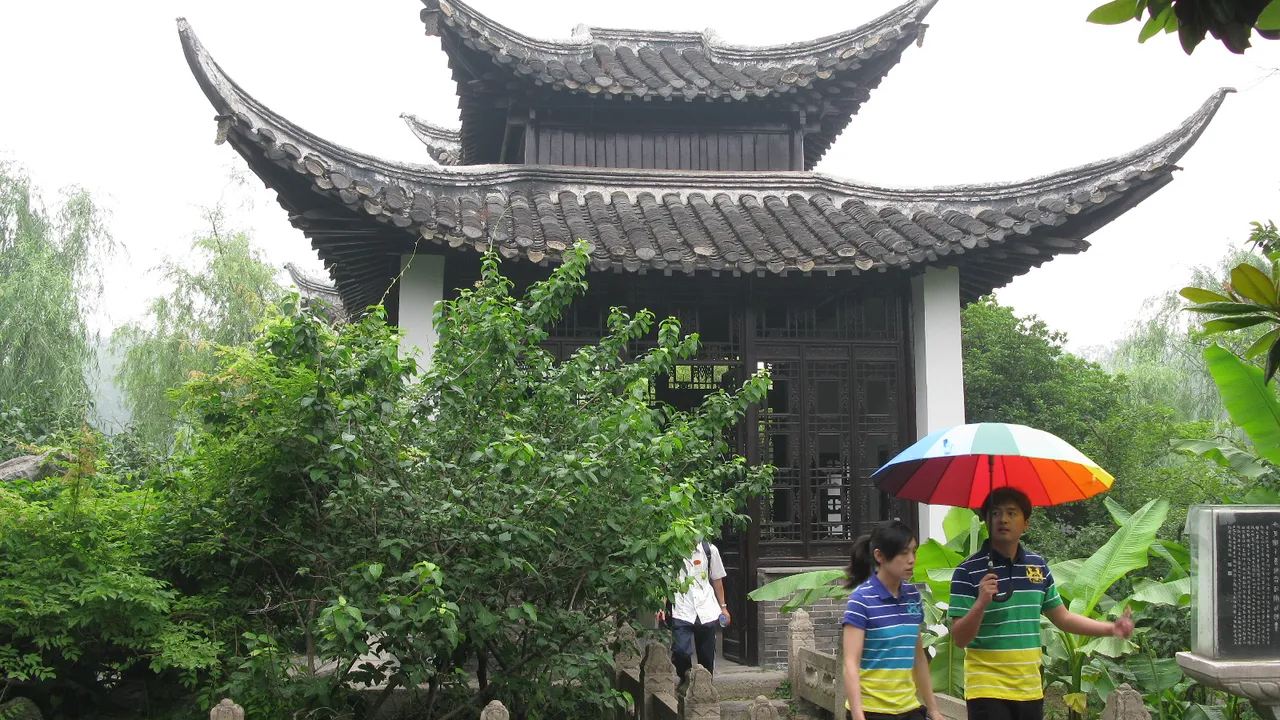
Itinerary at a glance
| D1 08:00 | Slender West Lake: Reading a Lake Garden Completely |
| D1 11:30 | Daming Temple: A Millennium of Incense on Shugang |
| D1 15:00 | The Han Tomb Museum: A Huangchang Burial Palace Underground |
| D2 08:30 | Ge Garden: A Close Reading of the Four-Season Rockery |
| D2 10:30 | Wang's Compound: The Small-and-Deep House Model |
| D2 14:00 | Zhu Ziqing's Former Home: An Old Courtyard of Modern Letters |
| D2 15:30 | The Wu Daotai Mansion: A Zhejiang Building School's Yangzhou Branch |
| D3 09:00 | He Garden: A Three-Dimensional Garden on Its Double Corridors |
| D3 11:00 | The Lu Salt-Merchant Residence: The City's Largest Merchant Gate |
| D3 14:30 | The Shi Kefa Memorial and Tianning Temple: Closing on Loyalty and Letters |
The route, stop by stop
Slender West Lake: Reading a Lake Garden Completely
Open the trip with a full morning on the lake. Enter at the south gate along the willow causeway, reading the Fisherman's Pavilion frame, Five Pavilion Bridge's fifteen arches, the White Pagoda's slim curve and the white marble of Twenty-Four Bridge in waterborne order. A lake garden's essence is shoreline by design, visible only at slow pace.
In high season the night show, A Moonlit Memory of Yangzhou, deserves its own evening, leaving daylight for structure and detail. Before the north gate, take a cup of tea at a lakeside house and finish the water before climbing the ridge.
Daming Temple: A Millennium of Incense on Shugang
From the north gate, climb straight up. The temple reads in three layers: the Sino-Japanese bonds of the Jianzhen Memorial, the literati accretions of Pingshan and Gulin halls, and the whole-city view from the Qiling Pagoda. The six voyages' documents hang beside the hall, and standing there explains what this ridge means to the city.
Eat at the vegetarian canteen at midday, then descend toward the Han Tomb Museum. The Shugang line runs south to north, tracing Yangzhou's depth from the Tang back to the Han.
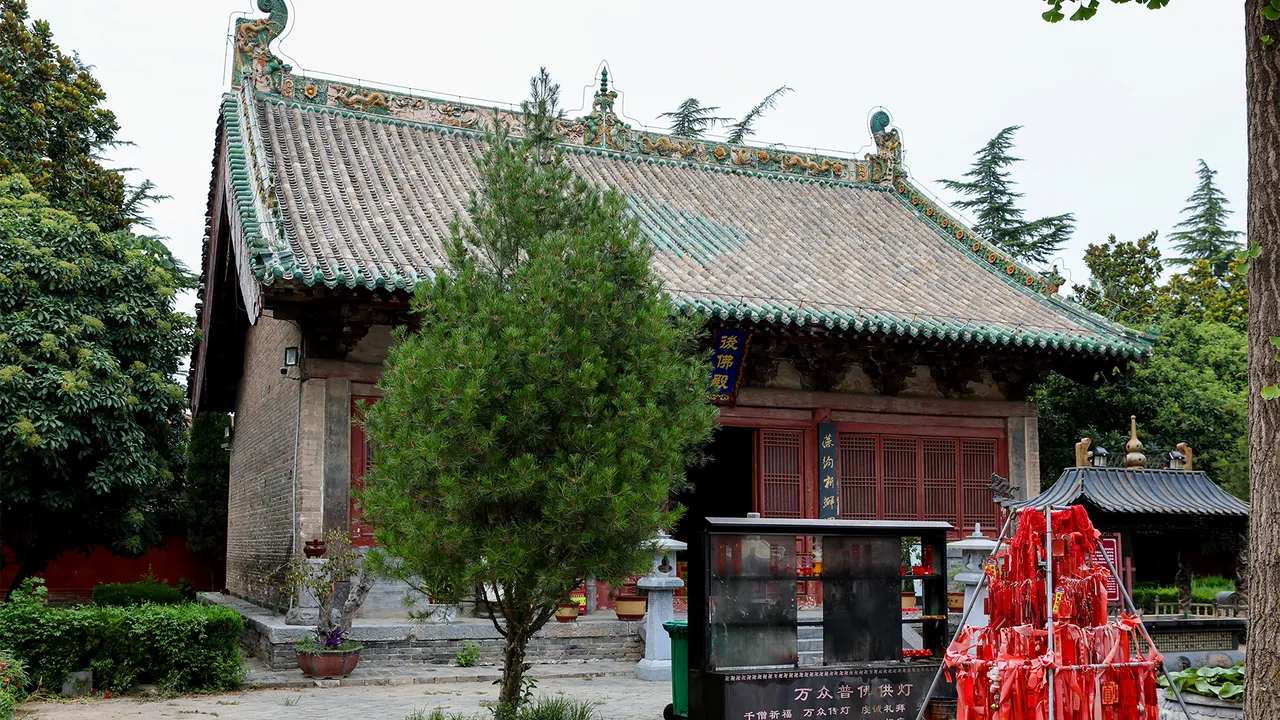
The Han Tomb Museum: A Huangchang Burial Palace Underground
The Han Tomb Museum houses the reassembled burial chamber of Liu Xu, King of Guangling in the Western Han, and its shock is the Huangchang Ticou: a wooden wall of thousands of cypress timbers laid heads inward, among the highest Han burial ranks, the whole chamber like a timber palace set upside down. The site was moved here in its excavated state.
Understanding the structure takes ten minutes of reading and ten of staring, and the exhibits explain it cleanly. This stop pushes the city's story back past merchants and literati to a princely state two millennia old, completing the trip's first stratum.
Ge Garden: A Close Reading of the Four-Season Rockery
Day two's theme is mansions, opening at Ge Garden. Morning side light sorts the four-season rockery's materials clearly: spring's bamboo-shoot stones, summer's lake stones, autumn's yellow granite, winter's alabaster, each posted by direction and texture. Take a guide or audio and read the Huang family's history against the garden's.
The house ranges reward close looking too, the structure of Baoshan and Congshu towers, nanmu timber in the hall, lattice patterns everywhere. Ninety minutes to two hours, exiting straight toward Wang's Compound.
Wang's Compound: The Small-and-Deep House Model
Walk a dozen minutes from Ge Garden to Wang's Compound. Where Ge Garden stages landscape, the compound is a pure housing specimen: three rows by three bays, fire lanes, hidden doors, a cellar, laying out a salt merchant's security logic flat on the plan. Gardens sit between the ranges, small spaces dug into deep layers.
The sight is the plan itself: depth from the entrance hall, defense from the fire lane, ventilation and daylight from the rear court. Forty to sixty minutes, the single best sample for understanding a Yangzhou merchant house.
Zhu Ziqing's Former Home: An Old Courtyard of Modern Letters
After lunch reach Anle Lane. Zhu Ziqing's home is a courtyard house in folk format, study and bedroom plainly furnished, giving The Silhouette's writing a street address. The exhibits are brief, laying out his arc from Yangzhou through teaching to his last years, and reading the prose against the objects carries real weight.
Forty minutes suffices; walking out along the lane, glance back at the quiet courtyard and understand how this city raised such a pen.
The Wu Daotai Mansion: A Zhejiang Building School's Yangzhou Branch
The day's last stop is the Wu Daotai Mansion, built by Wu Yinsun, a daotai of Ningbo-Shaoxing in Zhejiang, its construction carrying clear Zhejiang-school genes: materials and format modeled on Ningbo's Tianyi Pavilion, the Cehai library tower the compound's spiritual center, one Wu household producing four academicians.
The book-collecting tradition and the academicians' exhibit are the visit's core; understanding this house means understanding the cultural current between Yangzhou and Zhejiang in modern times. An hour suffices, with dinner in the nearby lanes toward dusk.
He Garden: A Three-Dimensional Garden on Its Double Corridors
Day three descends to Nanhexia. He Garden, also called Jixiao Shanfang, is famous for its double corridors, two stacked levels spiraling the compound, called the prototype of the Chinese overpass, the garden and mansion unfolding in alternating layers as you walk. Pianshi Shanfang, the rockery attributed to the painter Shitao, is called a unique surviving work, with a thread of daylight glowing inside the hill even at noon.
The other pleasure is East-meets-West: shutters, fireplaces and French balustrades set into a Jiangnan compound. Enter at opening when the grounds are thin, and the corridors' rhythm walks best then.
The Lu Salt-Merchant Residence: The City's Largest Merchant Gate
Walk from He Garden to the Lu residence on Kangshan Street, the largest surviving salt-merchant house in the city, its halls deeper and timber grander than Ge Garden's, century-old nanmu and courtyards without end telling of the trade's golden treasury. A Huaiyang cuisine museum inside folds food history into the house narrative.
See the two together and Nanhexia's merchant quarter completes itself: He Garden refined, Lu grand, one vertical one horizontal, the two poles of merchant taste. Lunch nearby, then back to the old city's north edge in the afternoon.
The Shi Kefa Memorial and Tianning Temple: Closing on Loyalty and Letters
The afternoon returns to the old city's north edge. The Shi Kefa Memorial stands by Plum Blossom Ridge, its cenotaph and shrine honoring the governor-general who died holding the city, courtyard ginkgo and wintersweet giving the solemn grounds their seasons. Tianning Temple across the moat served as a Qing imperial lodge, with the lost Wenhui Pavilion of the Four Treasures library beside it, while Zheng Banqiao and Jin Nong once sold paintings here.
The three days close here: from a Han tomb to salt merchants, from loyal death to literati ink, Yangzhou's layers unfolding and folding back day by day. Walk the moat at dusk and hand three days of information to the moving water.
| Getting around |
|
| Budget | Tickets total about RMB 300-400, with combos saving twenty to thirty percent, plus meals and transport putting the run at RMB 700-1000 pp. |
| Best time | March-May and September-November are kindest; many venues close Mondays, keep Monday off day one, and both dawn gardens and dusk lanes hold a best light. |
FAQs
How to buy combo tickets most cheaply across three days?
Yangzhou sells multi-site combos, usually covering the lake, Ge and He Gardens, valid two or three days and saving twenty to thirty percent. Check coverage first: the Han Tomb Museum, Wang's Compound and the Wu mansion mostly fall outside combos and ticket separately. Buy on the official account or at gates; routed as here, combo plus singles is the cheapest mix.
Which day can compress further?
Day two flexes most: fold the Wu mansion into the Zhu Ziqing leg or swap the whole stretch for a Pishi Street rest. Day one's Han Tomb Museum can yield to a Tangzetown walk if Han archaeology runs cold. The spine is lake, mansions, Nanhexia; anything outside it can move without damage.
Garden-and-mansion fatigue is real, how to pace it?
This route already interleaves: no more than two gardens or mansions a day, teahouses, lanes and vegetarian meals mid-route. The Han Tomb Museum and the Wu mansion are narrative halls that offset scenery viewing. If fatigue wins, drop an indoor stop for an hour by the moat; it outperforms pushing through.
How do the three days flex for rain?
Gardens look better in thin rain, avoiding only downpours, while mansions are roofed and run normally. Swap day one's Han Tomb Museum with day two's houses so the least exposed stops land in the heaviest rain. Slick slabs and door sills demand grip shoes, and a straight-handle umbrella steadies in wind.