
One day in Yangzhou picks itself: Slender West Lake is the required answer, Ge Garden and Dongguan Street the other half, Daming Temple sliding in between. The route runs backwards from opening hours, morning tea at 7:30, the lake's south gate near eight, saving the quietest hour for the willow causeway.
Transport is all bus and foot: tourist lines 1 and 2 chain the lake, the temple, the garden and the street for a few yuan with dense departures. Yangzhou has no urban rail and needs none, since old-city taxis run near flag fare. Expect about fourteen thousand steps on stone slabs, so wear shoes that grip.
Itinerary at a glance
| 08:00 | Slender West Lake: Willow Causeway to Five Pavilion Bridge |
| 11:30 | Daming Temple: Where Jianzhen's Voyage Began |
| 14:30 | Ge Garden: Four Seasons inside One Compound |
| 17:00 | Dongguan Street and the Ancient Ferry: Dusk by the Canal |
The route, stop by stop
Slender West Lake: Willow Causeway to Five Pavilion Bridge
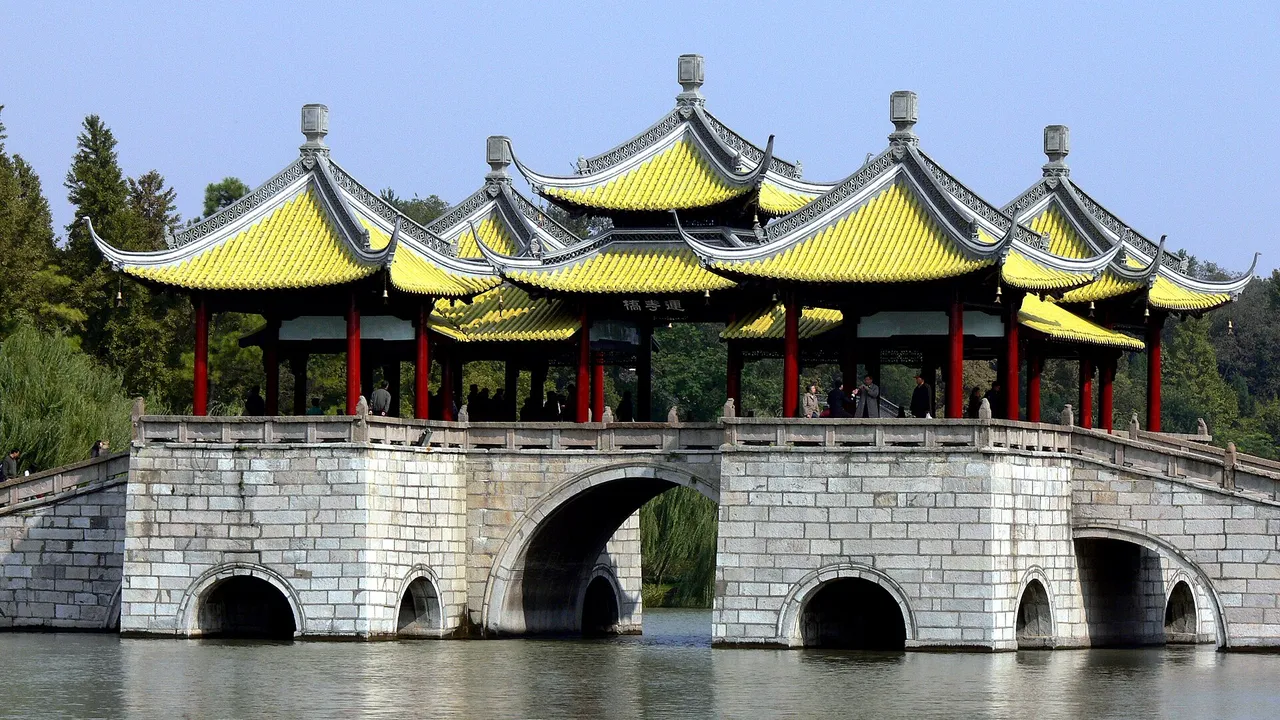
Enter at the south gate, where the willow causeway delivers the lake's opening line: a willow every step, the water flickering behind the strands. Past Xu Garden and Little Golden Hill, the round doorway of the Fisherman's Pavilion frames Five Pavilion Bridge in one arch and the White Pagoda in the other, the garden's most famous shot, unclaimed at this hour.
Five Pavilion Bridge is the lake's emblem, five wind pavilions above, fifteen arches below, each arch cradling a moon on mid-autumn nights. The White Pagoda faces it across the water, slimmer than its Beijing model. Walk on to Twenty-Four Bridge, where the flute-playing beauty of the old poem lands on this white marble span; with that, the lake's essence is gathered.
Daming Temple: Where Jianzhen's Voyage Began
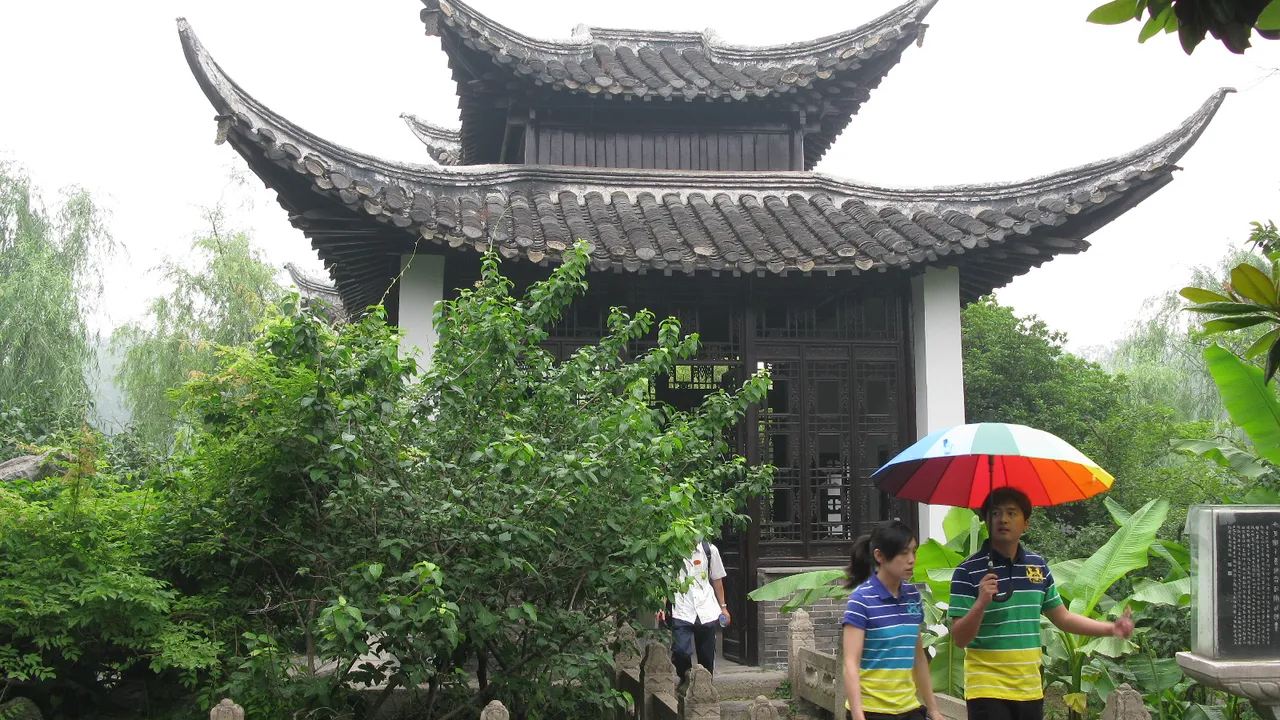
From the lake's north gate, two bus stops or a twenty-minute walk climbs Shugang ridge to Daming Temple. This is where the monk Jianzhen set out for Japan, and the Jianzhen Memorial, designed by Liang Sicheng after the golden hall of Toshodaiji, keeps a stone lantern gifted by Japanese friends, its flame carried from that temple.
Pingshan Hall inside was built by the Northern Song poet Ouyang Xiu, with Su Shi adding the Gulin Hall behind it, two men of letters gazing at each other across generations from the same ridge. Climbing the Qiling Pagoda commands the whole lake and city, among the old town's few high views.
Ge Garden: Four Seasons inside One Compound
Ge Garden was the estate of the Qing salt merchant Huang Zhiyun, its name taking half the character for bamboo, with ten thousand bamboo culms actually planted. The real protagonist is the four-season rockery: spring with bamboo-shoot stones beside fresh shoots, summer with lake stones piled into drifting cloud, autumn a great yellow-granite hill under maples, winter in matte alabaster like snow, with twenty-four vent holes pierced in the wall so wind hums through.
It is the famous Chinese garden that built time into space, one circuit passing a whole year. Tour house and garden together and the salt merchant's wealth and taste surface in the details: timber in the halls, lattice patterns, the buried storage pits. About ninety minutes all told.
Dongguan Street and the Ancient Ferry: Dusk by the Canal
Ten minutes' walk from the garden enters Dongguan Street, a commercial lane dating to the Tang that keeps its bluestone slabs and heritage shopfronts. Xiefuchun's famed powders, Sanhemeimei's pickles and the sweetness of ox-hide candy line the way, with lanes off both sides hiding another Ge Garden gate and several salt-merchant mansions.
At the street's east end sits the Ancient Ferry, where the Grand Canal once took on cargo; at dusk the water lights up and boats rock slowly beneath the arches. Dinner happens on the street, timed to catch the first night cruises, and the day's Yangzhou closes in the canal's lamp reflections.
| Getting around |
|
| Budget | Entry (about RMB 100 at Slender West Lake, RMB 45 Daming Temple, RMB 45 Ge Garden) plus meals and transport, roughly RMB 300-450 pp. |
| Best time | March-May brings viburnum and misty rain at their most Yangzhou, September-October osmanthus and thinner crowds; on holidays the lake queues build after nine, so enter at opening. |
FAQs
Can one day really cover both Slender West Lake and Ge Garden?
Yes, the key is capping the lake: enter at eight, exit the north gate by eleven, walking only the essential south-gate to Twenty-Four Bridge stretch. Midday gives Daming Temple ninety minutes, the afternoon Ge Garden ninety, and dusk goes to Dongguan Street. Highlights only at each stop, saving depth for a return trip.
How do I buy Slender West Lake tickets smartly, and are combo tickets worth it?
Single entry runs about RMB 100 in high season and RMB 60 off season, safest bought ahead on the official account; two- or three-day garden combos bundling the lake, Ge and He Gardens pay off only on multi-day plans. For one day as routed here, singles for lake, garden and temple suffice; do not bend the itinerary for a combo.
Without urban rail, is getting around Yangzhou for a day convenient?
Very. Tourist lines 1 and 2 are designed for the sights, chaining everything in this guide with dense, cheap departures; the old city is compact, most hops under twenty minutes on foot. Taxis run near flag fare with mild rush-hour delays. Yangzhou East station connects smoothly by both bus and taxi.
Is this route tiring for seniors and children?
The main drain is walking inside the lake, so ride the in-park electric carts between segments and reserve walking for the Five Pavilion and Twenty-Four Bridge stretches. Ge Garden's rockery stairs need slow, hand-held pacing; skip the pagoda climb. A teahouse rest on Dongguan Street after three lightens the whole day.