
Chaozhou culture runs on two layers: the orthodox northern learning carried south by scholar-officials, and the exquisitely carved local crafts. This day samples both: the museum builds the framework in the morning, then Jilue Huang Ancestral Hall shows the peak of Chaozhou gilt woodcarving; in the afternoon Xu's Mansion rewinds to the Northern Song, one of the rare surviving Song residential compounds; dusk ends on the North Pavilion light, wall, river and Han Mountain in one frame.
Everything sits in town at flag-fare taxi distance. Reading the carving is not the point; pacing is. The hall and mansion are both compact, so give each a full unhurried hour rather than rushing three big districts. If the craft bug bites, browse the teapot and embroidery shops nearby as a natural encore.
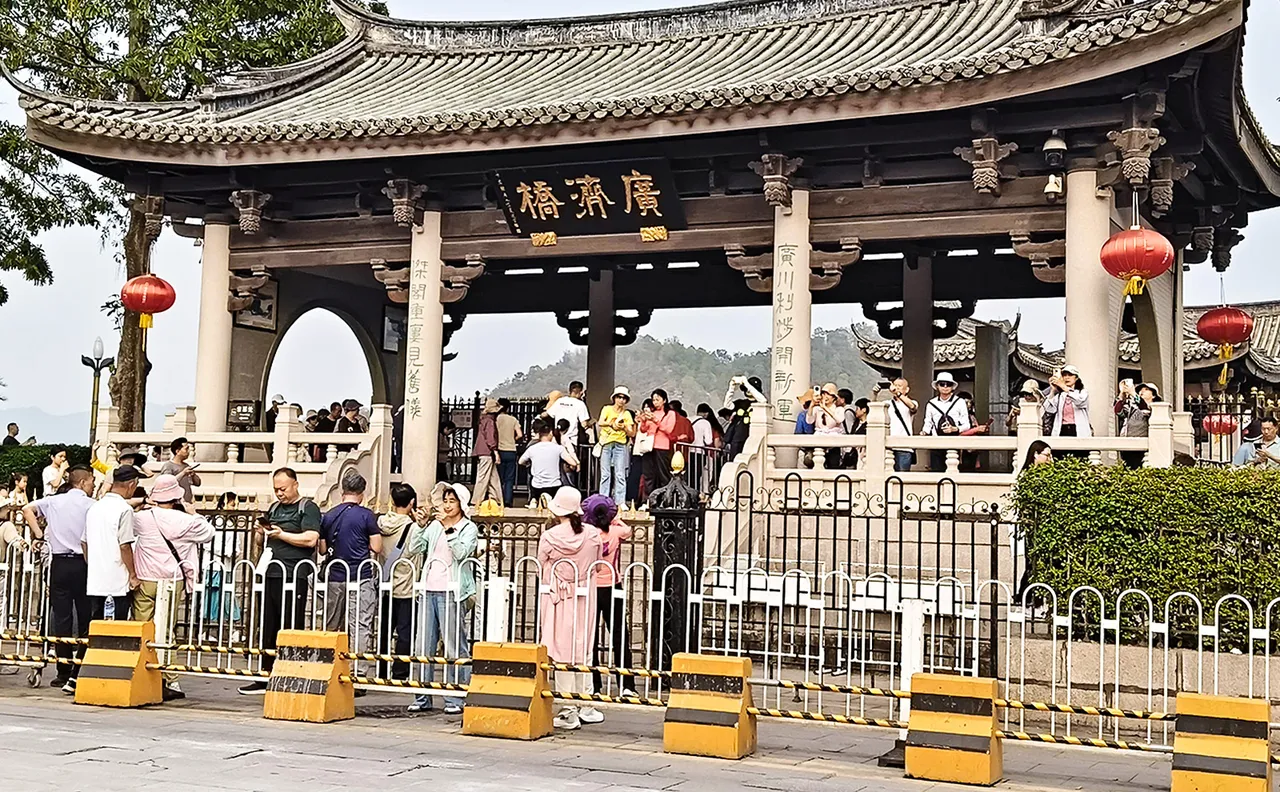
Itinerary at a glance
| 09:00 | Chaozhou Museum: Building the Framework First |
| 10:30 | Jilue Huang Ancestral Hall: The Ceiling of Chaozhou Woodcarving |
| 14:00 | Xu's Mansion: A House from the Northern Song |
| 16:00 | North Pavilion Light and the Old Wall: A Dusk Finale by the River |
The route, stop by stop
Chaozhou Museum: Building the Framework First
Before reading Chaozhou, spend an hour in its museum. The main thread is clear: from the Neolithic Fubin culture through Tang and Song ceramics, woodcarving and embroidery, the galleries half-answer why Chaozhou craft is so fine, with local materials, clan patronage and overseas trade cross-checking each other in the cases.
Two floors deserve focus: the gilt shrine and beam members of the woodcarving room are the preview for the afternoon's ancestral hall, while the ceramics room explains, through Fuxi kiln wares, why this city ranks among China's porcelain capitals. Entry is free; a brisk or slow ninety minutes both work.
Jilue Huang Ancestral Hall: The Ceiling of Chaozhou Woodcarving
Small in area, this Qing-era ancestral hall of the Huang clan from the Guangxu reign is hailed as the supreme marvel of Chaozhou woodcarving: gilt carving stacks over the gatehouse, worship pavilion and beam frames, a palm-sized member holding a whole universe of fishermen, woodcutters and water-spirit armies. Multi-layer openwork pulls the eye inward; ten minutes looking up and the neck aches happily.
Three spots tell the story: the shrimp-and-crab cage atop the pavilion, the most celebrated openwork; the beams' opera scenes, one allusion per panel; and the secret of gilt that still shines, laid in lacquer and gold leaf. Casual visitors do fine too, helped by thoughtful caption boards.
Xu's Mansion: A House from the Northern Song
Xu's Mansion was the residence of Xu Jue, consort of Princess De'an, daughter of Emperor Yingzong of the Northern Song, begun in the Zhiping era, and it stands among the rare Song residential compounds surviving anywhere in the country. Its pleasure lies in structure: Song-form timber frames, fire-shaped gables, woven-plaster walls and a three-courtyard plan, all textbook material in the flesh.
Read it against the ancestral hall: the hall shows ornament at its extreme, the mansion structure doing its honest duty. Crowds are thin and the courts hushed; look up from a skywell and the afternoon light falls in a clean square off the ridge, one of the old town's most photogenic courtyards.
North Pavilion Light and the Old Wall: A Dusk Finale by the River
The North Pavilion at the wall's northern end is often skipped by day-trippers, yet locals prize it: the wall rides the contours of Jin Hill, and the pavilion's lamp once guided night shipping on the Han, now the quietest of the city's eight scenes. From the top the Han River swings in a wide bend, a wilder view than Guangji Tower's.
Walk the wall path south at dusk, its bricks patch-worn like growth rings. As the lamps come on and Han Mountain across the water sinks into silhouette, the day's woodcarving and Song mansion settle into place, completing the picture of Chaozhou.
| Getting around |
|
| Budget | Entries total about RMB 40-60; with meals a day runs RMB 150-200 pp. |
| Best time | Works year-round in climate-comfortable halls; on peak holidays the ancestral hall fills, so aim for morning openings. |
FAQs
If time allows only two of the museum, the ancestral hall and the mansion, which?
The ancestral hall is non-negotiable, an irreplaceable peak of Chaozhou woodcarving. For the second slot: pick the museum for objects, a full free survey with air conditioning, or the mansion for a building, since surviving Song houses are nationally rare. Architecture fans should lean to the mansion.
Do these sites need advance booking?
The museum is free with on-site registration and possible caps on holidays; the ancestral hall and mansion sell tickets at the door, all under RMB 20. Booking pressure in Chaozhou is mild overall, the real advance buys being holiday rail seats and popular restaurants, not entry tickets.
Can I appreciate these without knowing architecture or woodcarving?
Absolutely. Treat the ancestral hall as treasure hunting: pick one member you like, stare five minutes, and the content surfaces on its own. The mansion's skywells, gables and stone inlay need no prior knowledge. Caption boards are plainly written, and on-site shared guide services beat straining solo.
Does this culture route suit young children?
Yes, with lighter narration: at the museum hunt for shapes in ceramics and carving, at the hall play find-the-shrimp-cage, at the mansion count courtyards and thresholds. Cool halls dodge the sun, taxi legs stay short, and a guide booklet from the museum door doubles as a clue card.