
Fenghuang dancong's birthplace is not the teahouse but Wudong village at over a thousand meters. This route completes Chaozhou's countryside: day one enters Fenghuang town's tea market and climbs to Wudong, clouds at the mountain lake and a night in a farmer's home drinking fresh-made tea; day two drops to Longhu Ancient Village with a Guantang beef hotpot after; day three returns to town, closing on the quiet of the Academy garden and dusk at West Lake.
The mountain road bends more than expected, so motion-sick travelers pack remedies, and nights run cold even in summer, so bring long sleeves. The real cost is time, over an hour each way on the climb, but a first-flush dancong poured at a farmer's own tea table repays every curve.
Itinerary at a glance
| 09:00 | Fenghuang Tea Market: First Stop for Dancong |
| 11:00 | Wudong Village and the Old Gardens: Ancient Bushes at 1,100 Meters |
| 15:00 | Phoenix Lake: Water and Cloud at the Summit |
| 19:30 | Farmhouse Night Tea: A Late Class in Fresh Dancong |
| 09:30 | Longhu Ancient Village: The First Old Settlement after the Descent |
| 15:30 | Guantang Beef Hotpot: From Tea Country to the Cutting Board |
| 09:00 | Danfu Academy: A Quiet Morning on Yanfeng Hill |
| 14:00 | Chaozhou West Lake: An Afternoon among the Cliff Inscriptions |
| 16:30 | Zaiyang Teahouse: The Last Brew of Three Days |
The route, stop by stop
Fenghuang Tea Market: First Stop for Dancong
An hour from the old town, Fenghuang town's market is the hub of the whole dancong region: after the Qingming picking, trade starts before dawn, sacks and sample trays crowding the street while farmers, dealers and brokers haggle nonstop.
Travelers need not trade; watching teaches plenty, since reading tea by nose is a live skill here, veteran buyers sniffing a handful and naming origin and roast on the spot. Shops around the market sell retail at roughly twenty percent below city prices; taste several brews before buying.
Wudong Village and the Old Gardens: Ancient Bushes at 1,100 Meters
Fifty winding minutes above Fenghuang town sits Wudong, the core of the core: old bushes priced by the trunk, the centuries-old Song-variety trees fenced for protection, bark dressed in moss like velvet, while cloud drifts up the valley and the gardens flicker in and out of view.
Every household lives by tea: leaves withering at the door, roast baskets steaming indoors, and with luck you catch the full making, withering, bruising, kill-green, baking, nothing skipped. Most families welcome watchers, and sitting down to tea follows as naturally as the next scene.
Phoenix Lake: Water and Cloud at the Summit
Above Wudong lies Phoenix Lake, an alpine pool at over 1,300 meters where legend says phoenixes bathed. The water never dries, ringed by high meadows, and on clear days a sea of clouds churns below your feet while the lake mirrors the sky, the mountain's most photogenic spot.
The lakeside boardwalk loops in forty minutes; wind bites and temperatures drop, a different climate from town. Stay for sunset and the cloud sea turns orange-pink, at which point most people fall silent, having nothing to add.
Farmhouse Night Tea: A Late Class in Fresh Dancong
Lodging with a tea family in Wudong or near Fengniaoji, the night is the true class. The host lines up household teas by site, bush age and roast, from fragrant to deep styles, last year's against this year's, building your taste memory in one evening, more direct than any course.
Talk never stays on tea: market prices, which child takes the garden, the season's weather and yield, conversations drifting past eleven. Mountain nights run cold, the host fetches you a jacket, the kettle never sleeps, gongfu tea with zero performance.
Longhu Ancient Village: The First Old Settlement after the Descent
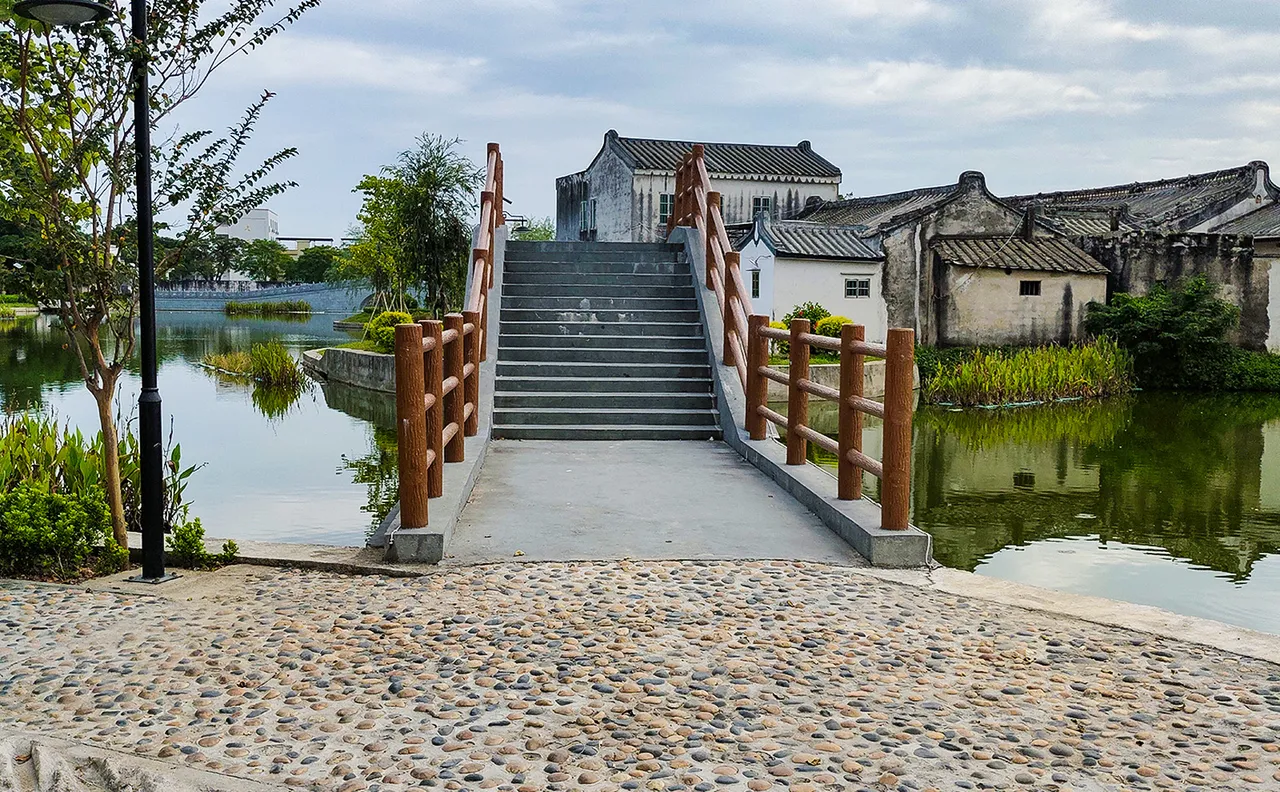
Sleep in, then swing into Longhu on the way down. The thousand-year settlement spreads along the Han's west bank, three streets and six lanes intact, halls and study houses in sequence; set against Wudong's tea-farming society, it shows the two faces of rural Chaozhou, mountains living by tea, plains by farming, learning and trade.
The sights are several well-kept halls and notable mansions, carving density rivaling the city at a fraction of the crowds. Old-street rice-noodle shops use local water and local rice, a sweetness the old town cannot match, so make lunch here.
Guantang Beef Hotpot: From Tea Country to the Cutting Board
Half past three in Guantang skips the lunch crush, the comfortable hour for hotpot. Order by cut: neck-core with the densest marbling, tender-crisp shoulder, marbled back-ridge, and chest fat, crisp without grease, every plate labeled with its seconds in a clear beef-bone broth, sesame sauce alongside.
Guantang's cattle come from nearby slaughterhouses, board to table in hours, which is the whole point of provenance: you watched tea travel mountain to cup, now watch meat travel board to pot. Two people, three cuts, one plate of rice noodles, exactly right.
Danfu Academy: A Quiet Morning on Yanfeng Hill
Day three returns to town, first stopping at Danfu Academy at the foot of Yanfeng Hill. Founded at the initiative of overseas Chaozhou notables, its symmetric halls rise terrace by terrace, collecting steles and artifacts across dynasties; the hill gate's archway and long stair announce a grandeur unlike the old town's density.
Crowds run an order of magnitude thinner; morning wind moves through the cloisters over rubbings, calligraphy and paintings. Gongfu tea is served properly here, and sitting on the hillside gallery replaying two days of mountain and village fits the pace exactly.
Chaozhou West Lake: An Afternoon among the Cliff Inscriptions
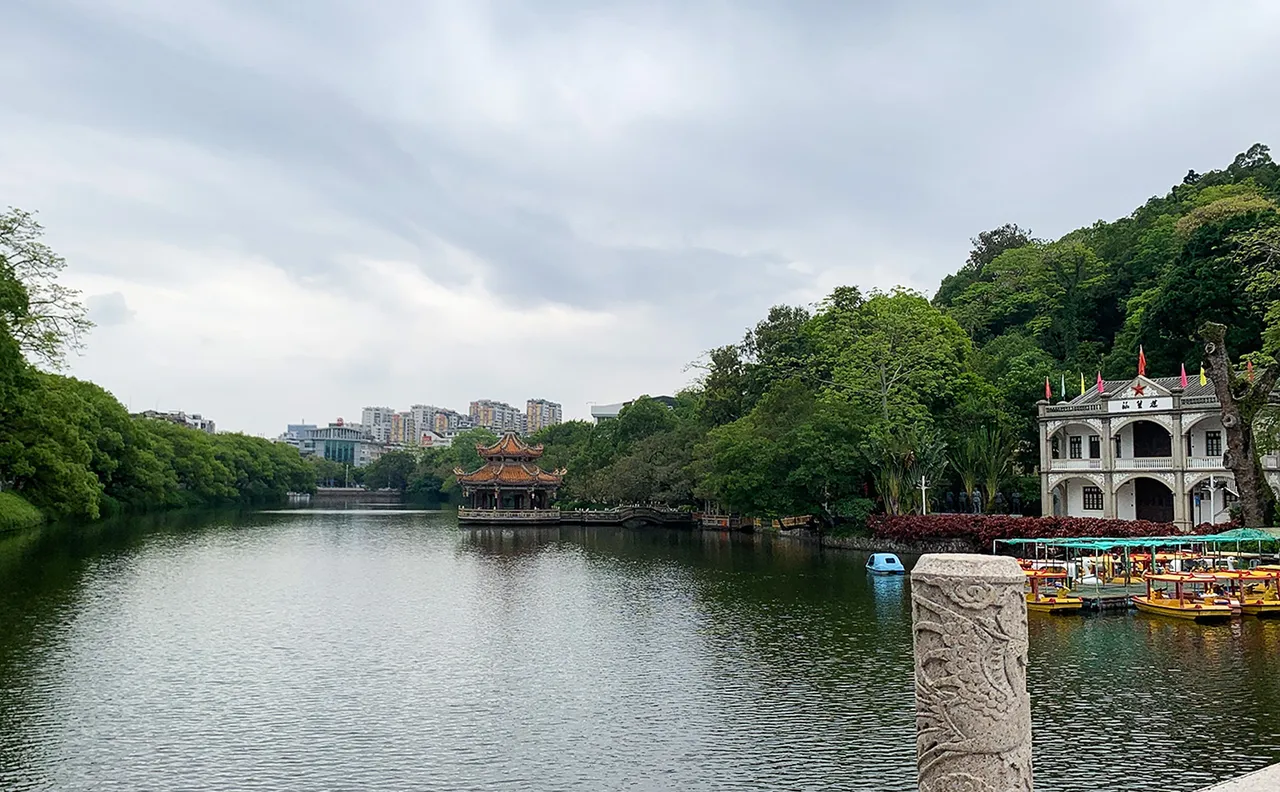
Back in town, give the afternoon to West Lake, an old course of the Han River. Over a hundred cliff inscriptions on lakeside Hulu Hill run from Tang and Song to modern times, an open stone gazetteer of the region; walk the lake and climb selectively, two unhurried hours.
Locals spend afternoons here at chess, tea and child-minding, and visitors blend in without friction. Buy licorice-pickled fruit, sit in the east pavilion watching diabolo spinners and pigeon chasers, and let three rural days land softly back in the city.
Zaiyang Teahouse: The Last Brew of Three Days
Close back in the old town, giving the final brew to Zaiyang Teahouse. Having seen gardens, handled fresh leaf and drunk new tea at the farm, one more cup under carved lattice windows completes the flavor map: site, craft, water and pot, nothing optional.
If an opera session is on, hear one before leaving. At checkout, ask the house how to store dancong at home, sealed tin, dark and dry as the baseline; good tea must travel well and age well.
| Getting around |
|
| Budget | Tea-country lodging runs RMB 150-400 a night; meals and entries over three days about RMB 400-600, or RMB 800-1200 pp all in. |
| Best time | Spring harvest in April-May and autumn crop in October fill the mountains with work and scent; summers run five degrees cooler up top, a bonus. |
FAQs
Can Phoenix Mountain be done as a day trip, or is an overnight necessary?
Technically yes, but you would miss the essence: night tea and dawn mist are half the mountain's content. Stay one night and descend by noon, sparing the fatigue of mountain roads after dark and leaving time to watch tea-making in Wudong. Time-poor travelers should still hold the summit through sunset.
Will non-tea-drinkers find this route boring?
No. The lake's cloud sea, the village streets and the craft of beef hotpot need no tea knowledge; at night tea just listen, no one force-pours. Dancong's threshold is genuinely low, honey orchid converts nearly everyone, and most self-declared non-drinkers descend with tea in their luggage.
How do I find a reliable chartered car, and at what price?
Easiest is booking through your guesthouse, since local drivers know the bends and double as half-guides. Common rates run RMB 400-600 a day for a sedan, thirty percent more for SUVs or seven-seaters. Confirm fuel and tolls included, agree waiting terms upfront, and avoid per-hour surprises.
Does tea bought at the farm cost more than at the market?
Usually fairer: with middlemen removed, prices match or beat the town market, with clear provenance. State budget and taste first and let the host brew to it; daily drinkers and thousand-yuan single-bush lots both negotiate openly, and RMB 50-100 packs make the best gifts.