
Five-day Chaozhou runs in three movements, city, village and mountain: days one and two stay on the old town and riverbanks, finishing the required reading of Paifang Street, Kaiyuan Temple, Guangji Bridge, the shrine and the ancestral hall; day three goes out to Longhu village and back through Guantang beef; days four and five climb the Phoenix tea country for Wudong and the mountain lake, returning at last to Xu's Mansion and the North Pavilion.
The pacing deliberately breathes: two or three priorities a day, no schedule-chasing on the mountain. Chaozhou's meaning lies in slack beyond density; two halls and one long tea session per day reads truer to local life than any five-stop forced march.
Itinerary at a glance
| 09:00 | Paifang Street: Opening the Five Days |
| 11:00 | Kaiyuan Temple: The Ancient Monastery on the Axis |
| 16:00 | Guangji Tower and Guangji Bridge: First Night, Lit Span |
| 08:30 | Guangji Bridge by Day: The Full Opening Story |
| 10:30 | Han Wengong Shrine: Second Stop across the River |
| 14:30 | Jilue Huang Ancestral Hall: The Afternoon for Woodcarving |
| 09:30 | Longhu Ancient Village: Day Three beyond the Walls |
| 17:00 | Guantang Beef Hotpot: The Countryside Leg's Proper Meal |
| 09:30 | Fenghuang Town and Wudong Gardens: The Ascent |
| 15:00 | Phoenix Lake: Cloud and Water at the Summit |
| 09:30 | The Descent and Xu's Mansion: Closing on a Song House |
| 16:00 | North Pavilion and the Wall: Five Days' Last Dusk |
The route, stop by stop
Paifang Street: Opening the Five Days
Enter from the north on the first morning, orientation before commerce: note the lane mouths of Xima, Yi'an and Kaiyuan Roads, reused across five days. Do not close-read all two dozen archways; pick the scholar and minister gates for their inscriptions.
Arcade shops open through the morning, pastry scent arriving before customers. The full walk takes an hour, and unhurried visitors should take a first cup of dancong at a mid-street stall, the baseline taste for five days of tea.
Kaiyuan Temple: The Ancient Monastery on the Axis
Turn off the main street into Kaiyuan Road. Over the imperially founded Tang base, Song and Ming members and Qing restorations stack in layers; the hall's depth and the sutra pillars' worn text reward slow reading. Enter before eleven to miss group crowds, and give the cloister bench ten minutes.
This is one of two stops in five days worth casual revisits, since it sits at the heart of the old town's circulation: a glance through the gate on every pass, and that everyday incense is its charm.
Guangji Tower and Guangji Bridge: First Night, Lit Span
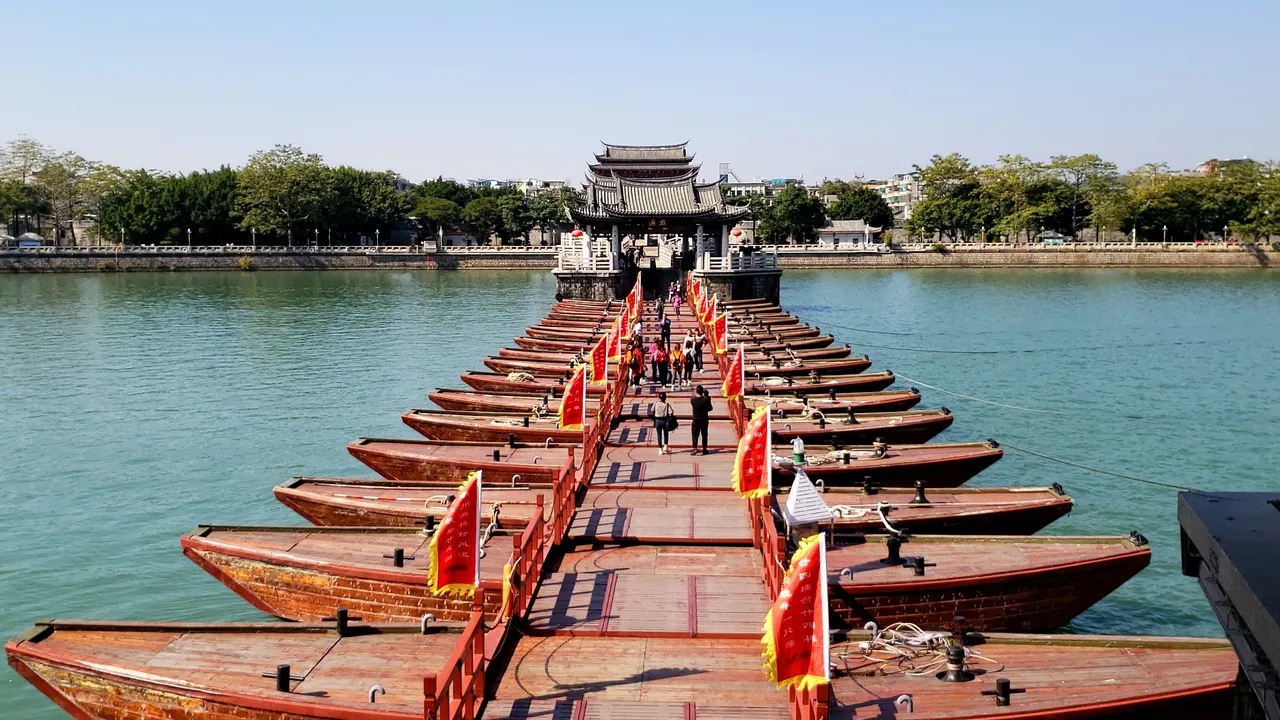
On the first evening climb Guangji Tower for the city view, then pass through the arch and walk the bridge once each way. By day it is engineering history, beam and pontoon; by night a landscape of lamps and river, eighteen shuttle boats afloat in the dark, tower and span joined in one light belt.
Watching only the night view on day one also works, saving the crossing for the next dawn: morning brings the fewest visitors and the lashed pontoon reads best against early light.
Guangji Bridge by Day: The Full Opening Story
Give the bridge a proper crossing on the second dawn. Start from the west, tower by tower and pier by pier past the iron ox, reaching the mid-river pontoon where the boats shift gently underfoot, the most direct feel of eighteen boats and twenty-four piers. If navigation opens during your visit, the detached span lets vessels thread through, an eight-century design still on duty.
On the east bank, linger before leaving: the view back to the western tower and Han Mountain is the panorama shot. The shrine sits right below the east ramp, a seamless handoff.
Han Wengong Shrine: Second Stop across the River
Off the bridge's east end the shrine waits at the mountain's foot, rising terrace by terrace through stele corridors, main hall and pavilion, the top platform gathering river, bridge and skyline in one frame. Han Yu served eight months; Chaozhou has remembered a thousand years, and the shrine is the key to the local cultural code.
Morning keeps the compound uncrowded, right for close reading the corridor: donor lists in the restoration steles are the ledger of the city's collective memory.
Jilue Huang Ancestral Hall: The Afternoon for Woodcarving
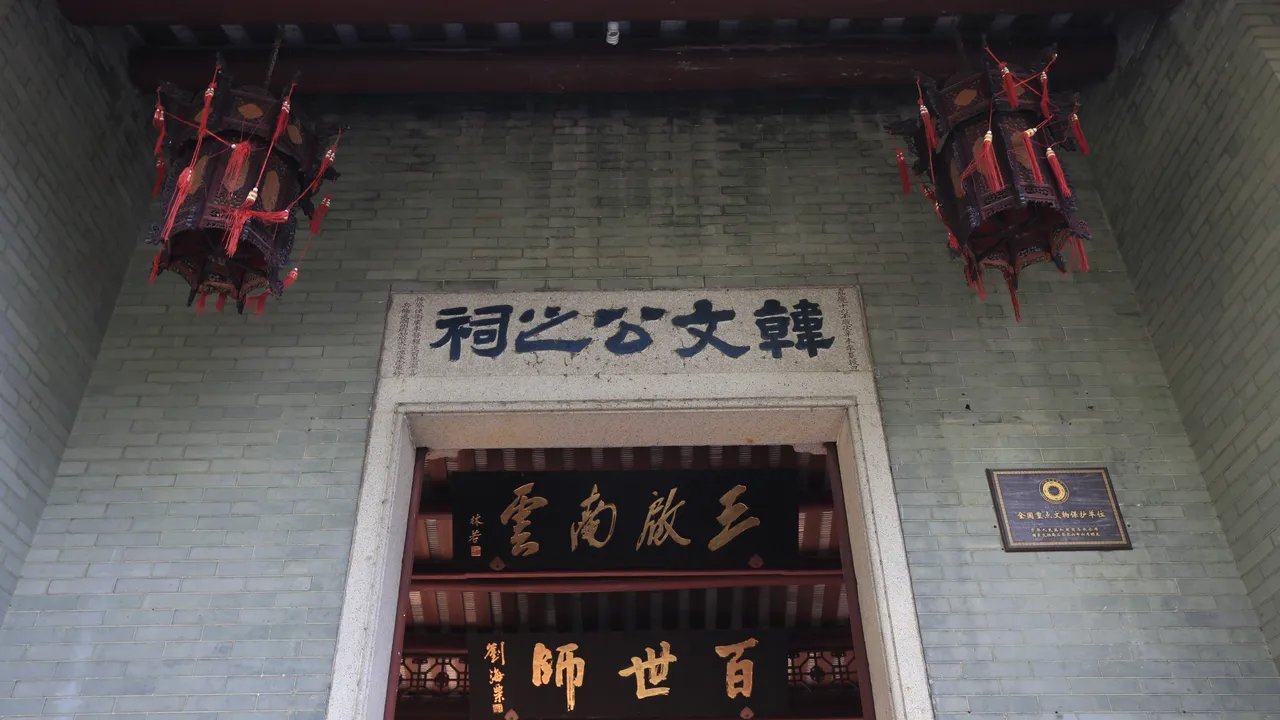
After lunch, ten minutes by taxi reaches the hall, the peak of Chaozhou gilt woodcarving: layered openwork over gatehouse, pavilion and beams, palm-sized members holding fishermen, woodcutters and water-spirit armies. Afternoon side light rakes into the gatehouse, the best hour for gilt detail.
Enter twice: a first pass for the whole impression, then a second singling out the shrimp-and-crab cage, opera scenes and story panels, five minutes each. Missing the allusions is fine; craft density is itself the content.
Longhu Ancient Village: Day Three beyond the Walls
Day three opens with a thirty-minute taxi to Longhu. The thousand-year settlement keeps three streets and six lanes, halls, mansions and study houses in line, carving rivaling the city at a fraction of the crowds, daily life still running: chess, drying vegetables, kids on bikes.
Focus on the best-kept halls and notable mansions, and settle lunch at an old-street rice-noodle shop, local water and local rice, a sweetness the city version cannot match.
Guantang Beef Hotpot: The Countryside Leg's Proper Meal
The village route home passes Guantang, and five in the evening beats the rush. Order by cut: neck-core's dense marbling, tender-crisp shoulder, marbled back-ridge, crisp chest fat, on clear bone broth, swished by the second, sesame sauce with garlic oil.
Guantang's beef runs hours from nearby slaughterhouses to table; freshness here is a supply chain, not an adjective. Two people, three cuts, one rice-noodle plate, then back for an evening tea.
Fenghuang Town and Wudong Gardens: The Ascent
Day four heads up Phoenix Mountain, first the Fenghuang town market to feel the region's hub, then fifty winding minutes into Wudong. Old bushes are priced by the trunk, centuries-old Song-variety trees fenced under protection, cloud rising and falling among the gardens.
Every household makes tea, leaves withering at the door and roast baskets steaming inside, and most families welcome watchers. Lodging with a tea family is the day's real task; drop the bags and drink the season's fresh roast, the five days' highlight beginning mid-afternoon.
Phoenix Lake: Cloud and Water at the Summit
Climb to Phoenix Lake in the afternoon, an alpine pool above 1,300 meters where phoenixes were said to bathe. On clear days a cloud sea churns below while the lake mirrors the sky; the boardwalk loops in forty minutes through wind and cold, a different climate from town.
Stay for sunset, the complete version: evening color turns the cloud sea orange-pink and the water follows. Most people go quiet, and this may be the single most valuable evening of five days.
The Descent and Xu's Mansion: Closing on a Song House
Day five descends to town, entering Xu's Mansion after lunch. The Northern Song consort's residence is among the nation's rare surviving Song houses: three courtyards, Song timber frames, woven-plaster walls, the display-board facts slowly matching the skywell's moving light.
Across five days you have walked a Tang temple, a Song house and Ming-Qing halls, and this mansion closes the timeline: hushed courts, near-private afternoons, a stone bench and light climbing the wall, the journey settling.
North Pavilion and the Wall: Five Days' Last Dusk
Close on the North Pavilion light at the old town's north end, a hillside site rising in twenty minutes to the wall's full curve and the river's great bend, the old lamp tower the city's quietest platform. Everything five days covered, archways, ancient temple, pontoon, halls, Song house, village, tea gardens, can be pointed out from this one view.
As lamps come on at sunset, raise the last cup on the platform. The dancong and clay pot in your luggage remain unopened, but Chaozhou itself is fully opened, and its door next time will sit ajar.
| Getting around |
|
| Budget | Entries over five days total about RMB 200, plus charter and mountain lodging; RMB 900-1400 pp before accommodation. |
| Best time | October to December steadies the whole plan; April-May adds spring harvest, mountains busy and fragrant, layering neatly onto the route. |
FAQs
Are five days too long? Does Chaozhou hold that much?
Five days is about depth, not count: two days reading the old town through, one countryside day, two mountain days, two priorities daily. Cut a mountain day for four if it feels slack, but the farmhouse night is the single least replaceable experience in the plan.
What gear do the two mountain days need?
The kit is windproof jacket, grippy walking shoes and motion medicine; day-night swings exceed ten degrees, so long sleeves even in summer. Farm lodging is rustic, so bring toiletries and slippers; allergy-prone visitors should carry masks, roast rooms get smoky.
Is the five-day plan workable with elderly parents?
Workable with three adjustments: use lifts and shuttles on the mountain, split old-town walking into morning and afternoon halves, and compress the village to two core streets. Flat, teahouse-dense and cheap to taxi, Chaozhou is highly senior-friendly, slowness being its default setting.
How should the five-day budget be managed, and what gets underestimated?
Lodging and charter are the two variables: old-town guesthouses RMB 200-400 a night, farm stays 150-400, charters 400-600 a day. The tea-and-pot budget is chronically underestimated, since almost everyone buys more after tasting farm-fresh brews; set aside a dedicated RMB 500-800 tea fund so the overspend is a choice.