
Chaozhou's old town rewards vertical reading: day one sinks into lanes and temples, the stratum of daily life; day two slides along the wall and the Han River, the city's defense and river-trade history; day three runs twenty kilometers out to Longhu Ancient Village, a complete specimen of Chaozhou clan society in the countryside. After three days, archways, woodcarving, pontoon and halls all find their places.
The pacing is deliberately loose: one slow meal and one tea break daily. Chaozhou heritage punishes rushing; the ancestral hall merits two visits, and Guangji Bridge at dawn and dusk is two bridges. Staying in an old-town guesthouse is the plan's premise, keeping taxi needs near zero.
Itinerary at a glance
| 09:00 | Paifang Street: First Pass, Eyes Only |
| 11:00 | Kaiyuan Temple: Incense and Shade before Noon |
| 14:30 | Jilue Huang Ancestral Hall: An Afternoon for Woodcarving |
| 17:30 | Guangji Tower and the Promenade: Dusk on the Wall |
| 08:30 | Guangji Bridge: The Pontoon in Morning Light |
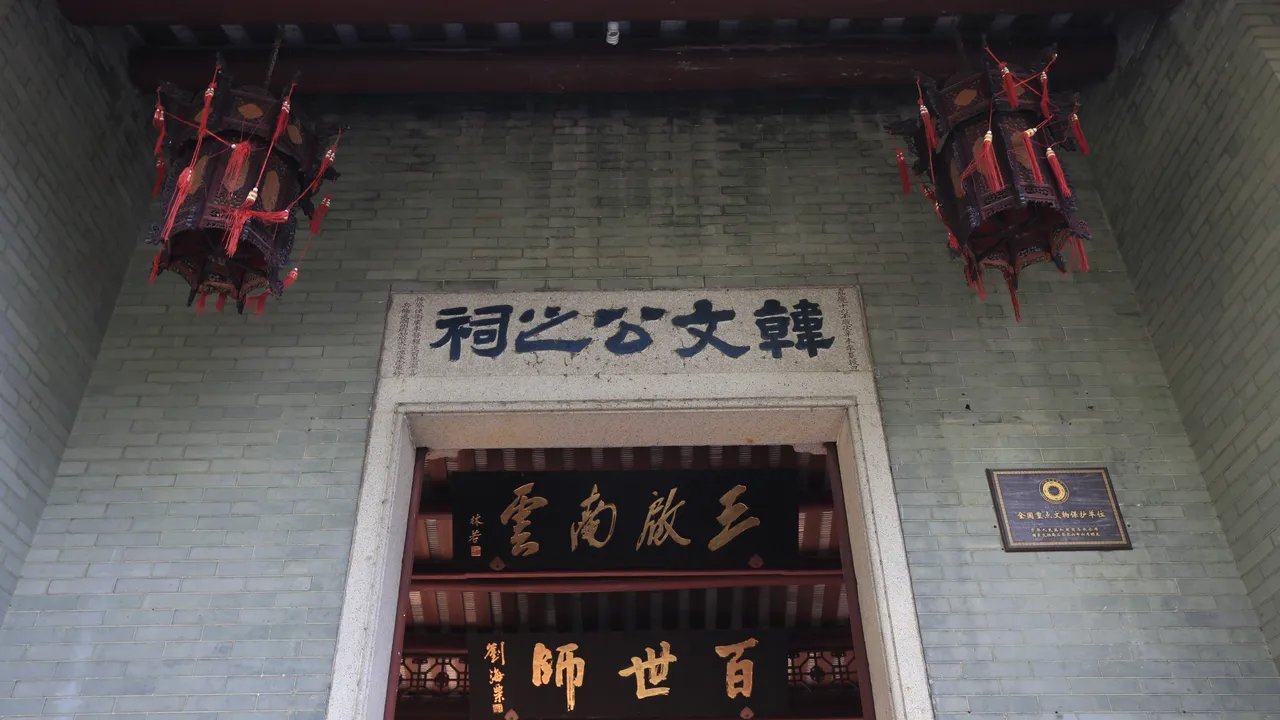
| 10:30 | Han Wengong Shrine: The Second Half across the Bridge |
| 14:00 | Xu's Mansion: A Slow Song-Era Read in the Afternoon |
| 16:00 | North Pavilion and Jin Hill: Finishing the Wall |
| 09:30 | Longhu Ancient Village: A Rural Specimen of Clan Chaozhou |
The route, stop by stop
Paifang Street: First Pass, Eyes Only
Begin the three days at the street's north end, with a first pass for orientation, not shopping: memorize the side-lane mouths, Xima Road for snacks, Yi'an Road for old shops, Kaiyuan Road for the temple, shortcuts the next two days will reuse constantly.
Each of the two dozen stone archways records a family's honors; close-read three to five inscriptions rather than ticking every gate. Morning light under the arcades is at its best, bakeries fire up along the way, and appetite builds naturally by lunch.
Kaiyuan Temple: Incense and Shade before Noon
Turn into Kaiyuan Road off the main street. By eleven the hall steps grow busy with worshippers, yet the compound keeps its composure: Tang foundations, Song and Ming members, Qing restorations stacked in layers; look up at ridge porcelain, down at sutra pillars polished bright by countless palms.
This is the three days' best stop for doing nothing: find a bench in the cloister, listen to chanting or just wind bells. The town's noise stays outside the wall; inside, time moves slower. Forty minutes to see, more to sit.
Jilue Huang Ancestral Hall: An Afternoon for Woodcarving
After lunch, ten minutes by taxi reaches the hall, the one stop in three days worth two entries: first pass gatehouse, pavilion and main hall in order for the whole impression; second pass, pick three favorite members, shrimp-and-crab cage, water-spirit scenes, opera figures, and give each five unhurried minutes.
Afternoon side light rakes into the gatehouse, the best hour to shoot the gilt carving. When eyes tire, sit at the tea stall under the arcade outside; the keeper's pride in this hall needs no prompting.
Guangji Tower and the Promenade: Dusk on the Wall
Return to the east gate at dusk to climb Guangji Tower as the light warms and the river and bridge kindle into evening. Descend and stroll south along the riverside promenade, the locals' evening turf: kites, square dancing, night jogging, all sharing the foot of a six-century wall.
Do not board the bridge today; watch its lit silhouette from this bank and save the reveal for tomorrow's early light. Dinner happens around Dongmen Street, sweet duck-tongue dumplings or a savory oyster omelette after.
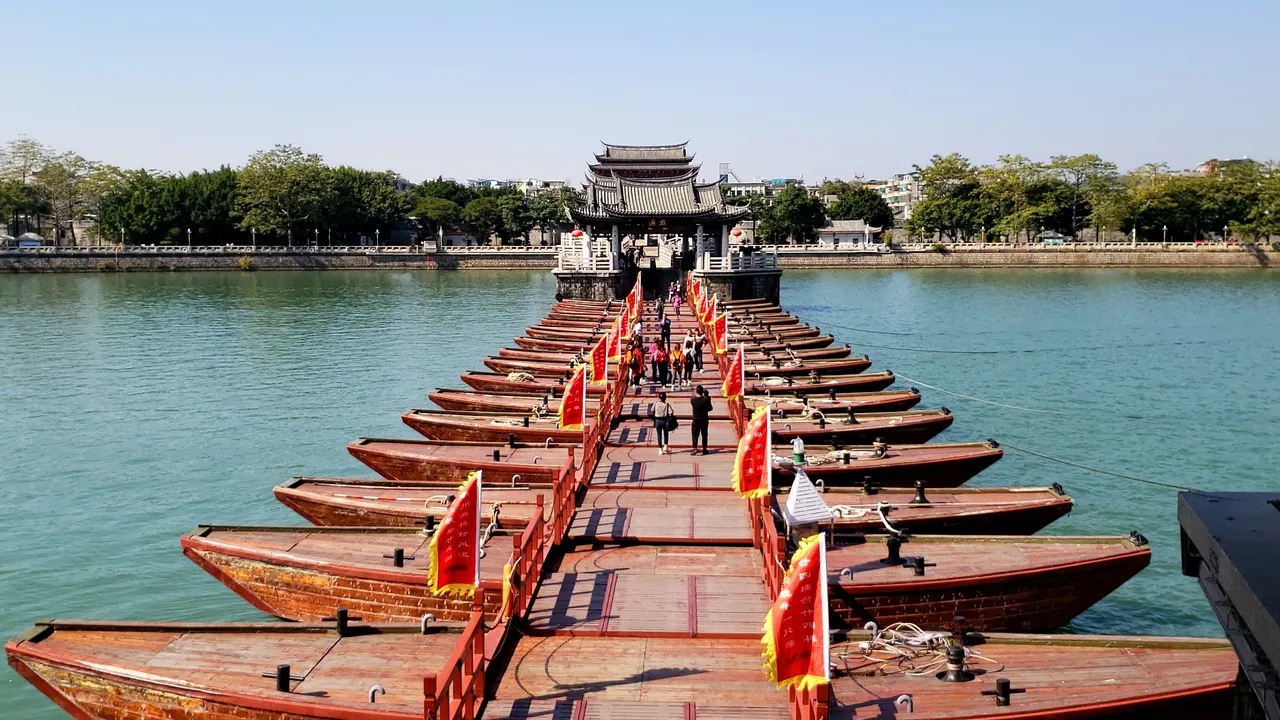
Guangji Bridge: The Pontoon in Morning Light
Day two's centerpiece starts early. At dawn the bridge is uncrowded, the lashed pontoon steady as ground, tower after tower down the span, morning light tracing the silhouette of eighteen boats and twenty-four piers. Walk slowly to the east bank and look back at the tower and hills, the bridge's finest camera position.
Against last night's distant silhouette, daylight reveals every detail: stone rails on the piers, the iron ox, tower plaques. If the pontoon opens during your visit, watch from the east platform as boats thread through the gap, the opening mechanism performed live, clearer than any lecture.
Han Wengong Shrine: The Second Half across the Bridge
Off the bridge's east end the shrine waits at the mountain's foot. By half past ten tour groups arrive in ones and twos, yet the compound absorbs them: climbing terrace by terrace past stele corridors, the main hall and the pavilion, the top platform gathering river, bridge and old-town skyline in one sweep.
This is the key to Chaozhou's cultural DNA: a city that has remembered a demoted official for a millennium, mountains and water renamed in his honor. After the main hall, read the restoration steles in the corridor, donor lists more moving than the inscriptions themselves.
Xu's Mansion: A Slow Song-Era Read in the Afternoon
After lunch and a rest, enter Xu's Mansion. The three-courtyard circuit takes an hour; focus on frames and gables, the Song timber logic, the woven-plaster wallwork, the curve of fire-shaped gables, all mapped on display boards, easier to retain by matching signs at your own pace than by guide.
The mansion's virtue is quiet, near-private in the afternoon. Skywell light moves with the hours; sitting on the stone bench by a threshold watching shadow climb the wall is one of three days' rare open slots.
North Pavilion and Jin Hill: Finishing the Wall
Head north from the mansion to complete the wall's northern stretch. The North Pavilion site climbs Jin Hill, low enough for a twenty-minute ascent, rewarded by the wall's full curve and the river's great bend. The old lamp tower is the city's quietest platform, and by four the light turns gold, perfect for pointing out everything seen in two days.
Descend into the lanes inside the wall and drift back toward the center, restocking at traditional bakeries and herbal-tea shops along the way. Day two closes its wall-and-river theme; reward it with a beef hotpot tonight.
Longhu Ancient Village: A Rural Specimen of Clan Chaozhou
Day three leaves town, thirty minutes by taxi to Longhu Ancient Village. This thousand-year settlement spreads along the Han's west bank, its three streets and six lanes intact, halls, mansions and study houses lining the route, the three-courtyard grammar continuous with the old town but looser in its rural skin.
The village's charm is that it still lives: elders play chess before the halls, women dry vegetables in courtyards, children pedal through stone lanes. Visit the best-kept halls and study houses, then eat a bowl of local rice noodles on the old street, where city and countryside of Chaozhou finally meet in one broth.
| Getting around |
|
| Budget | Entries over three days total RMB 100-150, before lodging; figure RMB 250-400 pp per day all in. |
| Best time | October to December is best; check the pontoon schedule daily, and market days give Longhu its fullest life. |
FAQs
Where should I stay for three days?
Stay inside the old town or around Dongmen and Paifang Street: walking covers ninety percent of stops with no taxi commute. A renovated courtyard mansion doubles as part of the itinerary if budget allows; when booking, confirm floor level in stairless old houses and the soundproofing.
Is pairing Guangji Bridge with Han Wengong Shrine in one day sensible?
Highly sensible: they face each other across the river, connected by the bridge, a natural pair. The key is bridge at dawn and shrine before noon, thinnest crowds and best light, then the mansion and North Pavilion in the afternoon for a well-paced day with no rushing.
Is Longhu Ancient Village worth the dedicated trip?
Yes, it completes the puzzle: the old town shows scholar-officials and merchant guilds, the village shows clans and rural life, and together they make Chaozhou whole. If rural settlements hold little pull, compress it to a half day with a countryside lunch en route rather than a full day.
How demanding are three days? How to adjust for seniors?
Eight to ten kilometers of daily walking is the main load. For seniors, cut three ways: view the North Pavilion from its lower terrace instead of climbing, walk half the bridge and return, and shorten Longhu to its two core streets or ride a cart. Flat terrain and dense teahouses make resting easy anywhere.