
Seven-day Chaozhou is designed in layers: days one to three live inside the old town, finishing every required read on the axis, the wall and both banks; day four switches to craft and countryside, Fuxi teapots in the morning, Longhu village in the afternoon, Guantang beef by evening; days five and six climb the tea country, sleeping with farmers and seeing the summit lake; the final day runs north to Raoping for Dounyun, the country's largest octagonal earthen fortress.
The enemy of this pacing is greed: every day tempts one more stop, and the discipline is declining. Chaozhou's rewards are density and depth, and reading one stop thoroughly beats rushing to the next. After seven days you hold a complete map of taste and sight, tea, pots, beef, woodcarving, pontoon, earthen walls, each in its rightful place.
Itinerary at a glance
| 09:00 | Paifang Street: The Week's First Axis |
| 11:00 | Kaiyuan Temple: The Heart You Pass Daily |
| 17:00 | Guangji Tower and the Promenade: The Week's First Wall at Dusk |
| 08:30 | Guangji Bridge: Eighteen Boats at Dawn |
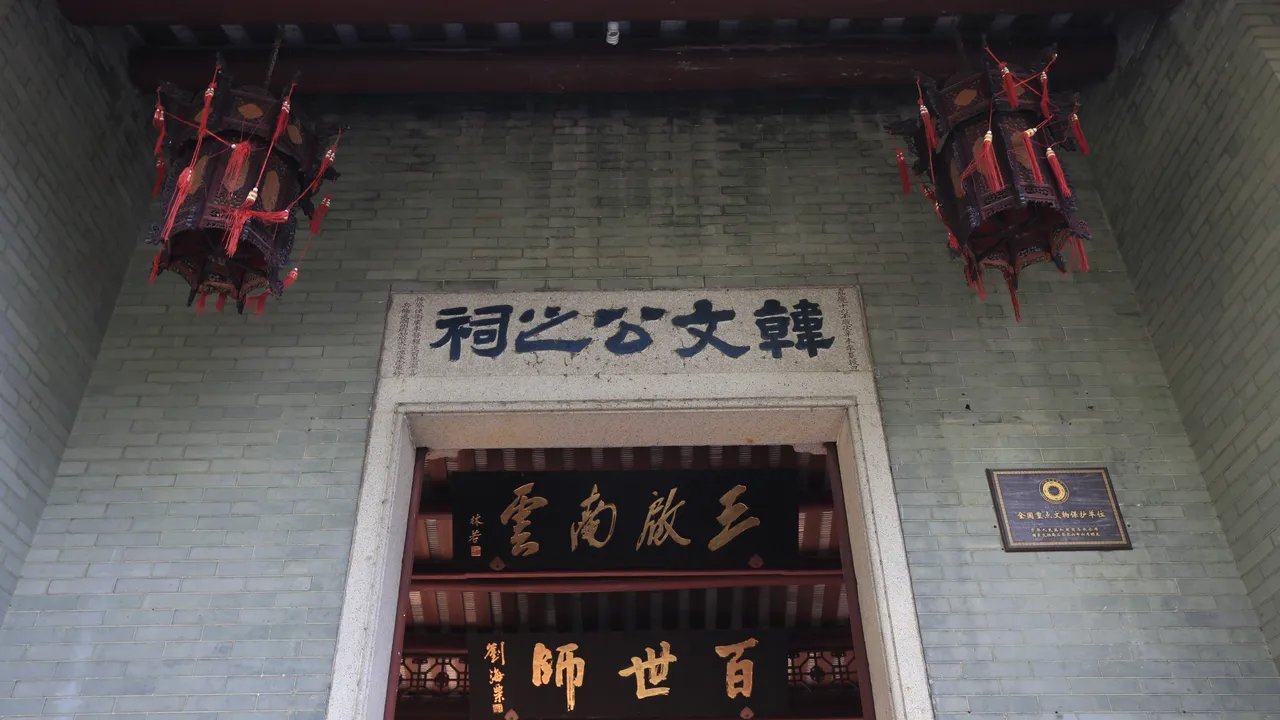
| 10:30 | Han Wengong Shrine: The Key to the Cultural Code |
| 14:30 | Jilue Huang Ancestral Hall: The Master Class in Gilt Woodcarving |
| 16:00 | Xu's Mansion: A House of the Northern Song |
| 16:30 | North Pavilion and the Wall: Closing Day Three |
| 09:30 | A Fuxi Teapot Workshop: Day Four Begins with One Pot |
| 13:30 | Longhu Ancient Village: A Rural Specimen of Clan Society |
| 17:30 | Guantang Beef Hotpot: The Craft Day's Proper Meal |
| 09:30 | Fenghuang Market and Wudong Village: Up the Tea Mountain |
| 15:00 | Phoenix Lake: Clouds at 1,300 Meters |
| 09:00 | Dounyun Lou: The Largest Octagonal Earthen Fortress |
The route, stop by stop
Paifang Street: The Week's First Axis
Enter from the north on the first morning with orientation, not shopping, in mind: fix the lane mouths of Xima, Yi'an and Kaiyuan Roads, reused all week. Close-read a few archway inscriptions among the two dozen, while arcade shutters lift and pastry scents lead the way.
The full walk takes an hour; take the week's first dancong at a mid-street stall as your baseline. Every return to this street will yield something new, but day one only builds the frame.
Kaiyuan Temple: The Heart You Pass Daily
Turn into Kaiyuan Road off the main street. Over the Tang foundation, Song and Ming members and Qing restorations stack in layers; the hall's depth, worn sutra pillars and ridge porcelain reward slow reading. Enter before eleven to miss group crowds, then give the cloister bench ten minutes.
Across the week this becomes your most-passed gate: each crossing of the entrance, with its everyday incense and chanting, reminds you the old town's core is life, not attractions.
Guangji Tower and the Promenade: The Week's First Wall at Dusk
Climb Guangji Tower on the first evening as slanting light gilds the river, the rampart view gathering rooftops, water and Han Mountain. Descend south along the promenade, the locals' evening turf at the foot of a six-century wall, square dancers, kites and joggers each in place.
Do not board the bridge tonight; watch its lit silhouette across the water and save the reveal for tomorrow's dawn. Dinner around Dongmen Street, then a riverside pot of tea till ten, the week's cheapest river view.
Guangji Bridge: Eighteen Boats at Dawn
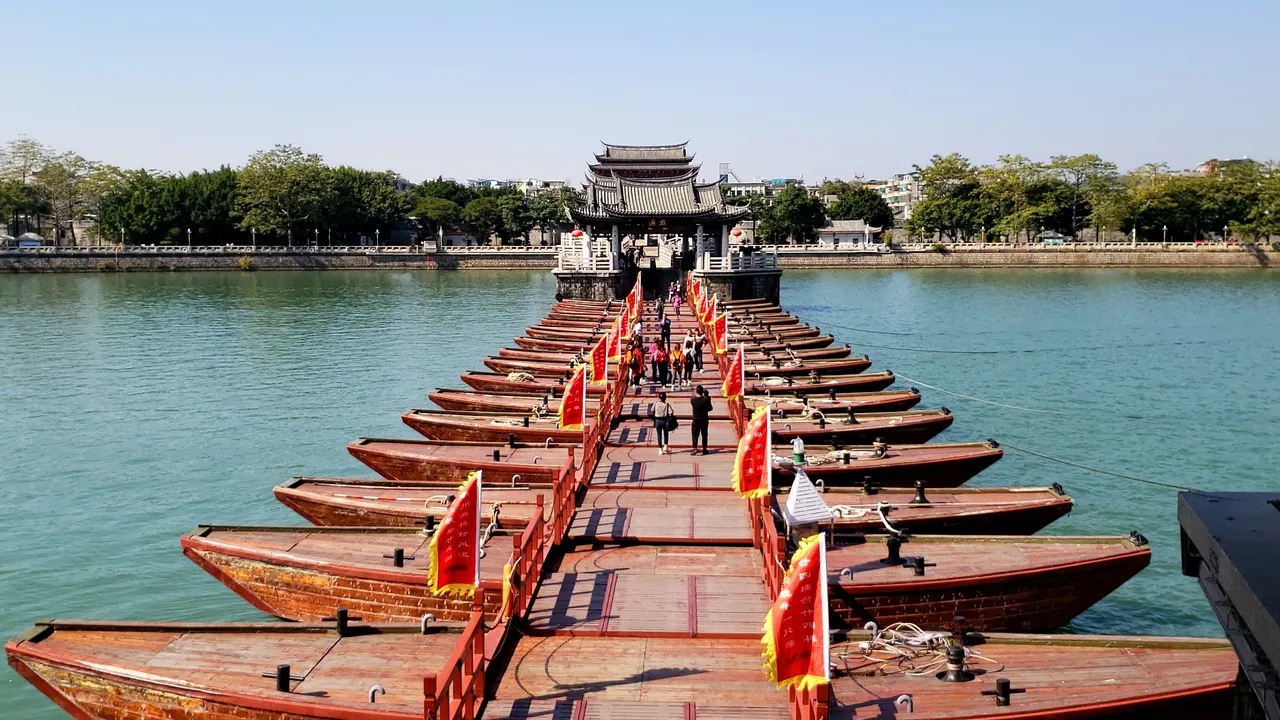
Enter at the second dawn's opening. Walk pier by pier from the west past towers and the iron ox to the mid-river pontoon, eighteen shuttle boats lashed tight, the deck shifting softly underfoot, the folk saying of eighteen boats and twenty-four piers made physical. From the east bank, the view back to tower and mountain is the bridge's finest camera angle.
If navigation is due, the pontoon detaches on schedule and vessels thread the gap, eight centuries of opening mechanism performed live. The round crossing runs forty minutes, and the shrine waits below the east ramp.
Han Wengong Shrine: The Key to the Cultural Code
Cross and arrive. The shrine rises terrace by terrace through stele corridors, main hall and pavilion, the top platform gathering river, bridge and skyline in one frame. Han Yu served eight months; Chaozhou has remembered a thousand years, mountains and waters renamed, the story read most truly in stone.
Morning crowds are thin, right for close reading the corridor: donor lists in restoration steles are the ledger of the city's collective memory, and if the week allows, this stop merits a second visit.
Jilue Huang Ancestral Hall: The Master Class in Gilt Woodcarving
After lunch, ten minutes by taxi reaches the hall, the ceiling of Chaozhou gilt woodcarving: multi-layer openwork over gatehouse, pavilion and beams, palm-sized members holding whole universes of fishermen, woodcutters and water-spirit armies. Afternoon side light rakes into the gatehouse and reads the gilt best.
Enter twice: first pass in order for the whole, then a second singling out the shrimp-and-crab cage, opera scenes and story panels, five minutes each. Missing allusions is fine; craft density is itself the content.
Xu's Mansion: A House of the Northern Song
Ten minutes by taxi from the hall. Begun in the Zhiping era for Xu Jue, consort of a Song princess, it stands among the nation's rare surviving Song residences: three courtyards, Song timber frames, woven-plaster walls, fire-shaped gables, display-board facts slowly matching the skywell's moving light.
Read it right after the ancestral hall: the hall shows ornament at its extreme, the mansion structure doing honest duty, ornament and skeleton, the two faces of Chaozhou building in one afternoon.
North Pavilion and the Wall: Closing Day Three
Reach the North Pavilion site at the old town's north end by evening. The wall rides Jin Hill's contours, twenty minutes to the top, the full curve and the river's great bend in view, the old lamp tower the city's quietest platform. Day three closes the old town proper: axis, wall, both banks, all connected.
As lamps come on, point out from the platform everything three days covered, Paifang rooftops, the tower's outline, the bridge's light belt; this living map is the week's most valuable souvenir.
A Fuxi Teapot Workshop: Day Four Begins with One Pot
Day four turns to craft, opening at a Fuxi workshop for hand-pulled red clay pots. Chaozhou pots form on a spinning wheel, the body growing out of the mud as it turns, concentric throwing rings inside as the craft's fingerprint; shop-front, factory-behind layouts show the wheel through glass.
Choose in three steps: an inverted lid that holds, a seven-inch pour that columns and cuts cleanly, thin walls light but not hollow. The RMB 300 tier brews beautifully, the thousand-yuan masters differing in work and clay. Add coaster and seasoning cloth, and watch the seasoning once.
Longhu Ancient Village: A Rural Specimen of Clan Society
After lunch, thirty minutes by taxi to Longhu. The thousand-year settlement spreads along the river's west bank, three streets and six lanes intact, halls, mansions and study houses in line, carving rivaling the city at a fraction of the visitors, daily life still running: chess elders, drying courtyards, bicycles in lanes.
Focus on the best-kept halls and mansions. The walled city shows officials and merchant guilds, the village shows clans and farming scholars; only together do they make Chaozhou whole. An old-street rice-noodle bowl makes the right afternoon snack.
Guantang Beef Hotpot: The Craft Day's Proper Meal
The village route home passes Guantang, and half past five beats the rush. Order by cut: neck-core's densest marbling, tender-crisp shoulder, marbled back-ridge, crisp chest fat, on clear bone broth, swished by the second, sesame dip with garlic oil.
After a day of craft, this pot carries extra meaning: a supply chain of mere hours from board to table, the plainest statement of Chaozhou's obsession with freshness. Two people, three cuts, one rice-noodle plate, exactly right.
Fenghuang Market and Wudong Village: Up the Tea Mountain
Day five enters the mountain: first Fenghuang town's market, the region's hub where spring trade opens at five in the morning among sacks and sample trays, then fifty winding minutes up to Wudong, old bushes priced by the trunk, centuries-old Song-variety trees fenced, cloud rising through the gardens.
Lodging with a tea family is the core arrangement: drop the bags, follow the host through withering, bruising, kill-green and baking without a gap, then taste from fragrant to deep styles at the tea table. Mountain nights run cold; long sleeves even in summer.
Phoenix Lake: Clouds at 1,300 Meters
Climb to Phoenix Lake in the afternoon, an alpine pool above 1,300 meters ringed by high meadows. On clear days a cloud sea churns below while the lake mirrors the sky; the boardwalk loops in forty minutes through wind and cold, another climate from town.
Stay for sunset, the complete version: evening color turns the cloud sea orange-pink, the water following, most people falling silent. The week's most valuable evening deserves eyes over lenses.
Dounyun Lou: The Largest Octagonal Earthen Fortress
The final day runs north to Sandiao town in Raoping county, about ninety minutes by car, for Dounyun Lou. Completed in the Wanli era of the Ming, this giant earthen compound spans nearly a hundred meters across, octagonal in plan, three ranks of rooms ringing the outer wall, once housing six hundred people, an architectural marvel of the Hakka-Chaozhou borderlands.
Life continues inside: elders wash vegetables at the well, grain dries in the courts, lintel inscriptions carry their own stories. The ring lane takes half an hour to walk, and the rammed-earth walls' thickness and scale only register on site.
| Getting around |
|
| Budget | Entries over seven days total about RMB 250, plus charter and mountain lodging; RMB 1500-2200 pp before accommodation. |
| Best time | October to December steadies the week; April-May layers in spring harvest, fragrant and busy; in July-August the mountain cools while the town swelters. |
FAQs
Which segments of the seven days truly need advance booking?
Three: Wudong farm stays in tea season, two weeks ahead; the mountain and Dounyun charters, confirming drivers a day ahead through the guesthouse; and holiday rail seats. Old-town lodging and city dining flex easily, so decide on arrival. Put certainty on the mountain and flexibility in town, the planning rule in one line.
Is seven days too slack? Could Shantou be inserted?
Not slack for depth seekers, but for a combined Chaoshan trip, day seven's Dounyun can swap for Shantou: over twenty minutes by high-speed rail, the two cities sharing Chaoshan station with zero wasted routing. The tradeoff is unique architecture versus another food capital, depth versus breadth, your call.
Without tea or woodcarving knowledge, are seven days wasted?
No, every stop has an entry that needs no expertise: the pontoon's opening is engineering theater, the earthen fortress spatial experience, the beef pot a taste class, and at night tea just listen. Interest grows by walking; most visitors start asking questions by day three and can judge teapots by day seven.
How should lodging be arranged across seven days?
Sleep five straight nights in the old town, one on the tea mountain, and day-trip Raoping. Base around Paifang Street or the east gate, walking range to every city stop; moving luggage through narrow lanes multiplies the cost, so avoid transfers entirely and store bags at one desk all week.