
Datong's chessboard plan comes from the Northern Wei capital of Pingcheng, but the streets now mix Liao-Jin halls, Ming walls and restored courtyards. The pleasure of the walking line is layering: one temple holds a Liao skeleton under Jin roofs, one street sets a drum tower beside espresso.
About four kilometers on foot: start at Shanhua Temple in the south, run north through Sipailou at the city's center, turn east into Dongnanyi, and finish on the wall at dusk. Taxis only circle the grid; ride a bus to the edge and give the rest to your feet.
Itinerary at a glance
| 09:00 | Shanhua Temple: The Most Complete Liao-Jin Monastery Standing |
| 11:00 | Sipailou and Gulou East Street: The Old Town's Cross Point |
| 13:30 | Dongnanyi Historical and Cultural Block: Old Courtyards, New Light |
| 16:00 | Datong's City Wall: The Southeast Corner to Sunset |
The route, stop by stop
Shanhua Temple: The Most Complete Liao-Jin Monastery Standing
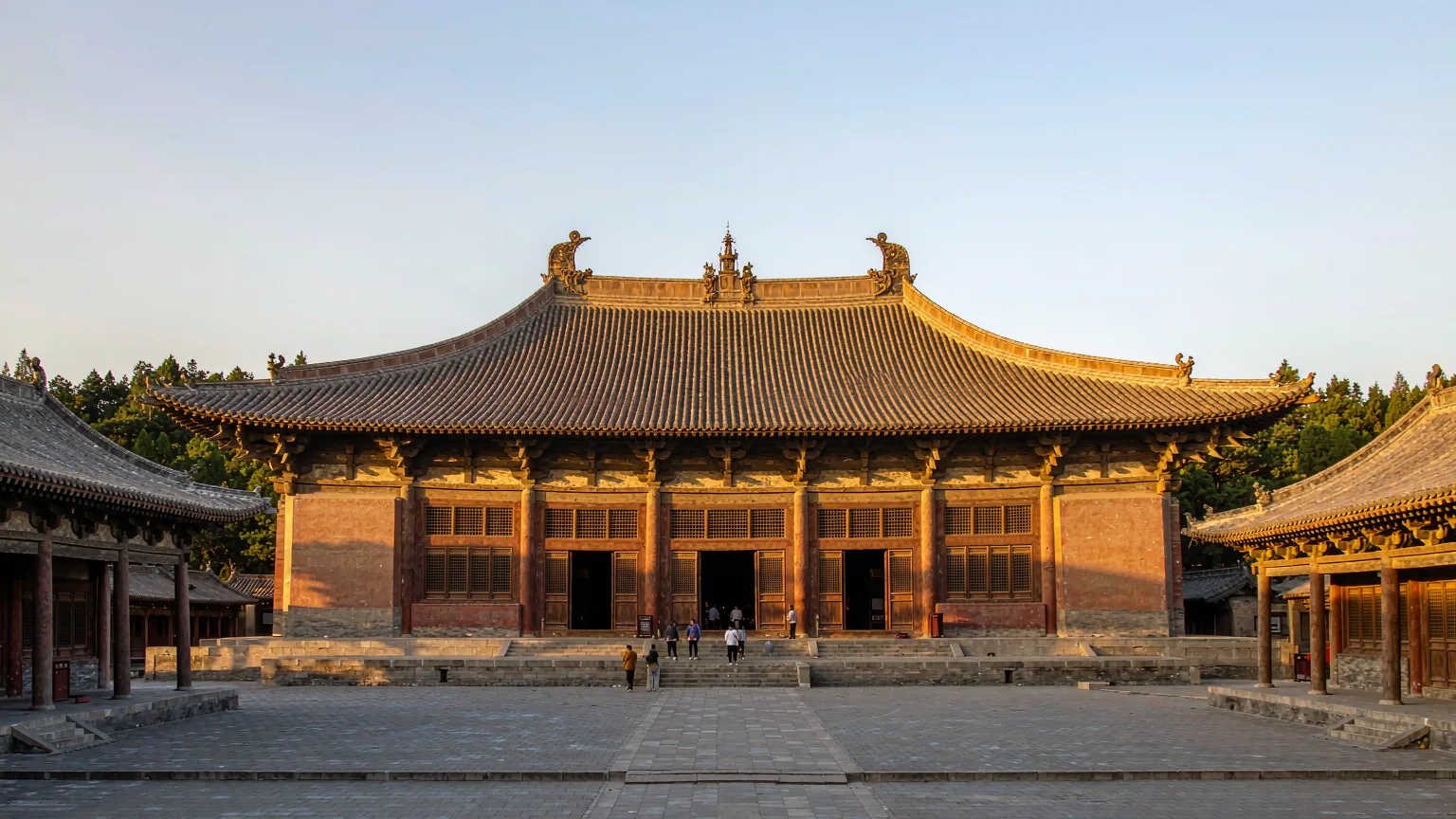
Start the day at Shanhua Temple in the south. Known locally as the South Temple, this Liao-Jin group keeps four principal buildings, gate hall, Three Sages hall, Puxi pavilion and the great Buddha hall, their frames and brackets barely altered, a measuring stick for dating the era.
The twenty-four heavenly attendants in the great hall stand among the finest Liao-Jin clay figures, and the twin guardian generals in the gate hall top four meters. The yard sits nearly empty at this hour, light raking flat through the doors to show every drapery fold.
Sipailou and Gulou East Street: The Old Town's Cross Point
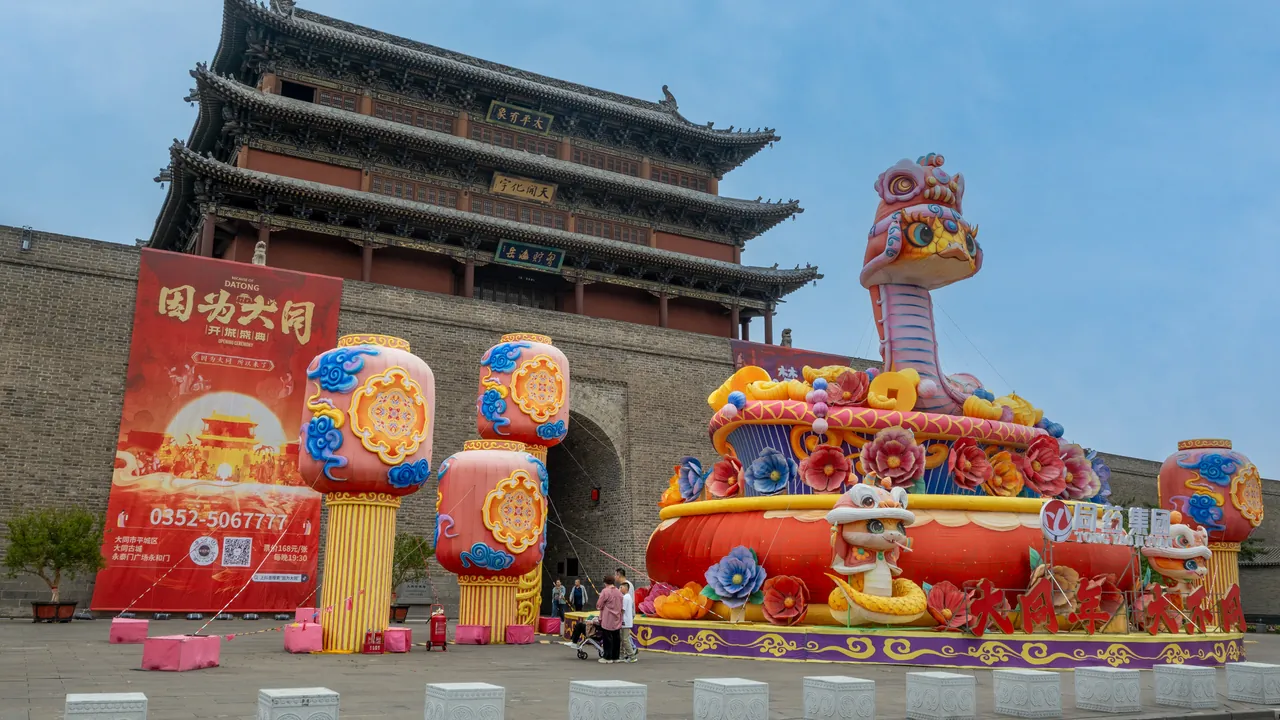
North along Yongtai Street twenty minutes from Shanhua brings you to Sipailou, four archways facing off across the crossroads, the geometric heart of the town. The Drum Tower stands on Gulou East Street just east, a three-tiered Ming body and the zero point of the old skyline.
Gulou East Street rewards a slow walk: the Guandi temple on it keeps a Yuan-dynasty hall, the oldest timber structure inside the walls, while shopfronts run from liangfen counters to curio stalls, and at eleven the street still belongs to locals.
Dongnanyi Historical and Cultural Block: Old Courtyards, New Light
After lunch, enter Dongnanyi on the old town's southeast. Restored from whole runs of old courtyards, the block keeps its original lane grain, with cafes, bookshops and craft studios set behind old wooden facades, the most successful piece of Datong's inner-city renewal.
Take half an hour in a courtyard cafe watching sun slant off the eaves into the lightwell. The block's exhibition spaces rotate local themes, and the vintage photos on the walls name every street you have walked these days.
Datong's City Wall: The Southeast Corner to Sunset
At dusk, climb at the gate beside Dongnanyi, the best vantage on the circuit: southwest lays out the roofs of Huayan and the Drum Tower, east faces the Yuhe river and the new skyline, Ming brick holding the frame with glass curtain walls.
The half hour before sunset is warmest, battlements striping shadows across the walkway. Follow the south wall down at Yongtai Gate straight into the night-market lights, four kilometers closing the old town's layers in a day.
| Getting around |
|
| Budget | Ticket spending stays minimal; budget RMB 80-150 per person, mostly meals and small design-shop buys. |
| Best time | May-June and September-October walk best; summer noons bake, so slot indoor stops and shaded lanes after lunch. |
FAQs
How long does a full walk of the old town take?
This line runs four kilometers, five to six hours with visits; the bare wall loop of 7.2 kilometers takes about two hours. Moderate walkers can sample just stretches of the south and east walls, which hold the two best faces.
Are there many paid entries on this walk?
Very few: Shanhua and the wall are free, Dongnanyi is free, with only spots like the Guandi temple plus meals to pay for. Save budget for Huayan on the classic line and this walk's entries stay under a few dozen yuan.
Which season suits this walk best?
Mid-May and September to mid-October are ideal, mild for all-day walking with the best dusk on the wall. Summer noons bounce hard off wall and stone, so compress outdoors to morning and evening; snow days photograph beautifully but the wind bites, dress for sub-zero.
Can I walk this route with luggage?
Not rolling it: stone lanes and sills abound, and storage clusters around Huayan and the gates. The easiest play is leaving bags at the rail station or hotel, walking the line empty-handed, then collecting; the experience differs completely.