
One day in Datong splits just as cleanly: give the whole morning to the Yungang Grottoes sixteen kilometers west, then return to the old town for Huayan Temple, the Nine-Dragon Screen and the wall. Yungang is an imperial Northern Wei project, and entering at opening is the only way to see it undiluted; after 9:30 the main circuit thickens.
A tourist bus line runs between the old town and Yungang, about forty minutes each way; for tight schedules or small groups, a taxi at roughly thirty minutes buys peace of mind. The wall opens free in the evening, and only when the lamps of Yongtai Gate come on does this day of Northern Wei capital and Liao-Jin secondary capital close its circle.
Itinerary at a glance
| 08:30 | Yungang Grottoes: The Tanyao Five Caves and the Cave 20 Colossus |
| 14:00 | Huayan Temple: The Liao-Jin Giant and the Smiling Bodhisattva |
| 16:30 | The Nine-Dragon Screen Wall: Glazed Front of the Dai Prince's Palace |
| 18:00 | Datong Ancient City Wall: Nightfall at Yongtai Gate |
The route, stop by stop
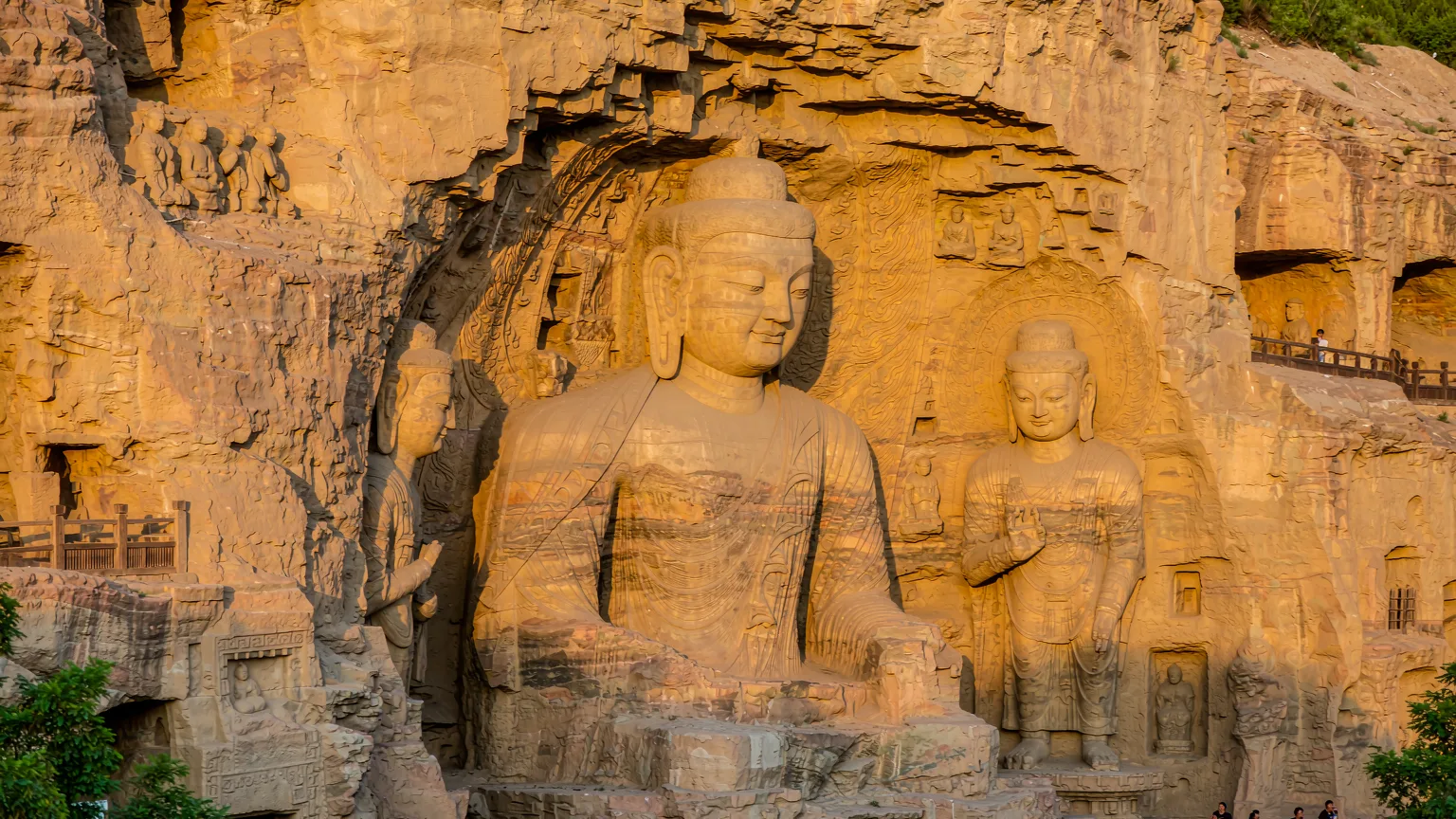
Yungang Grottoes: The Tanyao Five Caves and the Cave 20 Colossus
At opening, head for the westernmost Tanyao Five Caves, cut under the monk Tanyao in the Northern Wei, their principal Buddhas long read as portraits of five emperors, the opening chapter of the imperial project; the central pillars and wall-to-wall reliefs of Caves 5 and 6 form the circuit's other summit.
Cave 20 lost its front wall to an early collapse, leaving the colossus seated in the open, 13.7 meters tall, the cover image of Yungang and Datong alike. Morning sun strikes the face from the east; stand at the worship platform ten minutes, then work back through the remaining caves, three hours all told.
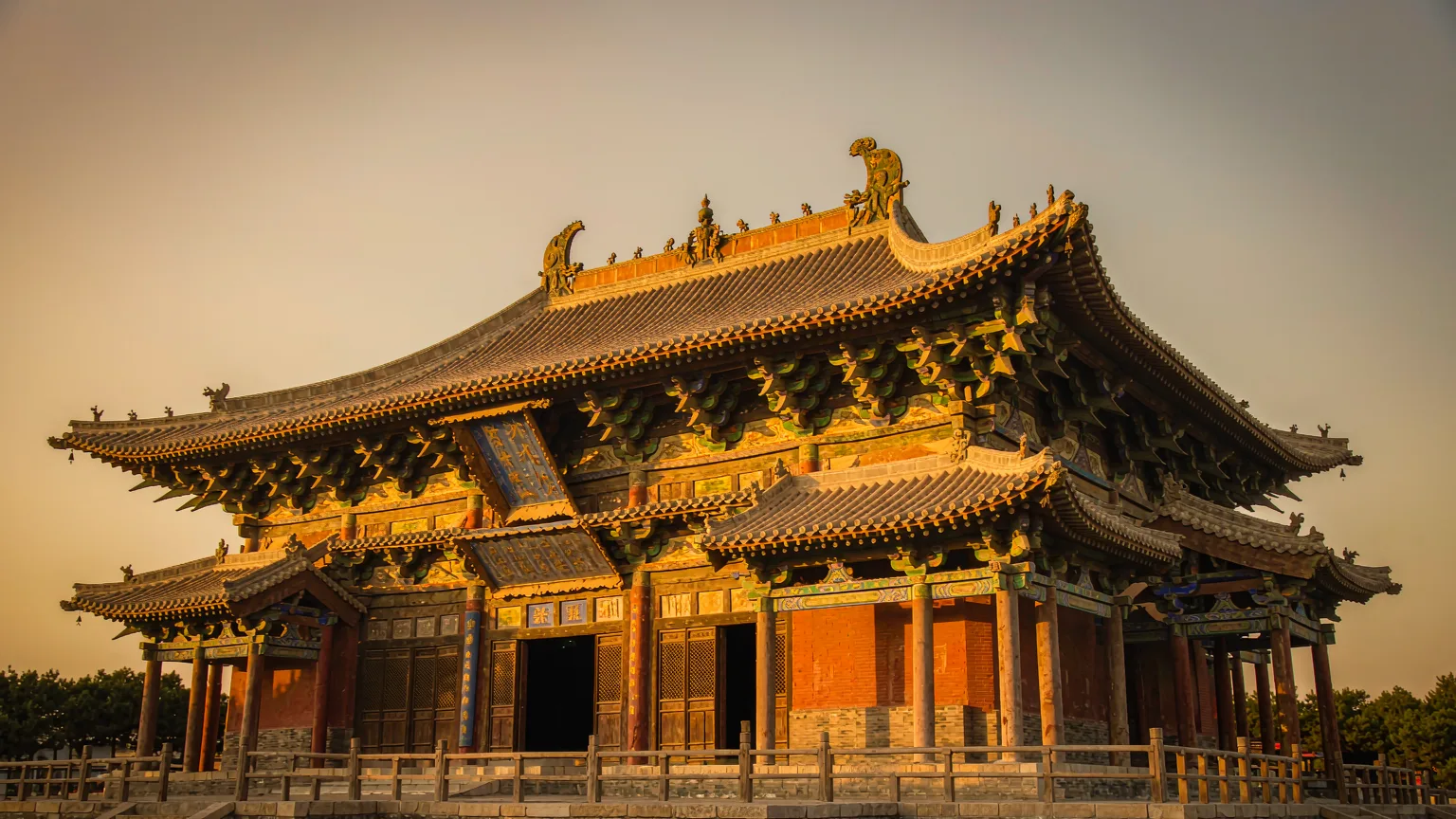
Huayan Temple: The Liao-Jin Giant and the Smiling Bodhisattva
In the early afternoon, return to Huayan Temple on the old town's west side, a Liao-Jin imperial compound in two parts: the upper hall, Daxiongbao, ranks among the largest surviving Liao-Jin Buddha halls, its roof ornaments 4.5 meters tall, while the lower Bhagavat Sutra Repository is original Liao work, its wall of celestial pavilions praised by Liang Sicheng as unique under heaven.
Inside the repository, the palm-together bodhisattva who bares her teeth in a sidelong smile is hailed as the Venus of the East. Three minutes on foot between the halls, ninety minutes covers the essentials.
The Nine-Dragon Screen Wall: Glazed Front of the Dai Prince's Palace
Ten minutes on foot from Huayan stands the Nine-Dragon Screen, a survivor of the front court of prince Zhu Gui's Ming Hongwu-era palace: 45.5 meters long, 8 meters high, assembled from over four hundred glazed blocks, older than Beijing's Beihai screen by more than three centuries and bigger too.
Nine dragons churn through seawater and cloud across the face, the peacock blue of the glaze most vivid in afternoon backlight. Ten minutes at the small square suffices, a fine warm-up before the wall.
Datong Ancient City Wall: Nightfall at Yongtai Gate
At dusk, climb the wall at Yongtai Gate, the south. Rebuilt atop the old city by general Xu Da in the Ming Hongwu era, the 7.2-kilometer circuit now runs whole again with restored walls, corner towers and barbicans, and climbing costs nothing.
Night is the wall's second personality: light ribbons unroll along the parapets, corner towers silhouette against the sky, and the roofs of the Drum Tower and Huayan Temple glow below. Walk a stretch of the south wall and descend with the day closed at the circuit's southeast corner.
| Getting around |
|
| Budget | Entries (Yungang plus Huayan Temple) run about RMB 170 per person; with transport and meals the full day lands near RMB 300-450. |
| Best time | May-June and September-October are the steady months; in summer and Golden Week Yungang doubles in crowds, so aim for the 8:30 opening. |
FAQs
With only half a day, Yungang or Huayan Temple?
Yungang, without hesitation: its scale and preservation stand in a class of their own nationwide, and anything under four hours shortchanges it. Huayan, the screen and the wall compress into a two-hour old-town dash; if you land in the afternoon, tour the town first and save Yungang for next morning's better light and thinner crowds.
Do Yungang tickets need advance booking?
In peak seasons, the May holiday, summer and Golden Week, book real-name tickets via the official account ahead of time, as slots often sell out a day or two out; off season, buying on site is easy. Foreign passports book with the document number and enter with the physical passport.
What is the smoothest way in from Datong South station?
Several buses and tourist lines link the station to town in about forty minutes for a few yuan; a taxi takes roughly thirty minutes for around thirty yuan. With heavy luggage, store it at the station, see Yungang unencumbered, then collect and head into town, the least tiring routing.
What should I wear for this one-day route?
Datong sits over a kilometer high, windier and drier, three to five degrees cooler than peers at the same latitude: a wind shell in spring and autumn, a light long layer even in summer. Yungang means real walking and the wall hard wind, so sneakers plus a hat are standard; the old town's stone lanes turn slick in rain.