
Five days are Datong's optimum: a full Yungang day with both visiting rhythms, one day over the old town's four stops, a museum-and-stupa catch-up, Heng and the Hanging Temple as the physical summit, then half a day in Hunyuan plus a craft session, with the evening train out of Datong South.
The build orders effort heavy-first: climbing and queueing land on day four, culture holds the middle, and browse-and-eat closes. Base inside the walls or just south all five nights, saving both luggage and rhythm.
Itinerary at a glance
| Day 1 · 08:30 | Yungang Grottoes: From the Tanyao Caves to the Five-Color Group |
| Day 1 · 18:30 | Datong's City Wall: Closing Yungang Night |
| Day 2 · 09:00 | Huayan Temple: A Liao-Jin Morning |
| Day 2 · 11:00 | The Nine-Dragon Screen and the Dai Palace: Glaze and Plan |
| Day 2 · 14:00 | Shanhua Temple: An Afternoon with the Twenty-Four Attendants |
| Day 2 · 16:00 | Dongnanyi: Coffee and Design in the Old Courtyards |
| Day 3 · 09:00 | The Datong Museum: Footnotes from the Pingcheng Era |
| Day 3 · 14:00 | Fahua Temple and the Drum Tower: The Old Town's Loose Afternoon |
| Day 4 · 08:30 | Mount Heng: Climbing Day on the Northern Peak |
| Day 4 · 13:30 | The Hanging Temple: The Cliff-Face Summit |
| Day 5 · 09:00 | Hunyuan Old Town: Yong'an Temple and the Yuanjue Pagoda |
| Day 5 · 15:00 | Paper-Cutting and the Exit: One Last Sheet of the Frontier |
The route, stop by stop
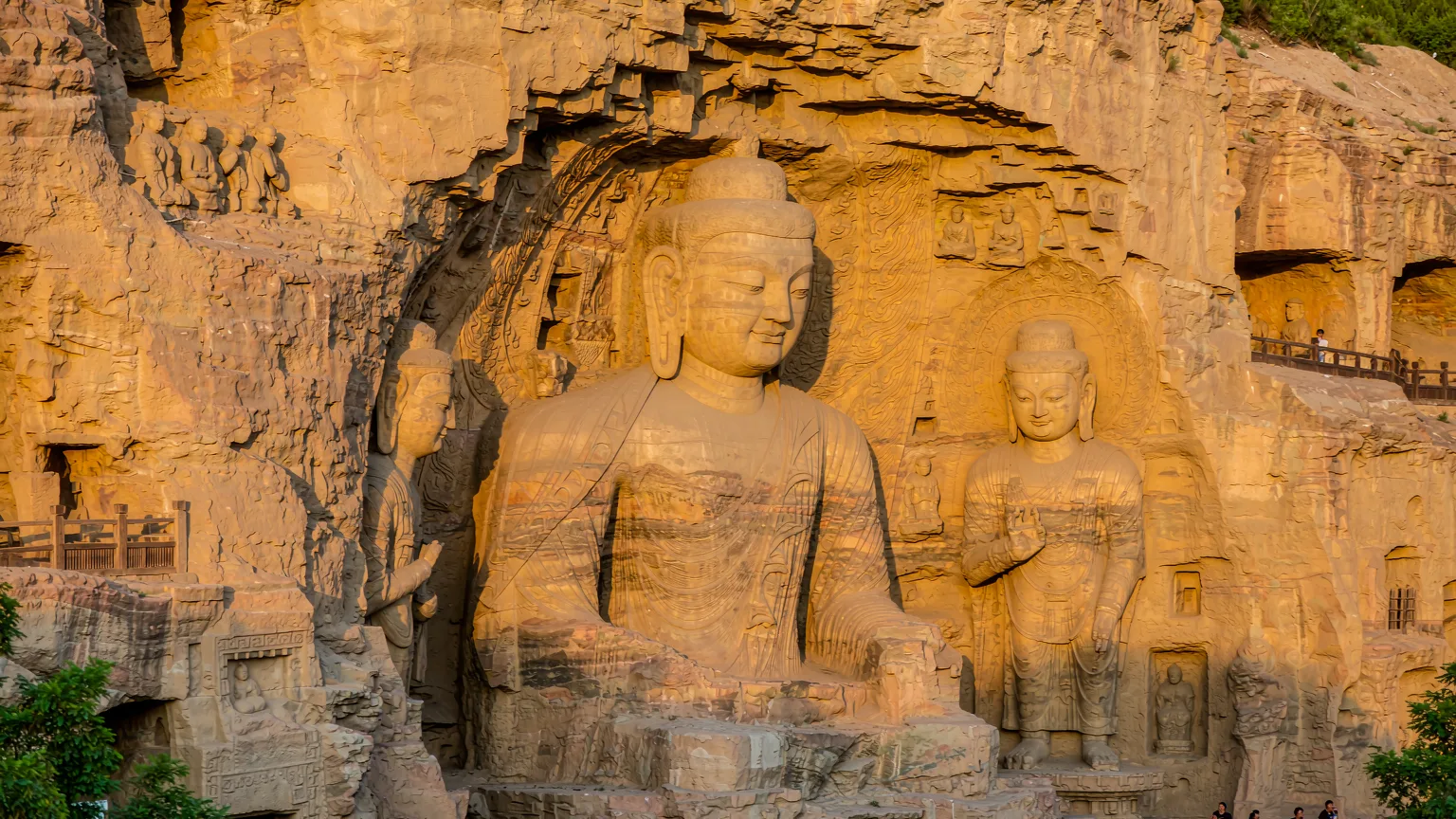
Yungang Grottoes: From the Tanyao Caves to the Five-Color Group
Five days open at Yungang, and Yungang deserves the whole day. Enter west at opening for the Tanyao Five Caves and the open-air Cave 20 colossus, morning light on the cliff giving the fullest modeling.
Lunch simply inside the scenic area, then return in the afternoon for Caves 5 and 6 and the Five-Color group, closing on the music cave's Northern Wei orchestra. Three hours for scale, three for detail: Yungang earns the weight.
Datong's City Wall: Closing Yungang Night
Return at dusk and climb at Yongtai Gate. A day among Northern Wei Buddhas ends standing on Ming walls, light ribbons unrolling along the parapets, corner towers against the sky, two eras stacked in one evening.
A stretch of the south wall suffices; dine below at Yongtai, with knife-cut noodles and sea-buckthorn juice as the day's standard period.
Huayan Temple: A Liao-Jin Morning
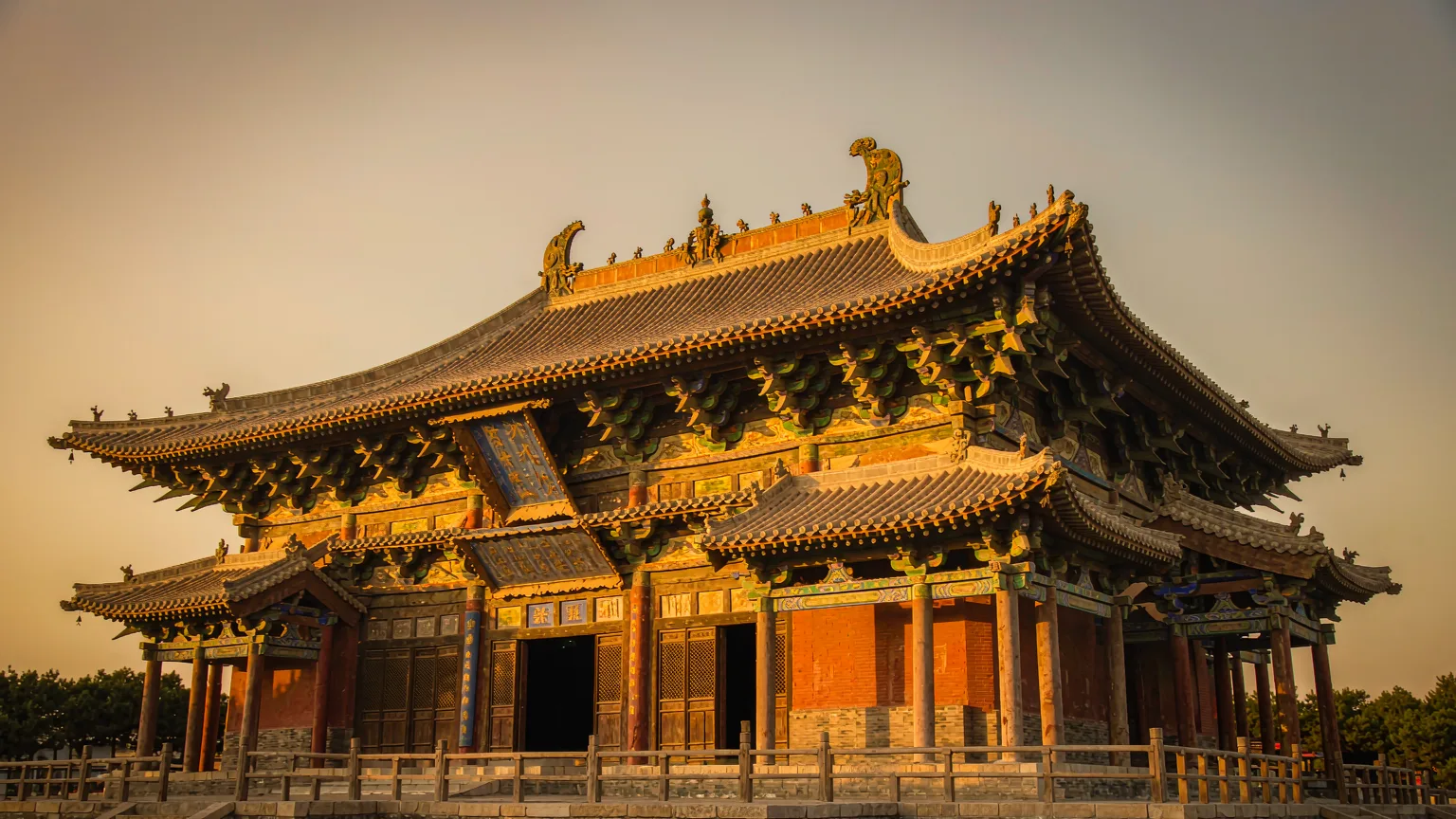
Day two's old-town line opens at Huayan. The upper Daxiongbao hall runs nine bays, the lower repository's pavilion wall is the piece Liang Sicheng called unique under heaven, and the palm-together smiling bodhisattva shares that hall.
Entering at opening means the thinnest crowd; two hours reads both halls and the roofline details. Casual visitors follow the figure and painting, specialists the reduced columns and brackets, no interference.
The Nine-Dragon Screen and the Dai Palace: Glaze and Plan
Ten minutes on foot from Huayan stands the Nine-Dragon Screen, its nine dragons in over four hundred glazed blocks three centuries older than Beijing's Beihai version, with late-morning sun square on the face for truest color.
The rebuilt Dai palace beside it shows its compound plan at posted prices. An hour covers both, landing exactly on lunch.
Shanhua Temple: An Afternoon with the Twenty-Four Attendants
In the afternoon, reach Shanhua south of the center. Four Liao-Jin buildings stage themselves in phases across one yard, the twenty-four heavenly attendants in the great hall the climax.
Coming from Huayan, your dating eye is open: roof pitch and bracket density separate the two temples at a glance. Finish before dusk, when light rakes in through the west doors.
Dongnanyi: Coffee and Design in the Old Courtyards
The afternoon's loose hour goes to Dongnanyi. The restored courtyard block threads cafes, bookshops and craft studios, digesting the morning's brackets and figures.
Take half an hour in a courtyard cafe and pick up the design souvenirs, pieces drawn from Yungang and the screen being the right choice, then climb the wall from here for sunset.
The Datong Museum: Footnotes from the Pingcheng Era
Day three's morning is catch-up. After Yungang and the temples, the museum's Pingcheng figure ranks and Silk Road relics explain why Datong is Datong: nearly a century of Northern Wei capital history sits in the cases.
Two hours covers all, Pingcheng first, Liao-Jin-Yuan after; free by reservation, closed Mondays, so lock a slot on the official account before arriving.
Fahua Temple and the Drum Tower: The Old Town's Loose Afternoon
In the afternoon return to the old town's northeast. Fahua's white stupa, first raised in the Yuan, glows as the walls' most photogenic tower, a twenty-minute circuit around it.
Then walk to Gulou East Street, climb the Drum Tower or tea beside it, and let dinner happen on the street, rabbit head, skewers and oil cakes, banking strength for day four's climb.
Mount Heng: Climbing Day on the Northern Peak
Day four is the physical peak. Set out at dawn for Hunyuan: Heng, the Northern Peak of the Five, carries stone steps and pine wind up to the Hengzong hall, the giant cliff inscription the mountain's signature.
The cableway erases most of the climb, a pure hiking round trip running four hours. The summit faces the Hunyuan basin, where frontier temperament meets the Five Peaks pedigree.
The Hanging Temple: The Cliff-Face Summit
Ten minutes down from Heng sits the Hanging Temple. A timber building hung on the cliff in the late Northern Wei, its manual runs three words, hanging, marvel, ingenuity, with the Three-Religions Hall's shared altar a national rarity.
Walkways run capped and one-way, while the valley-floor view matches the climb for shock. After 4 pm the tour groups drain, the last off-peak window.
Hunyuan Old Town: Yong'an Temple and the Yuanjue Pagoda
Day five's morning stays in Hunyuan. Yong'an's Yuan water-land murals of ten great kings are a heavyweight of Shanxi temple painting, and ten minutes away the Jin brick pagoda of Yuanjue still crowns its wind-vane bird.
Two hours covers both, with the yamen and old streets in passing; at noon, one last authentic bowl of Hunyuan liangfen nails the line's taste coordinate.
Paper-Cutting and the Exit: One Last Sheet of the Frontier
Back in Datong city, the five days close with a hands-on hour. Cut a piece themed on Yungang figures or the Great Wall at the paper-cutting workshop, teacher-led from draft to final cut in about an hour.
Bag the work for the train home, more personal than any shelf item, and board the evening departure from Datong South with the grottoes, the old town and the mountains all packed.
| Getting around |
|
| Budget | Entries total about RMB 500-700, led by Yungang, Heng and the Hanging Temple; five days with transport and meals run RMB 1,800-2,600 per person. |
| Best time | May-June and September-October are best; hit Yungang and the Hanging Temple early, and dodge Mondays for the museum day. |
FAQs
Can five days compress to four?
Yes: fold the museum and Fahua into day two's afternoon and give the freed day to Heng and the Hanging Temple as a two-day slow pair. For three days, drop Hunyuan's old town and the paper-cutting, keeping Yungang, the old town and Heng as the three blocks.
Is five days realistic with elders and kids?
Realistic with cuts: ride the Heng cableway, view the Hanging Temple from below only if needed, and use Yungang's carts for distance. The real pinch is day four's mountain road and queues, so depart by 7:30 and the whole pace halves its tension.
Which day works best as the rain day?
Day three: the museum is fully indoor and Fahua plus the Drum Tower half so, losing least to rain. Yungang is half-open, fine in drizzle and closed in downpours; Heng and the Hanging Temple simply cancel in rain, swapping wholesale with day three.
What is the leanest way to run the budget?
Three moves: Shanhua, Fahua and the walls are free, reserving tickets for the three hard ones, Yungang, Heng and the Hanging Temple; swap charters for the tourist bus and coaches at a cost of time; and fix one old-town guesthouse, closing near RMB 1,500 a head over five days.