
To the Tibetan world Everest is more than scenery: flags on a pass carry wishes, walking clockwise around mani stones is practice, and Rongbuk's monks and nuns have kept vigil near 5,100 m for decades. This culture route re-walks the mountain road, but each stop shifts the question from seeing the peak to understanding how it is treated.
The day weighs three things: conduct at passes and prayer circuits, the rules and rhythm of a monastery, and the surveying story behind the number 8,848.86 m. The hard conditions remain: a border permit to go up, a chartered vehicle, and no saving on mileage because the theme is culture.
Itinerary at a glance
| 08:30 | Tingri County Town: First Lap on the Morning Circuit |
| 10:30 | Gawula Pass: Windhorse Flags and the Rules of a Pass |
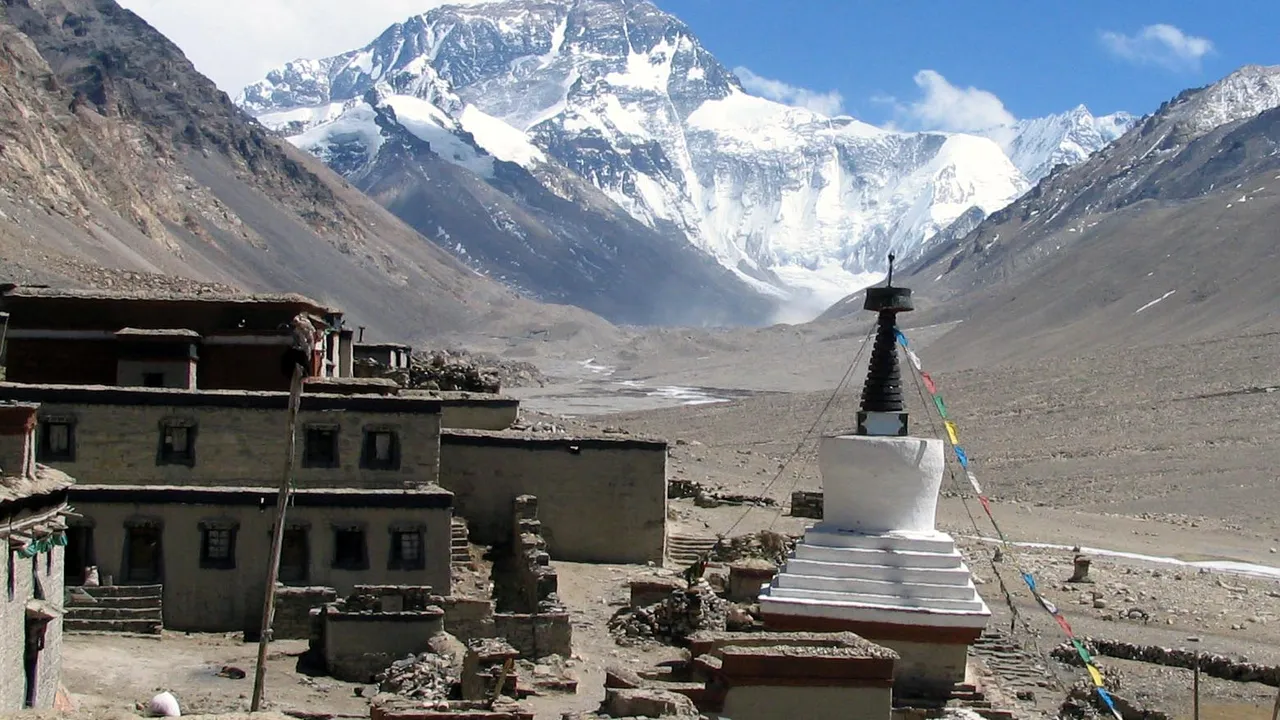
| 13:30 | Rongbuk Monastery: Daily Practice at 5,100 m |
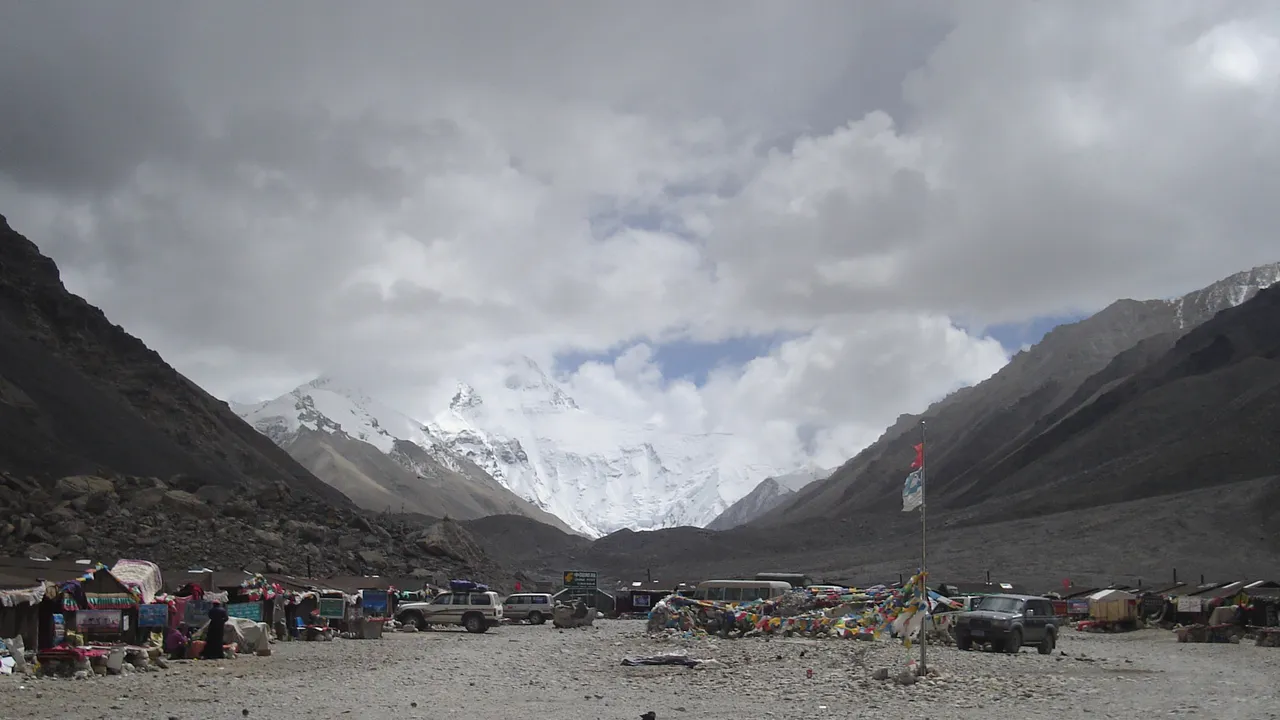
| 16:00 | Everest Viewing Point: How a Mountain Gets Measured |
The route, stop by stop
Tingri County Town: First Lap on the Morning Circuit
The culture day opens on the town's prayer circuit. Early walkers are mostly elders with hand prayer wheels or beads, moving at one slow shared tempo. Walk along in silence, clockwise; it is the best way to blend in and the nearest door into everyday Tibetan faith.
Two details matter: turn prayer wheels clockwise, and when someone prostrating full-length approaches, step wide around them, never across their path. One forty-minute lap warms the engine and gives you a first-hand read on today's altitude.
Gawula Pass: Windhorse Flags and the Rules of a Pass
A pass is Tibetan faith's open-air classroom: when new flags go up the old stay, since each flap of wind counts as one recitation. Beyond the five eight-thousanders, spend ten minutes reading the color order of the flags, blue, white, red, green, yellow for sky, cloud, fire, water and earth.
Pass conduct: never tread on scattered windhorse papers, never pocket stones from a mani pile, and toss windhorse papers with the wind. To hang a flag of your own, ask locals first; it is participation, not a photo prop.
Rongbuk Monastery: Daily Practice at 5,100 m
Founded in the early twentieth century, Rongbuk houses monks and nuns together, and its murals and butter lamps preserve the texture of an old Tibetan temple. Afternoon chanting often fills the hall, low and mixed with wind, an experience diluted out of existence in city temples; sit quietly for ten minutes.
Keep exchanges with practitioners light and brief: a joined-palms greeting suffices, never photograph people unasked, and lamp offerings are bought outside the hall. Look at the slopes behind the monastery; carrying water, hauling firewood, surviving winter, all daily life happens here at 5,100 m, and the respect follows naturally.
Everest Viewing Point: How a Mountain Gets Measured
The culture day closes at the Everest Viewing Point. The marker's 8,848.86 m comes from the recent height survey, where teams carried instruments up icy slopes above 6,000 m for months; a summit beacon and snow-depth radar brought the figure to the centimeter.
Tell the story to your companions, then look up at the summit: one mountain, at once a sacred peak, a climber's limit and a surveyor's problem. The value of a culture day shows on the ride back; the more you know, the more you see.
| Getting around |
|
| Budget | Everest park entry about RMB 160 pp plus vehicle fee; charter share and meals add up to roughly RMB 400-700 pp. |
| Best time | Apr-Jun and Sep-Oct are steadiest; monastery and prayer circuit run year-round, though winter passes are brutally windy and evenings outdoors should stay short. |
FAQs
How does the culture day differ from the classic sightseeing day?
Same road, different attention: the classic day chases clear-view windows and alpenglow, while the culture day spends time on circuit etiquette, Rongbuk's chanting and the survey story, slower and longer at each stop. Combine them as two days, scenery first, culture second, and the mountain grows a second layer of meaning.
What are the taboos at Rongbuk Monastery?
Hat off inside, never step on the threshold, circulate clockwise, no photos and no loud talk in the hall; a joined-palms greeting is enough with practitioners, and avoid probing their private practice or gifting food items. Turn prayer wheels clockwise, gesture before courtyard photos, and if declined, put the camera away; a monastery is not a set.
May I hang prayer flags or toss windhorse papers myself?
Yes, with a participant's mindset rather than curiosity: ask locals to hang flags or show you how, and toss windhorse papers with the wind, never at people. Circulate mani piles clockwise, pocket no stones, tread on no papers. These rituals carry wishes; casual behavior offends those present, so watch first, act second.
Does the culture route work with children?
Moderately: the circuit and viewpoint keep a controllable pace, and children take to the survey story. The risks are altitude and windchill, since both the pass and Rongbuk exceed 5,100 m and children's symptoms are easily underestimated. Let kids acclimatize a night in town first, carry oxygen and sugar, and descend immediately on vomiting or listlessness rather than pushing on.