
Dingri's eating runs on a strict clock and an altitude logic: the county town owns breakfast and lunch, and the Base Camp tents own the night's hot mouthful. The stomach is fragile up here, neither starving nor stuffing allowed, so the day splits meals smaller and stretches them longer, each one catching the next.
The route has two legs: daytime in town, working through noodles, tsampa and yak on the meal clock, then a drive up the mountain in time for supper in a tent. Do not underestimate the pressure-cooker noodle soup; in the wind at 5,200 m it outweighs any restaurant in any city.
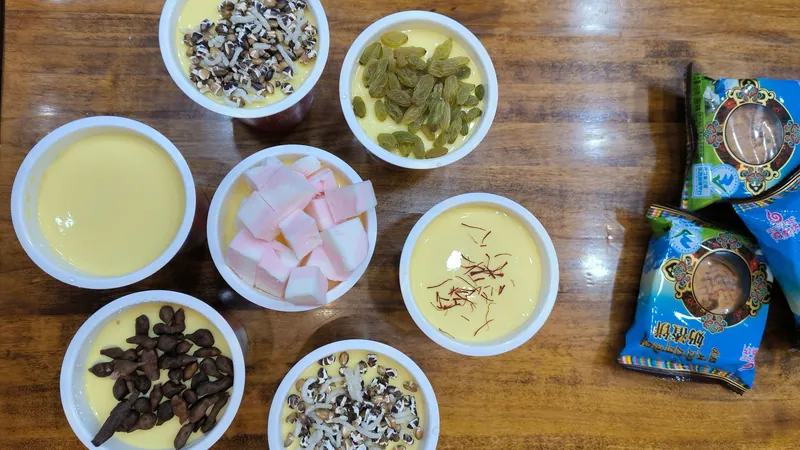
Itinerary at a glance
| 08:00 | Tingri Breakfast Stalls: Tibetan Noodles and First Sweet Tea |
| 11:00 | Everest Tsampa: From Barley Grain to a Bowl |
| 14:30 | Everest Yak Meat: Stew Pot, Handheld Cuts and Dried Meat |
| 19:00 | Everest Base Camp Tent Supper: Victory of the Pressure Cooker |
The route, stop by stop
Tingri Breakfast Stalls: Tibetan Noodles and First Sweet Tea
The town wakes when the sweet teahouses open: Tibetan noodles star here, a bone-broth base with thick noodles, minced meat and scallion, one bowl and the chill recedes. Sweet tea, simmered from black tea, milk powder and sugar, lands near milk-tea color, and locals refill bowl after bowl, the plateau's morning coffee.
If appetite allows, add a fried dough twist or a spoon of pickled radish. Note that appetite shrinks at altitude: order small, add as needed, waste nothing and stuff nothing, with three meals still ahead today.
Everest Tsampa: From Barley Grain to a Bowl
The noon lesson is understanding tsampa: barley roasted then ground, the flour still warm with toast, mixed with butter tea, curds and a little sugar, kneaded in the bowl with a rotating hand motion. Veterans shape a smooth, clean ball; beginners usually produce paste, and the owner typically rescues you with a laugh.
Tsampa must be mixed and eaten fresh or it dries out. It is the herding ground's energy chassis, filling, portable and gentle to digest, the lowest-burden lunch before going up the mountain. Cut it with plain tea and sit by the stove through the aftermath.
Everest Yak Meat: Stew Pot, Handheld Cuts and Dried Meat
The afternoon centerpiece is the full yak spread: a clear-broth pot as the base, ribs and brisket simmered off the bone, boiled cuts dipped in salt and pepper, and dried yak chewed raw in thin slices. The three preparations map three herding seasons, fresh in summer, dried in winter, while the broth, stewed from morning to night, only thickens.
The dried meat is wind-cured naturally through plateau winters, hard at first bite, then salt-savory, the local snack and hospitality currency. Go easy the first time; aching jaw muscles are standard. The radish and potato in the pot soak up the most flavor, so fish out every piece.
Everest Base Camp Tent Supper: Victory of the Pressure Cooker
The last stretch of road ends with the Base Camp tents already lit against the dark. At 5,200 m water boils in the mid-eighties Celsius, so everything relies on pressure cookers: noodle-flake soup, boiled radish, hot water and sweet tea, the stove burning yak-dung cakes, firelight on a ring of shared bunks.
Tent-supper rules are hot, small and repeated: half a bowl of soup first to warm the core, then a small bowl of noodles, with the host re-heating whenever hunger returns at night. What you eat matters less than that it is hot, salty and refillable; that bit of solidity before sleep, against the wind, is beyond price.
| Getting around |
|
| Budget | A mixed graze-and-meal day runs about RMB 120-220 pp, with the tent supper at RMB 100-200 and dried-meat gifts extra. |
| Best time | Edible year-round; breakfast stalls wind down after 9 am, and the Base Camp tents run April to October, so in winter the tent supper moves to town. |
FAQs
What are the rules of eating at high altitude?
Three rules: stop at seven-tenths full, since digestion costs oxygen and overeating deepens dizziness and fatigue; favor carbohydrates over grease, noodles and tsampa beat heavy meat feasts; and no alcohol or binges, which amplify altitude sickness. With poor appetite eat small and often; sweet tea and glucose water restore energy fast, so carry snacks.
Is the Base Camp tent supper hygienic? Can a weak stomach handle it?
Tent cooking is fresh-boiled; noodle soup, hot water and bottled drinks all pass through high heat, and the risk sits in cold dishes and leftovers of unknown age. Weak stomachs should order freshly boiled hot food and bottled water, skip cold salads and anything of uncertain storage, and carry stomach remedies, since dehydration at altitude doubles the danger of a bad gut.
Do the tsampa and yak-meat experiences need reservations?
Walk-ins are fine at town eateries, no booking needed; for a kneading demo or a dried-meat tasting, come before meal rush when owners have time. In peak season tour groups flood in at noon, so aim for before 11 am or after 2:30 pm for a quiet table, and for the tent supper have your driver phone a day ahead.
What should I know about taking dried yak meat home?
Choose vacuum-packed products with clear dating; loose dried meat keeps two or three days at room temperature and bruises badly. Domestic checked luggage is generally fine, but most countries strictly limit meat imports and confiscation is likely. For international trips, switch to meat-free souvenirs like tsampa flour or butter candy.