
Three days is the sensible minimum for Everest: one day is rushed, while three covers acclimatization, viewing and descent properly. Day one is not for the mountain but for putting your body in place, day two belongs to Base Camp's dusk, night sky and sunrise, and day three closes with gentle barley-field walks that hand the body back to the world.
The altitude curve is deliberate: two nights打底 at the 4,300 m county town, one night only at the 5,200 m camp, and glacier walking paced below breathlessness. The most important road of the three is the final descent; only a comfortable body has truly seen the mountain.
Itinerary at a glance
| Day 1 · 10:00 | Tingri County Town: Arrival, Permits and First Acclimatization |
| Day 1 · 13:30 | Gawula Pass: Roll Call for Five Peaks, First Time |
| Day 1 · 16:00 | Everest Viewing Point and Rongbuk: Setting Up the First Mountain Night |
| Day 1 · 19:00 | Everest Base Camp: Tent Night and the First Sky |
| Day 2 · 07:00 | Everest Sunrise: Twenty Minutes of Gold Climbing the Summit |
| Day 2 · 10:00 | Rongbuk Monastery: A Second Call in Morning Light |
| Day 2 · 13:00 | Everest Glacier: Reading the Rongbuk Ice Tongue from Afar |
| Day 2 · 16:30 | Descending to Tingri Town: A Buffer Night for the Body |
| Day 3 · 09:30 | Tingri Barley Fields and Village Lanes: The Gentle Post-Descent Walk |
The route, stop by stop
Tingri County Town: Arrival, Permits and First Acclimatization
Arrive from the Shigatse direction by late morning; the afternoon holds exactly three tasks: confirm the border permit, check the vehicle, and take a slow walk. One loop of the main street and prayer circuit reveals how your body first reacts to 4,300 m; dizzy means early bed, comfortable means another lap.
Dinner at seven-tenths full, in bed by 9:30. The town's nights are quiet enough to hear the wind, and the quality of this sleep decides how tomorrow goes up the mountain; put the phone down early.
Gawula Pass: Roll Call for Five Peaks, First Time
Set off light in the early afternoon for Gawula Pass, where the five eight-thousanders line up on the platform. Before shooting, name them one by one with your eyes: Makalu, Lhotse, Everest, Cho Oyu, Shishapangma; you will meet them again and again over three days.
This is among the route's highest points; twenty standing minutes suffices. Watch your breathing and head, and on any discomfort return to the car for oxygen and rest, staying conservative on day one.
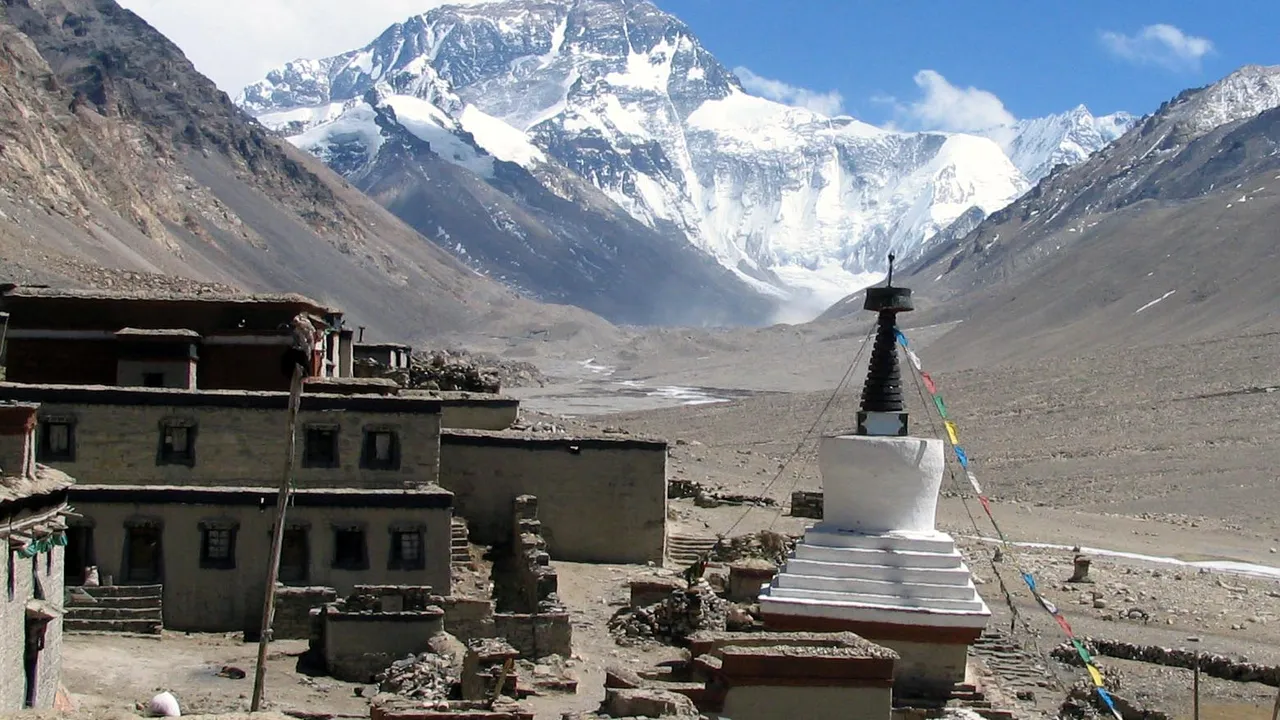
Everest Viewing Point and Rongbuk: Setting Up the First Mountain Night
Afternoon light suits the viewing point: the pyramid of Everest's north wall spreads before you, and the marker's 8,848.86 m annotates the whole trip. Drop to Rongbuk Monastery on the way, where white walls, red trim and chanting slow the rhythm.
Today is setup, not a sprint: after the last glow, either descend to town or push up to Base Camp, letting your condition and driver decide. Better to miss half an hour of light than overspend your legs at 5,100 m.
Everest Base Camp: Tent Night and the First Sky
The first night goes to a tent or to town, on your body's vote. Choose the tent and you earn the trip's best sky: 5,200 m, zero light pollution, the Milky Way rising toward Everest, with a red-cloth-wrapped flashlight to keep night vision.
Rehearse the tent rules: no shower, lots of hot water, oxygen for headaches, sleeping bag cinched tight. Waking with head pain is no crisis; sit up, breathe slowly for ten minutes, lie back down, and wake the host if it keeps building.
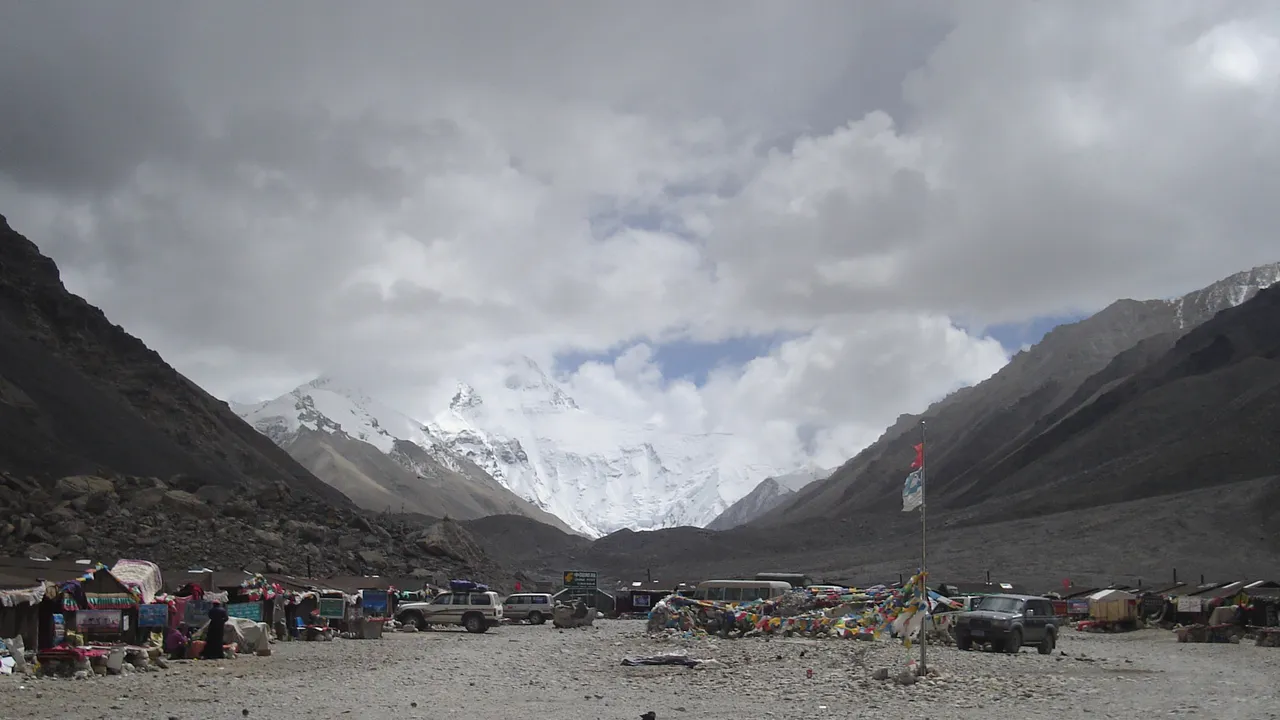
Everest Sunrise: Twenty Minutes of Gold Climbing the Summit
Out of the tent at 6:30, Everest before dawn is a cold blue silhouette. For about twenty minutes around sunrise, sunlight sweeps down from the summit and the mountain gilds layer by layer, the moment locals call the golden snow-light, the trip's high point.
Watch from the viewing-point direction or the open ground before the tents, fully layered against the wind. Set camera parameters early; do not surrender all twenty minutes to a screen.
Rongbuk Monastery: A Second Call in Morning Light
Rongbuk on the descent rewards a second look: morning sidelight brightens the white walls, and on chant or ceremony days the prayer-circuit crowd outside thickens. After yesterday's drive and this morning's sunrise, such stillness feels especially luxurious.
Drink a flask of sweet tea at the monastery teahouse and study the glacier striations on the facing slope. The temple cats and dogs are unafraid of people; skip feeding them human food and simply coexist quietly.
Everest Glacier: Reading the Rongbuk Ice Tongue from Afar
The Rongbuk Glacier is the largest on Everest's north slope, its gray-white ice tongue visible from the Base Camp direction stretching downhill. Close contact demands trekking and professional arrangements; the right approach for ordinary travelers is viewing plus imagination: aeons of snow pressed into blue ice, flowing down the valley.
If legs and time allow, walk thirty to sixty minutes on gentle ground near Base Camp and feel the wind arriving off the ice. Never step onto the ice itself; crevasses and hidden ice are lethal without gear.
Descending to Tingri Town: A Buffer Night for the Body
Back in town by early evening, this night's meaning is medically plain: from 5,200 m to 4,300 m, both sleep quality and appetite rebound. Take the hot shower you skipped (allowed now, after descending) and wash off two days of dust and fatigue.
Order a hot stew pot for dinner and turn in early. Tomorrow holds a half day of freedom, and the body's ledger will balance itself tonight. Finish washing and charging before bed and stage tomorrow's camera, permit and water by the door, so departure takes only putting on shoes.
Tingri Barley Fields and Village Lanes: The Gentle Post-Descent Walk
Day three's morning belongs to the town's outskirts: in harvest season the barley fields spread a golden blanket, village lanes run along Tibetan courtyards stacked with neat yak-dung cakes, and snow peaks hold the horizon. This is the lowest, loosest stretch of the three days; strolling pace is exactly right.
Move softly past village mouths and field ridges, nodding to working villagers; enter no courtyards or fields uninvited. The courtesy radius of rural Tibet is small but sharply drawn.
| Getting around |
|
| Budget | Entry about RMB 160 pp plus vehicle fee; three-day charter share, tent nights and meals total roughly RMB 1,200-2,200 pp. |
| Best time | Apr-Jun and Sep-Oct are best: clear, calm and tents fully open; July-August works with lower odds of a bare summit, while winter should stay day trips with no overnight. |
FAQs
Which day carries the highest altitude-sickness risk?
Risk peaks from the first night into the second morning: sleeping at 5,200 m after rising from 4,300 m exposes the body during sleep. The fix is sleeping in town the first night and moving the tent night to day two; either way, worsening overnight headache or unrelieved vomiting means descending, and a three-day plan exists precisely for that retreat.
How should nights split between tents and town?
The mainstream split is two nights in town, one in a tent, with the tent night on day two after a full night of adjustment; fit young travelers with mild symptoms may go straight up the first night. The test is simple: waking headache-free with a good appetite means proceed to camp; otherwise hold another night in town.
Can we get close to the glacier?
Viewing is easy, contact demands professional arrangements: crevasses and hidden ice are lethal without gear, and the proper route is a guided trekking program. For ordinary itineraries, gentle walking around Base Camp suffices, and the glacier seen inside the safety line is equally staggering; never push closer for its own sake.
Is leaving on the afternoon of day three realistic?
Yes, and that is the standard close: village walk in the morning, lunch back in town, then a chartered run to Shigatse or a shared ride toward Lhasa in the afternoon. Keep permits and tickets handy for return checkpoint checks, and evening-flight travelers must reserve six-plus hours of road time.