
Dingri's countryside is the easiest place to drive past: every car heads for the peaks and nobody stops for the fields. This route reverses the order, keeping the first two days at the 4,300 m county town and nearby villages to learn the plateau's daily life through markets, prayer circuits, tsampa and yak, saving the mountain for day three, when Everest becomes the backdrop to a rural story.
The countryside runs on meal times and daylight: morning market, midday stove, dusk field ridges. What you need is not a checklist but patience, and the nerve to talk to locals. Rural Tibet speaks little; one flask of sweet tea is enough to make a friend.
Itinerary at a glance
| Day 1 · 09:00 | Tingri Morning Market: Where the Day Stocks Up |
| Day 1 · 11:00 | Prayer Circuit and Mani Piles: The Countryside's Spiritual Infrastructure |
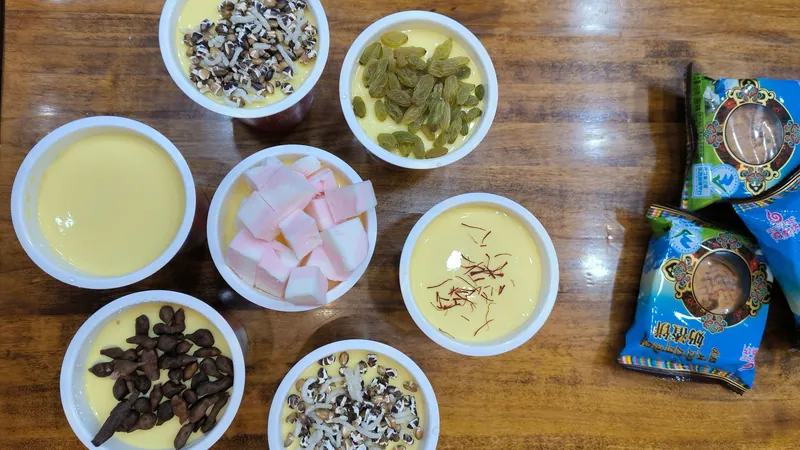
| Day 1 · 14:00 | Everest Tsampa: First Lesson at a Tibetan Stove |
| Day 1 · 18:00 | Everest Yak Meat: The Weight of a Village Supper |
| Day 2 · 09:30 | Barley Fields and Village Lanes: The Golden Corridor of Harvest |
| Day 2 · 14:00 | Around the Family Stove: Butter Tea and a Slow Afternoon |
| Day 2 · 17:30 | Tingri at Dusk: The Last Stroll before the Stars |
| Day 3 · 09:00 | Gawula Pass: The Peaks, Re-seen through a Rural Lens |
| Day 3 · 13:00 | Rongbuk Monastery: The Vestibule between Village and Peak |
| Day 3 · 16:00 | Everest Base Camp: Half an Hour of Farewell |
The route, stop by stop
Tingri Morning Market: Where the Day Stocks Up
The morning market is the town's earliest organ: herders bring butter and curds in, grocers stack cabbage and potatoes, and new gloves hang at the general store. Buy the trip's snacks, fruit and thermos here in one pass at the best prices.
Walk slowly; reading the order of goods reads the exchange between herding and farming: milk and meat off the mountain, barley and vegetables off the fields, with the county town as the hub of the trade.
Prayer Circuit and Mani Piles: The Countryside's Spiritual Infrastructure
The town's prayer circuit links the mani piles at village mouths, the countryside's oldest public works, older than any road. Walk a lap with the elders and count the sutra-carved stone slabs; each was cut by somebody's hand.
One method for the rural line: do not interrogate meaning, imitate conduct first. Clockwise, soft-voiced, yielding; when the behavior is right, the meaning surfaces by itself. If you fall in step with a circling elder for a while, the rhythm of their feet teaches more than any text.
Everest Tsampa: First Lesson at a Tibetan Stove
The afternoon tsampa session happens in a town Tibetan eatery: fresh roasting and grinding are rare, but mixing and kneading to order is the standard flow. Your hands do the learning: butter-tea measure, curd ratio, kneading pressure, more direct than ten guides.
Leaving food is fine, since hosts portion generously and leftovers carry no rudeness; but finishing the first bowl is the clearest compliment.
Everest Yak Meat: The Weight of a Village Supper
Day one closes on yak meat: the trio of stew pot, boiled cuts and dried slices, with a small cup of new barley wine, tea instead if you do not drink. In the countryside meat is the main argument, and brisket stewed long enough falls apart at the touch of chopsticks.
Table talk beats the dishes: ask the host about this year's snow line and head of cattle rather than ticket prices, and it lands better. Turn in early; tomorrow is field day.
Barley Fields and Village Lanes: The Golden Corridor of Harvest
Day two's morning goes to the field ridges. In harvest the barley runs from village edge to the foot of the peaks, sickles, threshing and grain-hauling three-wheelers all sounding at once. Walk the ridges slowly; the soft dirt beats any city boardwalk.
Village children are curious about visitors, and pencils or small notebooks as greeting gifts are a veteran traveler's tradition; go easy on candy, since dental care is far away.
Around the Family Stove: Butter Tea and a Slow Afternoon
In the afternoon find a teahouse or family room and sit; butter tea goes flask by flask. Yak-dung cakes crackle in the stove, the host feeds another in now and then, and talk drifts: this is the plateau afternoon in its correct form, doing nothing, burning time in the stove.
An invitation indoors is luck: hat off at the door, never on the threshold, move clockwise past the altar niche; when the hostess refills, steady the bowl with both hands, and if butter tea is not yours, sip shallowly rather than pushing the bowl back full.
Tingri at Dusk: The Last Stroll before the Stars
Return to town at dusk as street lamps come on in sequence and the prayer circuit takes its second crowd of the day. Walk one more lap and review the two days in your head: market prices, stove-side stories, field sounds.
The town sky is transparent; after dinner you can find Orion and the Big Dipper bare-eyed. Countryside stargazing needs no gear, only a warm scarf and twenty minutes of looking up.
Gawula Pass: The Peaks, Re-seen through a Rural Lens
Day three climbs. After recognizing butter at the market and barley in the fields, the five peaks of Gawula stop being postcards: the pastures below are where the yak came from, and the pass flags extend the prayer circuit's faith line. Only now does the mountain connect to the land.
On a clear day all five summits blaze; shoot your keepsake frames and descend promptly, saving legs for the afternoon. The pass wind builds from early morning; pin scarf and hat, and do not spend body heat waiting for one cloud to move.
Rongbuk Monastery: The Vestibule between Village and Peak
Rongbuk in the afternoon is the route's closing bracket: white walls and red trim on a 5,100 m scree slope, with barley fields below and glacier above in one view. The monks and nuns live on provisions from below; village and mountain complete each other here.
Sit before the monastery for a quarter hour with nothing scheduled. Over three days you have seen fields, stove, market and pass; stack them in one view now, and the rural line is truly walked.
Everest Base Camp: Half an Hour of Farewell
The final stop is Base Camp. Arrive before evening, catch the overture of the alpenglow and turn back, unburdened by any tent night. The three rural days end on the peak, but the real harvest lies below: you now know how this plateau eats, prays and lives.
On the ride down, confirm tomorrow's drop-off with your driver. Given a fourth day, the town teahouse deserves one more sitting. Here the three rural days close their circle; your relation to this plateau has turned from passing through into knowing.
| Getting around |
|
| Budget | Entry about RMB 160 pp plus vehicle fee; three-day charter share, lodging and meals total roughly RMB 1,100-2,000 pp. |
| Best time | Late September to early October at harvest is the most moving window, with April to June green-up close behind; winter villages are quiet but outdoor hours shrink. |
FAQs
Is it a pity that the rural line only enters the mountains on day three?
No, it is a deliberate trade: the countryside sits at 4,300 m and the peaks above 5,200 m, so placing body and eye in the rural world first gives Everest its context when you finally climb. If Base Camp box-ticking is all you want, take the classic nature line; to understand the land, this one pays more.
Can I stay in a villager's home?
Homestays are not yet common in Dingri and most travelers sleep in town hotels; a few villages show early guesthouse forms but limited capacity, arranged beforehand through local drivers or guides. Knocking unannounced does not fit local custom, so settle price and meals before staying, and respect the household's rhythm.
When exactly is harvest season?
Dingri barley ripens in early-to-mid September, with the harvest peak usually late September into early October, shifting with each year's temperatures. For golden fields and threshing scenes, aim between September 20 and October 10; nights are already cold then, so pack to winter standards.
What extra preparation does the day-three mountain run need?
Three things: the border permit on you, two canisters of oxygen to start, and full winter layers even for a same-day run. Sleep early the night before and eat a hot breakfast, cap pass and camp stops at thirty minutes, and turn back on any real headache; do not spend the rural line's good condition on the final day.