
Not everyone should sleep at 5,200 m: for seniors, children and the altitude-sensitive, making the county town a three-day base is the smarter plan. Day one tunes body and stomach at 4,300 m, day two runs a single big day up to Rongbuk, the viewing point and Base Camp, and day three either repeats sunrise or rests in town.
The philosophy is fighting high from low: sleep at 4,300 m every night, letting the evening absorb each day's altitude shock. The cost is road hours; the gain is no high-altitude all-nighters. For most ordinary travelers this is the optimum of comfort against scenery.
Itinerary at a glance
| Day 1 · 11:00 | Tingri County Town: Arrival and the Afternoon Adaptation Class |
| Day 1 · 14:00 | Everest Tsampa: The Base Plan's First Proper Meal |
| Day 1 · 17:00 | Town Dusk on the Prayer Circuit: Locking Tomorrow's Car |
| Day 2 · 08:00 | Gawula Pass: The Mountain Day's First Breath |
| Day 2 · 11:00 | Everest Viewing Point: Signing In, Face to Face |
| Day 2 · 13:00 | Rongbuk Monastery: Lunch and an Altitude Rest Stop |
| Day 2 · 16:00 | Everest Base Camp: Alpenglow without the Overnight |
| Day 3 · 07:00 | Everest Sunrise, Second Ascent: The Early Alarm Worth Paying |
| Day 3 · 14:00 | Everest Yak Meat: The Reward Feast before Departure |
The route, stop by stop
Tingri County Town: Arrival and the Afternoon Adaptation Class
Arrive around midday, check in, and start with one small thing: two slow laps of the guesthouse corridor as a baseline test. The afternoon stroll follows the main street and prayer circuit at a pace where you can still speak in full sentences, collapsing into a teahouse whenever tired.
Tonight's assignment is sleep: a hot foot soak, seven-tenths full at dinner, no alcohol. The whole capital of this base plan is three nights of town sleep. Stage tomorrow's oxygen, permit and snacks by the door so that setting out costs nothing but putting on shoes.
Everest Tsampa: The Base Plan's First Proper Meal
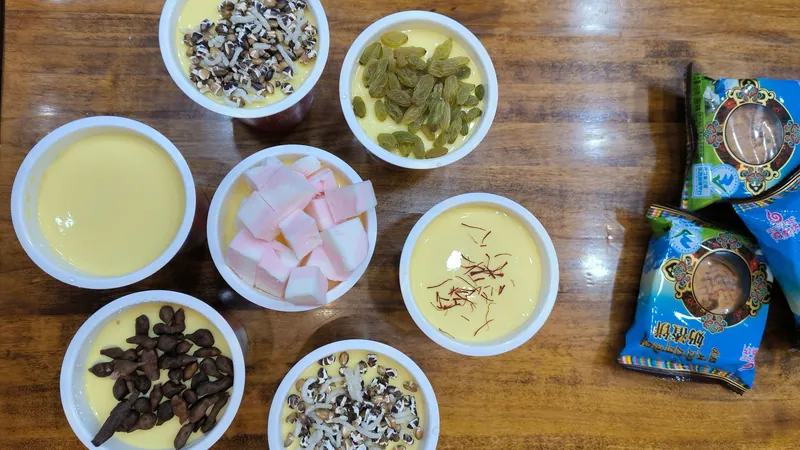
The afternoon tsampa is lunch and a test at once: carbohydrate-led, easy to digest, with your body's reply coming after the bowl. Town eateries serve it with butter tea and pickled radish at about RMB 30 pp, far kinder than scenic-area prices.
After lunch, an hour's nap back at the hotel. At altitude the siesta is part of your equipment; do not budget it away to itinerary anxiety. Wake to a cup of warm water and a look at the mountains; adaptation cannot be rushed, it only respects time.
Town Dusk on the Prayer Circuit: Locking Tomorrow's Car
While strolling at dusk, finalize tomorrow's mountain run: departure time with the driver, permits, oxygen, and whether the vehicle fee is covered. Day two is the plan's centerpiece; both car and body must be zeroed and ready tonight.
Restock tomorrow's consumables along the shop street: oxygen, heat packs, high-calorie snacks. Under market and evening lights, the town carries the solid feel of a frontier post.
Gawula Pass: The Mountain Day's First Breath
Leave at 8 am and stand on Gawula Pass two hours later. Today it is a waypoint: one look at the five summits, a check of weather and your own condition, then up after twenty minutes. If the head already aches, renegotiate on the spot into a pass-only day.
This is where the base plan's flexibility pays: the mountain road is not one-way, and a body voting no can always fall back to 4,300 m. Rehearse that option in your head once, and when the moment comes there will be neither hesitation nor a sense of defeat.
Everest Viewing Point: Signing In, Face to Face
Reach the viewing point around 11 am, when pre-noon frontlight hardens the north wall's outline. Shoot the marker, read the clouds and their flag direction, and take your twenty minutes plus one psychological calibration: this is the height you are moving toward.
Under thick cloud, do not linger; Rongbuk and Base Camp will offer better windows. Plateau weather runs on hours; the clouds overhead are not the afternoon's, and spending the time on the next road pays better.
Rongbuk Monastery: Lunch and an Altitude Rest Stop
Simple food and sweet tea near Rongbuk make the standard midday supply stop of the mountain day: hot noodle soup or tsampa with tea, eaten hot, small and slow. Then half an hour sitting in the courtyard sun turns 5,100 m into an ordinary hour.
Tour the hall after lunch, pace down one more notch. If Everest shows itself beyond the wall, this ranks among the day's closest views. The white stupa and prayer gallery before the hall deserve a slow circuit; settling your breath before the car is the altitude's excuse for a rest.
Everest Base Camp: Alpenglow without the Overnight
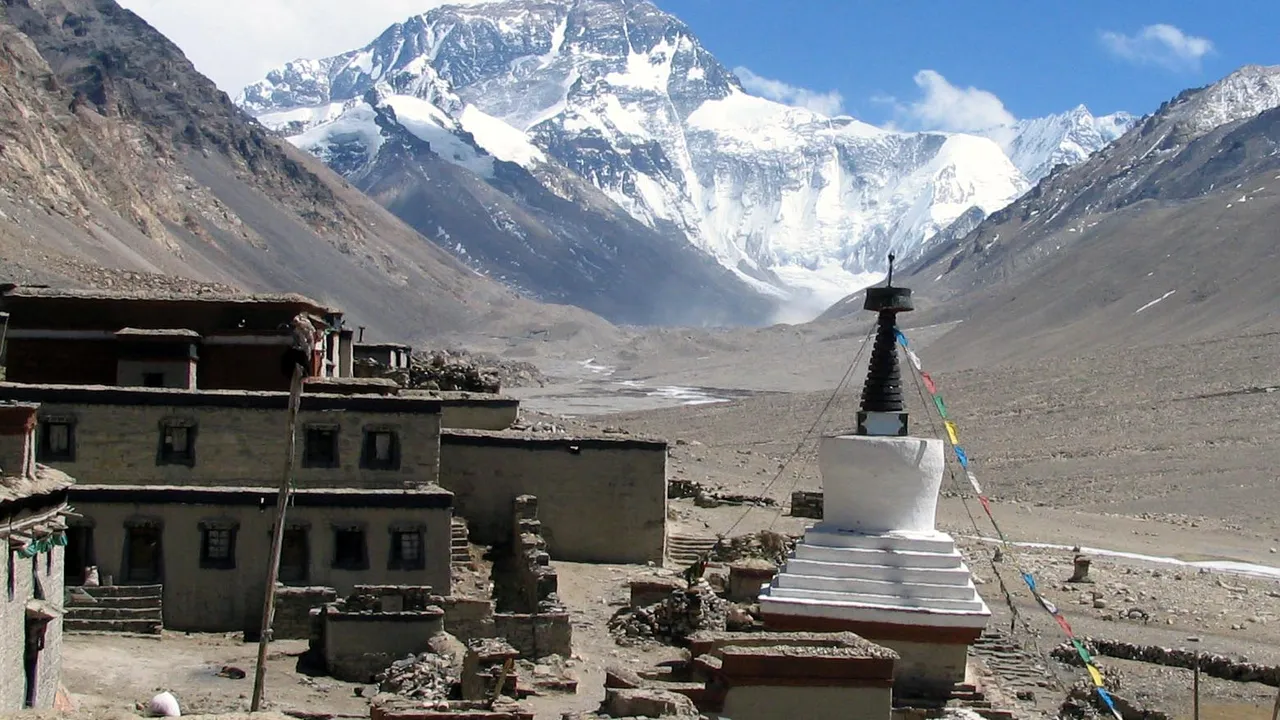
Enter the camp area by 4 pm and claim a viewing spot the simple way: find a wind-sheltered rock, put on every layer, and wait. Between 4:30 and 6 pm the summit's gold unfolds in layers, then the light chills fast.
Here the base plan's trade stands revealed: watch the first twenty minutes of alpenglow and withdraw, leaving the overnight grind to those who choose to pay it. The driver has the car warm.
Everest Sunrise, Second Ascent: The Early Alarm Worth Paying
The second dawn ascent on day three is optional, yet few regret it: the twenty minutes when Everest turns from cold blue to gold-red run on entirely different light from the dusk glow. Down before 8 am and back in town for a hot breakfast.
If yesterday ran flat, trading this for a town rest day is equally respectable: wake naturally, idle away the morning in a teahouse, and keep the return roomy.
Everest Yak Meat: The Reward Feast before Departure
The base plan's last meal lands at a town yak-meat house: settling the debt of three days in one hearty spread. Stew pot with boiled cuts and dried slices, a meal more celebration than fuel, toasting happily with sweet tea.
Afterward take a final lap of the main street and top up any unbought gifts. The town quiets after 4 pm, one of its best-looking hours.
| Getting around |
|
| Budget | Entry about RMB 160 pp plus vehicle fee; two nights in town keep costs down, with charter share and meals totaling roughly RMB 1,000-1,800 pp. |
| Best time | Runs year-round with Apr-Jun and Sep-Oct the finest; in winter the mountain is day-trip only and tents close, so the plan naturally becomes two town days plus a pass day. |
FAQs
How do I choose between the base plan and the classic overnight-at-camp line?
Two questions decide: body and obsession. For the night sky and no fear of sleeping at 5,200 m, take the classic line; if altitude-sensitive, traveling with seniors or children, or wanting scenery with good sleep, take the base plan. Both see the same peak; the difference is the star at night and the headache the next morning.
Is a single-day mountain run enough time?
Yes, with a tight clock: depart at 7-8 am, twenty minutes at the pass, twenty at the viewpoint, an hour at Rongbuk including lunch, forty at camp for the alpenglow, then down half an hour after sunset and back in town by 9 pm. Any slack anywhere eats the descent's daylight, so respect the driver's timetable.
Is the base plan safe for seniors and children?
Comparatively safe, which is the design intent: nights always sit at 4,300 m. Still hold three lines: a full acclimatization day before going up, oxygen and glucose along for the whole mountain run, and pass and camp stops capped at half an hour. On any vomiting, listlessness or blue lips, descend and seek care at once; the trip can be repeated.
Does this plan work in winter?
Yes, and the base plan is winter's best form: with tents closed there is no camp overnight, and single-day entry is already this plan's method. Mind three things: black ice halves road speed, pass winds demand extreme-cold dress, and some eateries close for winter, so lean on your driver for what is open. The sunrise run still works, with more luck needed for a bare summit.