
Most travelers treat Enshi as a staging post for the mountains, but the city itself earns a full day: Tusi City recreates a chieftain's compound of halls and stilt houses on a hillside at the urban edge, the Liujiaoting lanes keep the old town's daily smoke, and the Qingjiang slices through the middle, its riverside walkway carrying the city's evening strolls. No rushing here, just walking and short cab hops.
Go heavy in the morning and light after: Tusi City climbs, so give it your freshest hours; lunch on rice noodles in the old lanes; ramble the river in the afternoon; then watch Nüer City light up at dusk, shouts of the smashing wine rising around you, a proper full stop to the day.
Itinerary at a glance
| 08:30 | Enshi Tusi City: A Chieftain's Court in Nine Halls |
| 11:00 | Shizhou Old Town and Liujiaoting: The Old City's Daily Smoke |
| 14:00 | The Qingjiang Riverside Walk: Downstream to the Wind-Rain Bridge |
| 16:30 | Nüer City: The Hour When the Lights Come On |
The route, stop by stop
Enshi Tusi City: A Chieftain's Court in Nine Halls
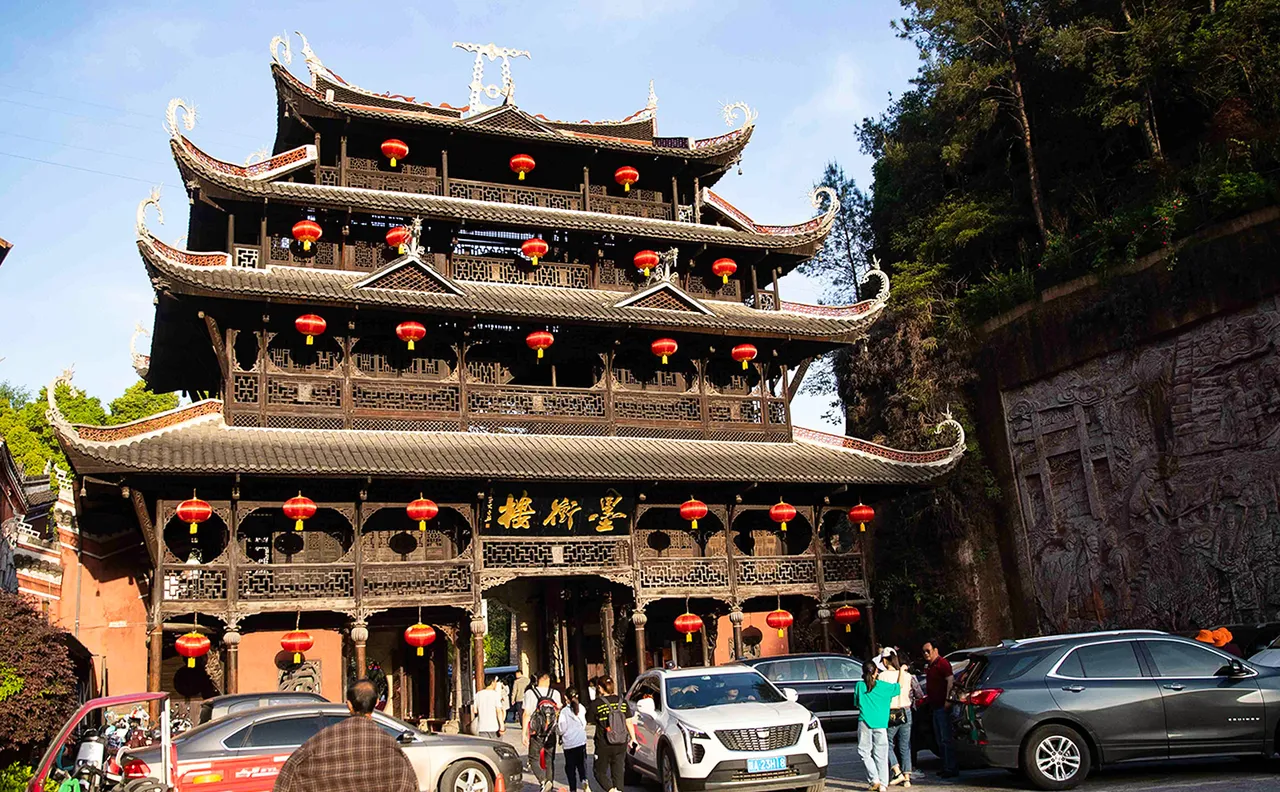
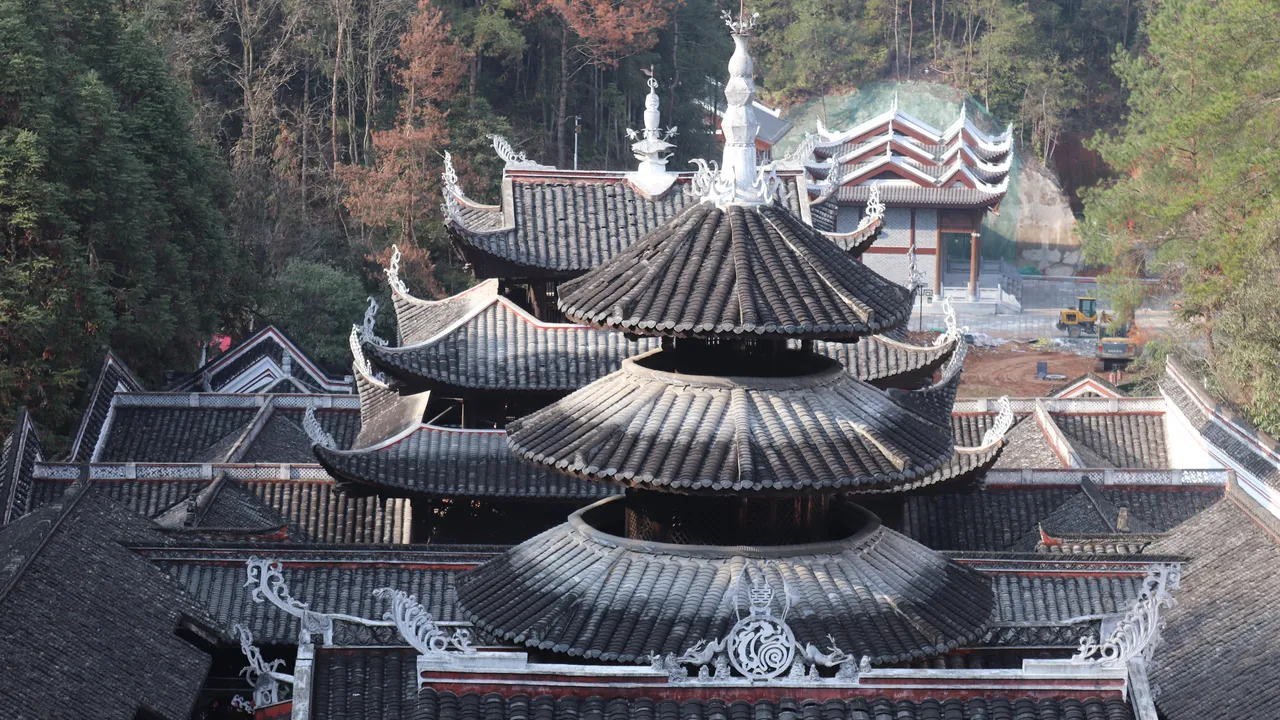
Tusi City is the country's largest recreated chieftain architectural complex, centered on the Nine-Court Hall: a compound rising terrace by terrace up the slope, nine courtyards deep, with opera stage, main halls and granaries, laying out the layout of a chieftain's government in three dimensions. From the drum tower at the top, look back over stacked ridgelines of roofs at their best in slanting morning light.
Beyond the main hall, the Linjun Shrine and the wall-top circuit each deserve half an hour. Linjun is the legendary Tujia ancestor, and the shrine murals retell the origin of the white tiger totem; a stretch of the rampart loop reveals the whole compound's plan. A welcome performance plays around nine, worth catching for the opening drums.
Shizhou Old Town and Liujiaoting: The Old City's Daily Smoke
Ten minutes by cab from Tusi City, Liujiaoting is where old Enshi took root. Little survives of the Shizhou walls, but the street fabric endures: narrow lanes lined with aged timber shopfronts, tailors, bamboo-weavers and old teahouses shoulder to shoulder, run by families who have traded here for decades.
Nothing here demands a checklist; the pleasure is slow browsing, elders sunning at lane mouths, cured pork hanging under eaves, and teahouse tea at pocket change, refilled until you surrender. Sit for twenty minutes and listen to locals trade stories in dialect, truer than any staged folk show.
The Qingjiang Riverside Walk: Downstream to the Wind-Rain Bridge
After lunch, digest along the Qingjiang. The riverside walkway is a linear park with water on one side and city life on the other: anglers, ground-calligraphy writers, carts selling chilled rice dessert. Two kilometers or so bring you to the wind-rain bridge.
The bridge is the city's emblem, a covered gallery span with benches along both sides where locals play chess and escape the heat. From mid-span, watch the river bend, glass towers and timber gallery sharing one frame, the city's old-and-new juxtaposition in a single shot.
Nüer City: The Hour When the Lights Come On
Cab over at dusk to catch the switch-on. By day Nüer City is a food street; by night it is a theater: lanterns coming on in sequence, the stage drumming up, calls of the smashing wine drifting from deep in the lanes. Don't rush to eat; walk the main street once first, past silversmith workshops, brocade shops and Tujia embroidery windows.
Dinner happens in the courtyards: hezha with cured pork, plus gege straight off the steamer. If your legs allow afterward, circle the perimeter, where the stilt-house outline lights reflect in the man-made lake, the quarter's most photogenic angle.
| Getting around |
|
| Budget | Tusi City entry runs about RMB 50 and the rest is mostly free; budget around RMB 100 pp for meals and transport. |
| Best time | Works year-round, with early mornings and evenings kindest in summer; the old lanes get slick in rain, so bring grippy shoes. |
FAQs
Is one day enough for the city? Should I swap Tusi City for something else?
Yes, the day runs light. Tusi City condenses Tujia architectural culture, and seeing it before heading into the mountains makes the stilt-house villages land harder, so keep it. If you already know Tujia country, swap it for the prefecture museum and its Ba-culture relics before the lanes.
Do these stops charge admission, and how much?
Tusi City's roughly RMB 50 ticket is the only real cost; the lanes, riverside walk, bridge and Nüer City are free. Special performances or small in-park halls may charge separately, a few yuan to twenty, posted on site, decide there.
Does this city day survive rain?
Mostly yes: Tusi City's courtyards have covered galleries, and the lanes and bridge shrug off light rain; skip the wall-top path when wet. Summer afternoons bring frequent showers, carry a folding umbrella, and the river mist after rain makes the bridge at its best.
Is this route manageable with elderly companions?
The only strain is Tusi City's climb; everything else is flat. Fix it by taking the sightseeing cart up to the Nine-Court Hall's upper level and walking downhill through the courtyards, no backtracking, no steepest steps. The lanes and riverside invite slow strolling with plenty of seats, and Nüer City's courtyards make easy rest stops.