
Enshi's culture stacks two strata: the Ba people below, the chieftains and Tujia above. One glance at each fills a day: the prefecture museum's bronzes and Ba-style swords trace the land's earliest origins, the Nine-Court Hall and Linjun Shrine at Tusi City rebuild chiefly power and belief, and the Nuo opera and hand-waving dance at Nüer City keep the folklore alive in the present.
Order the day by booking difficulty: the museum is free but capacity-limited, so reserve ahead and dodge Monday closures; Tusi City sells tickets on site; the evening shows at Nüer City are free, just claim seats before dinner. All three stops sit in town, cab rides under twenty minutes, an unhurried rhythm.
Itinerary at a glance
| 09:00 | Enshi Prefecture Museum: Where the Ba and the Tujia Came From |
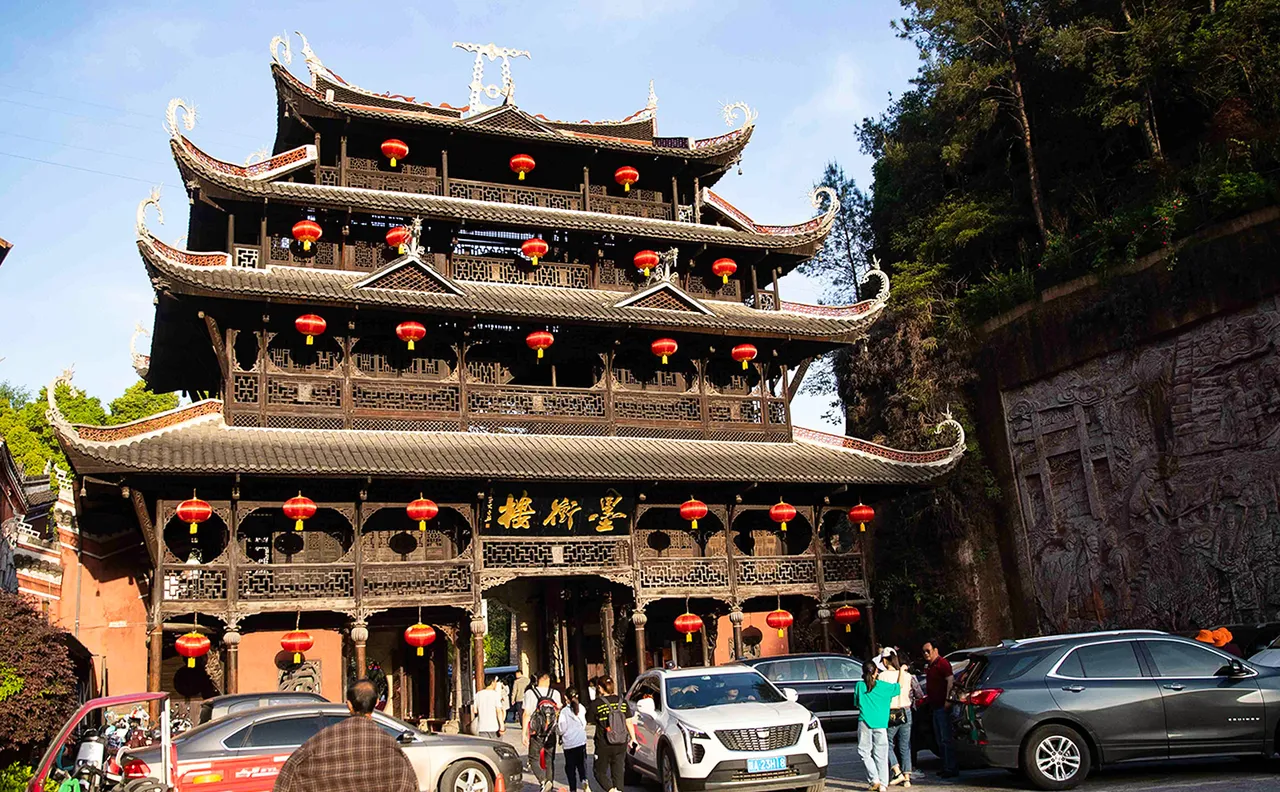
| 11:30 | Tusi City: The Nine-Court Hall and the Linjun Shrine |
| 14:30 | Enshi Yuntai Temple: Incense on a Mid-Slope Terrace |
| 17:30 | Nüer City at Night: Nuo Opera, Hand-Waving Dance and the Fire Pit |
The route, stop by stop
Enshi Prefecture Museum: Where the Ba and the Tujia Came From
The prefecture museum is the first step to reading Enshi. The permanent exhibit opens with Neolithic sites and centers on the Ba chapter: willow-leaf swords, tiger-knobbed chunyu bells and a sweep of bronzes, laying out a white-tiger totem people of boats two thousand years back. At the chunyu, note the standing tiger on the knob, one lineage with the white tiger of the Linjun legend.
The Tujia gallery repays a slow walk: Xilankapu brocade, Nuo masks and stilt-house models spreading Tujia dress, food, shelter and transport. See it before Tusi City and the Nine-Court Hall unlocks on the spot. Allow two hours; the audio guide earns its rent.
Tusi City: The Nine-Court Hall and the Linjun Shrine
Having read the artifacts in the morning, walk the real thing after lunch. The Nine-Court Hall retells the hierarchy of a chieftain's government in architecture: each court higher than the last, opera stage, council hall and residences in strict order, and from the top the meaning of ascending courts reads at a glance. The eave carvings and lattice windows are the detail-hunter's quarry, every panel a story.
The Linjun Shrine is the other anchor: Linjun is the Tujia legendary ancestor, and the white-tiger totem starts here. The shrine murals retell the old tales of the earthen boat and the salt goddess, echoing the tiger-knobbed bells you saw at the museum. The wall-top loop takes about forty minutes with the best views.
Enshi Yuntai Temple: Incense on a Mid-Slope Terrace
Slow the afternoon with an hour at Yuntai Temple. Built against the hillside, its halls climb terrace by terrace, incense steady but never loud. Unlike temple sights, this one runs on local worshippers' routine: oil for the lamps, a handful of incense, sun on the benches before the halls, devotion and daily life braided together.
From the terrace in front, hills and farmland open wide, a rare quiet vantage near town. On the first and fifteenth of the lunar month or Buddhist feast days you may catch a ceremony, bells rolling around the valley. The vegetarian canteen opens at noon; if the hour is kind, eat a plain, good meal.
Nüer City at Night: Nuo Opera, Hand-Waving Dance and the Fire Pit
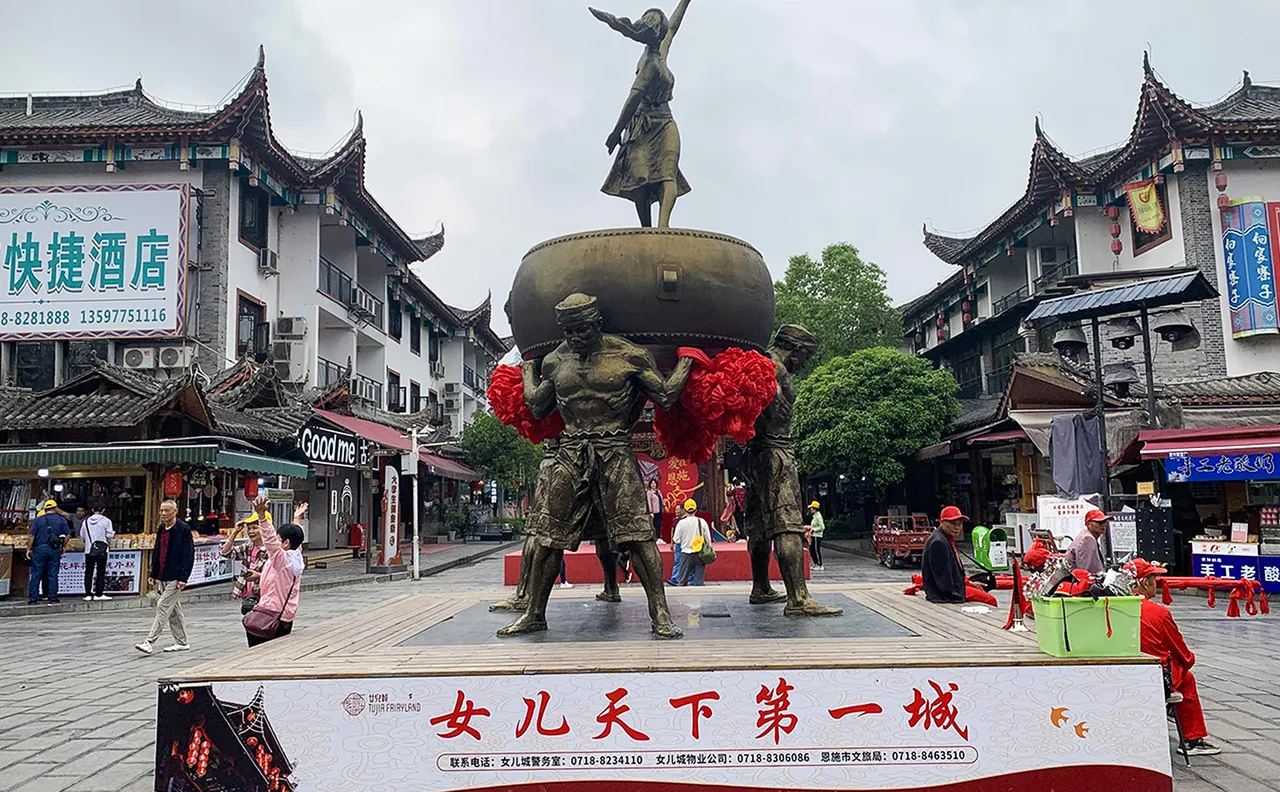
Save the day's heavyweight for last. The evening stage at Nüer City concentrates the living half of Tujia folklore: Nuo masks opening and closing under the lights to bleak, beautiful singing, and when the drumbeat of the hand-waving dance starts, visitors and locals join one circle, the steps simple enough to pick up in two turns. Fire-pit performances around the Baren Hall re-create a Tujia night around the hearth.
Watch and eat at once: courtyard tables face the stage, so order hezha and cured pork and dine through the show. Subtitled boards explain the Nuo plays, dialect no barrier.
| Getting around |
|
| Budget | The museum is free with booking and Tusi City runs about RMB 50; the whole day costs roughly RMB 120-200 pp including meals and city transport. |
| Best time | Year-round with climate-controlled halls; the museum typically closes Mondays, and holidays need early booking. |
FAQs
What if I cannot book a free museum slot?
Three routes: camp the official release, usually days ahead, since cancellations drip back; pick a weekday morning lull; or try the same-day counter for returned slots. Worst case, Tusi City's architecture is a standing exhibition, and giving it the whole day loses nothing.
Do the museum and Tusi City overlap too much?
Not at all, they complement: the museum gives relics and context, Tusi City gives scale and space. Knowing the tiger on the chunyu makes the Linjun Shrine land, knowing brocade motifs makes the lattice windows sing. If energy is short, cap the museum at two hours in the core galleries.
What if I cannot follow the Nuo opera?
No worry: the pleasure of Nuo opera is ritual rather than plot, the masks, drumbeats, vocals and steps. Intro boards stand by the stage, and the backstage display area lets you inspect masks up close after. The museum's daytime Nuo exhibit already did the homework; at night, just feel it.
Any dress code across the day?
Keep it modest at the museum and temple, no revealing outfits, hats off inside halls; Tusi City and Nüer City mean miles of walking, wear comfortable shoes. Downtown temperature swings little, but the fire-pit zone runs hot and the riverbank cools at night, so a layer you can shed is the easy answer.