
Enshi's shopping list orbits three things: what the mountains grow, what the beans become, and what the tea bushes yield. Cured pork and dried tofu head the edible column, Xilankapu brocade and Nuo masks the craft column, and Enshi Yulu green tea with its selenium-rich cousins plus Laifeng vine tea the region's calling card. This route buys all three the right way, which mostly means not buying in the wrong place.
Three budget rules: buy foodstuffs at Nüer City's resident stalls and local supermarkets, two or three tenths cheaper than the scenic main street; buy crafts at Liujiaoting workshops where the making happens in front of you; buy tea only at clearly priced brand shops after a tasting. For jade and antiques, no expertise means no purchase.
Itinerary at a glance
| 09:30 | Nüer City Souvenir Street: Food First |
| 11:30 | Liujiaoting Old Lanes: Handcrafts and Old Things |
| 14:30 | Wuyangba Mall District: The Modern City's Shelves |
| 16:30 | The Enshi Yulu Tea Table: Taste Before You Pay |
The route, stop by stop
Nüer City Souvenir Street: Food First
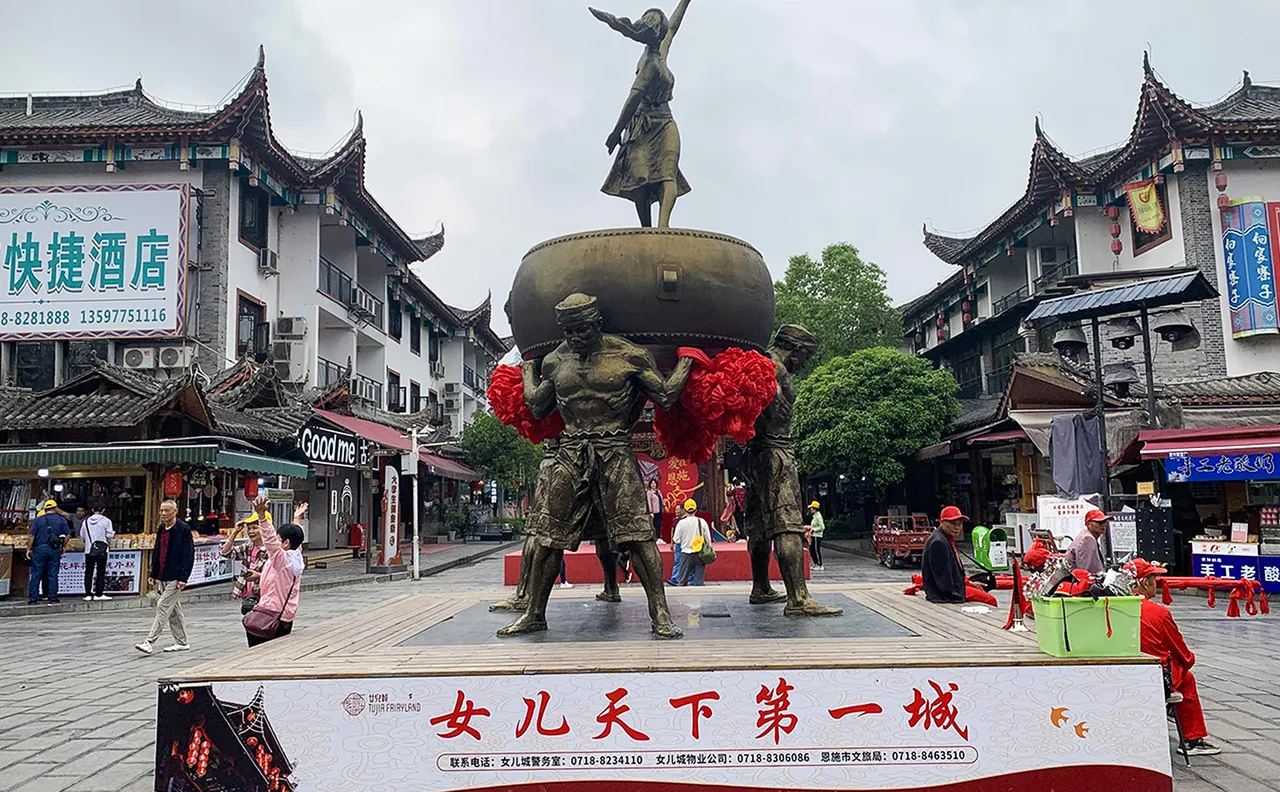
Morning Nüer City runs thin on crowds, the best hour for souvenirs. The list: Baiyang dried tofu with full brine aroma and tight cut faces; cured pork in vacuum packs, fat and lean banded, surfaces dry; ciba cakes, fern cakes and fermented corn relish to taste. The pickle carts at the street's end hide bargains, dried radish and chopped chili, cheap and travel-proof.
Do not skip the silver shops: Tujia chased-engraving work rewards a close look, and small earrings and bracelets run tens to hundreds of yuan, far more handfeel than scenic-area batch goods. For edibles, always confirm shelf life and vacuum seals, and inspect packaging again before check-in.
Liujiaoting Old Lanes: Handcrafts and Old Things
Midday moves to the Liujiaoting lanes, where the handcraft lives. Xilankapu brocade weaves on the loom in several shops; watching the shuttle cross the warp explains why a small wall hanging takes ten days or more. Coasters and table runners run tens to two hundred yuan, large hangings over a thousand; ask whether the piece came off this very loom.
The Nuo-mask carving shops deserve a stop too: expressions cut stroke by stroke by knife, beyond any machine. Secondhand books and old objects turn up here as well; an old tea bowl or vintage ticket is fate's gift, but anything whose age or authenticity you cannot judge, leave untouched.
Wuyangba Mall District: The Modern City's Shelves
Afternoon belongs to Wuyangba, downtown's commercial core of chain supermarkets and malls. The supermarket's value is restocking: properly branded vacuum packs of cured pork, dried tofu and selenium-rich grains at steadier prices and standard packaging, ideal for bulk hauling home. The malls double as the last legitimate outdoor outfitters before the mountains; if shoes or rain gear disappoint, fix them here.
Basement collective stores of local brands deserve a lap: tea, honey and hickory gift boxes with clear price tags, presentable as gifts. Finish with lunch or an afternoon snack in the district, banking appetite for the tea table.
The Enshi Yulu Tea Table: Taste Before You Pay
Give the day's close to a cup of tea. Enshi Yulu is one of China's rare steamed green teas, its Tang-era craft carried down unbroken: needles of jade-green leaf, chestnut perfume and freshness in the cup. Sit at a clearly priced tea shop and taste first, smell the first infusion, sip the second; fine Yulu's freshness actually cools the back of the tongue.
Budget guide: everyday grades run one to two hundred yuan per jin, gift grades hundreds to thousands. Beyond Yulu, try Laifeng vine tea, sweet-bitter when brewed and easy on desk workers. Once decided, have the shop split half-jin packs and fit the gift box on the spot, easy to carry and to give.

| Getting around |
|
| Budget | Souvenir budgets swing wide, from tens of yuan for tofu and tea to thousands for brocade; most travelers do it well within RMB 300-600. |
| Best time | Any season; weekends crowd the malls but stock tea and craft shops fullest, while old-lane workshops give weekday visitors more patience. |
FAQs
How do I tell good Enshi Yulu from bad?
Three checks: the dry leaf should stand needle-straight and slim, fresh green never yellowing; the liquor runs clear, cloudiness is a walking-away sign; the sip is fresh with chestnut aroma and a sweet return. Rock-bottom priced Yulu is usually mislabeled outsider green tea, so stick to origin labels and proper brand shops, never unpriced stalls.
Can cured pork and dried tofu fly?
Domestic flights generally allow them if properly vacuum-packed, in date, and checked rather than carried on; international flights will almost certainly trip quarantine, so don't risk it. Low-moisture braised tofu travels safer than soft fresh kinds, and confirming the latest airline rules before departure is the safe play.
How do I judge whether brocade and masks are handmade?
For brocade, check the reverse: handwoven thread ends look organic with slight irregularities in the pattern, machine weave backs read tidy as print; the surest test is the loom working in front of you. For masks, read the knife: hand carving varies in depth with re-cut marks, machine work is uniform and stiff. When unsure, ask the artisan to demonstrate.
Is the selenium-rich hype real, and should I buy for it?
Enshi really is a famous selenium-rich soil region, and tea and grain selenium levels have test backing, so buying them as local character is fair. Treating selenium as medicine is where it goes wrong, no food replaces treatment. Buy what you enjoy and check the test report, never pay a premium for the concept alone.