
Enshi's history hides in three kinds of architecture: a chieftain's government halls, a clan's manor, and villages perched on cliffs. Three days thread them: day one reads Tusi City and the old town downtown, day two pushes into Lichuan for Tenglong Cave's geology and the century-old survivals of Dashuijing and Yumu Stockade, and day three arrives at the Tusiya chieftain site, inscribed on the World Heritage list.
The spine of the plan is a hired car: public transport reaches Lichuan and Xianfeng but transfers eat hours, and this heritage line runs deep on country roads, so a car doubles the effective sightseeing time each day. Tusiya joined the World Heritage list in 2015, bundled with Yongshun in Hunan and Hailongtun in Guizhou as the Tusi sites, the true finale of this route.
Itinerary at a glance
| 09:00 | Enshi Tusi City: First Lesson in the Chieftain System |
| 13:30 | Liujiaoting, Shizhou Old Town: Street Life Carried On |
| 18:30 | Nüer City: Landing the First Heritage Night |
| 08:30 | Tenglong Cave, Lichuan: The Mouth of an Underground Beast |
| 13:30 | The Dashuijing Complex: A Clan Manor's Century of Grandeur |
| 16:00 | Yumu Stockade: A Thousand-Year Gate on the Cliff |
| 08:30 | The Tusiya Chieftain Site: A Day at World Heritage |
| 14:00 | Pengjiazhai: Stilt Houses Taking a Bow in the Valley |
| 19:00 | Wenlan Bridge: Farewell over the Gongshui |
The route, stop by stop
Enshi Tusi City: First Lesson in the Chieftain System
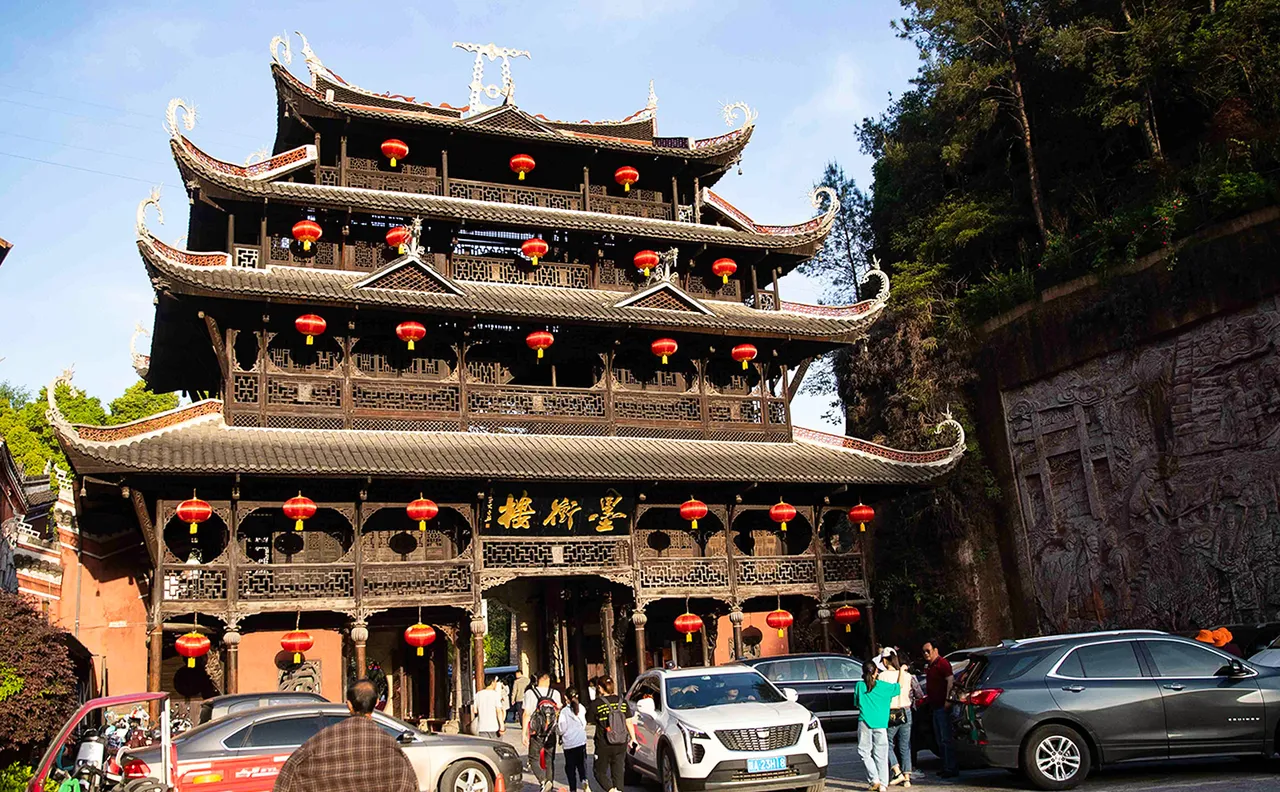
Begin the three heritage days at Tusi City and learn what chieftain rule meant before hitting the road. The nine courts of the main hall stand as a solid model of a chieftain's government, hierarchy, ritual and military function all written in the layout. From the drum tower at the top, look back over the ridgelines and down at Enshi itself: the tie between institution and geography reads at once.
Real ruins come tomorrow, so this morning's reconstructions are the ideal primer. Give the white-tiger murals at the Linjun Shrine ten extra minutes; you will meet the tiger again at Tusiya.
Liujiaoting, Shizhou Old Town: Street Life Carried On
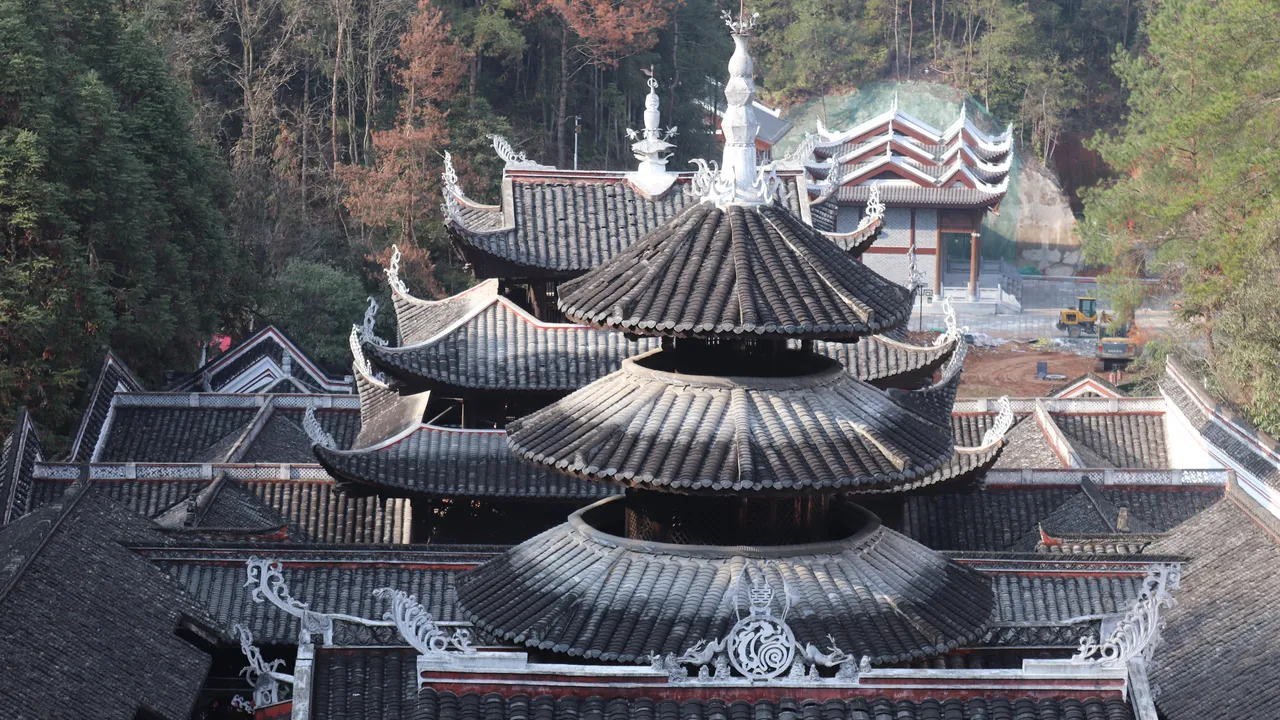
After lunch, slip into the Liujiaoting lanes. The name Shizhou reaches back a thousand years; little of the wall remains, but the street fabric and its daily life continue on. The days between bamboo shops, tailors and old teahouses are the other face of Tusi City's grandeur: beyond institutions, how ordinary people lived, answered right here.
One hour covers it; the real job is switching your eyes from sightseeing mode to life mode, groundwork for two days of rural survivals ahead.
Nüer City: Landing the First Heritage Night
Sleep and eat at Nüer City tonight. After a day of institutions and old streets, the evening Nuo opera and hand-waving dance supply the living half of folklore: masks, drumbeats and songs around the fire pit, every symbol from the morning museum and shrine suddenly in motion.
Turn in early; the Lichuan run tomorrow is the longest driving day of the three.
Tenglong Cave, Lichuan: The Mouth of an Underground Beast
Day two rides a half-hour train to Lichuan, first stop Tenglong Cave, among the largest known caves in China: the entrance towers over seventy meters, tall enough for a helicopter to fly through. The walk-in section delivers the scale shock best, a human no bigger than a grain of sand, echoes rolling tens of meters overhead.
The laser and song-and-dance shows inside run to fixed schedules, worth one sitting; the cave depths hold a constant low-teens chill, bring a jacket even in summer. Geology and humanity cross here: such caves sheltered the Ba forebears in wartime, and the entrance cliffs still bear traces of that life.
The Dashuijing Complex: A Clan Manor's Century of Grandeur
North after lunch to Baiyangba, where the Dashuijing complex is Lichuan's foremost survival: the Li clan's ancestral hall and manor terraced into the hillside, Huizhou-style fire walls shaking hands with Tujia stilt houses in one courtyard, a mixed-blood architecture rare in the southwest.
The hall's opera tower and courtyards survive intact, stone-carved family precepts still on the walls. For architecture lovers the walking-beam corner tower is the prize, a three-story timber system raised without a single iron nail. Read this well and Yumu Stockade this afternoon opens up.
Yumu Stockade: A Thousand-Year Gate on the Cliff
Yumu Stockade hangs on a hilltop in Moudao with one stone-stair track in and out; shut the gate and no outsider gets in, the name rooted in a legend of fishwood being hard to storm. The surprise inside is Qing-dynasty tomb carving, the Shuangshouju tombs so fine that archaeologists blink.
Villagers still live here, flagstones, old houses and vegetable gardens all alive. The Bright Ladder section climbs sheer; if heights or knees object, stop at the gate. At dusk, from the stockade wall, the ranges along the Hubei-Chongqing border spread out, the bleakest, grandest frame of the three days.
The Tusiya Chieftain Site: A Day at World Heritage
Day three heads straight to Tusiya town in Xianfeng. The Tusiya chieftain site is this route's terminus and its thesis: the Qin clan ruled here eighteen generations across four centuries, and the street grid, government halls, academy and tombs still read clearly, the stone gateway arch inscribed Bulwark of the Southern Jing standing at the center, its stone horses and men on guard for four hundred years.
Unlike the rebuilt Tusi City, these are true remains: foundation stones in the grass and the paving underfoot are all original. Take the site guide; the logic of the chieftain system, its abolition and this city's rise and fall, only opens with narration.
Pengjiazhai: Stilt Houses Taking a Bow in the Valley
Return via Shadaogou in Xuan'en, where the Tujia stilt houses of Pengjiazhai line the Longtan River in one rank, a nationally protected site. The timber stilthouses rise without nail or rivet, ground floors raised against damp for livestock, upper floors for living, fitting the terrain like something grown.
The river gallery bridge and water mill are finishing touches, and the elders' bamboo weaving at the village gate is still a living trade. There is no shopping street; a bottle of local honey is the best exchange with the village. After Pengjiazhai, every timber building of the past three days finds its source.
Wenlan Bridge: Farewell over the Gongshui
Put the last night in Xuan'en county town, where Wenlan Bridge's lit silhouette signs off the heritage run. The gallery bridge's stacked eaves mirror in the Gongshui, elders dancing and children chasing on the head plaza, the Tujia building form living on in daily use, more persuasive than any exhibition.
Finish riverside over grilled fish, replay the government halls, manor, stockade and stilt houses through your head, and Enshi's cultural thread closes the loop.
| Getting around |
|
| Budget | Tickets total roughly RMB 350-450 (Tenglong Cave about RMB 180, Tusiya about RMB 60, most others tens of yuan); with charter and lodging the three days run about RMB 1500-2200 pp. |
| Best time | Mar-May and Sep-Nov run steadiest; the Yumu Stockade road turns slick after rain, so on wet days swap it with day three. |
FAQs
Can this heritage route be done on public transport?
Possible but slow: buses or trains reach Lichuan and Xianfeng, and rural minibuses serve Yumu, yet frequencies are thin and two stops a day is the ceiling. A three-day charter is the best value, a bit over a hundred yuan per head daily, in exchange for full control of your time.
Do Tusiya and Enshi Tusi City overlap?
Not at all: Tusi City is a modern reconstruction teaching the spatial logic of a chieftain's compound, while Tusiya is the true site where roads and foundations are original. See Tusi City first, then Tusiya: legend first, then map. The order should not reverse.
Is Yumu Stockade worth the detour, and how is the road?
Yes: it is the wildest survival on the route, pairing Qing-dynasty tomb carving with a living village. The road is paved country lane, narrow and twisting, passing takes experience, and rain makes it slick. If the road worries you, agree with the driver to stop at Dashuijing only and gift the saved hours to Tenglong Cave.
Is the heritage line manageable with seniors and kids?
Friendlier than the nature line: walking loads run low, and both Tusi City and Tusiya offer carts or gentle routes. The pinch points are Yumu's stone stairs and the Bright Ladder; seniors and kids can turn back at the gate. Two hours of driving a day with overnight stops in Lichuan and Xuan'en keeps the pace humane.