
Enshi's villages hide in the folds of its mountains: Luyuanping is a village dropped into a rift, once entered only up a sheer ladder; the tea gardens of Wojiatai have grown tribute leaf since the Qing; Pengjiazhai's stilt houses rank along a river while Erguanzhai's rapeseed floods the valley in spring. Three days at slow pace, no grand sights, just villages learning to live with the mountain.
Lodging is part of the itinerary here: night one back downtown, night two in a Xuan'en guesthouse or tea-mountain homestay with gardens and stilt eaves outside the window. Pack for two nights; the backpacker's method suits this line best.
Itinerary at a glance
| 08:30 | Luyuanping: The Village Inside the Rift |
| 13:30 | The Luyuanping Rift and Falls: The Gorge Behind the Village |
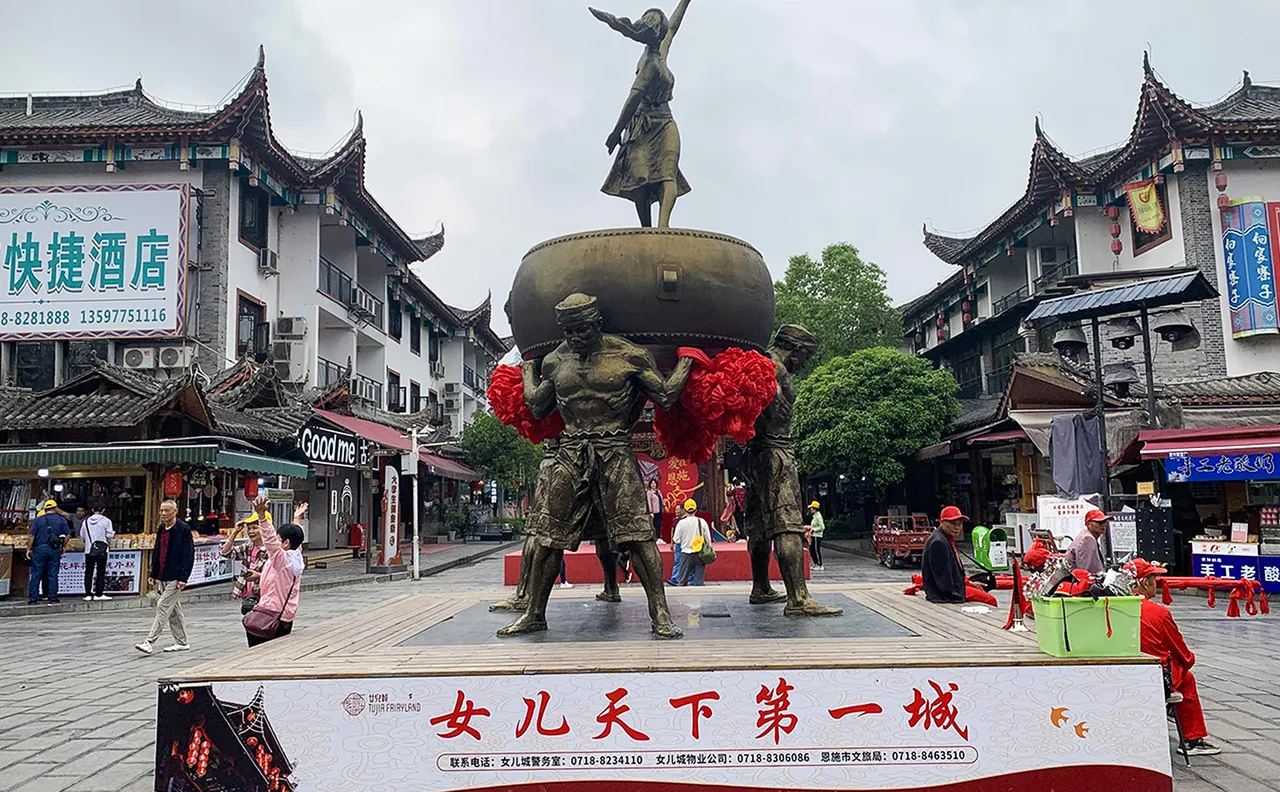
| 19:00 | Nüer City: A Night to Catch Breath Downtown |
| 08:30 | Wojiatai Tribute Tea Gardens: Waking Up in the Tea Hills |
| 13:00 | Pengjiazhai: Stilt Houses in the River Bend |
| 18:30 | Wenlan Bridge and the Gongshui: A Small-Town Night |
| 08:30 | Erguanzhai: A Heritage Village in Rapeseed and Rice |
| 13:00 | The Daqing River: The Countryside from the Water |
| 17:30 | Phoenix Hill Forest Park: Closing the Country Three |
The route, stop by stop
Luyuanping: The Village Inside the Rift
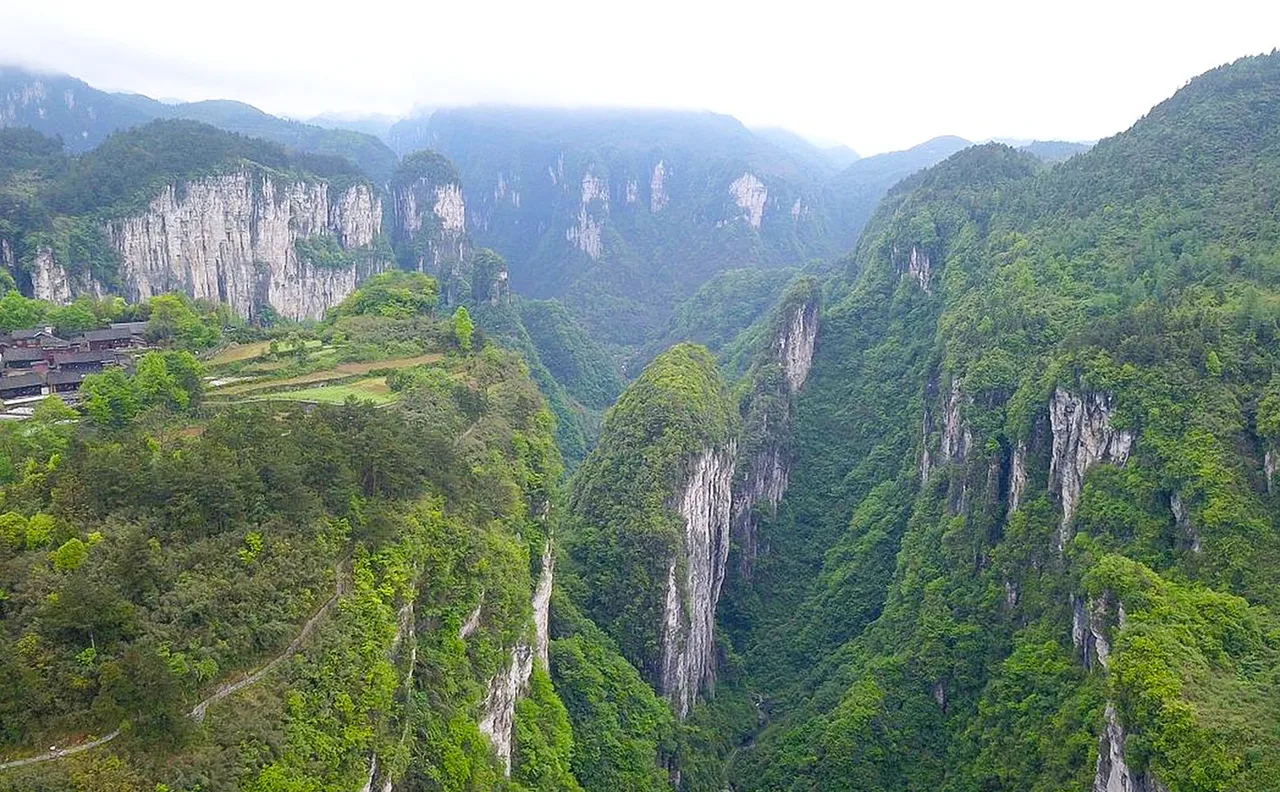
Day one belongs to Luyuanping. The whole village sits on a canyon floor ringed by cliffs; the old way in was eighteen hundred stone steps, and though an incline elevator now runs, the old path survives as a one-hour hike past sheer walls, an ancient bridge and a road pinned to the cliff face.
The village floor is another world: paddies, stilt houses and water wheels, rooster calls rising from the depths. Eat a wood-fire lunch at a farmhouse, cured pork and potatoes, the honest taste of the place.
The Luyuanping Rift and Falls: The Gorge Behind the Village
Behind the village yawns a deeper rift where four falls step down the gorge, at fullest flow after rain. Forty minutes of boardwalk reach the nearest drop, the roar ricocheting off the walls until shouting is the only way to talk.
The path runs slick with cantilevered sections, so pace yourself. Return the way you came, ride the incline elevator up, and make downtown before dark.
Nüer City: A Night to Catch Breath Downtown
Night one returns downtown, best spent near Nüer City. Six or seven hours in a gorge deserve a simple dinner, hezha and rice, a hot soak and early bed.
Tomorrow's Xuan'en day is mostly riding and strolling, so tonight's savings will be spent well.
Wojiatai Tribute Tea Gardens: Waking Up in the Tea Hills
Morning two climbs into the hills of Wojiatai. Famous for tea sent as Qing-dynasty tribute, the village still hangs the Qianlong-era tablet of imperial favor. The gardens roll down the slopes in tidy waves; in picking season baskets fill every row, and the village runs pick-and-craft experiences.
From the viewing platform the tea rows breathe with the land, and the air is all green leaf. The factory's tasting room pours the new crop; buy from the co-op's packing for prices truer than downtown tea shops.
Pengjiazhai: Stilt Houses in the River Bend
Early afternoon reaches Pengjiazhai in Shadaogou. The stilt houses rank along the Longtan River, timber bodies raised on legs above the shingle, roof curves aligned with the far ridges. As a nationally protected site, the architecture here is the textbook of Tujia dwellings.
The stockade takes an hour, focused on the gallery bridge, the water mill and the raised ground-floor structure. Elders weave bamboo at their doors; a small basket is both souvenir and direct support.
Wenlan Bridge and the Gongshui: A Small-Town Night
Tonight sleeps in Xuan'en county town. Once Wenlan Bridge lights up, both banks of the Gongshui hit their best hour: dance music, charcoal at the fish stalls, the gallery bridge doubled in the water, a small-town night that never goes cold.
Pick a riverside grill with a full house, since crowds are their own freshness guarantee. Walk the embankment to where the lamps end and back, two kilometers of the trip's loosest evening.
Erguanzhai: A Heritage Village in Rapeseed and Rice
Day three bends toward Enshi and stops at Erguanzhai in Shengjiaba. A village on the national traditional-villages list, its timber houses line the stream, rapeseed flooding from the gate to the hills in spring and rice turning another gold in autumn.
There is little to tick off here and everything is real: the old granary, stone bridges and a working oil press. A cup of rough home-grown tea in a farmhouse is worth more than any ticket.
The Daqing River: The Countryside from the Water
The afternoon returns to the water. Beyond the gorges, the Qingjiang runs long quiet rural stretches: stilt houses scattered on gentle slopes, cornfields planted down to the waterline, egrets flushing as fishing skiffs pass. The four-hour round trip splits half village, half gorge.
From the upper deck, watching the villages slide backward is the most direct lesson in the phrase mountains, rivers, fields and gardens.
Phoenix Hill Forest Park: Closing the Country Three
Give the final hour back in town to Phoenix Hill. Forty minutes of trail reach the viewpoint in time for sunset warming both city and far ridges, and the villages, tea gardens and stilt houses of three days fold into the dusk.
Pass a night stall on the way down for pan-fried potatoes, and the country three closes on a mouthful of char and aroma.
| Getting around |
|
| Budget | Tickets and boats total about RMB 400 (Luyuanping and the river cruise lead); farmhouse lodging runs RMB 100-200 a night, so the three days cost roughly RMB 1000-1500 pp. |
| Best time | March rapeseed bloom and the September-October rice harvest are loveliest; summer garden picking happens before seven, so late risers should swap in an evening stroll. |
FAQs
Can non-hikers handle Luyuanping?
Yes: the incline elevator has removed the hardest descent and climb, the village floor is flat, and the rift walk can turn back at the first falls. Full-stamina demands belong to old-path thru-hikers only; ordinary visitors need not push.
Which season is best for this countryside line?
Late March blooms make Erguanzhai loveliest, April puts new green over every row at Wojiatai, and September-October delivers golden rice with steady weather. Winter leaves the villages bleak and homestays shuttered, so unless snow is the goal, pick another season.
What are farmhouse lodgings actually like?
Farmhouse stays in Luyuanping and the tea hills are clean but simple, with private bathrooms spreading and hot water plus electric blankets standard. The sensitive can sleep in Xuan'en county town at near-city standards. When booking, ask directly about private bathrooms and parking.
Is this line good for photography, and when is the light best?
Very: the rift light shafts at Luyuanping show clearest around ten in the morning, tea-garden fog runs an hour after sunrise, and stilt houses with rapeseed read best in four-o'clock sidelight. The trip carries a hidden daily rhythm of shooting early and late while riding at noon; simply follow it.