
Enshi's flavors grow in the mountains: cured meats fed on corn and potatoes, bean-born hezha and rice noodles, gege stacked in bamboo steamers, and fish from the Qingjiang. The city eats on a strict clock, morning belongs to noodles and fried youxiang, noon to a bubbling pot of hezha, dusk to the snack street, night to grilled fish and corn liquor.
The route is easy on the legs: morning around Wuyangba, a midday hop for hezha, afternoon inside Nüer City, and back downtown for night stalls. Under eight kilometers of walking and cabs between four sittings; the only real risk is wanting seconds of everything.
Itinerary at a glance
| 07:30 | Wuyangba Morning Market: A Bowl of Scalded Rice Noodles Opens the Day |
| 12:00 | Hezha Hotpot: A Proper Meal in a Pot of Bean Perfume |
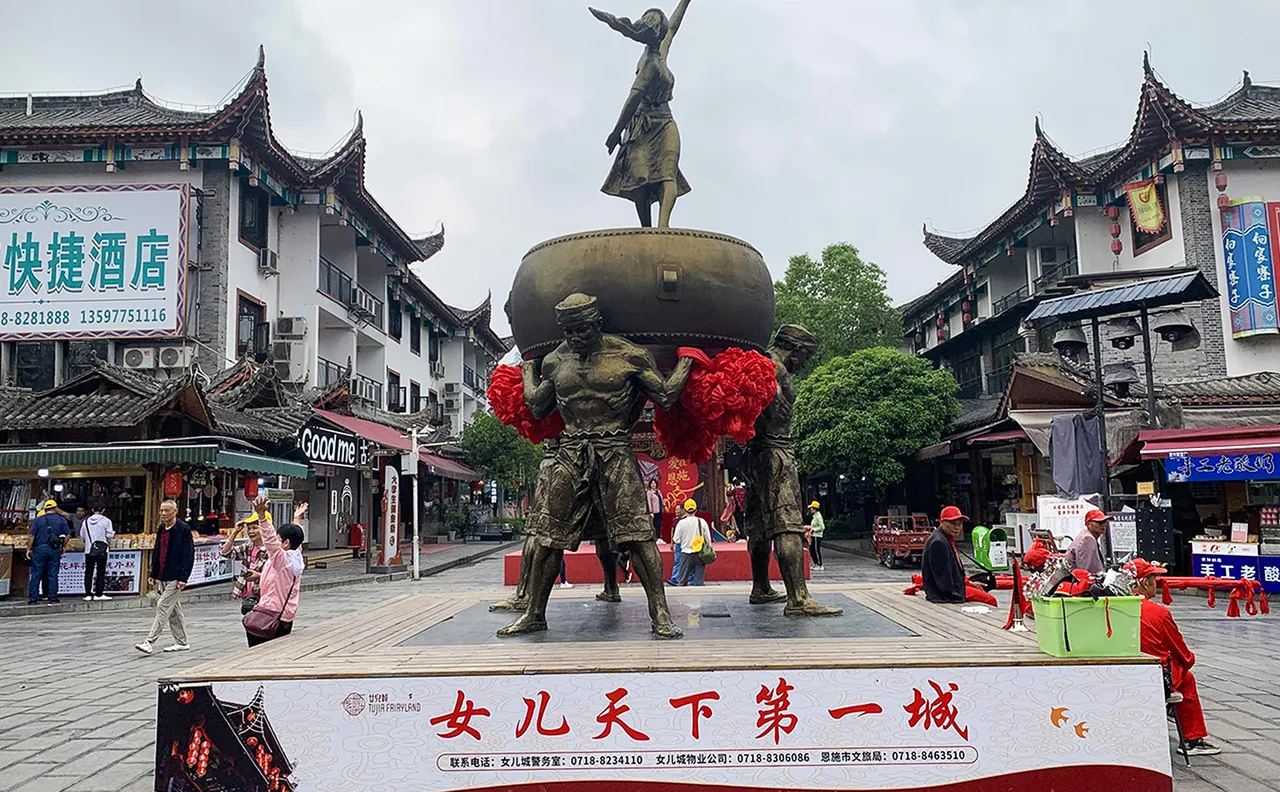
| 15:00 | Nüer City Snack Street: Gege, Ciba Cakes and Baiyang Dried Tofu |
| 18:30 | Qingjiang Grilled Fish and Night Stalls: A Chili Finish |
The route, stop by stop
Wuyangba Morning Market: A Bowl of Scalded Rice Noodles Opens the Day
Enshi mornings start with doupi. Not tofu skin here, but a round sheet spread from rice batter, cut into strips, scalded in boiling water and drowned in bone-broth toppings, soft, sticky and fragrant with rice. The stallholder's first question is width, spice level; first-timers order medium-wide and mild, with the free seaweed soup on the side.
Beside the noodle stalls, youxiang vats fry batter-wrapped bean sprouts and pork shreds to a shatter-crisp golden on both sides. Finish these two standing up, grab a cup of fresh soy milk, and the market's homework is done. Beloved stalls fold after nine, so don't oversleep for the hot stuff.
Hezha Hotpot: A Proper Meal in a Pot of Bean Perfume
Hezha is the soul of the Enshi table: soybeans ground without straining, pulp and solids simmered together with greens, minced pork or dried fish into one fragrant pot, bean perfume braided with vegetable sweetness. Served as a hotpot with a ring of side plates, cured pork, potato rice, fern cakes and wild chives all going into the pot, it is the local set dinner.
Zhangguan hezha is the most famous name on the sign, with several veteran shops downtown. Ask portions first; a small pot feeds two or three. The pot thickens as it cooks, and the connoisseur's last move is a bowl of rice stirred straight in. Thirty to fifty yuan a head, cheap and filling.

Nüer City Snack Street: Gege, Ciba Cakes and Baiyang Dried Tofu
Three in the afternoon is Nüer City's loosest hour, tour groups absent, local youths drifting in twos and threes. Gege is the must-try: small bamboo steamers lined with potato or taro under lamb, pork intestine or ribs, stacked in towers; the lid lifts on a blast of chili perfume, cooled by a bowl of mung-bean soup.
Hand-pounded ciba cakes toast on the spot and get rolled in soybean powder, stretchy when hot; Baiyang dried tofu, a famous product of Baiyangba in Lichuan, is deeply savory in its braise and vacuum-packs for travel. Sample lightly here and bank the appetite for grilled fish.
Qingjiang Grilled Fish and Night Stalls: A Chili Finish
Back downtown at night, the stalls belong to grilled fish. Qingjiang river fish is killed and charcoal-grilled to order, skin charred crisp, then moved to an iron tray of red broth kept bubbling over coals, tofu, konjac and potato slices steeping ever deeper. Enshi's heat pairs dried chilies with Sichuan pepper, more fragrant than savage; half-spice exists for the wary.
The right table: one fish around a kilogram, a cold salad of houttuynia, stir-fried cured pork with fermented corn relish, and a chilled cup of liangxia rice dessert each to close. When the sweat comes, the river breeze arrives on cue, the best part of a mountain-city night.
| Getting around |
|
| Budget | Graze all day for about RMB 120-200 pp; a full sit-down with fish runs around RMB 300 for three or four. |
| Best time | Year-round; market stalls fold by half past nine while night stalls warm up after seven, so time both ends. |
FAQs
Can one person finish this whole eating route?
Yes, by portioning: one bowl of noodles, a small hezha pot, light tastes on the snack street, half a grilled fish or shared with a neighbor table. Enshi portions run honest and big, so eating four full sittings solo wastes food; the right play is seventy-percent full each time.
Any options for non-spicy eaters?
Yes: doupi goes fully mild, hezha's base broth carries no heat with spice living in dips and sides, request them separate; grilled fish has a plain-stewed version whose soul is freshness, not fire. Gege mostly runs spicy, but plain potato-lined steamers exist with a mild dip.
What travels well as take-home food?
Baiyang dried tofu, vacuum-packed cured pork, selenium-rich and vine teas, and small bottles of corn liquor all keep well. Vacuum-seal the pork and check the date, generally fine in domestic checked baggage; loose cooked foods and fresh ciba finish same-day, never on a plane.
What should sensitive stomachs watch for?
Three things: no iced drinks with the first meal, save the liangxia for midday; eat hezha and grilled fish thoroughly boiling hot; go light on raw salads like houttuynia at first try. Mountain cooking runs oily and spicy, pack common stomach remedies, sip warm water between sittings, and the gut gets its buffer.