
Enshi's landscapes are three expressions of one geological logic: the Grand Canyon is sheer walls and deep seams, Pingshan Gorge is water so clear over stone it turns to mirror, and Suobuya Stone Forest is a wood of stone left behind by a retreating sea. Three days, one form per day, with a river cruise and a cave as connective tissue.
Use downtown Enshi as base camp: day one south to the Grand Canyon, day two the long run to Hefeng with a Xuan'en night on the way back, day three north to Suobuya. Each drive holds around two hours, and nights return to the city or Xuan'en, so bags never repack, the gentlest way through mountain country.
Itinerary at a glance
| 07:30 | Yunlong Rift: The Opening Seam |
| 10:30 | Qixing Village: Cliffs, Cloud Sea and the Incense Pillar |
| 18:00 | Nüer City: Bowl-Smashing Wine Washes Off the Day |
| 08:00 | Pingshan Gorge, Hefeng: Floating on Glass Water |
| 15:30 | Shiziguan, Xuan'en: Driving Across the Water |
| 19:30 | Xianshan Gongshui and Wenlan Bridge: Night on the Gongshui River |
| 08:00 | The Daqing River: Cruising the Qingjiang's Great Bend |
| 14:00 | Longlin Palace: Cool Air of an Underground River |
| 16:00 | Suobuya Stone Forest: A Wood of Stone Left by the Sea |
The route, stop by stop
Yunlong Rift: The Opening Seam
Give the trip's first morning hour to Yunlong Rift. The boardwalk to the valley floor runs wet under waterfall roar, the walls closing to a slit of sky. Enter before nine, while tour groups are still on the road, and you own the seam's golden hour.
The rift takes about two hours; exit by shuttle to the Qixing trailhead. Photographers, the gorge's contrast is brutal, so raise ISO rather than bother with a tripod.
Qixing Village: Cliffs, Cloud Sea and the Incense Pillar
The four-hour Qixing crossing is the trip's biggest physical ask. Ride the cable car up and start with the cliff walkway, mist boiling out of the gorge below while the path hangs in midair, Enshi's signature image. The Incense Pillar stands late in the route, so bank legs for the finale.
Take the escalator down or walk by knee verdict; out of the park by three, in time for a late lunch before the ride home.
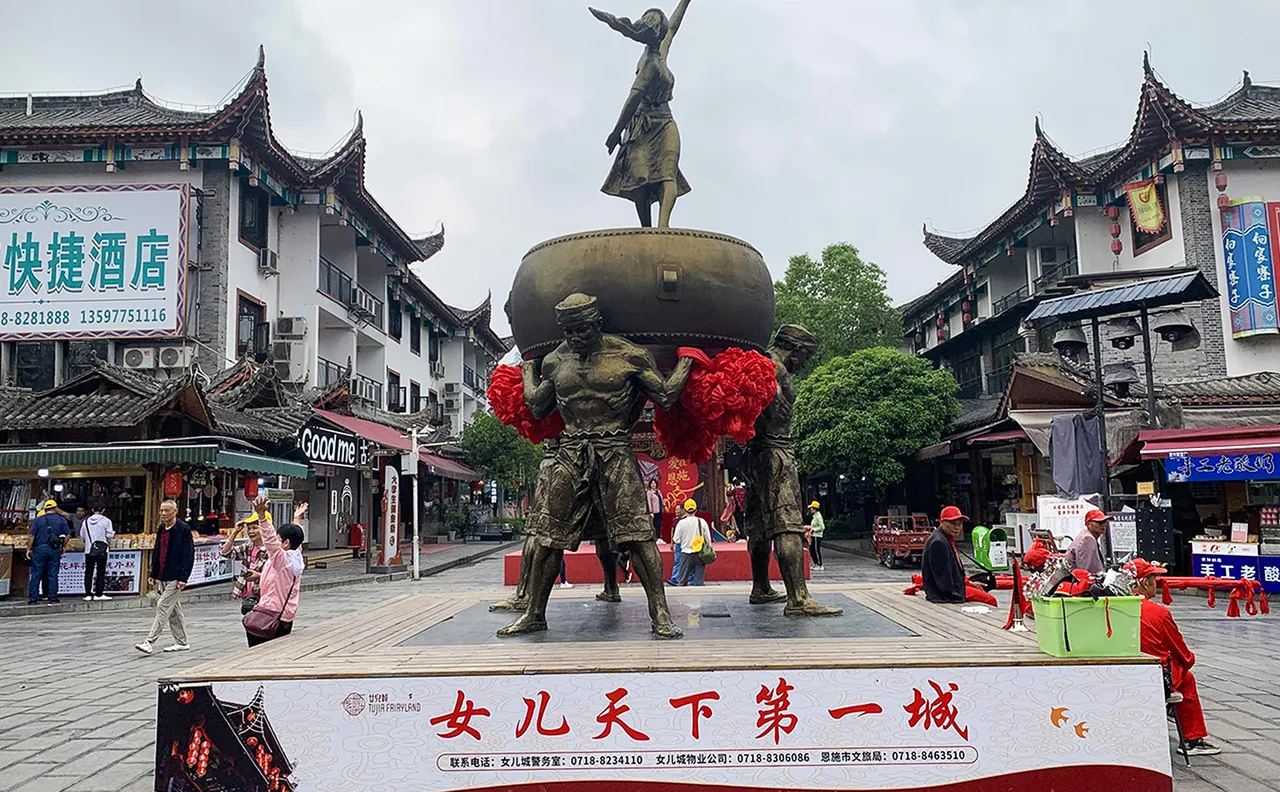
Nüer City: Bowl-Smashing Wine Washes Off the Day
Roll straight into Nüer City on return and solve dinner and recovery together. Hezha and cured pork warm the stomach, the smashing wine lifts the mood, and the evening hand-waving dance pulls everyone into the ring. Sleep early tonight; Hefeng tomorrow is a long road.
If legs remain, circle the quarter's rim, stilt-house lanterns lying on the water, a quiet bedtime program.
Pingshan Gorge, Hefeng: Floating on Glass Water
Day two belongs wholly to Pingshan Gorge. Reach Hefeng county town and transfer to the park, where the boat is the star: a skiff gliding onto water so clear the hull seems to hang in air, and that famous floating-hull photo is real only once you've sat in it. Walls tower on both sides, and sunlight strikes the water squarely only around midday, the two clearest hours.
Boat plus boardwalk totals about three hours. Shoot the floating shot at the shallows; the boatmen know the best angle and will hold the boat exactly there for a small tip.
Shiziguan, Xuan'en: Driving Across the Water
Loop back into Xuan'en for Shiziguan's floating bridge, the afternoon's bonus. This long span across a reservoir accepts private cars: wheels rolling over the pontoons, the bridge breathing gently under you, ripples spreading on both sides, exactly the clip from the viral videos. Park shuttles cross it for the carless.
The park's gorge and cave loops take an hour each; if time is short, concentrate on the bridge section, worth two crossings.
Xianshan Gongshui and Wenlan Bridge: Night on the Gongshui River
Tonight sleeps in Xuan'en county town and collects the trip's most underrated night view. The Xianshan Gongshui strip lines the Gongshui River, lamps warming the stilt facades and walkways, Xuan'en grilled fish riding the river breeze. Wenlan Bridge, the covered span, lights its stacked eaves at night, reflections dropping into the water, the town's calling card.
Eat riverside, live fish grilled to order with local beer, and stroll the embankment till ten, when the lamps fade in sequence and the little town goes quietly to sleep.
The Daqing River: Cruising the Qingjiang's Great Bend
Day three returns to the water. The Daqing River cruise runs a round trip of some four hours from its dock, the river unwinding between gorge walls of unbroken cliff, and the signature Butterfly Cliff mid-route, a peak like folded wings resting by the water.
The upper deck holds the best sightlines with morning light raking the cliff faces into relief. The Qingjiang's green runs deep and steady, a different temperament from Pingshan's transparency, and the two annotate each other beautifully.
Longlin Palace: Cool Air of an Underground River
Back on the city's edge in the afternoon, Longlin Palace completes the trip's geology lesson. This cave splits into a dry and a water passage, stalactites and flowstone first, then a boat ride on the underground river, the cave holding a constant low-teens temperature, a season swap in summer.
Colored lighting on the formations divides opinion, but the depth of the underground river is real. Ninety minutes all told, out in time to collect bags downtown and meet an evening train or flight.
Suobuya Stone Forest: A Wood of Stone Left by the Sea
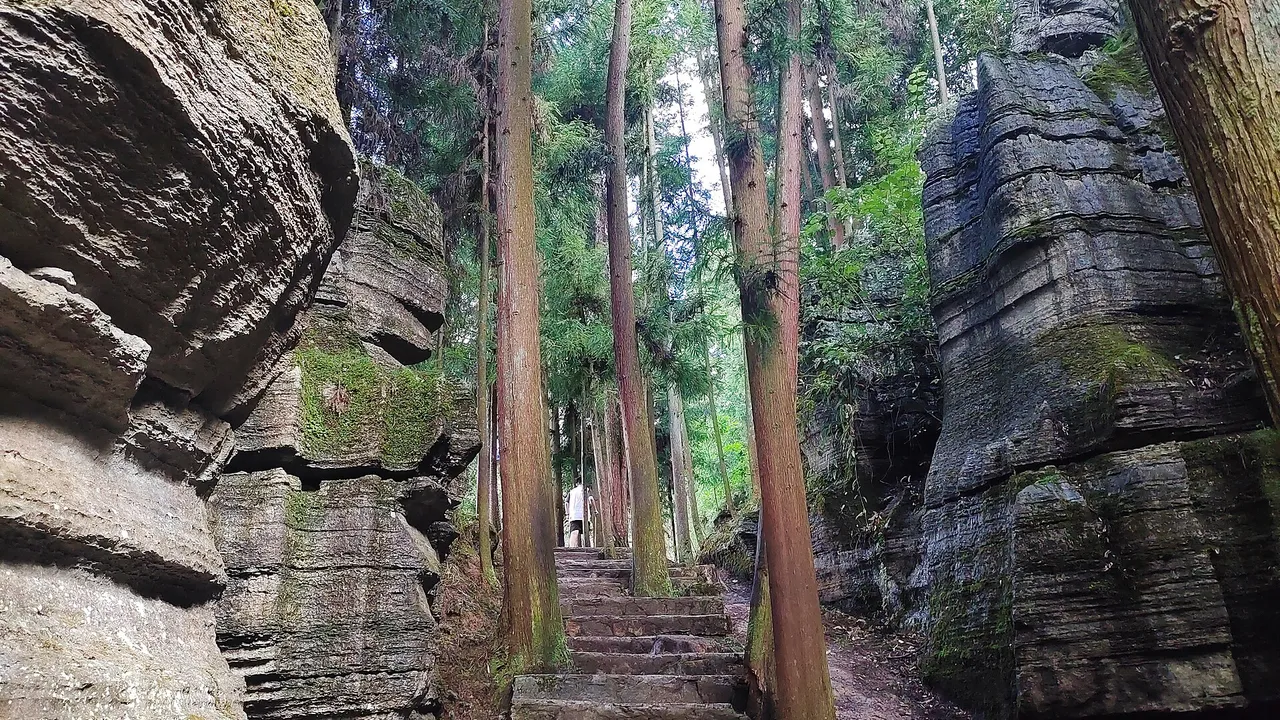
Saving Suobuya for the last half day is deliberate: the stone forest is the finale of Enshi's geological story. Over four hundred million years ago this was shallow sea; the water withdrew and solution carved limestone into today's forest, crown stones stacked on pillar heads, lanes between them so narrow you turn sideways.
The densest stands cluster around Lianhua Village, about two hours of walking. Late light slants through the seams, stretching long shadows across the stone wood, thin crowds and still air, an unhurried full stop for three days.
| Getting around |
|
| Budget | Grand Canyon about RMB 230, Pingshan about RMB 250, Shiziguan about RMB 100, the river cruise about RMB 200; with meals and lodging the three days total roughly RMB 1200-1800 pp. |
| Best time | Apr-Jun and Sep-Nov balance water levels and visibility best; in high summer, shade the midday hours out of the plan. |
FAQs
Is this three-day plan exhausting, and how do I pace it?
Intensity concentrates in days one and two: a four-hour canyon crossing and a three-hour gorge-and-boat combo. Counter by taking the cable car on day one, walking the gorge slowly on day two, and leaning on Shiziguan and the night stroll as light programs. Day three is mostly seated, proper recovery.
What is the easiest way to buy all the park tickets?
Book the Grand Canyon and Suobuya by real-name reservation on official platforms ahead, as peak slots fill; Pingshan, Shiziguan and the river cruise sell online and on site, but always pre-buy on holidays. Check whether combo products include shuttle and boat fares before double-paying.
Which season suits this route best?
April to June brings full moisture, gorge cloud seas and rift waterfalls at their best; September to November offers clear skies and the steadiest river color. July and August work but scorch at noon, which the plan already offsets with afternoon water programs. Winter shortens some boat routes, confirm openings before travel.
Charter or scheduled buses, how to choose?
For one or two travelers with slack schedules, buses and shuttles suffice and halve transport costs. For three or more, or with seniors and kids, charters come out reasonable per head and put the Hefeng transfer timing in your hands. Mountain last buses run early and replacement cabs cost dearly, so never cut margins too fine.