
Fuzhou's history peaks twice: Song-era learning and the modern upheaval. The lanes produced Lin Zexu, Yan Fu and Shen Baozhen, the Mawei naval academy built China's first modern fleet, and Song literati stacked inscriptions on Gushan. These three days follow exactly that timeline.
One theme per day, effort spread evenly: day one inside walking districts, day two reserving transit time for Mawei, day three back in the hills. Most sites close Mondays, so verify each in advance and gift the closed day to shopping and meals.
Itinerary at a glance
| 08:30 | Sanfang Qixiang: Where the Roll of Great Minds Begins |
| 10:30 | Yan Fu's Residence: The Translating Pen of Langguan Lane |
| 13:30 | Lin Zexu Memorial: From Opium Smoke to Coastal Defense |
| 16:00 | Hualin Temple: Northern Song Wood That Still Speaks |
| 09:00 | Zhenhai Tower: The City Axis from Pingshan's Top |
| 10:30 | Mawei Shipbuilding Museum: Cradle of the Modern Navy |
| 14:30 | Luoxing Pagoda: Beacon and Legend at the River Mouth |
| 08:30 | Yongquan Temple and the Cliff Inscriptions: The Song Literati's Message Wall |
| 13:30 | Shangxiahang: An Afternoon of Merchant Guild Halls |
| 16:30 | Yantai Shan: The Last Page of Modern Fuzhou |
The route, stop by stop
Sanfang Qixiang: Where the Roll of Great Minds Begins
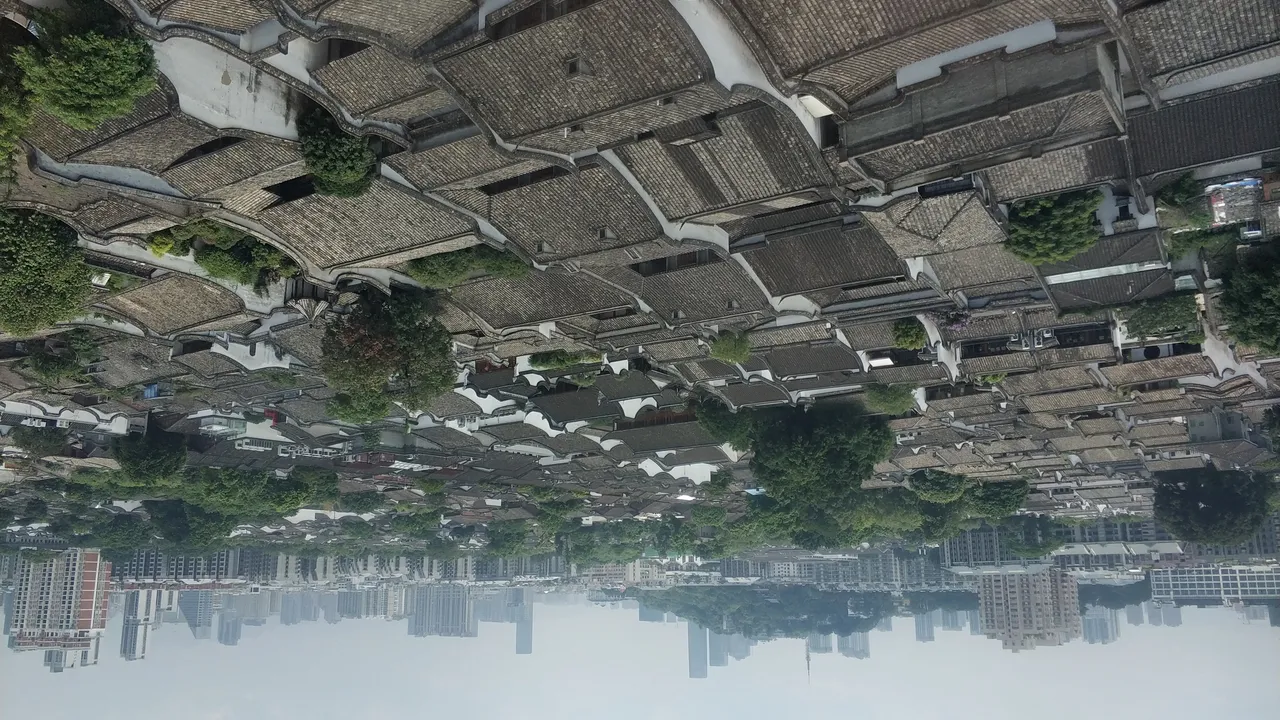
Three heritage days open in the lanes. Crowds stay thin in the morning; enter from Yangqiao Alley and work the Lin Juemin and Bing Xin house, the Water Pavilion stage and Xiaohuang Tower in one line, the old brick and worn thresholds all genuine. The street plan has barely shifted in eight centuries, so walking here walks Ming-era Fuzhou's fabric.
Today's goal is groundwork, not shopping: Shen Baozhen, Yan Fu and Lin Zexu appear here first, and once the names register, every later stop echoes.
Yan Fu's Residence: The Translating Pen of Langguan Lane
At the west end of Langguan Lane, Yan Fu's two-courtyard house survives intact. The exhibit circles translation and thought: facsimile pages of his Evolution and Ethics, margins dense with notes, the whole process of a Fuzhou man carrying evolution into Chinese laid out on paper.
The parlor keeps its old arrangement, the study window opening onto the lane where he once translated through street noise. Forty minutes inside, then stand at the lane's mouth a moment and consider the road those four characters traveled.
Lin Zexu Memorial: From Opium Smoke to Coastal Defense
The memorial stands on Aomen Road at the lanes' south mouth, shrine-style. Three imperial steles, the seated statue in Shude Hall and the famous couplet about serving the country structure the space; the exhibit runs from the opium destruction through Ili reclamation to his late years, a complete scholar-official's life line.
Focus on the coastal defense section: his ties to the naval yard foreshadow tomorrow's Mawei trip. An hour covers it, cool and unhurried after lunch.
Hualin Temple: Northern Song Wood That Still Speaks
Day one closes in the city's north at Hualin Temple: its hall raised in 964, the Northern Song, the oldest surviving timber structure south of the Yangtze. Not a nail inside, brackets like clouds, columns still entasis-curved, the whole grammar of Song construction in one room.
Late light slants through the doorway onto the millennium-old wood, a gentle age that no rebuilt hall can fake. Half an hour with the building and day one's threads tie themselves together.
Zhenhai Tower: The City Axis from Pingshan's Top
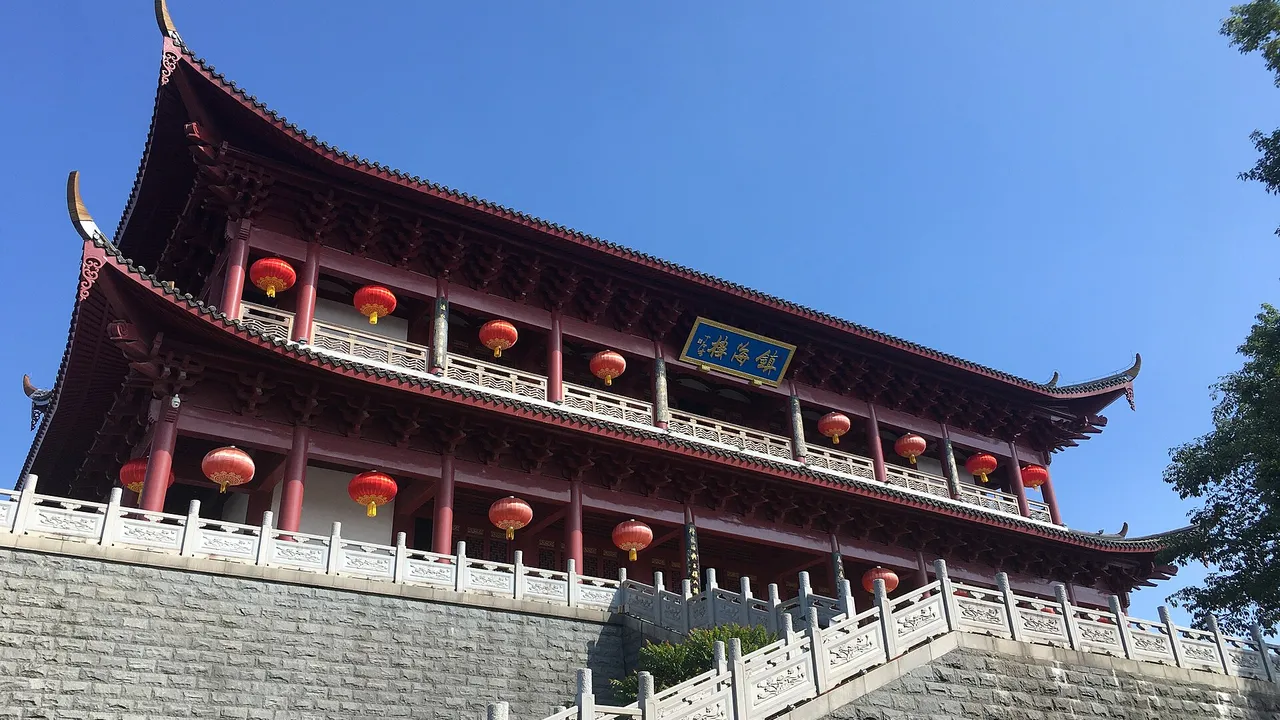
Day two starts by climbing Pingshan. Zhenhai Tower marks the old city's due north; from the top the historic axis runs south to the South Gate, and between the high-rises you can pick out the gray tiles of Sanfang Qixiang, aligning yesterday's walk with the map.
Pingshan Park is free and busy with morning exercisers, the trail reaching the tower in ten minutes. Descend and set out for Mawei.
Mawei Shipbuilding Museum: Cradle of the Modern Navy
Mawei carries the heaviest weight of the trip: the naval academy built China's first modern ships and first generation of engineers, and Yan Fu and Zhan Tianyou walked out of it. The museum unfolds from blueprints to ship models, the grief of the 1894 war and the yard's self-strengthening sharing one frame.
Around the museum, the academy's old buildings, drafting office and engine shops form one campus, about three hours in all. In the old workshops, light falls from high windows and you can almost hear the hammering of a century past.
Luoxing Pagoda: Beacon and Legend at the River Mouth
Luoxing Pagoda stands by the Min River, in its day an internationally known navigation beacon called the China Tower. Not tall, it looks over the broad confluence where cargo ships and fishing boats share the water; the 1884 Battle of Mawei was fought on this very stretch below the tower.
The riverside park is free and windy, a good spot to digest Mawei's weight before riding back to town ahead of the evening rush.
Yongquan Temple and the Cliff Inscriptions: The Song Literati's Message Wall
Day three returns to the hills. Gushan's cliff inscriptions stack from the Song to the Republic, densest at Heshuiyan, with Zhu Xi's hand and Cai Xiang's carved characters among them, a full morning of reading. Morning light rakes the rock, making every carved stroke dimensional.
The temple itself deserves its time: Song ceramic pagodas, the sutra library and blood-inscribed scriptures justify the crown-of-Fujian title. Temple and inscriptions fill a leisurely half day.
Shangxiahang: An Afternoon of Merchant Guild Halls
Down from the hills into commercial history: Shangxiahang was old Fuzhou's wharf district, guild halls lining the Sanjie River, the red-brick Yongde Guild Hall in fine shape. Guild culture is the key to Fuzhou's modern commerce, and the bronze plaques deserve reading one by one.
The riverside photographs best in afternoon light; finish the main street and duck into a Longping Road lane, where the crowds drop off. A relaxed stretch that cools the whole itinerary down.
Yantai Shan: The Last Page of Modern Fuzhou
The finale belongs to Yantai Shan: the treaty-port consulate quarter, stone church, former US consulate and old trading houses scattered across the slopes, brick arcades honey-colored at sunset. The lanes were Fuzhou of the scholars, Mawei its self-strengthening, and this hillside its opening to the world.
Climb from Meiwu Road at dusk and walk down to the lit riverside, closing the three-day book in the gloaming. A Fujian dinner by the river seals the trip.
| Getting around |
|
| Budget | Lanes combo RMB 68 plus temple RMB 40, most else free; about RMB 130-200 pp before meals. |
| Best time | Year-round; avoid Mondays when many venues close, and walk easiest in Apr-May and Oct-Nov. |
FAQs
What is the time-smartest way to handle the Mawei day?
Depart before 9 am: a taxi takes about forty minutes straight to the campus, and the bus back rides outside the rush. All-bus legs run about an hour each way, so pad waiting time. Pairing the shipyard campus with Luoxing Pagoda in one outbound loop maximizes transit value.
What is the smartest ticket strategy?
The RMB 68 lanes combo pays for itself across three or four residences, so use it fully; Hualin Temple at RMB 2 and Yongquan at RMB 40 buy on site; the shipbuilding museum is free. Every paid site sells same-day tickets, no reservations, the easiest ticketing of any Fuzhou plan.
How do I compress this to two days?
Fold Zhenhai Tower and Hualin Temple into day one's afternoon, both in the city's north; compress Mawei to half a day, museum plus pagoda; merge Shangxiahang into the Yantai Shan evening. The two-day version keeps the irreplaceable trio: the lanes, the shipyard and Gushan's inscriptions.
Any dress or etiquette rules at the shrines and memorials?
No hard dress codes at the memorials and shrines, just neat and modest. Shoot without flash indoors, never touch steles or inscriptions, step over rather than on temple thresholds, and keep monks out of close-up shots at Yongquan. Quiet and non-intrusive covers the rest.