
Fuzhou's nickname is the Banyan City, and green is its base layer: hills inside the town, ridges beyond, walkways strung through the treetops, a river running through. These three days skip the malls and give every step to footpaths: Gushan's pilgrim trail, the steel walkway of the Fudao, and the city-view skywalk of Jinji Mountain, three entirely different ways of walking.
The rhythm goes hard to easy: climbs on day one, lakeside flats on day two, a mid-height hill plus night cruise on day three. Summer is muggy, so watch the weather; the Fudao walks fine in rain while stone steps should wait, and the dense site list makes reshuffling cheap.
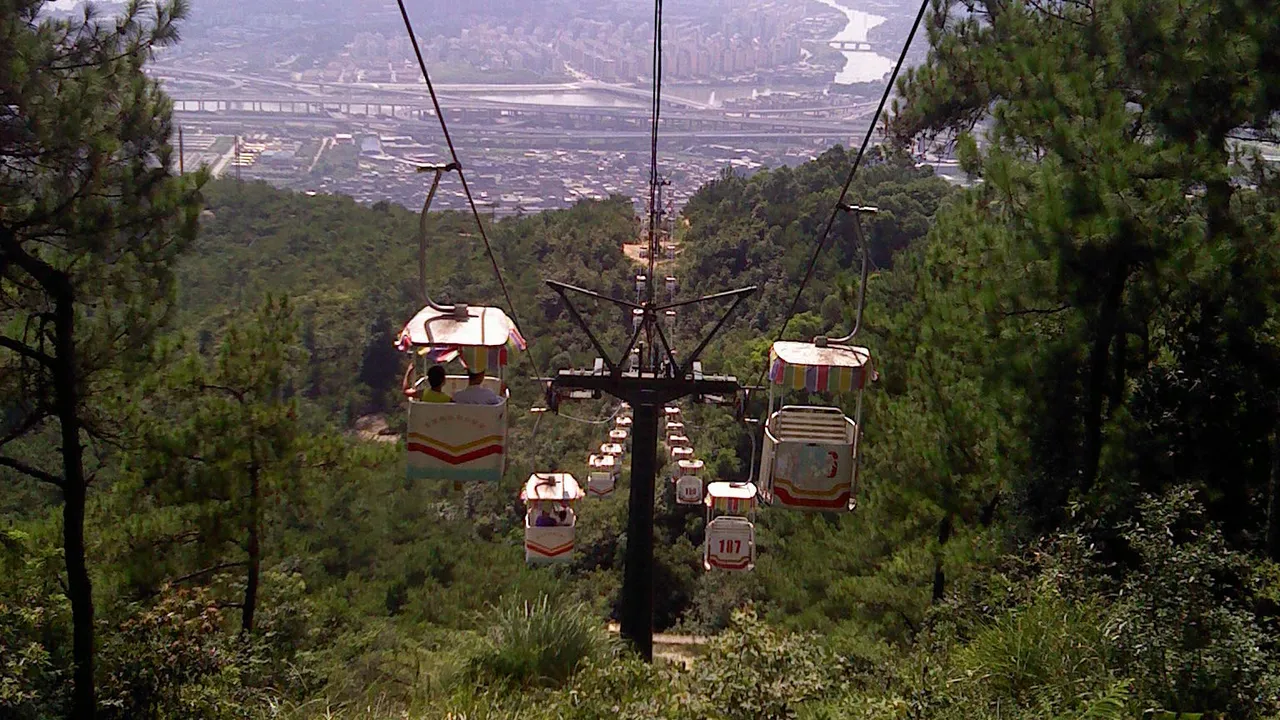
Itinerary at a glance
| 08:30 | Yongquan Temple on Gushan: Morning on the Pilgrim Path |
| 13:30 | Guling: Summer Villas on the Ridge |
| 17:00 | The Fudao: Evening on a Walkway Above the Trees |
| 09:00 | Fuzhou National Forest Park: Under the Ancient Banyan |
| 14:30 | West Lake Park: An Afternoon in a Jin-Dynasty Garden |
| 19:00 | Jinji Mountain Skywalk: The City at Night |
| 08:30 | Wushan: Day Three Begins with Inscriptions |
| 11:00 | Yushan and the White Pagoda: The City's Other Hill |
| 16:00 | Min River Cruise: Seeing Fuzhou From the Water |
The route, stop by stop
Yongquan Temple on Gushan: Morning on the Pilgrim Path
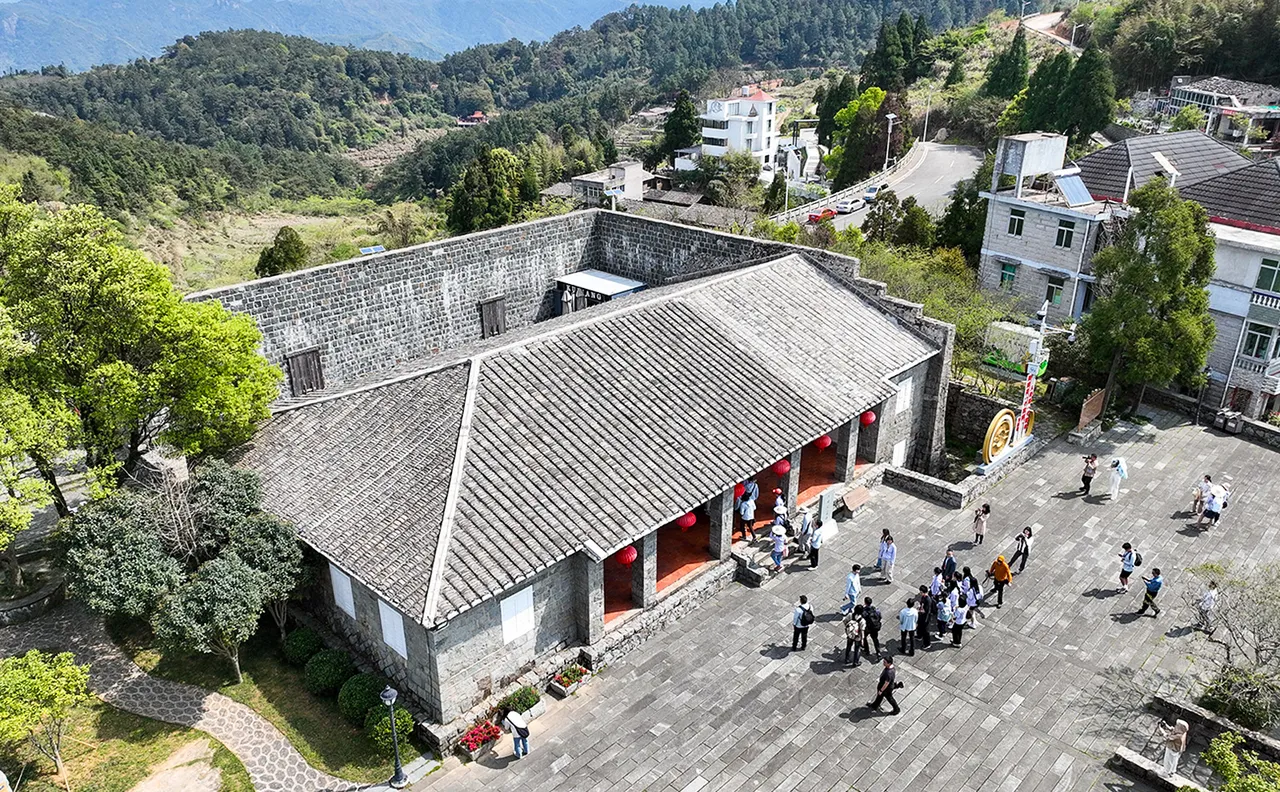
Day one's main event runs in the morning: up the pilgrim path from the trailhead, gentle steps under complete canopy, about an hour to Yongquan Temple. Song ceramic pagodas out front, the sutra library within, and the cliff inscriptions behind form one line through Gushan's thousand years.
With legs to spare, keep climbing to the overlook above the temple for the Min River; to save effort, descend the same way and be back at the trailhead before noon.
Guling: Summer Villas on the Ridge
Guling rides the ridge north of Gushan, a summer retreat since the late Qing for foreigners and wealthy Fuzhou families, century-old villas scattered through the woods. The thousand-year cryptomeria in Liushanwang Park is the landmark, its crown shading a whole clearing; the international clubhouse, old church and century-old pool anchor the villa quarter, free to view outside.
The ridge runs five to eight degrees cooler than town; eating and strolling here at summer noon is how Fuzhou does the season. Farmhouse meals average RMB 40 pp, and the free-range chicken soup earns its order.
The Fudao: Evening on a Walkway Above the Trees
The Fudao is Fuzhou's calling card: an all-steel forest walkway riding the Jinnyushan ridge, closed to vehicles, its slatted deck letting you see the canopy beneath your feet. Come at dusk, walk and gaze in alternation, and sunset turns the whole span gold, the finest hour in town.
The full trail runs about nineteen kilometers, but the sports park section of two or three kilometers covers it for most visitors; ramp exits everywhere mean the design was built for hopping on and off at will.
Fuzhou National Forest Park: Under the Ancient Banyan
Day two shifts to flat ground. The forest park in the city's north holds the ancient banyan, a living footnote to the name Banyan City: a crown over ten meters across, aerial roots rooting into a grove, the temperature dropping the moment you step under. A loop trail strings bamboo, streams and nurseries, about two hours around.
Electric carts serve the park, so ride half and walk half if legs are short. Early morning means birds; afternoon brings breeze off the water.
West Lake Park: An Afternoon in a Jin-Dynasty Garden
West Lake is Fuzhou's oldest surviving garden, dug in the Jin dynasty and now seventeen centuries old. Kaihua and Xiaping isles link by willow dikes and arched bridges, the full loop about three kilometers, open water under banyan shade, claimed by locals as routine: morning swimmers, choirs, chess players, each with their patch.
It connects to Zuohai Park for those with spare legs. Afternoon light comes off the water, and the bridgehead on Kaihua Isle is the classic frame for lake and hills.
Jinji Mountain Skywalk: The City at Night
The evening plan stays easy: Jinji Mountain's city-view skywalk rides an urban ridge and, once lit, wraps the hill like a band of light. Facing downtown, ten thousand windows spread to the Min River, an hour around the loop with the city glowing brighter underfoot.
Elevators rise from the trailhead, sparing the climb. Night wind runs a few degrees cooler than daytime, so a light layer earns its place.
Wushan: Day Three Begins with Inscriptions
Day three closes easy at mid-height. Wushan takes ten minutes to climb, and the value is all on the cliffs: inscriptions stacked from the Tang to the Republic, densest around Daoshan Pavilion, with Zhu Xi's hand among them. Morning light rakes the stone and reads the carved strokes at their sharpest.
Locals box and brew tea on the flat top; linger a while, descend, and the east slope exits straight into lunch territory.
Yushan and the White Pagoda: The City's Other Hill
Yushan, facing Wushan across the avenue, is day three's second stop: Qi Jiguang Temple honors the anti-pirate general, and the Jiuri Terrace once hosted Double Ninth climbs. The White Pagoda stands on the east slope, whitewashed, paired black-and-white with the Black Pagoda as the old skyline's twins.
Both hills fit a half day together; Yushan loops in about an hour under thick shade, walkable even at noon.
Min River Cruise: Seeing Fuzhou From the Water
The last stop returns to the water: board at Taijiang wharf for a night cruise on the Min, both banks lighting up in sequence, Jiefang Bridge, Zhongzhou Island and the new towers knitting into one band of light on the river. The hills and pagodas of three days now line the shore as silhouettes.
The cruise runs about an hour, night wind across the deck, the right reward for three days on foot; riverside night markets wait at the dock for dinner.
| Getting around |
|
| Budget | Ticket spend is tiny: RMB 40 for the temple and river cruises from RMB 68, the rest mostly free, roughly RMB 150-250 pp across three days. |
| Best time | Oct-Apr is kindest; in summer push climbs to morning and evening and let noon belong to lakesides and shade. |
FAQs
What if the hills and forest park lack direct metro access?
Metro coverage is limited, so buses and taxis fill the gaps: several routes reach Gushan in about forty minutes, buses serve the forest park directly, and taxi is fastest to Guling. Budget 30 to 50 yuan per taxi leg, about a hundred-odd yuan across three days, far cheaper than chartering.
Do the Fudao and the river cruise need booking?
The Fudao is free, no booking, hop on anytime; cruises sell by vessel class, walk-up fine on ordinary days, online booking a day ahead for peak weekends. The temple's RMB 40 ticket buys on site. Ticketing stress on this route is nearly zero.
If three days run short, what gets cut first?
Yushan goes first, redundant with Wushan, and Zuohai folds into a West Lake walk anyway; if pressed, compress Guling to the one-hour cryptomeria-park version. Keep the core: the Gushan path, the Fudao, the West Lake loop and the night cruise, the four experiences no other city offers.
What about insects and weather on the nature route?
Fuzhou's mosquitoes bite hardest in woods and by water, so long trousers plus repellent is standard, and avoid scratching welts. Summer afternoons pop thunderstorms, read the clouds and leave the skywalk at the first thunder. In typhoon season, July to September, check warnings before setting out; cruises may halt.