
Hulunbuir wakes inside a mouthful of salty milk tea. The meal clock differs from farm country: morning tea is a formal opening, a pot simmering with dried beef, milk skin and fried millet; noon belongs to hand-held boiled mutton, plain-boiled to test the meat itself; the afternoon's bakeries carry Russian-descended craft; and charcoal lamb ribs end the day glossy. Follow the clock and one day eats like three.
The whole line runs inside downtown Hailar, linked on foot with short charter hops. The only discipline is portioning: stop at seven-tenths full, since the steppe stomach is trained over days, and herders' feasts and river fish still wait.
Itinerary at a glance
| 07:30 | Mongolian Morning Tea: The Correct Opening Pot |
| 12:00 | Hand-Held Boiled Mutton: The Serious Midday Meat |
| 15:00 | Lieba Afternoon Tea: Wheat Aroma from a Wood Oven |
| 18:30 | Roast Lamb Ribs: A Charcoal and Cumin Finale |
The route, stop by stop
Mongolian Morning Tea: The Correct Opening Pot
Morning tea here is eaten, not sipped: brick-tea milk tea simmering in a pot with dried beef, milk skin, fried millet and strips of boiled mutton, served with fried dough and butter rolls while a table shares the pot for forty minutes. Tea rooms open at 6:30 am and the local business of the day gets talked through over this meal; the bustle thins after nine.
First-timers order the small pot; fried millet goes soft if it sits, so add as you go. The tea is salty, so start with half a bowl, then add a spoonful of milk skin the local way and watch the salt round into richness.
Hand-Held Boiled Mutton: The Serious Midday Meat
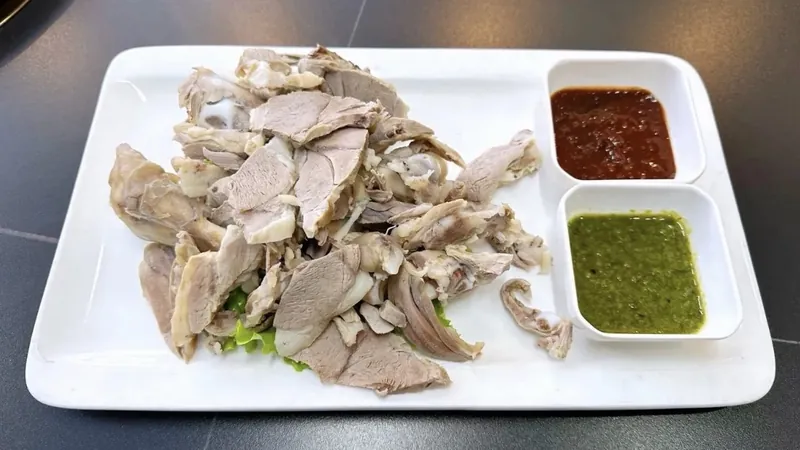
Hand-held boiled mutton is the steppe's home dish: bone-in lamb dropped into plain water with only salt and scallion, lifted at seven-tenths done and eaten by hand, dipped in chive-flower sauce. The dish stands on meat quality, free-range steppe lamb carries no gaminess, and plain boiling locks in the sweet finish; you taste the animal, nothing else.
Order by the jin, combining ribs and leg, three jin for two or three people. Pair with chive-flower sauce and wild leek paste, add garlic chili if you run hot; and never waste the broth, a handful of noodles turns it into the soup-noodle lunch of herding childhoods.

Lieba Afternoon Tea: Wheat Aroma from a Wood Oven
Give the afternoon stomach to the lieba bakery: a fresh loaf's crust rings when tapped, and inside the crumb opens like honeycomb with wheat aroma, spread with blueberry jam or honey and washed down with kvass or hot milk tea, an afternoon tea of real standing. The family bakeries of Ergun and Enhe are the famous ones, but downtown Hailar keeps old shops of the same lineage.
Lieba travels well, keeping about a week vacuum-packed; buy two before leaving, a more convincing gift than any glossy snack box. If you catch a batch coming out of the oven, the owner will ask you to wait ten minutes, and the ten minutes are worth it.
Roast Lamb Ribs: A Charcoal and Cumin Finale
Dinner stars the roast lamb ribs: a full hour over charcoal gives the crust its crackle, finished with salt and cumin, still sizzling at the table. The local standard is a whole roasted rack, smaller parties ordering half or by the portion, cut with cold wild-chive salad and kvass, and closed with yogurt under white sugar.
The steppe stomach is trained over days, so do not max out on day one: ribs with one or two cold dishes suffice, saving capacity for herders' feasts and river fish ahead. Walk twenty minutes along the Yimin after dinner and let the day's fat and charcoal settle.
| Getting around |
|
| Budget | Pot tea RMB 40-60, mutton about RMB 70-90 per jin, lieba tea RMB 20-40, half a rack of ribs about RMB 200; the day totals roughly RMB 150-260 pp. |
| Best time | Year-round, with June-to-September lamb at its tenderest; tea rooms fold by 10 am and lieba sells out by 3 pm, so time both ends. |
FAQs
What is the smoothest routing for this food day?
Downtown Hailar is compact, so the smoothest order is morning tea and dinner in the old west bank, boiled mutton near wherever noon finds you, and the bakeries as distributed. Keep each walking leg under twenty minutes or take a short charter, and the day's car spend stays trivial. For the herders'-camp version of mutton at noon, have your driver route toward Jinzhanghan so the two ends loop without backtracking.
Do boiled mutton and roast ribs need advance booking?
Boiled mutton is cooked to order and needs no booking; roast lamb ribs, however, take a full hour over charcoal and must be phoned in at least an hour ahead, sometimes a day ahead for whole racks. Herder-camp feasts and whole-roast-lamb projects always need headcount and price confirmed a day before; in peak season a walk-up rarely gets fed.
Four sittings in a day, too much? How to choose?
It will, so the discipline is seven-tenths at every sitting: a small tea pot, three jin of mutton for two, two slices of lieba, half a rack of ribs. The line suits two or three people splitting dishes; solo travelers should cut the afternoon tea and keep the lieba as a gift instead. Fresh arrival stomachs need a gentle first day, saving the whole rack for day two.
What should sensitive stomachs watch on this line?
Steppe food runs high in protein and fat, so skip iced drinks with the first hot meal and let warm milk tea settle the stomach; take the mutton fully cooked, never rare, and approach yogurt and milk skin gradually. Pack routine stomach remedies. QR payment works throughout, though some herder visits take cash or WeChat only, so a hundred in small notes is the safest hedge.