
Not everyone wants three straight days on the steppe. This two-city line lowers the intensity: a Hailar day for museum, river and night market; day two giving the morning to Jinzhanghan and the afternoon to Hulun Lake before moving to Manzhouli by evening; day three on the National Gate and Matryoshka Square with an unhurried exit. Every leg stays short, ideal for seniors, children or shoulder-season travelers.
Hailar and Manzhouli sit about 200 km apart, two hours by charter, with trains and buses too. Charter the steppe-and-lake stretch, then pick your intercity mode by budget; the two nights split between Hailar and Manzhouli, so the bags move only once.
Itinerary at a glance
| 09:30 | Hulunbuir Museum: Chapter One of the Two-City Line |
| 14:00 | Genghis Khan Square and the Yimin River: Axis and Water |
| 18:00 | Hulunbuir Old City Night Market: Closing Night One |
| 09:00 | Jinzhanghan: Compressing the Steppe into Half a Day |
| 14:30 | Hulun Lake: A Northern Sea on the Way to Manzhouli |
| 19:00 | Matryoshka Square by Night: First Impressions of the Border |
| 08:30 | Manzhouli National Gate Scenic Area: Up the Tower, Two Countries in View |
| 10:30 | Matryoshka Square by Day: Facade Details and Cultural Goods |
| 14:00 | Final Russian-Goods Sweep and the Way Home |
The route, stop by stop
Hulunbuir Museum: Chapter One of the Two-City Line
The two-city diary opens at the museum, reading the steppe's history before seeing it, so every view ahead carries annotations. The ethnic-history hall runs from Xianbei to the Mongol clans, and the folklore room's shamanic dress and reindeer-hide gear will echo, faintly, in Manzhouli's Russian-goods shops.
Ninety minutes suffice; finish the key halls and step out. Lunch around the new eastern district offers chains and local rooms alike, and the light afternoon helps it settle.
Genghis Khan Square and the Yimin River: Axis and Water
The afternoon keeps a walking pace: take in the horse-warrior column at Genghis Khan Square, then follow the Yimin east to Hasar Bridge, two kilometers of flat path. The riverside breeze filters half the city's noise away, locals fishing, children cycling, a steppe town unhurried at its core.
The bridgehead is the city-postcard angle, better as a backlit silhouette at dusk. Benches and drink stands line the water when legs tire; sit and watch the birds, saving strength for the night market.
Hulunbuir Old City Night Market: Closing Night One
The old city quarter is plain by day and alive by night: skewer grills, snack carts and fruit stalls filling the street, the after-work crowd outnumbering tourists. Order the whole dinner at once, pot milk tea, small roast ribs, Buryat dumplings, fifty yuan a head and solid.
Turn in early, since the steppe comes tomorrow. The market winds down by 21:30, so either catch it hot or move dinner up to 18:00, when the grills often hit their best fire before closing.
Jinzhanghan: Compressing the Steppe into Half a Day
Day two allots the steppe a single stop: Jinzhanghan and the Morigele overlook. Climb the slope by the road for the bends, take a bowl of milk tea at the camp, catch the morning wrestling and archery show, and two and a half hours complete the steppe sketch without pushing into the deep grass.
Riding is optional; on a half-day plan stick to the flat beginner loop for half an hour. Lunch at the camp or back in town on boiled mutton, with Hulun Lake waiting all afternoon.
Hulun Lake: A Northern Sea on the Way to Manzhouli
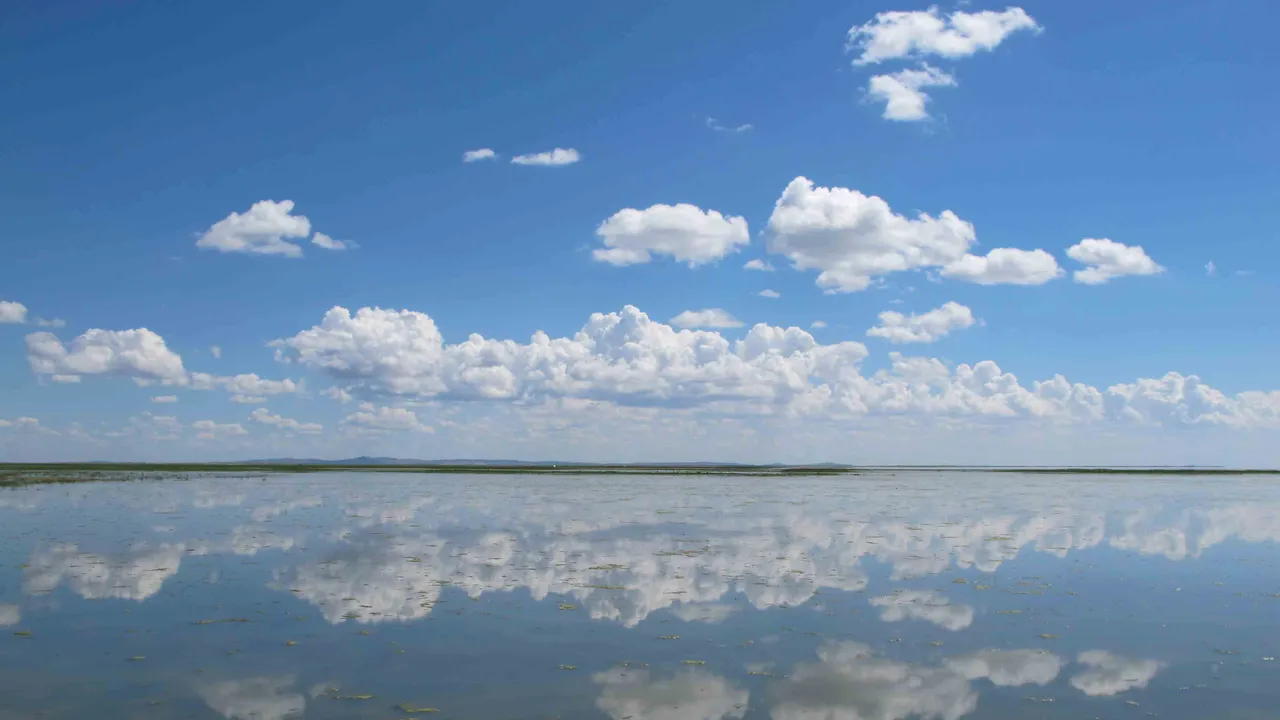
Hulun Lake sits southwest between Jinzhanghan and Manzhouli, best folded into the charter route. The water spreads sea-wide, waves rowing up the shingle, and the Xiaohekou viewing ground lines up grass and lake in one clean band, the wind harder than the steppe's.
Forty minutes to an hour suffices; lakeside fish stews offer a tofu-and-fish taste. Then straight on to Manzhouli, two hours, reaching the city in time for dinner and the lights.
Matryoshka Square by Night: First Impressions of the Border
You reach Manzhouli as Matryoshka Square and the main streets switch on, the border town's opening line: onion domes, doll buildings and gilded sculpture, more outrageous by night than day. The square's perimeter is free, best shot from the southwest corner outside.
Dinner at a Russian restaurant downtown, borscht, pot-braised beef and kvass as the standard trio, RMB 60-100 a head; afterward walk Zhongsu Street to digest, with the National Gate first thing.

Manzhouli National Gate Scenic Area: Up the Tower, Two Countries in View
Day three opens at the National Gate ahead of the tour vans. From the tower, the Russian yard and water tower of Zabaikalsk lie plainly across, a crossing freight train shivers the structure in low frequencies, and boundary marker No. 41 with the tower view anchor the visit.
The on-site exhibition covers a century of port history, skippable when time is tight; tower and marker take an hour, then continue conveniently to Matryoshka Square, breakfast fitted in between.
Matryoshka Square by Day: Facade Details and Cultural Goods
Only daylight reveals the fairy-tale murals and facade details of the doll buildings, and the rides and show theater open to day visitors alone. Cultural shops line the main building's ground floor, doll magnets, chocolate and kvass boxes as the standard trio, big items shippable.
Without shows or rides, an hour clears it; families with slack can take two. Lunch nearby runs Russian or Mongolian, and the afternoon belongs to an unhurried exit.
Final Russian-Goods Sweep and the Way Home
Give the last hour before departure to the Russian-goods shops around Zhongsu Street: price against the quotes noted earlier, and top up gift-sized pieces. Sweets, honey and kvass are the three that never miss; amber and furs stay untouched without an expert beside you.
Manzhouli back to Hailar is two hours, so wrap downtown by 15:00 for evening trains or buses; Manzhouli's own western airport serves direct routes in some seasons and can end the trip outright.
| Getting around |
|
| Budget | Tickets RMB 200-300 combined, two nights RMB 300-600, intercity chartering and short hops RMB 400-600 pp; the whole run about RMB 1000-1500 pp. |
| Best time | June to September is kindest; winter works too, Manzhouli snow a bonus, though the steppe half-day moves indoors or demands full winter kit. |
FAQs
Is this two-city line easy for solo travelers?
Very easy, since this is Hulunbuir's lowest-intensity plan: both nights sit downtown with food and shopping on foot, and only the steppe half-day and the intercity leg need ride-share or charter. Solo ride-share goes through your front desk or a licensed fleet at far below a solo charter. For the steppe leg, get the route and price written down before boarding and check driver and plate details first.
What is the simplest way to handle tickets and bookings?
The museum is free but needs real-name booking, morning slots reserved a day ahead in season; Jinzhanghan about RMB 30, Hulun Lake 30-40, the National Gate 70, Matryoshka Square 100-150, all per posted prices. Buy Gate and Matryoshka tickets online in peak season and walk up everywhere else. Handle every booking the previous evening and the itinerary never pauses.
Only half a day of steppe in three days, is that a loss?
Depends on your purpose. For deep steppe immersion these three days are not the optimal shape, so take the northern loop instead; for controlled intensity, cities and the border, half a day of grassland is exactly enough to understand Hulunbuir's ground note. Jinzhanghan plus the Morigele overlook already delivers the classic river-bend image, and saving the deep version for a later, unhurried trip is the wiser trade.
Which districts suit the two nights best?
In Hailar, stay near the new eastern district or the old-city quarter so food and the night market lie within walking range; in Manzhouli, base around Zhongsu Street or Matryoshka Square so the lights and shops sit at your doorstep. In July-August book both cities three to five days ahead for prices twenty to thirty percent under walk-up rates. In winter, confirm heating and hot water explicitly, since border-town older buildings vary widely.