
Seven days is the deepest Hulunbuir can go: no viewing deck is chased, and every landscape gets a night. The first two days bridge city and deep steppe, the middle three run north to Genhe's reindeer and sleep in two Russian-descended villages along the border river, the last two close through Hulun Lake on the frontier at Manzhouli. Herder visits, lieba baking, riding and homecoming herds all grow out of their own segments.
Depth costs logistics: seven days of chartering, nights scattered across city, township and village, bookings made one to two weeks ahead. The schedule's discipline is two heavy stops a day and driving under five hours; the leftover time goes to roadsides, tables and yards, and that is the real difference between seven days and three.
Itinerary at a glance
| 14:00 | Hulunbuir Museum: Fitting Seven Days with a Narration |
| 18:00 | Genghis Khan Square and the Old Quarter: A City Night Before the Road |
| 09:00 | Jinzhanghan: The Steppe's First Lesson and the Morning Show |
| 11:30 | Deep Along the Morigele: A Herder Visit and a Milk-Tea Afternoon |
| 09:30 | Ergun Wetland: Shifting from Steppe to River Valley |
| 15:00 | An Ergun Bakery: The Hands-On Lesson and Resupply |
| 09:00 | Aoluguya at Genhe: A Whole Day with the Reindeer Tribe |
| 15:00 | Shiwei Russian Ethnic Township: First Night on the Border River |
| 09:30 | Enhe Russian Ethnic Township: A Family Visit and a Slow Village Morning |
| 16:00 | Heishantou: Riding, the Homecoming Herds and a Steppe Sunset |
| 10:00 | Hulun Lake: A Morning of Water and Downshifting |
| 08:30 | The Manzhouli National Gate: The Border Lesson at the End |
| 11:00 | Matryoshka Square and the Last Goods Sweep: Seven Days at the Platform |
The route, stop by stop
Hulunbuir Museum: Fitting Seven Days with a Narration
Arrival afternoon goes to the museum, where seven days rehearse in the galleries: the relay of Xianbei, Shiwei, Mongol clans and the reindeer-herding Evenki across this land maps onto the steppe, river and forest ahead. The folklore room's reindeer-hide gear, birchbark canoes and shamanic dress index the coming stops at Genhe and Enhe.
Two and a half hours, notes or photos on the key halls for roadside reference. Dinner of pot tea and boiled mutton in the old west-bank streets, then early to bed for the steppe's early start.
Genghis Khan Square and the Old Quarter: A City Night Before the Road
Walk the city's axis at dusk: the horse-warrior column, the Yimin and Hasar Bridge, light strings waking on the water. Only tonight and the final night sit in Hailar, so spend the city-stroll luxury now.
Skewers and pot tea for dinner, then round one of seven-day provisioning at a supermarket: water, dry rations, chocolate, heat packs and common medicines. Shops thin out badly ahead, and skipping tonight leaves no chance for three days.
Jinzhanghan: The Steppe's First Lesson and the Morning Show
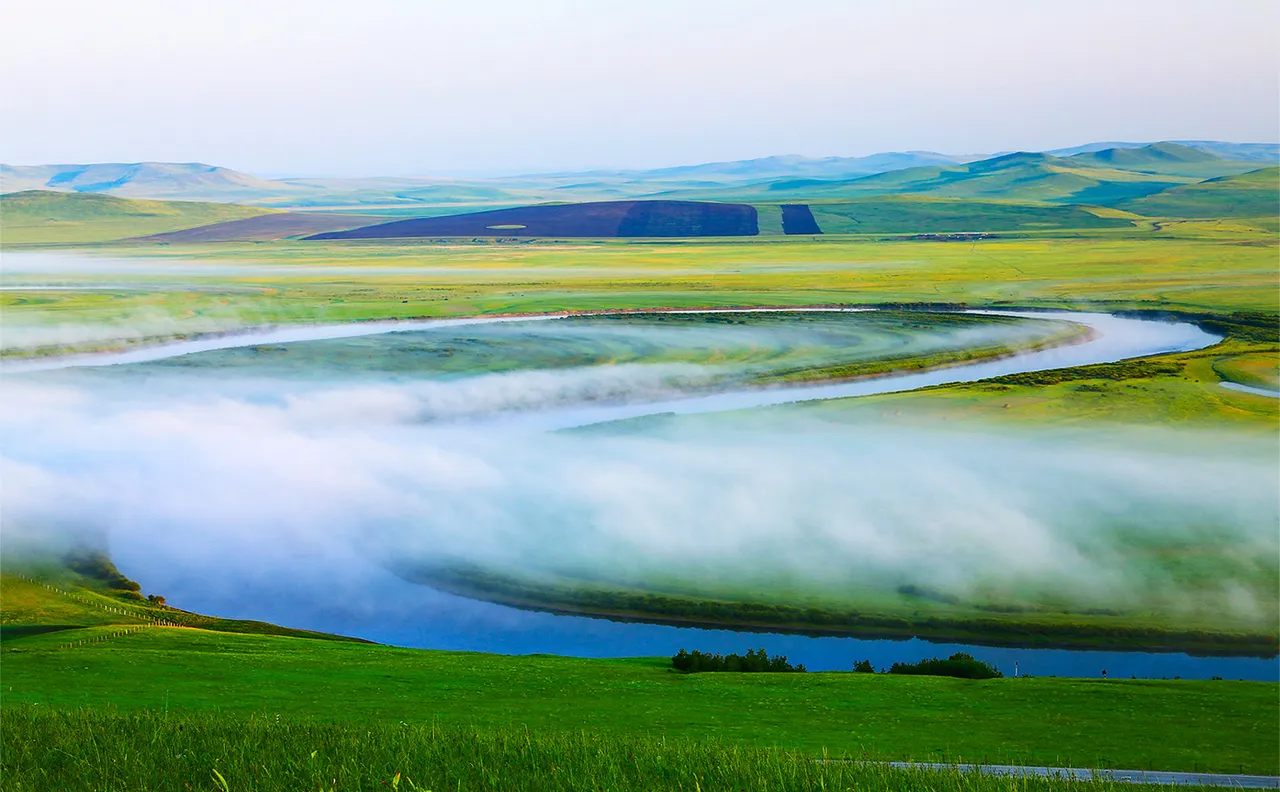
Day two reaches Jinzhanghan within half an hour: first the rise behind the camp for the Morigele bends in morning light, then into camp for the morning wrestling and archery show. The trip's first steppe day runs deliberately light, letting the body meet land barely seven hundred meters high but hard with wind.
After the show, a proper bowl of pot tea and a chat with camp herders about this year's rain and grass prices. Riding stays off today; deep-grass saddle time belongs to Heishantou, the loop's finest ranch country.
Deep Along the Morigele: A Herder Visit and a Milk-Tea Afternoon
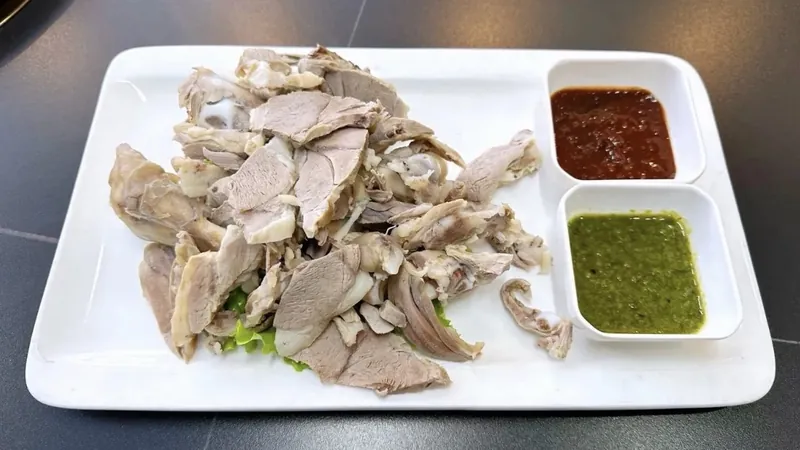
Midday turns into the deep grass to a herder family, the trip's most lived-in stretch of steppe: milking, moving sheep, boiling pot tea, hands-on wherever hands are wanted. Lunch is hand-held boiled mutton, bone-in in plain water with chive-flower dip, and a pot like this hides nothing about the meat.
The afternoon and night stay with the family, nothing scheduled: watch cloud shadows cross the rangeland, help walk the sheep in, then climb the rise behind the ger for the homecoming and sunset. At night the steppe darkness is thick enough to hear your own breathing.
Ergun Wetland: Shifting from Steppe to River Valley
Day three leaves the grass running north, reaching Ergun around midday. The wetland deck shifts the trip's first gear: the Morigele's curves give way to braided channels, the steppe horizon folds into valley birch and brush, and the landscape completes its change of scene in half a day.
Forty minutes up the boardwalk to the main deck, longer if you take the lower platform. The summit wind shakes the herder dust out of your coat, and the bakery and villages still wait this afternoon.
An Ergun Bakery: The Hands-On Lesson and Resupply
The afternoon bakery holds two tasks: an hour of hands-on lessons in hops starters and wood ovens, then vacuum-packing two large loaves as the staple rations for two days of river villages. Fresh from the oven with black tea and blueberry jam, today's share goes first.
Ergun town is the last resupply before Genhe: fruit and water at the supermarket, a pharmacy check on the medicine kit. Overnight downtown; tomorrow's drive runs past two hours, and breakfast can happen at the guesthouse.
Aoluguya at Genhe: A Whole Day with the Reindeer Tribe
Day four runs north to Genhe with the whole morning given to Aoluguya. The reindeer herds drift through moss and birch; feed them, see the cone lodgings, hear hunters tell how they came down from the mountains, and two and a half hours vanish. In seven days this is the day most opposite to the steppe: forest, moss and deer bells.
The afternoon can add a wetland walk at Genhe or head straight back to Ergun for rest. Listen to the full guided talk; the Evenki and reindeer symbiosis is among this country's most singular cultural specimens.
Shiwei Russian Ethnic Township: First Night on the Border River
From Genhe via Ergun the road bends east to Shiwei by early evening. The village faces Russia across the Ergun, and the log-house yard opens toward the river sky. Dinner is home-style Russian at the guesthouse, then a stretch of the riverside path trades two days of forest damp for river wind.
Shiwei's evening quiets until you can hear horses chewing. The border-river morning mist is the whole trip's finest argument for an alarm, so set it forty minutes before sunrise.
Enhe Russian Ethnic Township: A Family Visit and a Slow Village Morning
From Shiwei's mist south to Enhe, the morning holds exactly two things: the Russian family visit and a village walk. The mistress bakes lieba and tells her family's century of crossing, and the old bakery photographs and accordion indoors turn textbook ethnography into a roomful of concrete life.
After the visit, idle through the lanes: every log house a different shade, yard cucumber frames, flower beds and drying floral cloth all frames in themselves. Lunch on soup and lieba with jam, the afternoon ceded to Heishantou's steppe.
Heishantou: Riding, the Homecoming Herds and a Steppe Sunset
You reach Heishantou by early evening, in time for the trip's defining combination: an hour of deep-grass riding with the horizon moving at saddle height, then a rise to wait for the homecoming as herds press in from the skyline, hooves arriving before shapes, and at last a full steppe sunset.
This is the emotional peak of the seven days and the steppe segment's close. Sleep in Heishantou or Ergun on roast lamb ribs, folding the grassland's three lessons, herder camp, river villages and saddle, into one evening.
Hulun Lake: A Morning of Water and Downshifting
Day six reaches Hulun Lake, where the Xiaohekou ground lines up grass, water and sky in one band. Walk the shingle while wind and water gather five days into one rhythm, the trip's psychological rumble strip: the last day in Manzhouli runs light, all shopping and streetscape.
Lakeside fish stew makes brunch, then an hour to Manzhouli. Watch Matryoshka Square light up at dusk, the gentlest evening of the seven.
The Manzhouli National Gate: The Border Lesson at the End
The last morning opens at the National Gate to finish the geography: from the tower, Zabaikalsk's yard across, and a crossing freight train's low drum as the port's live footnote. One group portrait before marker No. 41, and the steppe, forest and river of seven days all connect to their terminus, the border line.
An hour on site: tower, marker, Peace Square, exhibition hall by appetite. Then the day's last thread runs through Matryoshka Square and downtown Russian-goods shops.
Matryoshka Square and the Last Goods Sweep: Seven Days at the Platform
Matryoshka Square plays the seven days' closing act: facade details and fairy-tale murals by daylight, souvenirs cleared in one pass at the cultural shops, big items shipped on the spot. Then the Zhongsu Street shops take the final price check, topping sweets, honey and kvass against the gift list.
Two hours back to Hailar, or fly out of Manzhouli's western airport directly. File the week's tickets and tracking numbers before boarding; the trip ends on wheels, but the herders' pickles and the bakery's oven fire travel farther.
| Getting around |
|
| Budget | Seven-day charter RMB 4500-5600 per car, tickets and activities RMB 600-900, six nights RMB 1500-3000; the whole trip about RMB 4500-7000 pp for two sharing. |
| Best time | June to September all work, July and August the fullest and priciest; June and September cut costs a quarter to a third, and September's golden grass is the deep traveler's window. |
FAQs
Where do the extra two days of a seven-day plan earn their keep?
It earns its keep in two places: a complete night with a herder family and two nights in the river villages. In three- and five-day versions the family visit is a checkbox, while seven days let you watch a herder household run its whole day; with a night each in Enhe and Shiwei, you collect both the morning mist and the dusk. The extra budget buys not sights but rhythm and people, which is the entire secret of depth.
What should seven days of chartering cost, and how do I stop mid-trip surcharges?
In season, RMB 4500-5600 for a sedan and 5600-7000 for a van is the rational band including fuel, tolls and the driver's board. Three safeguards against surcharges: an itinerary sheet listing every stop and dirt segment, an explicit zero-shopping-stops clause, and payment in two tranches, sixty percent at departure and the balance at the end. Any mid-trip proposal to add stops or reroute gets checked against the sheet before you decide.
Which nights are tightest to book, and when should I reserve?
The log-house guesthouses of Enhe and Shiwei have tiny total capacity and often sell out one to two weeks ahead in July-August, making them the tightest nights; Genhe town and Heishantou run second. The tactic: lock village lodging the day you fix the itinerary, then backfill city hotels. In season village rooms run RMB 200-400, and last-minute hunting means high prices and poor picks, so do not gamble.
What extra gear does seven days need over five?
Clothing adds one spare set and one warm layer over the five-day list; the real difference is redundancy: a full seven-day medicine kit, two power banks, RMB 500 cash, which remains hard currency in villages and herder camps, and offline maps covering the whole route. Seven days cross urban, steppe, forest and village environments, so repellent and windproof shells serve simultaneously, and the suitcase still stays at 24 inches.