
Lanzhou's countryside lives on both banks of the Yellow River: upstream, Shichuan keeps over ten thousand pear trees three centuries old; midriver, Qingcheng preserves the mansions of a tobacco port; downstream, Hekou guards the crossing where two rivers meet. Three days along the water read crops, courtyards and waterways, the very template of the northwest countryside.
This is the loosest itinerary: one zone per day, with farmhouse meals and heated kang as part of the program, not transitions between sights. It suits travelers slowing down after the big sights, and families with seniors or kids; the one hurdle is chartering a car.
Itinerary at a glance
| Day 1 · 09:00 | The Shichuan Ancient Pear Orchard: Three-Hundred-Year Trees |
| Day 1 · 11:30 | The Shichuan Suspension Bridge and the River Bend |
| Day 1 · 13:30 | Farmhouse Lunch: Wood-Fired Chicken and Soft Pears |
| Day 2 · 10:00 | Qingcheng Old Town: City God Temple and the Academy |
| Day 2 · 13:00 | The Luo Compound and the Gao Ancestral Hall |
| Day 2 · 15:30 | Qingcheng Long Noodles and the Old Vinegar Workshop |
| Day 3 · 10:00 | Hekou Old Town: Where Two Rivers Meet |
| Day 3 · 13:00 | Hekou Courtyards and Painted Lanterns |
| Day 3 · 16:30 | Crossing Sunset and the Road Home |
The route, stop by stop
The Shichuan Ancient Pear Orchard: Three-Hundred-Year Trees
Shichuan town sits in Gaolan County where the river makes a great bend, and inside the bend lies over ten thousand mu of ancient pear trees, many three hundred years old and still bearing, billed as the world's largest ancient pear orchard. Trunks too thick for one person's arms are propped by wooden poles set by generations, like outstretched hands.
In late April the whole valley turns white with blossom, the northwest's grandest flower event; autumn hangs the trees with soft pears and perfume pears. Wander the paths freely, since the orchard is the village itself, pickers and visitors mingling under the boughs.
The Shichuan Suspension Bridge and the River Bend
The river runs right beside the orchard, and the Shichuan suspension bridge, once the vital crossing, now carries mainly foot traffic. The deck sways underfoot with wind humming through the cables, and the water here runs far clearer than in the city stretch.
Cross to the far slope and look back for Shichuan's standard panorama: orchard, village and river in one frame. Vendors by the bridge sell soft pears and seed melons; in autumn, eating a frozen pear on the embankment is the season's proper ritual.
Farmhouse Lunch: Wood-Fired Chicken and Soft Pears
Lunch happens in a farmhouse courtyard at the orchard's edge. The cooking is honest country fare: wood-fired chicken, sour-celery noodles and every form of pear, with fresh-picked fruit as the dessert course. In autumn the headliner is the soft pear, hard as an iron ball when frozen, melting into a sack of sweet juice.
Many courtyards take guests, with clean heated kang from around a hundred yuan a night. Book by phone a day ahead if you want to sleep inside the orchard; blossom and harvest seasons fill fast.
Qingcheng Old Town: City God Temple and the Academy
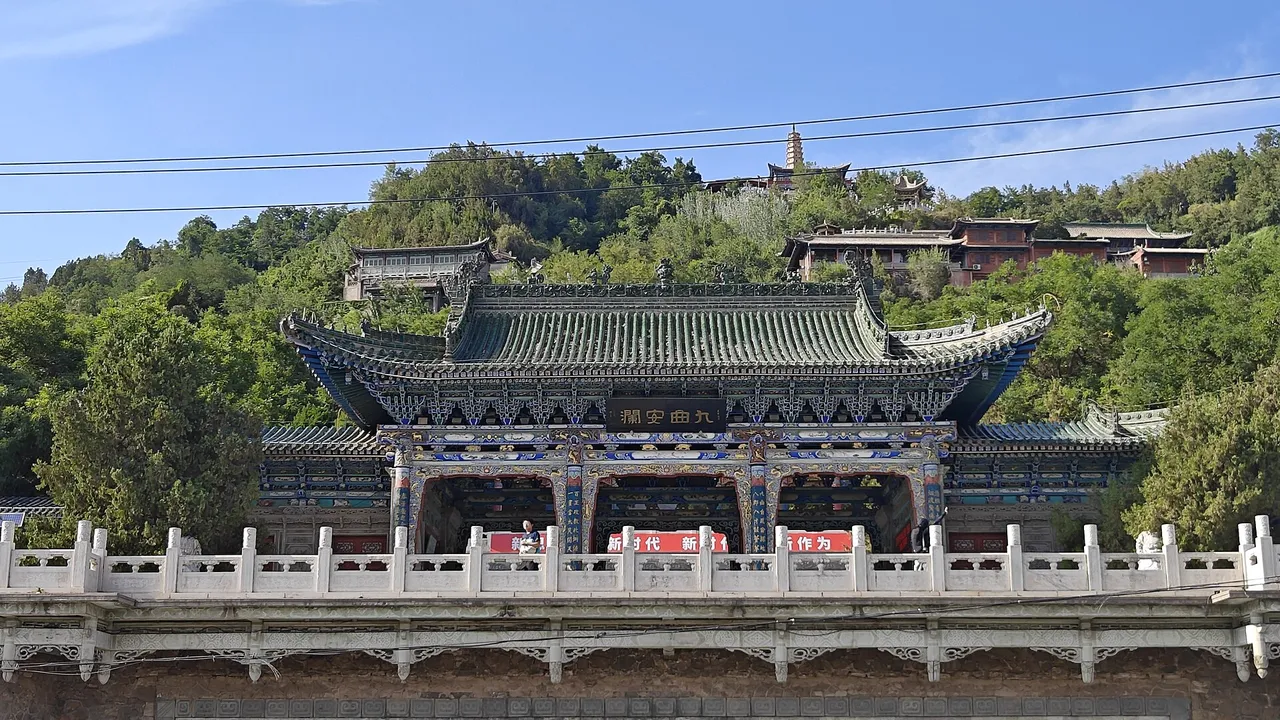
Day two opens in Qingcheng. Enriched by the water-tobacco trade for three Ming-Qing centuries, this riverside town builds its City God Temple up the slope, opera stage, offering hall and main hall rising in step, the ensemble grandest in town. The Qingcheng Academy follows, alma mater of jinshi and provincial graduates, lecture hall and dormitories intact.
The lanes run wider than expected, rammed-earth walls with plain wooden gate towers and restrained ornament, an aesthetic system apart from the ornate south. Morning light raking the walls makes the best photos.
The Luo Compound and the Gao Ancestral Hall
The Luo compound typifies the merchant mansion: three courtyards deep with counting room, tobacco workshop and embroidery tower complete, the whole toolkit of water-tobacco making laid out from pressing to shredding. The Gao ancestral hall preserves plaques, memorial tablets and ritual protocols in neat order.
Forty minutes each suffices, with a few minutes on foot between. The rewards sit in details: lintel wood carving, screen-wall brickwork, roof-ridge beasts, all archives of wealth and taste.
Qingcheng Long Noodles and the Old Vinegar Workshop
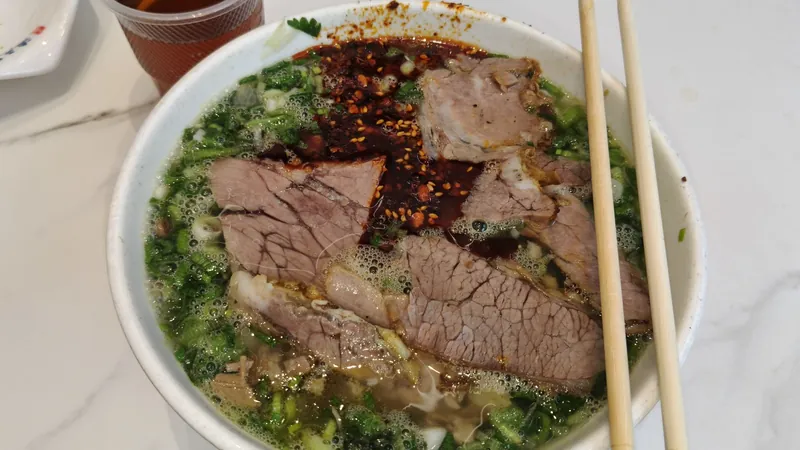
The local afternoon tea is long noodles with aged vinegar. Qingcheng's long noodles, hand-rolled and cut fine as silver thread, come under minced-meat broth, dozens of unbroken strands per bowl, the standard dish at the town's weddings and funerals. In the old vinegar workshop the full brewing process is on show, the fumes sharp enough to sting.
Vinegar makes an ideal gift: loose at a few yuan per jin, gift boxes hardly pricier. After the workshop, walk the riverside lane to the ferry crossing, where evening light lands on the water and raftsmen patch their sheepskins.
Hekou Old Town: Where Two Rivers Meet
Day three heads back toward the city with a stop at Hekou, where the Zhuanglang River feeds into the Yellow River and the town grew as the river-and-road wharf west of Lanzhou. Many Ming-Qing shopfronts and post-station houses survive in grey brick and tile, their firm names still legible above the gates.
The town is compact, two hours covering the core. Enter the lantern hall: Hekou's painted lanterns are provincial intangible heritage, wooden frames and silk panels hand-painted, each lamp a scene from opera.
Hekou Courtyards and Painted Lanterns
Hekou's old houses live closer to the bone than Qingcheng's: corn drying in the courtyards, laundry on the lines, hosts happy to talk about ancestors who ran the wharf. Pick one or two open courtyards and go slow, the lintel carving and screen-wall brickwork matching any grand mansion's craft.
Lunch in town, where the sour-celery noodles differ slightly from Shichuan's with a heavier vinegar note. Keep the afternoon for the crossing's riverbank, where the two waters hold visibly distinct colors.
Crossing Sunset and the Road Home
Give the trip's final half hour to the crossing. The two rivers keep deep and shallow tones across the flats, the far hills turn to silhouette at sunset, and the ferry lights come on one by one. This is the quietest way to meet the Yellow River near Lanzhou.
The drive back to town runs about an hour, landing in time for dinner. After three country days, a bowl of beef noodles in the city completes the story of both banks.
| Getting around |
|
| Budget | Ticket costs are minimal; two days of charter plus farmhouse lodging and meals run about RMB 800-1500 pp, with blossom-season rooms needing early booking. |
| Best time | Late-April pear blossom and the September-October soft pear harvest are the two peaks; summer brings the deepest green shade and winter the fewest visitors. |
FAQs
How crowded is pear-blossom season, and how do I dodge it?
Late April's full bloom is the year's peak, with weekend traffic queuing outside town. Cut the crowd from two ends: come on a weekday, and enter at the day's edges, before eight or in the hour before sunset, when light and emptiness both peak.
Are the old-town guesthouses worth an overnight?
Worth it with adjusted expectations. Lodging in Qingcheng and Shichuan is simple; the payoff is owning the town at dawn and night, cooking smoke, morning mist and empty lanes that no daytime visit buys. The quality-sensitive can day-trip, eating but not sleeping.
Does this route suit families with small kids?
Well suited: three low-intensity days where the orchard is one big playground, the bridge thrills safely, and the lanes carry no cars. Two cautions: the kang's hard edges need bed rails for toddlers, and hold hands firmly along the riverbank and crossing.
Any options for travelers avoiding mutton?
Yes. Farmhouse tables lean on chicken and vegetables: wood-fired chicken, sour-celery noodles, jiaotuan paste and seasonal pear dishes all skip mutton, and Qingcheng's long noodles offer a vegetarian topping. Beef noodles use beef anyway, so the line runs more forgiving than expected.